
Navigating the vibrant landscape of Florida, whether for a leisurely vacation or as a resident, should be accessible to everyone. For individuals with disabilities, this accessibility is often amplified by the need for convenient parking. A handicapped parking permit, also known as a disabled parking placard or license plate, is a crucial tool that ensures easier access to destinations, attractions, and accommodations across the Sunshine State. This guide will walk you through the straightforward process of obtaining one, ensuring your travel experiences in Florida are as seamless and enjoyable as possible, whether you’re planning a stay at a luxurious resort or exploring its many landmarks.

Obtaining a handicapped parking permit in Florida is primarily managed by the Florida Department of Highway Safety and Motor Vehicles (FLHSMV). The process is designed to be clear and accessible, ensuring that eligible individuals can secure the necessary documentation without undue burden. This permit, whether a temporary or permanent placard, or a specialized license plate, significantly enhances the ease of travel by allowing parking in designated accessible spaces. This is particularly beneficial when visiting popular Florida destinations like Orlando‘s theme parks, the serene beaches of Siesta Key, or the historic charm of St. Augustine.
Understanding Eligibility and Application Requirements
The cornerstone of obtaining a handicapped parking permit in Florida lies in understanding who is eligible and what documentation is required. The FLHSMV outlines specific criteria to ensure that permits are issued fairly and appropriately. Generally, eligibility is based on a certified medical condition that substantially limits one or more major life activities, or a condition that requires the use of a wheelchair, crutches, canes, or other mobility aids. This can include conditions that affect mobility, vision, or respiratory function. The state recognizes that many different medical situations can warrant accessible parking, making the system inclusive for a broad range of individuals.
Medical Certification: The Essential First Step
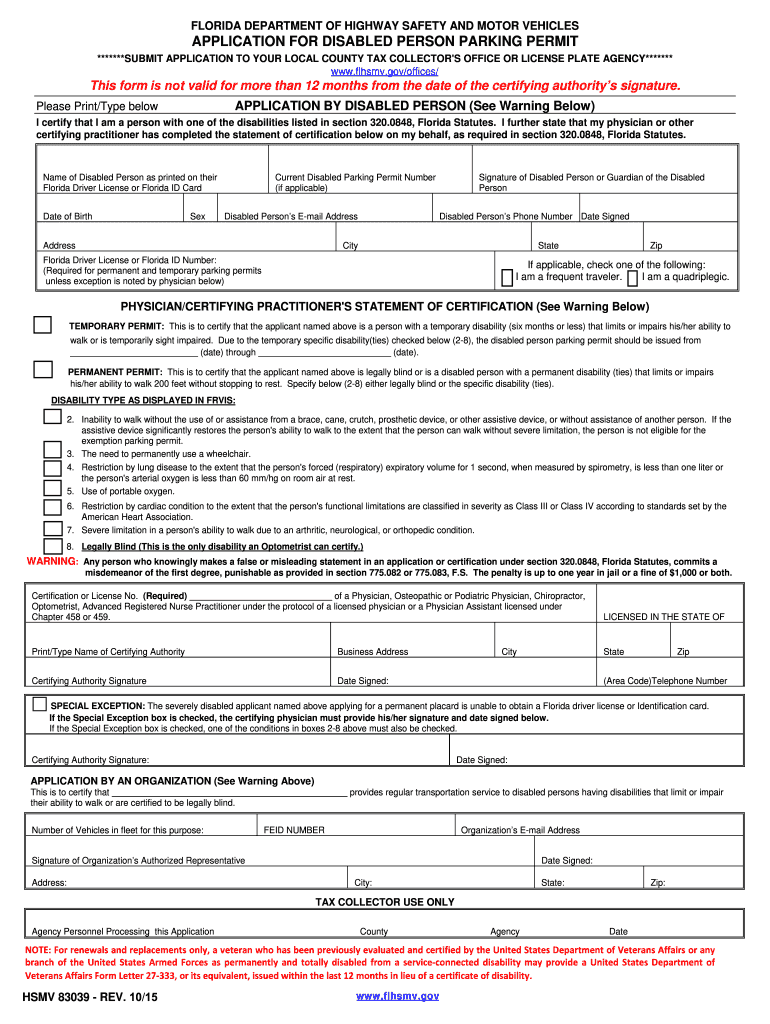
The most critical component of your application is the medical certification. You will need a licensed physician, osteopathic physician, chiropractor, podiatric physician, or out-of-state physician licensed in the United States to certify your disability. This medical professional will complete a portion of the Application for Disabled Person Parking Permit (Form HSMV 83007). It is imperative that this section is filled out accurately and completely by your healthcare provider. They will assess your condition and determine if it meets the criteria for a disabled parking permit as defined by Florida law. This certification is the primary evidence of your need for accessible parking, and without it, your application cannot proceed.
When consulting with your physician, be sure to discuss how your medical condition impacts your ability to walk or your need for specific mobility assistance. They will need to detail the nature of your disability and its effect on your mobility. This professional evaluation ensures that the permit system is used by those who truly benefit from it, maintaining the integrity of designated parking spaces for those who require them for accessibility.
The Application Form: Gathering Your Information
Once your medical provider has completed their section of the application, you will need to fill out the remaining parts of Form HSMV 83007. This form requires your personal information, including your name, address, and driver license or state identification card number. You will also need to indicate whether you are applying for a temporary or permanent permit, or a disabled parking license plate.
It is important to choose the correct type of permit for your needs. Temporary placards are issued for conditions that are expected to improve, typically for up to six months. Permanent placards or license plates are for individuals with long-term or permanent disabilities. If you are applying for a disabled parking license plate, you will need to provide your vehicle registration information.
Identification and Proof of Residency
Along with the completed application form and medical certification, you will need to provide proof of identity and residency in Florida. Accepted forms of identification typically include a valid Florida driver license or a Florida identification card. If you do not have these, other forms of government-issued identification may be accepted. Proof of residency can often be established through utility bills, lease agreements, or other official documents mailed to your Florida address. It is always advisable to check the official FLHSMV website or contact your local county tax collector’s office for the most up-to-date list of acceptable identification and residency documents.
Types of Permits and How to Apply
Florida offers several types of disabled parking permits to accommodate different needs and situations. Understanding these options will help you select the most appropriate permit for your circumstances. The application process is generally the same, but the type of permit you choose will influence the validity period and any associated fees.
Permanent and Temporary Placards
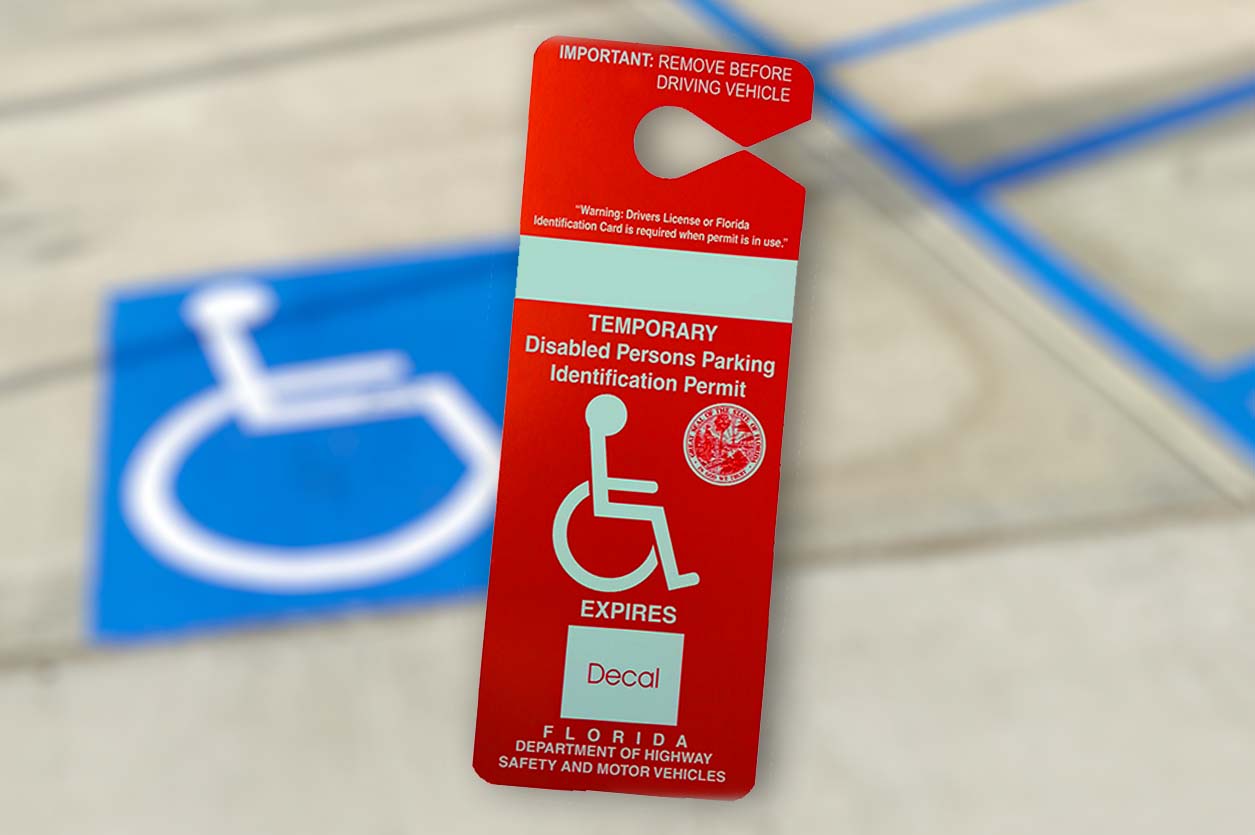
As mentioned earlier, Florida offers both permanent and temporary disabled parking placards. Permanent placards are valid for four years and can be renewed. Temporary placards are issued for a specific duration, not exceeding six months, and can be renewed if the disability persists. If you have a chronic condition that significantly impacts your mobility, a permanent placard is likely the best option. For a temporary condition, such as recovery from surgery or a short-term illness, a temporary placard will suffice. It’s essential to be truthful about the duration of your disability to ensure you are applying for the correct type of permit.
Disabled Parking License Plates
For Florida residents who own a vehicle, a disabled parking license plate can be a convenient alternative to a placard. This plate is affixed to your vehicle, eliminating the need to remember to display a placard. To be eligible for a disabled parking license plate, you must meet the same medical criteria as for a placard, and you will need to provide your vehicle registration information. There may be additional fees associated with obtaining a disabled parking license plate, which will be collected by your local county tax collector’s office. These plates offer a seamless way to identify your vehicle as having accessible parking privileges, especially when visiting popular tourist spots like Miami or exploring the natural beauty of the Everglades.
Where to Submit Your Application
Applications for disabled parking permits and license plates can typically be submitted at your local county tax collector’s office. These offices serve as the primary point of contact for FLHSMV services within each county. You can usually find the location and operating hours of your nearest county tax collector’s office on the FLHSMV website or through your county government’s official website.
In some cases, you may be able to submit your application by mail, especially for renewals. However, for initial applications, especially for license plates, an in-person visit might be required to complete vehicle-related paperwork. It’s always a good idea to call ahead or check the county tax collector’s office website to confirm their specific procedures and requirements. This ensures a smooth and efficient application process, whether you’re a resident of Tampa or planning a long-term stay in a vacation rental in Fort Lauderdale.
Renewing and Maintaining Your Permit
Keeping your disabled parking permit up-to-date is crucial to continue enjoying the benefits of accessible parking. Florida has specific procedures for renewing both temporary and permanent permits, as well as license plates. Understanding these renewal requirements will help you avoid any lapses in your permit’s validity, ensuring continued ease of access during your travels across the state, from the historic streets of Key West to the family-friendly attractions of Orlando.
Renewal Procedures for Permanent Permits and License Plates
Permanent disabled parking permits are valid for four years. Prior to their expiration, you will typically receive a renewal notice from the FLHSMV. To renew, you will need to complete a renewal application and pay any associated fees. If your medical condition has not changed, you may not need to obtain new medical certification for a permanent permit renewal, but it’s always wise to verify this with the FLHSMV or your county tax collector’s office. For disabled parking license plates, the renewal process is usually integrated with your vehicle’s annual registration renewal.
Renewing Temporary Permits
Temporary disabled parking permits have a much shorter validity period, usually up to six months. If your disability persists beyond this period, you will need to reapply and obtain a new medical certification from your healthcare provider to renew your temporary permit. This ensures that the eligibility for temporary permits is periodically reviewed, aligning with the temporary nature of the condition.
Lost or Stolen Permits
If your disabled parking placard or license plate is lost or stolen, you must report it immediately to the FLHSMV and your local law enforcement agency. You will then need to apply for a replacement permit. For lost or stolen placards, you can usually obtain a replacement at your county tax collector’s office by completing a specific application form and paying a replacement fee. For stolen license plates, you will need to follow the procedures for replacing stolen vehicle tags, which will also involve the county tax collector’s office and potentially the Florida Highway Patrol. Prompt reporting and replacement are essential to prevent misuse of your permit.
By following these guidelines, obtaining and maintaining your handicapped parking permit in Florida becomes a manageable process. This permit is an invaluable tool, opening up the state’s rich tapestry of travel opportunities, accommodations, tourism, and lifestyle experiences to individuals with disabilities, making Florida a truly accessible destination for everyone. Whether you’re planning a relaxing beach getaway or an adventure-filled trip, your permit ensures that accessible parking is one less thing to worry about.
LifeOutOfTheBox is a participant in the Amazon Services LLC Associates Program, an affiliate advertising program designed to provide a means for sites to earn advertising fees by advertising and linking to Amazon.com. Amazon, the Amazon logo, AmazonSupply, and the AmazonSupply logo are trademarks of Amazon.com, Inc. or its affiliates. As an Amazon Associate we earn affiliate commissions from qualifying purchases.