
Florida’s construction industry is a vibrant and dynamic sector, constantly evolving with new developments and opportunities. For aspiring professionals looking to enter this field, obtaining a contractor’s license is a fundamental and often legally mandated step. This license not only signifies a level of competency and professionalism but also unlocks the ability to undertake various construction projects legally and ethically. The process, while rigorous, is designed to ensure that only qualified individuals contribute to the state’s built environment. This guide will walk you through the essential steps and considerations for acquiring your contractor’s license in the Sunshine State.
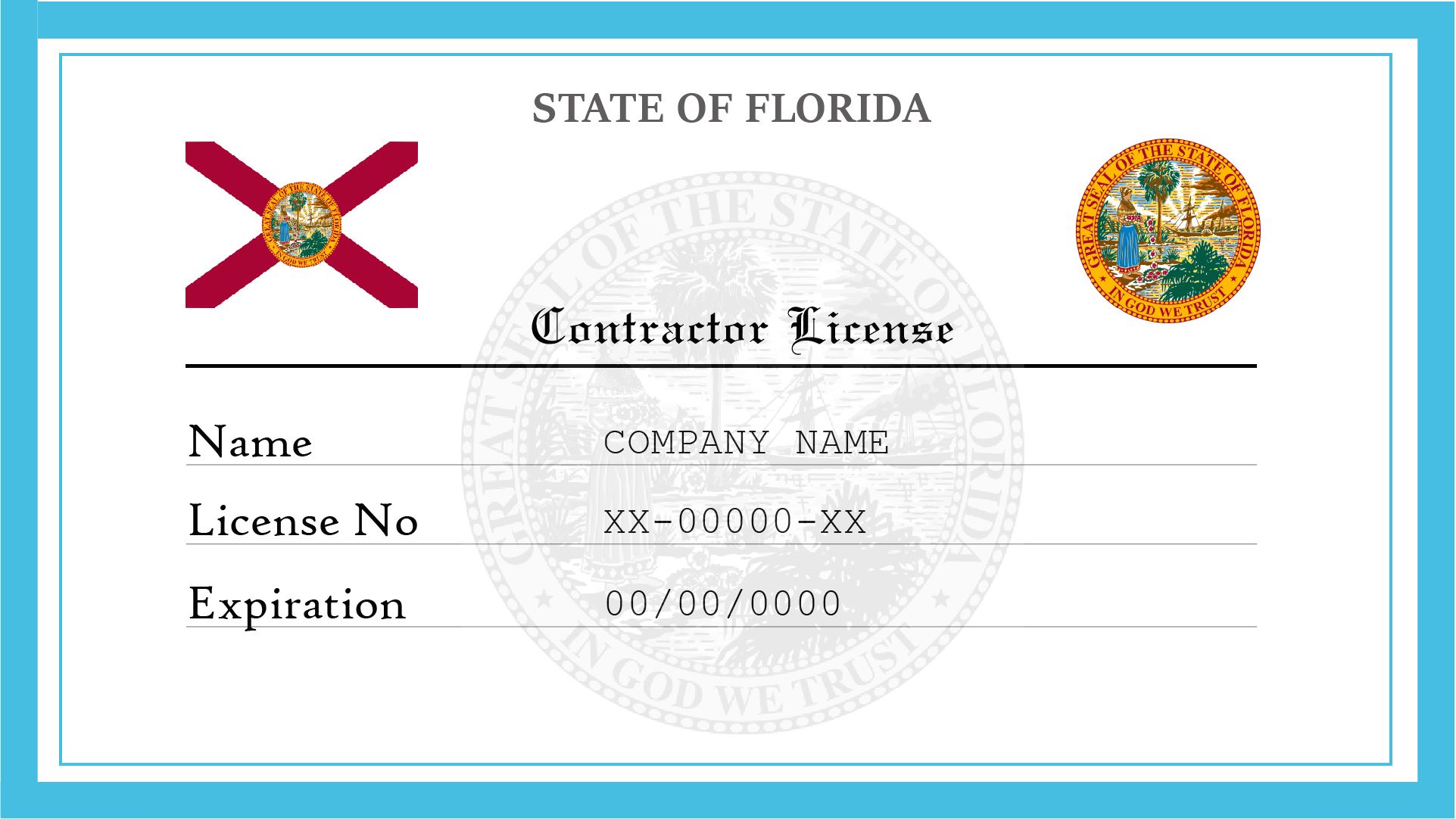
Understanding Florida Contractor Licensing Requirements
Before embarking on the licensing journey, it’s crucial to understand the landscape of contractor licensing in Florida. The state has a tiered system, distinguishing between statewide and local licenses, and categorizing contractors by the type of work they perform.
Statewide vs. Local Licensing
Florida offers two primary avenues for contractor licensing: statewide certification and local registration.
Statewide Certified Contractor License
A statewide certified contractor license allows you to perform contracting work in any county or municipality within Florida. This is generally required for larger, more complex projects and for contractors seeking to operate across different jurisdictions without the need for multiple local registrations. Obtaining a certified license involves meeting stringent requirements related to experience, financial stability, and passing comprehensive examinations. The Florida Department of Business and Professional Regulation (DBPR), specifically the Construction Industry Licensing Board (CILB), oversees this certification process.
Local Registered Contractor License
In many areas, particularly for smaller to medium-sized projects, a local registered contractor license may suffice. This type of license is issued by individual local building departments or local licensing boards within specific counties or cities. If you plan to operate primarily within a particular geographic area, a local license might be a more straightforward option. However, it’s important to note that even with a local license, certain types of work or project values may still necessitate a statewide certification. Always verify the specific requirements of the jurisdiction where you intend to perform work.
Contractor Classifications
Florida law categorizes contractors based on the type of services they offer. Understanding these classifications is vital for obtaining the correct license.
Registered vs. Certified Contractors
This distinction is fundamental. As mentioned, a certified contractor is tested on their competency in specific areas and their license is recognized statewide. A registered contractor has typically met experience requirements and may have passed a basic competency exam, but their license is generally recognized only within the jurisdiction that issued it.
Specific Contractor Categories
The CILB recognizes several broad categories of contractors, each with sub-classifications. Some of the most common include:
- General Contractor (GC): This license is for individuals who are responsible for the overall construction of a building and who can superintend the work of any trade. A General Contractor typically oversees the entire project, from planning to completion, coordinating various subcontractors and ensuring compliance with building codes and project specifications.
- Building Contractor (BC): This license permits the holder to construct, repair, alter, or improve residential, commercial, and other buildings. A Building Contractor often focuses on the structural aspects of buildings, including foundations, framing, roofing, and structural modifications.
- Residential Contractor (RC): This license is for individuals who construct, repair, alter, or improve residential buildings not exceeding three stories in height. This is ideal for those focusing specifically on single-family homes, townhouses, and smaller multi-unit residential structures.
- Specialty Contractor: This broad category encompasses a wide range of specific trades, such as roofing, plumbing, electrical, air conditioning, swimming pool, and alarm system contractors. Each specialty typically has its own set of requirements and examinations.
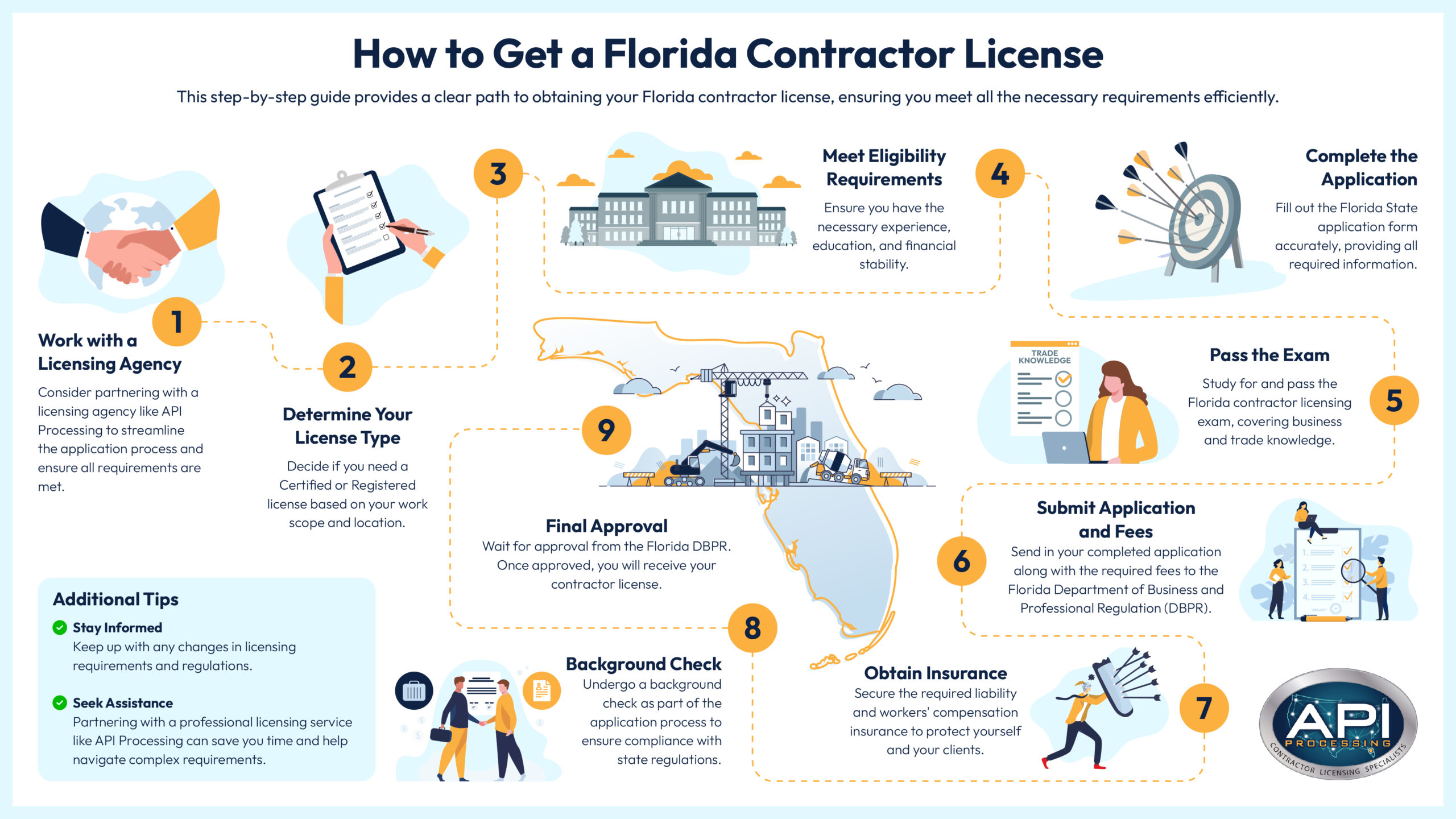
The Application Process: Step-by-Step
Obtaining your Florida contractor’s license involves several distinct stages. Meticulous attention to detail throughout this process is key to a smooth and successful application.
1. Meeting Eligibility Requirements
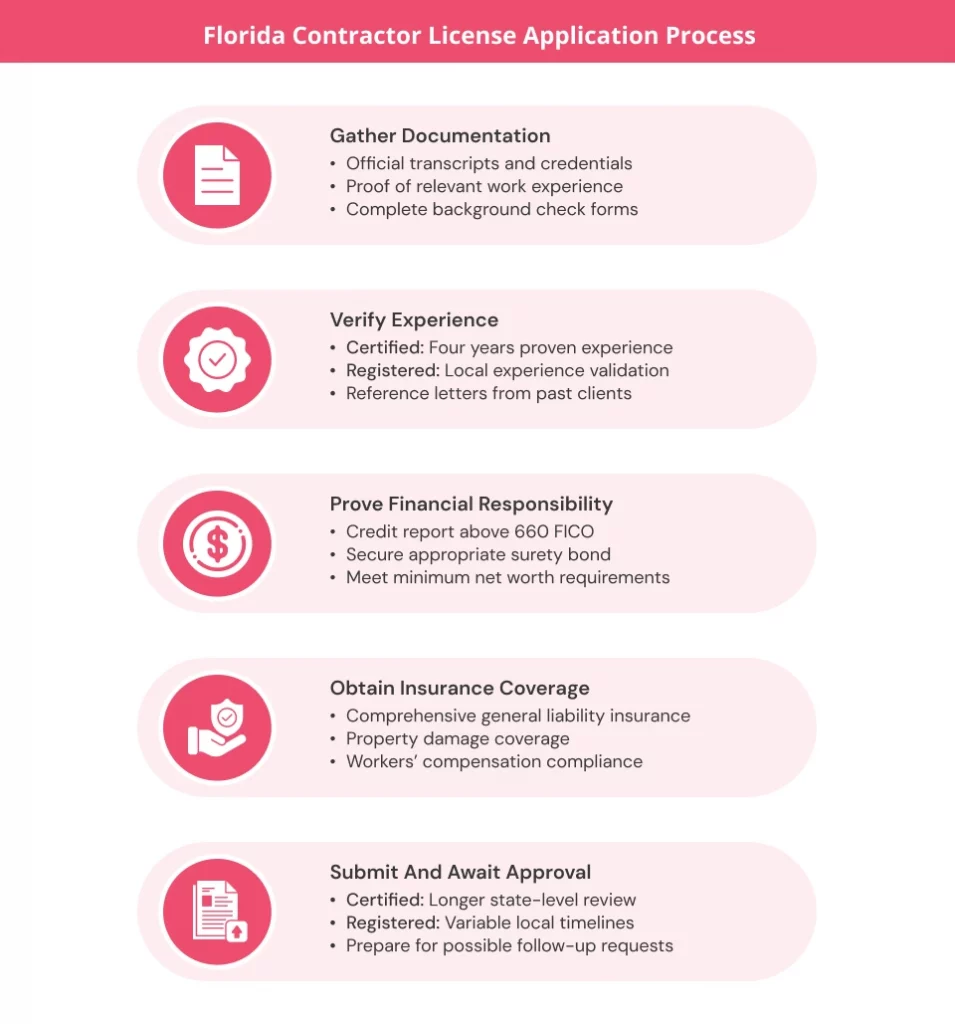
The first hurdle is ensuring you meet the fundamental eligibility criteria set forth by the DBPR. These typically include:
- Age: Applicants must be at least 18 years old.
- Financial Responsibility: You will need to demonstrate financial stability. This often involves providing a credit report and meeting minimum credit scores. The specific requirements can vary depending on the license type.
- Experience and Education: This is a cornerstone of the application. You will need to document substantial experience in the specific trade for which you are applying. The required experience is usually measured in years and can be a combination of practical, hands-on work and relevant educational credentials. For example, a General Contractor applicant might need four years of experience where at least one year was as a supervisor or in a management capacity. Educational degrees from accredited institutions in construction-related fields can sometimes substitute for a portion of the experience requirement.
- No Disqualifying Criminal History: Certain criminal convictions can prevent an applicant from obtaining a license. Background checks are a standard part of the process.
2. Assembling Your Application Package
Once you’ve confirmed your eligibility, you’ll need to gather all necessary documentation. This package is critical for your application’s review.
- Application Form: Obtain the correct application form from the DBPR website. Ensure you are filling out the form for the specific license type and classification you are seeking.
- Proof of Experience: This is often the most time-consuming part to compile. You will need to provide detailed affidavits from former employers, clients, or supervisors verifying your work history. These affidavits should clearly outline the nature of the work performed, the duration, and your role.
- Financial Statement: You may need to submit a financial statement prepared by a certified public accountant (CPA) or provide a credit report that demonstrates your financial stability.
- Proof of Insurance: Depending on the license type, you may need to provide proof of general liability and workers’ compensation insurance.
- Exam Scores: Once approved to take the exams, you will need to submit your passing scores as part of the final application.
3. The Examination Process
Florida contractor licensing exams are designed to test your knowledge of construction practices, building codes, business management, and relevant state laws.
Types of Exams
There are typically two main parts to the certification exams:
- Business and Finance Exam: This exam covers general business knowledge, financial management, accounting, contracts, and business law relevant to operating a contracting business in Florida.
- Trade Knowledge Exam: This exam is specific to the contractor classification you are applying for. It covers technical aspects of the trade, building codes (such as the Florida Building Code), safety practices, and specialized construction techniques.
Scheduling and Preparation
Once your application is reviewed and approved by the DBPR, you will receive authorization to schedule your exams through the testing service designated by the state (currently, this is typically Pearson VUE). It is highly recommended to undergo thorough preparation for these exams. Many candidates utilize preparatory courses, study guides, and practice exams to familiarize themselves with the exam format and content. Understanding the Florida Building Code is particularly crucial for the trade knowledge exam.
4. Submitting Your Final Application and Fees
After successfully passing both portions of the examination, you will submit your final application package, which now includes your exam scores, along with the required licensing fees. The DBPR will conduct a final review of your complete application. If all requirements are met, your license will be issued.
Maintaining Your Florida Contractor License
Obtaining your license is a significant achievement, but it’s essential to understand that it requires ongoing commitment to remain valid.
Continuing Education
Like many licensed professions, Florida contractors are required to complete continuing education (CE) courses to renew their licenses. These courses are designed to keep licensees updated on the latest building codes, industry best practices, safety regulations, and business management techniques. The specific number of CE hours and the types of courses required can vary by license type and renewal period. It is crucial to track your CE credits and ensure you are meeting the state’s requirements before your renewal date.
License Renewal
Contractor licenses in Florida are typically renewed every two years. The DBPR will send out renewal notices, but it is ultimately the licensee’s responsibility to ensure their license is renewed on time. Failure to renew can result in a lapsed license, requiring a more complex reinstatement process or even reapplying for a new license. The renewal process also involves paying renewal fees and submitting proof of completed continuing education.
Compliance with Regulations
Maintaining your license also means adhering to all applicable Florida laws and regulations governing the construction industry. This includes obtaining necessary permits for projects, ensuring your work meets building code standards, carrying appropriate insurance, and operating your business ethically. The DBPR and local building departments conduct inspections and may investigate complaints, so maintaining a high standard of practice is paramount.
Navigating the Nuances: Tips for Success
The path to becoming a licensed contractor in Florida can be challenging, but with careful planning and diligent effort, it is achievable.
Seek Professional Guidance
Consider consulting with a contractor licensing specialist or an attorney experienced in construction law. These professionals can provide invaluable assistance in navigating the complexities of the application process, understanding legal requirements, and ensuring all documentation is accurate and complete.
Financial Planning
The financial requirements for licensing can be substantial, including application fees, exam fees, and potentially the cost of surety bonds or insurance. Budgeting for these expenses is crucial. Furthermore, establishing a solid financial history is a prerequisite for demonstrating financial responsibility, so focus on building good credit well in advance of applying.
Understand Your Trade Deeply
While the business and finance exam is important, don’t underestimate the trade knowledge exam. Dedicate significant time to studying the Florida Building Code and the specific technical aspects of your chosen contractor classification. Hands-on experience is invaluable, but formal study can bridge any gaps and ensure you are well-prepared for the rigorous testing.
Network and Learn
Connect with other licensed contractors in Florida. They can offer insights into the licensing process, share best practices, and provide guidance on common challenges. Industry associations and local trade groups are excellent resources for networking and continuous learning.
Stay Informed
The construction industry and its regulatory framework are constantly evolving. Stay informed about changes to the Florida Building Code, licensing requirements, and industry trends. The DBPR website and industry publications are essential resources for keeping up-to-date.
Becoming a licensed contractor in Florida is a significant step towards a rewarding career. By understanding the requirements, diligently preparing your application, and committing to ongoing professional development, you can successfully navigate the licensing process and build a strong foundation for your contracting business in the vibrant Florida market.
LifeOutOfTheBox is a participant in the Amazon Services LLC Associates Program, an affiliate advertising program designed to provide a means for sites to earn advertising fees by advertising and linking to Amazon.com. Amazon, the Amazon logo, AmazonSupply, and the AmazonSupply logo are trademarks of Amazon.com, Inc. or its affiliates. As an Amazon Associate we earn affiliate commissions from qualifying purchases.