
The crisp, white blanket that defines a perfect ski season is not always a gift from nature. In fact, for many ski resorts, especially those in regions with unpredictable snowfall, artificial snowmaking is a critical component of their operation. This sophisticated process transforms water and air into the fluffy, crystalline substance that allows skiers and snowboarders to carve up the slopes. Understanding how ski resorts make snow offers a fascinating glimpse into the engineering and environmental considerations that go into creating a world-class winter destination.
The Science of Snowmaking
At its core, artificial snowmaking is a race against time and temperature. The fundamental principle relies on the same physics that create natural snowflakes: supercooled water droplets freezing onto tiny particles in the atmosphere. However, ski resorts engineer this process to be highly efficient and controllable, allowing them to cover vast areas of terrain with a consistent snow surface.
Water and Air: The Essential Ingredients
The primary raw materials for artificial snow are water and compressed air. Water is typically sourced from reservoirs, natural lakes, or even municipal water systems, often requiring significant infrastructure to transport it to the snow guns. The quality of the water is important; cleaner water generally produces better snow. Air is compressed using powerful industrial compressors, providing the necessary force to atomize the water and propel it into the atmosphere.
The Role of Temperature and Humidity
The efficiency and feasibility of snowmaking are heavily influenced by ambient temperature and humidity. This is often expressed as a “wet bulb temperature,” which accounts for both air temperature and relative humidity. The colder and drier the air, the more efficient the snowmaking process. As the wet bulb temperature drops, less energy is required to freeze the water droplets, and the resulting snow is typically drier and more durable. Many resorts have sophisticated weather monitoring systems to track these conditions and optimize their snowmaking efforts. When temperatures are too warm, snowmaking becomes energy-intensive and the snow produced may be wetter and melt faster.
Atomization and Nucleation
The magic happens when water and air are combined in the snow gun. There are two primary methods employed:
Air-Water Guns
These are the older, more traditional type of snow gun. They work by mixing compressed air and water at the nozzle. The compressed air not only propels the water but also atomizes it into very fine droplets. Simultaneously, a small amount of compressed air is often released at the tip of the gun, creating a nucleation site. As these supercooled water droplets are ejected into the cold air, they freeze around these nucleation sites, forming ice crystals.
Fan Guns
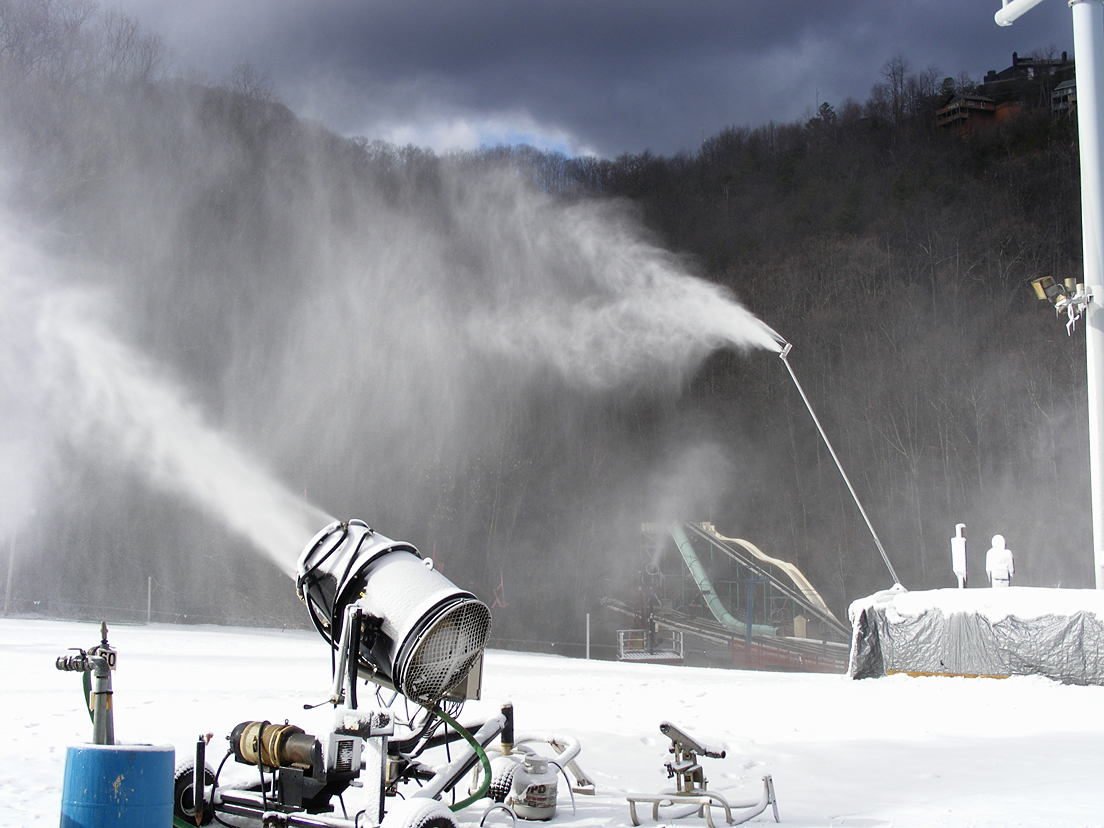
Modern ski resorts increasingly rely on fan guns, which are more efficient and can produce snow over a wider range of temperatures. These guns utilize a powerful fan to propel a large volume of atomized water droplets into the air. The water is sprayed through a ring of nozzles surrounding the fan, creating a mist. The fan then draws in ambient air, mixes it with the water mist, and blows it out. In this process, the air itself assists in cooling the water droplets, and many fan guns also have a small air compressor to provide nucleation. The continuous flow of air and the fine atomization of water allow for rapid freezing.
The Technology Behind the Flakes
Modern snowmaking operations are highly technological, employing automation, advanced weather forecasting, and precise control systems to maximize efficiency and snow quality. This technological evolution has allowed resorts to extend their seasons and ensure reliable conditions even in challenging weather patterns.
Snow Guns: The Machinery of Winter
Snow guns are the visible workhorses of artificial snowmaking. They come in various designs and sizes, each optimized for different terrain and conditions.
Types of Snow Guns
- Air-Water Guns: As mentioned, these rely on a direct mix of compressed air and water. They are often used for spot snowmaking or in areas where fan guns are impractical.
- Fan Guns: These are larger, more powerful machines. They use a fan to project water, and their efficiency allows them to cover larger areas and produce more snow with less manual intervention.
Hydrants: Strategically placed hydrants along the slopes provide convenient access points for water and air to connect to various snow guns.
Automation and Control Systems

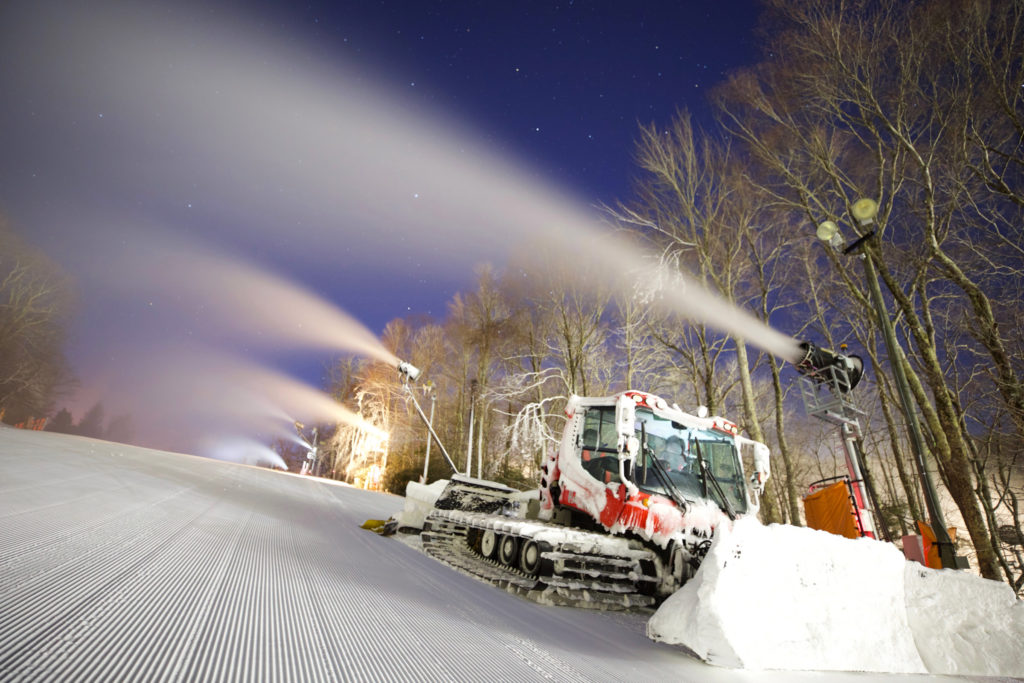
Today’s snowmaking systems are often remotely controlled. Operators can monitor temperature, humidity, water flow, and snow quality from a central control room. Advanced software analyzes weather data and adjusts the snow guns’ settings automatically to optimize production. This allows resorts to make snow precisely when and where it is needed, maximizing their investment and minimizing energy consumption.
Weather Monitoring
Sophisticated weather stations are crucial for effective snowmaking. They provide real-time data on temperature, humidity, wind speed, and direction. This information is fed into the control systems, which then dictate the optimal operation of the snow guns. Some systems can even predict upcoming weather changes to proactively adjust snowmaking efforts.
Water Management and Pumping
Moving vast quantities of water to the snow guns requires an extensive network of pumps and pipelines. These systems are designed to deliver water at high pressure and volume. Energy efficiency is a key consideration in pump selection and operation, as pumping water can be a significant energy consumer.
Environmental Considerations and Sustainability
While artificial snowmaking is essential for the viability of many ski resorts, it also comes with environmental considerations. Resorts are increasingly focusing on sustainable practices to mitigate the impact of snowmaking.
Energy Consumption
Snowmaking is an energy-intensive process, primarily due to the power required for compressors and pumps. Resorts are investing in more energy-efficient equipment, such as variable speed drives for compressors and pumps, and optimizing snow gun placement to reduce the distance water and air need to travel. Many are also exploring renewable energy sources to power their operations.
Water Usage
The amount of water used for snowmaking can be substantial. Responsible resorts carefully manage their water resources, often using closed-loop systems where meltwater is collected and recirculated. The timing of snowmaking is also critical, with efforts often focused on periods of naturally cold temperatures to maximize efficiency and minimize the need for energy to cool the water.
Impact on Natural Ecosystems
The placement of snow guns and pipelines, as well as the physical impact of snowmaking on the terrain, can affect natural ecosystems. Resorts work to minimize this impact through careful planning, using existing infrastructure where possible, and rehabilitating areas after snowmaking operations are complete. The goal is to create a sustainable winter sports experience that respects the natural environment.
The Future of Snowmaking
The evolution of snowmaking technology is ongoing, driven by the need for greater efficiency, reduced environmental impact, and enhanced snow quality. Innovations in water atomization, nucleating agents, and control systems are continually improving the process.
Advanced Nucleation Techniques
Researchers are exploring new ways to create effective nucleation sites, which can allow snowmaking to occur at slightly warmer temperatures. This could significantly expand the operational window for resorts.
Water Conservation Technologies
New technologies are being developed to further optimize water usage, including more precise control over the water-to-air ratio and improved methods for collecting and recycling meltwater.
Smarter Control Systems
The integration of artificial intelligence and machine learning into snowmaking control systems holds great promise. These systems could learn and adapt to micro-climates within a resort, further optimizing snow production for specific areas and conditions, leading to a more consistent and enjoyable skiing experience for visitors to destinations like Whistler Blackcomb or Aspen Snowmass. The ongoing development in this field ensures that ski resorts can continue to offer pristine slopes, even as climate patterns shift, preserving the allure of winter destinations for enthusiasts worldwide.
LifeOutOfTheBox is a participant in the Amazon Services LLC Associates Program, an affiliate advertising program designed to provide a means for sites to earn advertising fees by advertising and linking to Amazon.com. Amazon, the Amazon logo, AmazonSupply, and the AmazonSupply logo are trademarks of Amazon.com, Inc. or its affiliates. As an Amazon Associate we earn affiliate commissions from qualifying purchases.