
Navigating the complexities of applying for disability benefits can be a daunting process, particularly when faced with health challenges. For residents of Colorado, understanding the specific pathways and requirements is crucial for a successful application. This comprehensive guide outlines the steps, eligibility criteria, and resources available to assist individuals seeking disability support within the state.
Understanding Disability Benefits in Colorado
In Colorado, disability benefits primarily refer to federal programs administered by the Social Security Administration (SSA). While there are some state-level programs for specific needs, the two main federal programs providing financial assistance to individuals with disabilities are Social Security Disability Insurance (SSDI) and Supplemental Security Income (SSI). These programs differ significantly in their eligibility requirements and funding sources.
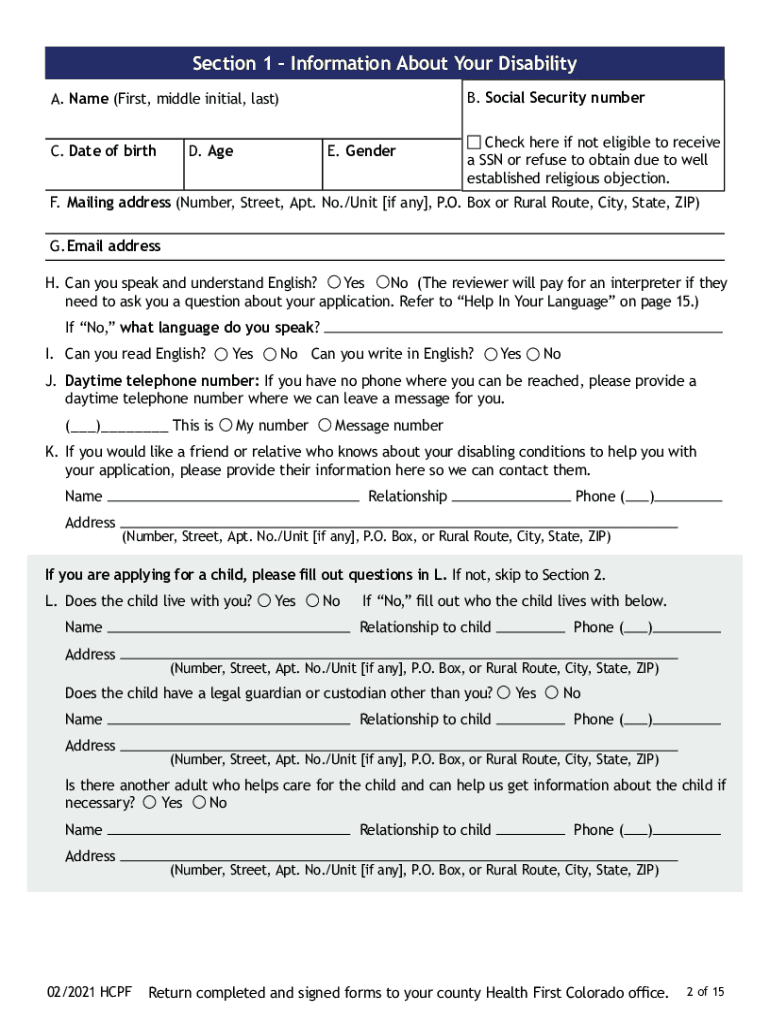
Social Security Disability Insurance (SSDI)
SSDI is a federal insurance program for workers who have paid Social Security taxes (FICA) on their earnings. Eligibility for SSDI is based on an individual’s work history. To qualify, you must have worked long enough and recently enough, accumulating a certain number of “work credits.” The amount of benefits received is tied to your average lifetime earnings. Generally, to be considered “fully insured,” you need 40 work credits, with 20 of those earned in the last 10 years ending with the year you become disabled. Younger workers may qualify with fewer credits. After receiving SSDI benefits for 24 months, beneficiaries typically become eligible for Medicare coverage, regardless of age.
Supplemental Security Income (SSI)
SSI is a needs-based federal program that provides financial assistance to disabled adults and children who have limited income and resources. Unlike SSDI, SSI eligibility does not depend on work history or payment of Social Security taxes. Instead, it focuses on financial need. An individual’s countable income and assets must fall below specific limits set by the SSA. For single individuals, the resource limit is typically $2,000, and for couples, it is $3,000. Many SSI recipients in Colorado are also eligible for Medicaid, which provides health insurance coverage.
It’s important to note that it is possible to apply for and receive both SSDI and SSI simultaneously if you meet the criteria for both programs. This is often referred to as “concurrent benefits.”
Eligibility Requirements for Disability Benefits
The definition of “disability” for both SSDI and SSI is stringent and federal, meaning it is the same across all states, including Colorado. The SSA defines disability as the inability to engage in any substantial gainful activity (SGA) by reason of any medically determinable physical or mental impairment which can be expected to result in death or which has lasted or can be expected to last for a continuous period of not less than 12 months. This means short-term or partial disabilities do not qualify.
Medical Eligibility
When you apply, your application goes to Colorado’s Division of Disability Services (DDS), a state agency that makes medical determinations for the SSA. A claims examiner, along with a medical consultant, will review your medical records to assess whether your condition meets the SSA’s definition of disability. They will evaluate:
- Severity of the Impairment: Your condition must significantly limit your ability to perform basic work activities.
- Duration of the Impairment: The condition must have lasted or be expected to last for at least 12 continuous months or result in death.
- Impact on Work: They will consider whether your impairment prevents you from doing any of your past relevant work and, if so, whether there is any other type of work you can adjust to, considering your age, education, and work experience.
It is crucial to provide comprehensive and up-to-date medical documentation, including diagnoses, treatment records, test results, and physician statements, to support your claim.
Non-Medical Eligibility
In addition to medical eligibility, applicants must meet specific non-medical criteria depending on the program:
- For SSDI: As mentioned, you need sufficient work credits.
- For SSI: You must have limited income and resources. This includes cash, bank accounts, stocks, bonds, and real estate (other than your primary residence). The SSA has specific rules for what counts as income and resources, and there are many exclusions. For example, your home and one vehicle are typically not counted.
Understanding which program you might qualify for is a critical first step. You can apply for both, and the SSA will determine your eligibility for each.
The Application Process: A Step-by-Step Guide
The application process for disability benefits in Colorado can be lengthy and complex. It’s often advisable to seek assistance from an attorney specializing in Social Security disability or a qualified advocate, especially if your initial application is denied.
Gathering Your Documentation

Before you begin your application, organize all necessary information. This typically includes:
- Personal Information: Your Social Security number, birth certificate, marriage certificates (if applicable), and bank account information for direct deposit.
- Medical Information: Names, addresses, and phone numbers of all doctors, hospitals, and clinics that have treated you; dates of treatment; and a list of all medications, tests, and medical procedures. Be prepared to list the conditions that limit your ability to work.
- Work History Information: A detailed list of your past five jobs, including job titles, dates worked, and a description of your duties.
- Financial Information (for SSI): Proof of income and assets for all household members, including bank statements, pay stubs, and property deeds.
- Veteran Status: If you are a veteran, your military service papers.
- Workers’ Compensation: If you have filed for workers’ compensation, details of that claim.
The more complete and accurate your documentation, the smoother the process will be.
Submitting Your Application
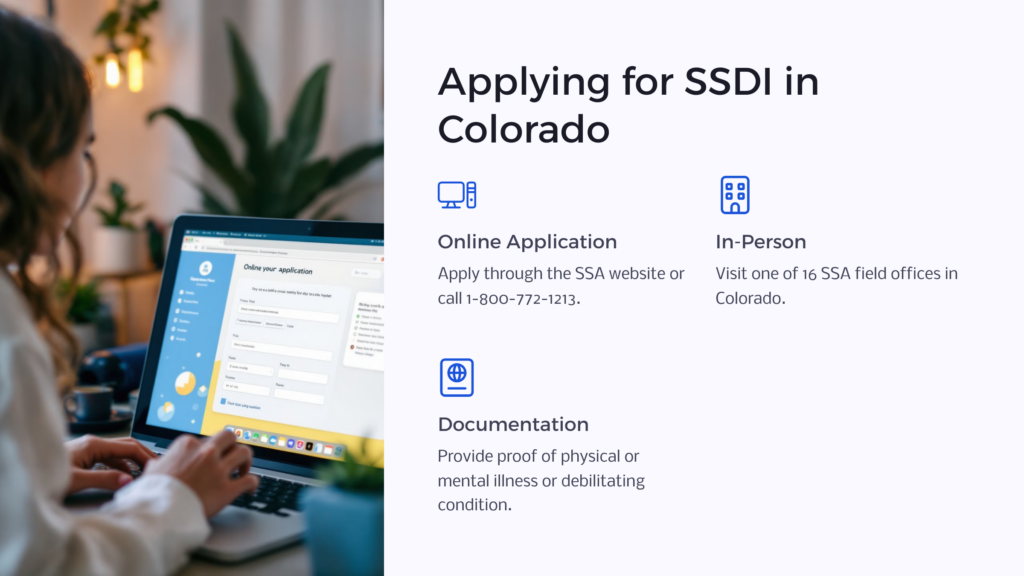
You can apply for SSDI online via the SSA website. For SSI or to apply for both, you will need to contact the SSA directly either by phone or by visiting a local Social Security office. Colorado has several SSA field offices located in major cities such as Denver, Colorado Springs, and Boulder.
Once you submit your application, the SSA reviews it for technical eligibility (work credits for [SSDI], income/resources for [SSI]). If you meet these non-medical requirements, your case is then forwarded to Colorado’s Division of Disability Services.
The DDS Review and Determination
The DDS in Colorado is responsible for making the medical determination. A claims examiner will gather your medical records from the providers you listed. They may also contact you for additional information, ask you to undergo a consultative examination (CE) with a doctor chosen by the DDS, or conduct an interview. It is crucial to cooperate fully and attend all scheduled appointments.
The DDS process can take several months. Once their review is complete, they will send their determination back to the SSA, which will then notify you of the decision.
Navigating Denials and Appeals
Many initial applications for disability benefits are denied. This is a common occurrence and does not mean your claim is without merit. It simply means you must pursue the appeals process. There are several levels of appeal:
Reconsideration
This is the first level of appeal. If your application is denied, you have 60 days from the date you receive the denial letter to request a reconsideration. During reconsideration, a different DDS claims examiner and medical consultant in Colorado will review your case, including any new medical evidence you submit. The statistics show that most reconsiderations are also denied.
Hearing Before an Administrative Law Judge (ALJ)
If your reconsideration is denied, you can request a hearing before an Administrative Law Judge (ALJ). This is often the most successful stage of appeal. An ALJ hearing is a formal proceeding where you can present your case, bring witnesses (such as medical professionals or vocational experts), and be represented by an attorney. The judge will consider all the evidence, including your testimony, to make a new decision. The wait time for an ALJ hearing in Colorado can be significant.
Appeals Council Review
If the ALJ denies your claim, you can appeal to the Appeals Council. The Appeals Council reviews ALJ decisions for legal errors or if the ALJ’s decision was not supported by substantial evidence. They may affirm the ALJ’s decision, reverse it and grant benefits, or remand it back to an ALJ for a new hearing.
Federal Court Review
The final level of appeal within the Social Security system is to file a lawsuit in a federal district court. This step requires legal representation and involves a judge reviewing the entire administrative record to determine if the SSA’s decision was lawful.
Resources and Support in Colorado
Navigating the disability application and appeals process can be overwhelming. Fortunately, there are several resources available in Colorado to help:
- Social Security Administration Offices: Visit the SSA website or call their toll-free number to find a local office in Colorado and get general information.
- Disability Advocates and Attorneys: Many law firms and advocacy groups specialize in Social Security disability cases. They can assist with filing applications, gathering medical evidence, representing you at hearings, and appealing denials. Many work on a contingency basis, meaning they only get paid if you win your case.
- Colorado Department of Human Services (CDHS): While the main disability programs are federal, the Colorado Department of Human Services may offer information on state-specific programs or services that complement federal benefits, such as Medicaid or other support services for individuals with disabilities.
- Legal Aid Societies: For individuals with limited income, legal aid organizations in Colorado may offer free or low-cost legal assistance for disability claims.
- Non-Profit Organizations: Various non-profit organizations in Colorado focus on specific medical conditions or general disability advocacy, offering support groups, information, and resources.
Applying for disability in Colorado is a detailed and often challenging journey, but understanding the steps, preparing thoroughly, and utilizing available resources can significantly improve your chances of success.
LifeOutOfTheBox is a participant in the Amazon Services LLC Associates Program, an affiliate advertising program designed to provide a means for sites to earn advertising fees by advertising and linking to Amazon.com. Amazon, the Amazon logo, AmazonSupply, and the AmazonSupply logo are trademarks of Amazon.com, Inc. or its affiliates. As an Amazon Associate we earn affiliate commissions from qualifying purchases.