
Embarking on a journey of self-reinvention or simply navigating life’s significant milestones often brings about changes, and sometimes, those changes include our legal name. Whether spurred by marriage, divorce, gender transition, adoption, or a deeply personal desire for a fresh start, altering your legal name in California is a defined process that, while requiring attention to detail, opens doors to new possibilities. For those with a zest for travel, seeking unique accommodation, or simply embracing a new lifestyle, ensuring your legal identity aligns with your personal one is paramount for seamless experiences, from booking a luxury suite to exploring the state’s breathtaking landmarks. This guide will illuminate the path to changing your legal name in the Golden State, offering insights that touch upon the practicalities and the broader implications for your life’s adventures.

Navigating the Waters: Understanding the Legal Name Change Process in California
A legal name change is more than just selecting a new moniker; it’s a formal declaration of identity recognized by the state. While the process itself is primarily administrative and judicial, its impact resonates through every facet of an individual’s life, especially for those who frequently interact with services related to travel, hotels, and tourism. Understanding the foundational reasons and the general steps is the first stride in this significant transition.
Why Consider a Name Change? A Journey of Identity and Opportunity
People pursue a legal name change for a myriad of reasons, each deeply personal and reflective of individual circumstances. For many, it’s a practical step following life events such as marriage, where one spouse often adopts the other’s surname, or divorce, where individuals may revert to a maiden name or choose an entirely new one. For others, it’s a profound act of self-affirmation, particularly for individuals undergoing gender transition, where a new name truly reflects their authentic identity. Adoptees may take on their adoptive parents’ names, and in some cases, individuals may seek a name change for personal protection or simply because they dislike their given name or wish to distance themselves from a past association.
The decision to change one’s name often coincides with a period of personal growth and an embrace of new opportunities. Imagine planning an exciting trip to explore the vibrant culture of San Francisco or the sun-drenched beaches of San Diego under an identity that truly feels like “you.” This shift can be incredibly liberating, enabling individuals to book dream stays at a boutique hotel in Napa Valley or a serene resort in Palm Springs with confidence, knowing all their documents are in perfect alignment. This newfound alignment supports a lifestyle of ease and adventure, free from the potential complications that might arise from mismatched identification when crossing borders or checking into luxurious California State resorts.
General Steps: From Petition to Publication
At its core, changing your legal name in California involves several key procedural steps, primarily through the state’s Superior Court system. The general process typically includes:
- Filling out the appropriate court forms: These forms petition the court to grant your name change.
- Filing the forms with the court: This officially begins your case, usually in the Superior Court of the county where you reside.
- Paying filing fees: Like most legal processes, there are associated costs, though fee waivers are available for those who qualify.
- Publishing a notice in a newspaper: This informs the public of your intent to change your name, a crucial step unique to many name change processes.
- Attending a court hearing: A judge reviews your petition and, if everything is in order, grants the name change.
- Obtaining a certified copy of the Order Changing Name: This is your official document proving your new legal name.
Each of these steps requires careful attention to detail, adherence to deadlines, and an understanding of legal requirements to ensure a smooth transition.
The Core Procedures: Initiating Your Name Change Petition
The journey to a new legal name begins with a series of structured actions within the California judicial system. While it might seem daunting, breaking it down into manageable steps makes the process clearer and less intimidating.
Gathering Your Documentation and Filing Your Petition
The very first practical step involves gathering necessary personal information and completing the required court forms. You’ll typically need to complete forms such as the “Petition for Change of Name” (often form NC-100 or a similar variant, though checking the latest Judicial Council forms is always recommended). These forms will ask for your current legal name, the name you wish to adopt, your reasons for the change, your date and place of birth, and current residence. Additionally, you may need to submit a “Civil Case Cover Sheet” (CM-010).
The next crucial step is filing these completed forms with the Superior Court in your county of residence. For instance, if you reside in the sprawling metropolitan area, you would file with the Los Angeles County Superior Court, or if you live further south, it would be the Orange County Superior Court. This is not just a formality; it officially initiates your legal proceeding. At the time of filing, you will be required to pay a filing fee. However, California law provides for fee waivers for individuals who meet specific income requirements, ensuring that the cost doesn’t become an insurmountable barrier to updating one’s identity. It’s advisable to check the current fee schedule and eligibility criteria for fee waivers on the California Courts website or by contacting your local court clerk.
The Critical Step of Public Notice: Publication Requirements
One of the most distinctive and often misunderstood requirements for a legal name change in California is the need for public notice through newspaper publication. Unless specifically exempted (e.g., for certain domestic violence survivors or individuals seeking a name change due to gender transition through a simplified process), petitioners are generally required to publish a “Notice of Petition to Administer Estate” or “Notice of Hearing” in a local newspaper of general circulation. This notice must appear once a week for four consecutive weeks prior to your court hearing.
The purpose of this publication requirement is to alert any interested parties to your intention to change your name, providing an opportunity for potential objections. While rare, objections can arise from creditors or others who might have a legitimate legal interest in your current name. After the publication period, the newspaper will provide you with an “Affidavit of Publication,” which is a sworn statement confirming that the notice was published as required. This affidavit is a critical document that must be filed with the court before your hearing. Selecting an appropriate newspaper – one designated for legal notices in your county – is vital, and many courts provide lists of approved publications. While this step may feel intrusive to one’s privacy, it is a cornerstone of the legal transparency required for such a fundamental change.
Beyond the Courtroom: Finalizing Your New Identity and Embracing New Horizons
Receiving your court order is a momentous occasion, but it’s only the beginning of fully integrating your new identity into your daily life. The real work of establishing your new legal name across all official records ensures that your future travels, accommodations, and lifestyle choices are seamless and hassle-free.
The Court Hearing and Receiving Your Order
After completing the filing and publication requirements, your next step is to attend the scheduled court hearing. This hearing, typically held in a courtroom at your county’s Superior Court, is generally straightforward. The judge will review your petition, confirm that all procedural requirements have been met (including proper publication), and ensure that there are no legal grounds for objection. Unless there are unusual circumstances or valid objections raised, the judge will usually grant your petition.
Upon approval, the judge will sign an “Order Changing Name.” This official court order is the legal document that formally declares your name changed. It is paramount to obtain several certified copies of this order. These certified copies, bearing the court’s official seal, are your indisputable proof of your new legal identity. They are what you will present to various agencies and institutions to update your records. Without certified copies, many organizations will not accept your name change, making the subsequent steps impossible. It’s often recommended to get at least 3-5 certified copies, as they are required for critical updates and are usually only valid in their certified form.
Updating Your Records: Seamless Transitions for Travel and Life
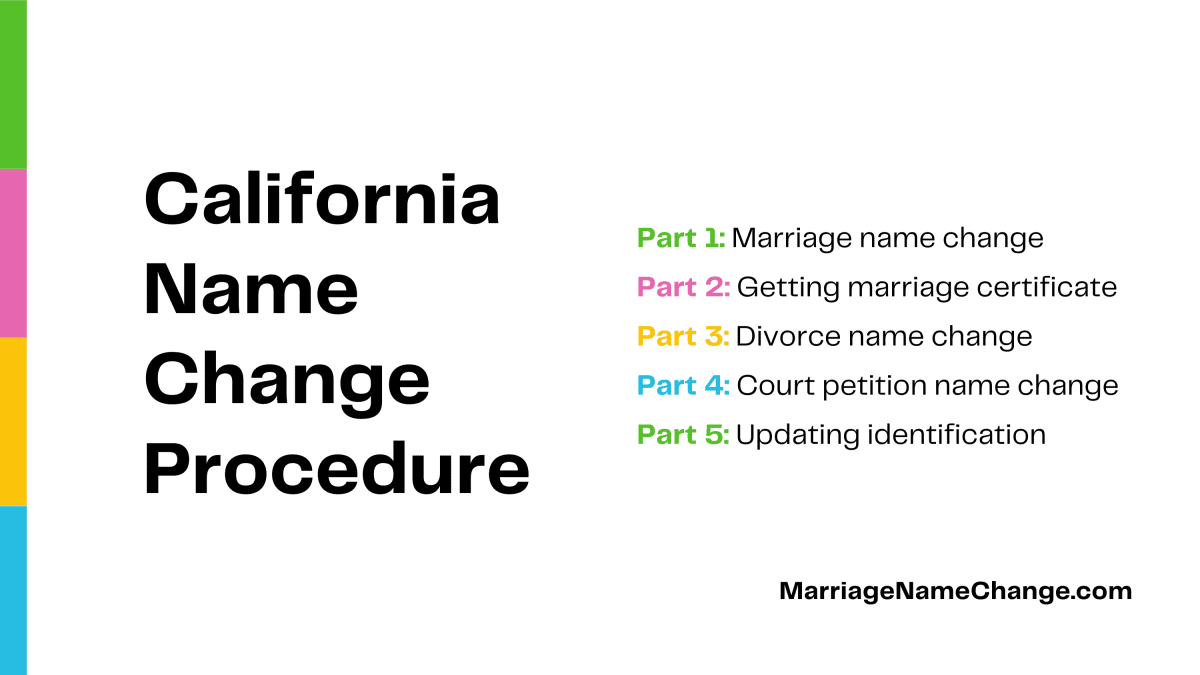
With your certified “Order Changing Name” in hand, the most comprehensive phase of the name change process begins: updating all your personal and financial records. This is where the implications for your travel and lifestyle truly come into play.
The first and arguably most important updates involve federal and state identification:
- Social Security Administration (SSA): This is often the first place to update your name, as it forms the basis for many other federal documents. You’ll need to submit Form SS-5 (Application for a Social Security Card) along with your certified name change order and proof of identity.
- Passport: If you plan any international travel, updating your passport is non-negotiable. The name on your passport must match the name on your flight tickets and other international travel documents to avoid significant issues at airports. You’ll submit Form DS-11 or DS-82 (depending on your situation) to the U.S. Department of State, along with your certified order and existing passport. Imagine the frustration of arriving at Los Angeles International Airport only to find your flight to an exotic destination might be jeopardized by a name mismatch.
- Department of Motor Vehicles (DMV): Your Department of Motor Vehicles (DMV) record for your driver’s license or state ID card is crucial for domestic travel, hotel check-ins, and everyday identification. You’ll need to visit a California DMV office, present your certified name change order, and apply for a new driver’s license or ID card. This ensures you can confidently check into a hotel like the Fairmont San Francisco or rent a car for a scenic drive along Big Sur without any hiccups.
Beyond these critical documents, you’ll need to systematically update your name with:
- Financial Institutions: Banks, credit card companies, investment firms.
- Employers: Human resources, payroll, and benefits departments.
- Educational Institutions: Schools, colleges, and universities for transcripts and diplomas.
- Professional Licensing Boards: If your profession requires a state license (e.g., medical, legal, real estate).
- Utility Companies: Gas, electric, water, internet, and phone providers.
- Insurance Providers: Health, auto, home, and life insurance.
- Voter Registration: To ensure your right to vote remains uninterrupted.
This comprehensive update process, while meticulous, is vital. It guarantees that whether you’re booking a flight to explore a new destination, reserving a luxury suite at a resort in Lake Tahoe, or simply engaging in daily transactions, your new identity is consistently recognized and respected, paving the way for a truly untroubled lifestyle.
Special Circumstances and Considerations for Your Journey
While the general name change process covers most situations, California law provides for specific procedures and considerations depending on the underlying reason for the name change, making certain transitions smoother or requiring additional steps.
Name Changes Related to Marriage, Divorce, or Gender Transition
California law offers simplified avenues for name changes tied to major life events like marriage and divorce, which are common reasons for individuals to update their identity.
- Marriage: When you get married in California, you can typically change your surname to your spouse’s surname, hyphenate your surnames, or keep your own surname simply by indicating your desired name on your marriage license application. Once the marriage certificate is officially recorded by the California Department of Public Health, it serves as legal proof of your name change. You can then use the certified marriage certificate to update your Social Security card, driver’s license, and passport without needing a separate court order.
- Divorce: Similarly, during a divorce proceeding, individuals can request that the court restore their former name (e.g., a maiden name) as part of the divorce judgment. This request is typically included in the divorce petition or response, and the final divorce decree will serve as the legal document for updating records.
- Gender Transition: For individuals undergoing gender transition, California has enacted progressive laws to simplify the process of aligning legal names and gender markers with one’s gender identity. Petitioners can often utilize a more streamlined court process, and in some cases, publication requirements may be waived to protect privacy and safety. The court order changing both name and gender will then be used to update all identification documents, including state ID, birth certificates, and passports, recognizing the individual’s authentic self.
These specialized pathways acknowledge the unique circumstances and emotional significance behind these particular name changes, aiming to reduce administrative burden where appropriate.
Changing a Minor’s Name: A Family Affair
Changing a minor’s name involves additional considerations, primarily focusing on the child’s best interests and requiring the consent of both parents (if applicable). The process is generally similar to an adult name change but with stricter requirements:
- Parental Consent: Both parents with legal custody typically must agree to the name change. If one parent objects, the petitioning parent must demonstrate to the court that the name change is in the child’s best interest.
- Child’s Best Interest: The court’s primary concern is always the welfare of the child. Factors considered might include the child’s preference (if mature enough to express one), the length of time the child has used the current name, the impact of the name change on the child’s relationships, and potential confusion or embarrassment.
- Notification: If the non-petitioning parent’s whereabouts are known, they must be formally notified of the proposed name change and given an opportunity to object.
- Court Hearing: A hearing will be held where the judge will review the petition and any objections, making a decision based on the child’s best interest.
This process ensures that name changes for minors are undertaken with careful consideration for their well-being and future, including how a new name might impact family travel or school enrollment.
Embracing Your New Name: A Lifestyle of Possibility in California
With your legal name change finalized and all your documents updated, a new chapter truly begins. This isn’t just about administrative compliance; it’s about confidently stepping into your authentic self and experiencing the world, especially the diverse landscapes and vibrant cities of California, with newfound freedom.
From Ancient Redwoods to Hollywood Lights: Traveling Under Your New Identity
Imagine the sheer joy of embarking on a cross-state adventure, fully confident that every document, from your driver’s license to your hotel reservation, reflects your true identity. Exploring California’s National Parks, like the majestic groves of Yosemite or the towering trees of Sequoia, becomes an even more profound experience when it’s tied to a journey of personal reinvention. Your new name allows you to book an idyllic cabin or luxury lodge within these natural wonders without a second thought.
Urban explorations, too, take on a new luster. Whether you’re visiting the iconic Golden Gate Bridge in San Francisco, immersing yourself in the entertainment capital of Hollywood, discovering the tech innovation of San Jose, or enjoying the dynamic cultural scene of Oakland, your updated identity ensures seamless travel. Checking into a chic hotel in Beverly Hills, renting a car for a coastal drive, or even simply enjoying a meal at a highly-rated restaurant becomes an effortless part of your new lifestyle, free from the administrative hurdles of mismatched names. This freedom extends to every type of experience, from visiting theme parks like Disneyland to enjoying a relaxed stay at a historic inn.

The Future is Yours: Booking Your Next Adventure with Confidence
The meticulous effort invested in changing your legal name and updating all your records culminates in a profound sense of empowerment, particularly for those who cherish travel and diverse life experiences. Booking flights, securing prime accommodation in any destination, and making reservations for once-in-a-lifetime tourism activities become straightforward affairs. No more worries about airline tickets not matching your ID, no more delays at hotel check-ins, and no more awkward explanations about differing names on various documents.
Your newly established identity supports a lifestyle of adventure and exploration, allowing you to focus entirely on the joy of discovering new places and cultures. Whether it’s a spontaneous weekend getaway, a meticulously planned international expedition, or an extended stay in a picturesque California town, your legal identity now perfectly mirrors your personal one. This harmony unlocks a future filled with confident bookings, smooth transitions, and unforgettable memories, making every journey – both personal and geographical – a true pleasure. The ease of navigating travel logistics under your new, authentic name transforms every trip into a more enjoyable and authentic experience, fulfilling the promise of a life lived fully and freely.
Changing your legal name in California is a journey that intertwines legal diligence with profound personal significance. While the process demands careful attention to court procedures, documentation, and record updates, the outcome is transformative. It allows individuals to align their external identity with their internal truth, paving the way for a lifestyle rich in authentic experiences and unhindered travel. From booking your next stay at an exquisite hotel to exploring California’s iconic landmarks and vibrant cities, your new name is not just a change on paper; it’s a key to unlocking a future of confidence, clarity, and boundless possibility.
LifeOutOfTheBox is a participant in the Amazon Services LLC Associates Program, an affiliate advertising program designed to provide a means for sites to earn advertising fees by advertising and linking to Amazon.com. Amazon, the Amazon logo, AmazonSupply, and the AmazonSupply logo are trademarks of Amazon.com, Inc. or its affiliates. As an Amazon Associate we earn affiliate commissions from qualifying purchases.