
Navigating the legal and practical aspects of changing your name can seem daunting, especially when it involves a specific jurisdiction like Texas. Whether it’s due to marriage, divorce, personal preference, or gender affirmation, understanding the process is crucial for a smooth transition. This guide provides a comprehensive overview of how to change your name in Texas, covering the legal requirements, necessary documentation, and the steps involved in updating your identification. While this guide focuses on the administrative and legal journey, it’s worth noting that such personal transitions often accompany significant life events, which can also be a time for exploring new horizons or revisiting cherished destinations.
The Legal Framework for Name Changes in Texas
In Texas, changing your name is primarily governed by state law, which outlines the eligibility criteria and the procedural steps required. The most common avenues for a legal name change are through marriage, divorce, or a court order. Each method has distinct requirements and processes.
Name Change Through Marriage
One of the most frequent reasons for a name change is marriage. In Texas, you can elect to change your surname to that of your spouse or a hyphenated combination of both surnames.
Marriage License Application
The first step for a name change through marriage is to obtain a marriage license. When you apply for a marriage license in Texas, you will indicate your intention to change your surname. The marriage license application itself serves as the legal document that facilitates this change upon the solemnization of the marriage.
Marriage Certificate as Proof
After the marriage ceremony, you will receive a marriage certificate. This official document is your primary proof of marriage and the legal basis for your name change. You will need certified copies of your marriage certificate to update your name with various government agencies and private institutions.
Name Change Through Divorce
Divorce proceedings also provide an opportunity to revert to a previous surname. This is particularly common for individuals who adopted their spouse’s surname during the marriage.
Requesting Name Restoration in Divorce Decree
During the divorce process, either party can request to restore their former surname. This request is typically made as part of the final divorce decree. The judge will review the request and, if granted, will include the legal name restoration in the official divorce decree.
Divorce Decree as Legal Documentation
The signed and filed divorce decree is the legal document that authorizes your name change. Like the marriage certificate, you will need certified copies of your divorce decree to update your personal records. It’s essential to ensure the decree clearly states the name restoration to avoid any future complications.
Court-Ordered Name Change
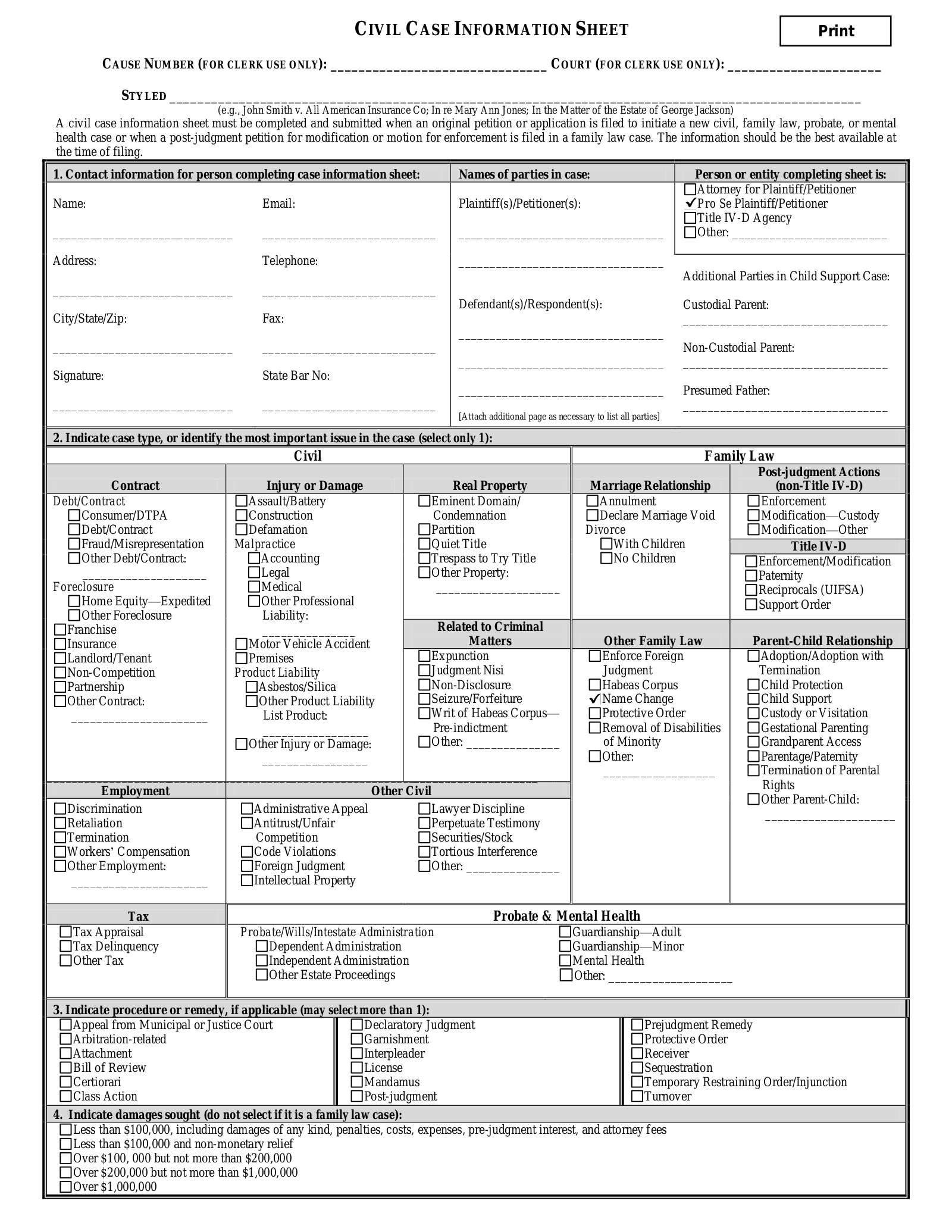
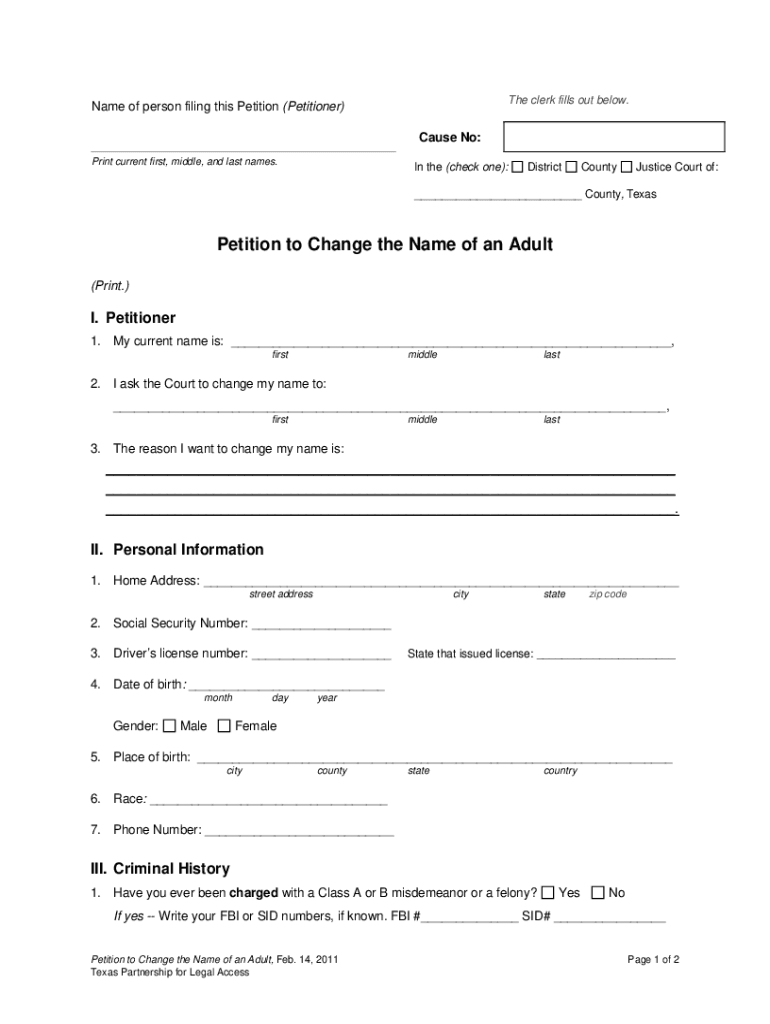
For reasons other than marriage or divorce, individuals can petition the court for a legal name change. This process involves a formal application to a district court and requires adherence to specific legal procedures.
Petition for Change of Name
To initiate a court-ordered name change, you must file a “Petition for Change of Name” with the district court in the county where you reside. This petition will require specific information, including your current name, the desired new name, your date of birth, and the reason for the requested change.
Publication Requirement
A critical step in the court-ordered name change process in Texas is the publication of a notice of the intended name change. This notice must be published in a newspaper of general circulation in the county where you are filing your petition. The purpose of this publication is to inform the public of your intent and allow any interested parties to object to the change. The publication must occur for a specified period before the court hearing.
Court Hearing and Order
After fulfilling the publication requirement, you will attend a court hearing. The judge will review your petition, any objections (if any), and the evidence presented. If the judge approves your request, they will issue a court order for the change of name. This court order is the legal document that officially changes your name.
Steps to Update Your Identification and Records
Once you have obtained the necessary legal documentation (marriage certificate, divorce decree, or court order), the next crucial phase is updating your name on all official identification and records. This can be a meticulous process, but it’s essential for ensuring your identity is accurately reflected across all platforms.
Social Security Administration (SSA)
The first and most important step is to update your name with the Social Security Administration. This is vital because your Social Security record is the foundation for many other identity updates.
Required Documents
To change your name with the SSA, you will need to complete Form SS-5, “Application for a Social Security Card.” You will also need to provide original or certified copies of your legal name-change document (marriage certificate, divorce decree, or court order) and proof of identity, such as a driver’s license or state-issued ID.
Processing Time
After submitting your application and supporting documents, it typically takes the SSA about 10 to 14 business days to process the request and mail your new Social Security card with your updated name.

Department of Public Safety (DPS) – Driver’s License and ID Cards
Next, you will need to update your Texas driver’s license or identification card. This is handled by the Texas Department of Public Safety (DPS).
Visiting a DPS Office
You will need to visit a local DPS driver’s license office. Be sure to bring your current driver’s license or ID, your legal name-change document, and proof of your Social Security number update (if you have received your new card). You will also need to fill out a driver’s license application and pay the required fee.
Real ID Compliance
When you go to update your driver’s license or ID, you may also want to ensure it complies with Real ID requirements, especially if you plan to use it for federal purposes like boarding domestic flights. This may involve providing additional documentation.
U.S. Passport
If you have a U.S. passport, you will need to update its information to reflect your new name. The process depends on when your current passport was issued.
Minor Name Changes (Less than 1 year since issuance)
If your passport was issued less than one year ago and you are changing your name due to marriage or divorce, you can typically use the form DS-5504, “Name Change, Data Correction, and Limited Passport Book Replacement Application,” free of charge. You will need to submit this form along with your current passport and a certified copy of your marriage certificate or divorce decree.
Major Name Changes (More than 1 year since issuance or other reasons)
If more than a year has passed since your passport was issued, or if your name change is due to a court order or other reasons, you will need to apply for a new passport using Form DS-11, “Application for a U.S. Passport,” and pay the applicable fees. You will also need to submit your current passport and a certified copy of your name-change document.
Other Important Institutions
Beyond these primary documents, numerous other institutions and accounts will require updating. It’s a good practice to create a checklist to ensure no detail is overlooked.
Financial Institutions
Banks, credit card companies, and investment firms will need to be notified. This typically involves visiting a branch or contacting customer service with your new identification and legal name-change document.
Employers and Educational Institutions
Inform your employer, and if you are a student, your educational institution, about your name change. This ensures payroll, benefits, and academic records are updated accurately.
Voter Registration
Update your voter registration to reflect your new name. This can usually be done online through the Texas Secretary of State’s website or at your local county elections office.
Utilities and Subscriptions
Don’t forget to update your name on utility bills, subscriptions, and any memberships you hold.
Medical Providers
Notify your doctors, dentists, and other healthcare providers of your name change to ensure your medical records are accurate.
Considerations for Specific Situations
While the general process is outlined above, certain circumstances may require additional considerations.
Gender Affirmation Name Changes
For individuals undergoing gender affirmation, the court-ordered name change process is the primary legal route. The petition should clearly state the individual’s intent to align their legal name with their gender identity. Many courts are supportive of these petitions, recognizing the importance of legal name and gender recognition for an individual’s well-being. Advocacy groups and legal aid societies often provide resources and assistance for individuals navigating this process in Texas.
Name Changes for Minors
Changing a minor’s name in Texas requires consent from both parents or a court order. If one parent objects, a judge will decide what is in the best interest of the child. The process is similar to a court-ordered adult name change but involves additional scrutiny regarding parental consent and the child’s welfare.
Conclusion
Changing your name in Texas is a structured legal process that requires careful attention to detail. Whether driven by marriage, divorce, personal preference, or gender affirmation, understanding the specific requirements for each scenario is paramount. By diligently following the legal procedures and systematically updating your identification and records, you can ensure a seamless transition to your new name. While the administrative journey is important, the personal significance of a name change can also be a catalyst for new beginnings, perhaps even inspiring a fresh perspective on travel and personal exploration.
LifeOutOfTheBox is a participant in the Amazon Services LLC Associates Program, an affiliate advertising program designed to provide a means for sites to earn advertising fees by advertising and linking to Amazon.com. Amazon, the Amazon logo, AmazonSupply, and the AmazonSupply logo are trademarks of Amazon.com, Inc. or its affiliates. As an Amazon Associate we earn affiliate commissions from qualifying purchases.