
Navigating the legal and administrative landscape of operating a business, particularly in a dynamic state like Texas, often involves understanding specific registration requirements. For many entrepreneurs and business owners, one of the fundamental steps is filing a “Doing Business As” (DBA) or Assumed Name Certificate. This document is crucial for businesses that operate under a name different from their legal personal name or their registered business entity name. Understanding the process in Texas is paramount for ensuring legal compliance and operational legitimacy.
Understanding the DBA in Texas
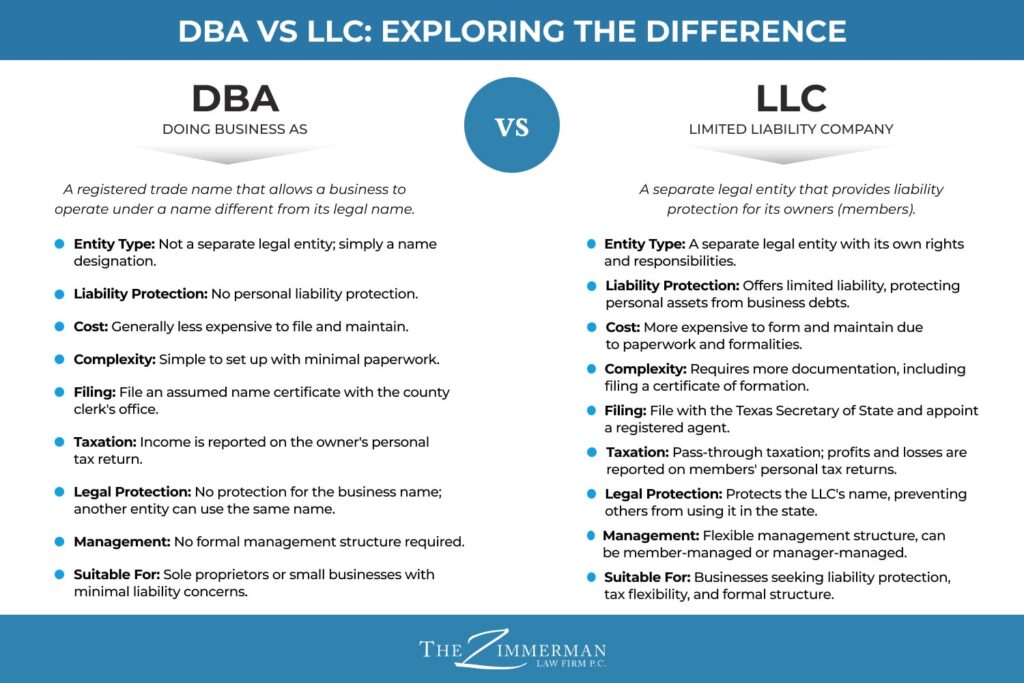
A DBA, or Assumed Name Certificate, is a legal filing that allows an individual or a business entity to operate under a name other than their own legal name. In Texas, this filing is handled at the county level, unlike many other states where it’s a state-level registration. This means the specific procedures and forms can vary slightly depending on the county in which the business is located or intends to operate.
Who Needs a DBA in Texas?
Several scenarios necessitate filing a DBA in Texas:
- Sole Proprietors and Partnerships: If you are operating a business as an individual or with partners and using a business name that is not your full legal name (e.g., “Smith’s Plumbing” instead of “John Smith”), you will need to file a DBA.
- Corporations and LLCs: Even if you have a registered legal entity like a corporation or a limited liability company (LLC), if you plan to conduct business under a different name than the one registered with the Secretary of State, you must file an Assumed Name Certificate. For example, if your LLC is legally named “XYZ Holdings, LLC,” but you market your services under “Innovative Solutions,” you’ll need a DBA.
- Acquisitions and Rebranding: If a business acquires another company and intends to operate it under its existing brand name, or if a business undergoes a significant rebranding and adopts a new operating name, a DBA is typically required.
Why File a DBA?
Filing a DBA serves several critical purposes:
- Legal Compliance: It ensures your business is operating legally. Failing to file a DBA when required can lead to penalties, fines, and legal complications.
- Banking and Financial Transactions: Banks require proof of your legal right to use a business name to open business bank accounts, process checks, and conduct financial transactions under that name.
- Contractual Agreements: When entering into contracts, it’s essential to use the legally registered name of your business to avoid ambiguity and potential disputes.
- Brand Recognition: A DBA allows you to establish and promote a distinct brand identity in the marketplace, separate from your personal name or corporate registration.
The Filing Process for a DBA in Texas
The process of filing a DBA in Texas is relatively straightforward, primarily revolving around the county clerk’s office.
Step 1: Determine the Correct County for Filing
In Texas, you file an Assumed Name Certificate with the County Clerk in each county where your business will conduct operations or have a physical presence. If your business operates in multiple counties, you will need to file separate Certificates of Assumed Name in each of those counties. It’s crucial to identify all relevant counties to ensure full compliance. For instance, a business operating out of Dallas but serving clients in Collin and Denton counties would need to file in all three.
Step 2: Obtain the Assumed Name Certificate Form
Each county clerk’s office typically provides its own Assumed Name Certificate form. You can usually download these forms from the respective county clerk’s website or pick them up in person. Some counties may have slight variations in their forms, so it’s essential to use the correct form for the county where you are filing.
Step 3: Complete the Assumed Name Certificate
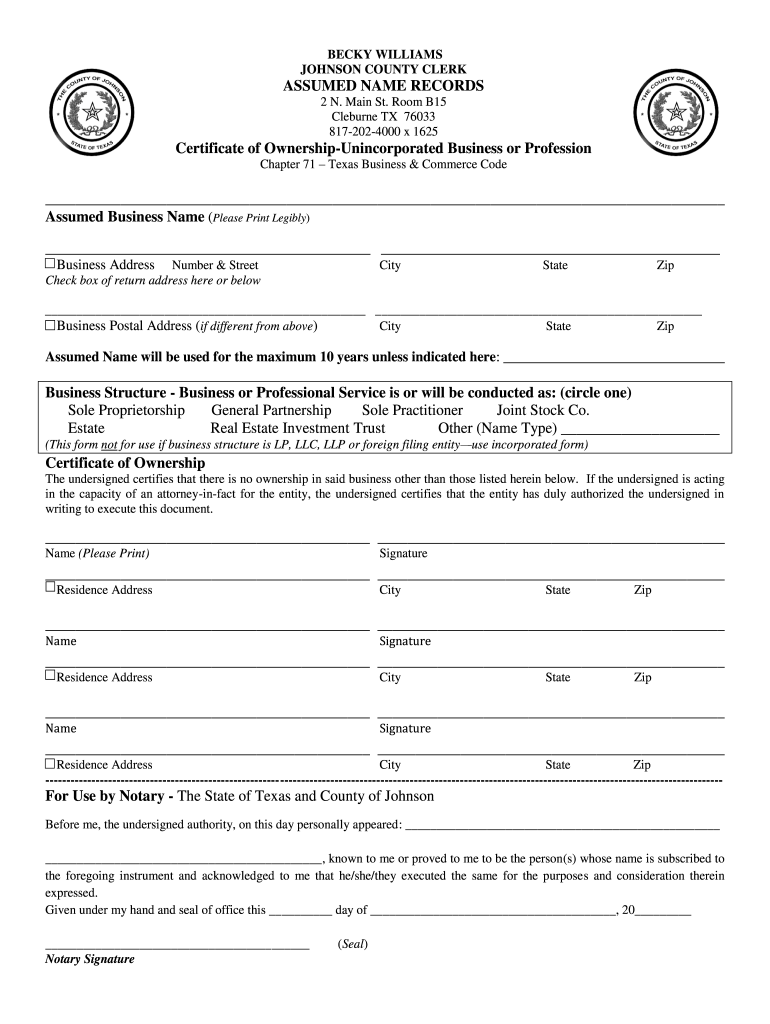
The form will require specific information, including:
- The Assumed Name: This is the business name you intend to use that is different from your legal name or registered entity name.
- The True Name:
- For an individual owner: Your full legal name as it appears on your identification.
- For a business entity (corporation, LLC, partnership): The exact legal name of the entity as registered with the Texas Secretary of State.
- The Business Address: The principal place of business for the assumed name. If operating in multiple counties, ensure this address is accurate for each filing.
- Filing Information for Entities: If you are a corporation, LLC, or other registered entity, you will need to provide information such as the state of formation and the file number assigned by the Texas Secretary of State.
- Signatures: The certificate must be signed by the individual owner(s) or authorized representative(s) of the business entity. Notarization may be required depending on the county.
Step 4: Submit the Completed Form and Filing Fee
Once completed, the Assumed Name Certificate needs to be filed with the appropriate County Clerk’s office. This can usually be done in person, by mail, or sometimes online through the county’s portal. Each county charges a filing fee, which can vary. It’s advisable to check the specific fee with the county clerk’s office before submitting. The fee is typically nominal, often in the range of $10 to $30 per filing.
Step 5: Publication Requirements (Important Distinction)
A critical point to understand for DBAs in Texas is that there is generally no statewide requirement for publishing your DBA notice in a newspaper. This is a significant difference from many other states. However, individual county clerks may have specific local rules or recommendations, though this is uncommon for standard DBA filings. Always confirm with the specific county clerk’s office.
Renewal and Maintenance of Your DBA
DBA filings in Texas do not automatically expire based on a set timeframe like some other business registrations. However, there are critical aspects to renewal and maintenance:
Withdrawal of Assumed Name
If you cease using an assumed name, you are required to file a Withdrawal of Assumed Name Certificate with the same County Clerk’s office where the original certificate was filed. This officially removes the assumed name from public record and prevents potential future liabilities associated with it. This is a crucial step to formally close out the DBA.
Changes to Business Information
If any of the information on your Assumed Name Certificate changes – such as a change in the business address, the legal name of the owner, or the legal name of the entity – you must file an amended Assumed Name Certificate or a new one reflecting the changes. For registered entities, changes to the legal entity name registered with the Texas Secretary of State would necessitate updating the DBA.
Maintaining Accuracy
It is the responsibility of the business owner to ensure the Assumed Name Certificate on file with the county clerk is always accurate and up-to-date. Keeping your filings current is essential for ongoing legal compliance and to avoid potential legal hurdles.

Common Pitfalls and Best Practices
While the process is generally straightforward, several common pitfalls can be avoided by following best practices:
- Incorrect County Filing: Failing to file in all necessary counties where business is conducted is a common oversight. Ensure you identify every county where you have a physical presence or actively conduct business.
- Using the Wrong Form: Each county may have a slightly different version of the Assumed Name Certificate form. Always procure the form directly from the county clerk’s office or their official website.
- Incomplete or Inaccurate Information: Double-check all details before submitting. Errors in legal names, addresses, or entity information can invalidate the filing.
- Ignoring Withdrawal Requirements: If you stop using an assumed name, failing to file a withdrawal can leave you liable for future actions under that name.
- Not Verifying Name Availability: While the county clerk will process your filing, they typically do not conduct thorough searches to ensure your chosen DBA name is not infringing on existing trademarks or other registered names. It is highly recommended to conduct your own due diligence, including searching the Texas Secretary of State business database and the U.S. Patent and Trademark Office (USPTO) database for potential conflicts.
By understanding these nuances and adhering to the procedural requirements, business owners can effectively file and maintain their DBA in Texas, ensuring their operations are legally sound and their brand is properly represented. Whether you are a sole proprietor launching your dream business or an established entity expanding your services, the Assumed Name Certificate is a vital tool for success.
LifeOutOfTheBox is a participant in the Amazon Services LLC Associates Program, an affiliate advertising program designed to provide a means for sites to earn advertising fees by advertising and linking to Amazon.com. Amazon, the Amazon logo, AmazonSupply, and the AmazonSupply logo are trademarks of Amazon.com, Inc. or its affiliates. As an Amazon Associate we earn affiliate commissions from qualifying purchases.