
Navigating the complexities of divorce can feel as daunting as planning a grand adventure to an unfamiliar land. While the promise of a fresh start beckons, the legal landscape can seem as intricate as deciphering the local customs of a remote destination. Fortunately, understanding the process for a divorce in Florida, much like preparing for a journey, can be broken down into manageable steps. This guide will illuminate the path, offering clarity and demystifying the procedures involved.
Understanding the Fundamentals of a Florida Divorce
Before embarking on any significant undertaking, a foundational understanding is crucial. In Florida, a divorce, legally termed a “dissolution of marriage,” requires adherence to specific statutes and procedures. The state’s approach to divorce is generally characterized by its no-fault provisions, meaning you do not need to prove that your spouse did something wrong to initiate the divorce. This can significantly simplify the process, akin to finding a direct flight rather than navigating multiple layovers.

Residency Requirements: Establishing Your Footing
The first and perhaps most fundamental requirement for filing for divorce in Florida is establishing residency. This isn’t a mere suggestion; it’s a legal prerequisite. One of the spouses must have resided in the state of Florida for a minimum of six months immediately preceding the filing of the petition for dissolution of marriage. This ensures that Florida courts have the jurisdiction to hear the case. For instance, if you recently moved to the Sunshine State from California with the intention of making it your permanent home, you’ll need to ensure you meet this six-month mark before proceeding with your filing. This residency requirement is akin to needing a valid passport and visa to enter a foreign country; without it, the process cannot begin.
Grounds for Divorce: No-Fault and Its Implications
As mentioned, Florida is a no-fault divorce state. This simplifies the legal proceedings by eliminating the need to assign blame. The two grounds for dissolution of marriage in Florida are:
- Irretrievably broken: This means that the marriage has reached a point where reconciliation is not possible, and the marriage cannot be saved.
- Mental incapacity: This ground applies when one spouse has been mentally incapacitated for a period of at least three years immediately preceding the filing of the petition.
The no-fault principle is a cornerstone of Florida’s divorce law. It allows couples to move forward without the acrimony and expense of proving fault. This is similar to how many travel guides focus on the positive experiences and attractions of a destination, rather than dwelling on potential travel mishaps.
Types of Divorce in Florida: Tailoring Your Journey
Just as there are various ways to experience a destination – from luxury resorts to budget-friendly hostels – Florida offers different pathways to achieve a divorce, catering to varying degrees of agreement between spouses. Understanding these options is key to choosing the most suitable and efficient route for your situation.
Simplified Dissolution of Marriage: The Express Route
For couples who have reached a mutual understanding on all aspects of their separation, Florida offers a simplified dissolution of marriage process. This is an expedited option designed for those who can agree on crucial issues such as:
- Division of property and debts: Both parties must agree on how marital assets and liabilities will be divided.
- Alimony: If alimony is to be paid, the amount, duration, and terms must be agreed upon.
- Child custody and support: If there are minor children, parents must agree on parenting plans, time-sharing schedules, and child support payments.
To qualify for a simplified dissolution, both spouses must also sign an affidavit stating that they have resolved all financial matters and that no minor or dependent children were born or adopted during the marriage. This process is typically quicker and less expensive than a traditional divorce, much like opting for a direct flight over a multi-leg journey with extended layovers. It’s ideal for couples who can amicably navigate these decisions, perhaps while enjoying a quiet retreat in Amelia Island.
Uncontested Divorce: The Collaborative Approach
An uncontested divorce occurs when spouses agree on all the terms of their divorce. This is a more common scenario than a simplified dissolution, as it allows for the possibility of minor children. In an uncontested divorce, the parties will still file a petition, but they will also submit a Marital Settlement Agreement (MSA). This legally binding document outlines their resolutions on all pertinent issues, including:
- Equitable distribution of assets and liabilities: This involves fairly, though not necessarily equally, dividing all property and debts acquired during the marriage.
- Parenting Plan: This detailed plan covers time-sharing with the children, parental responsibility, and how decisions regarding education, healthcare, and religious upbringing will be made.
- Child Support: Calculations for child support are made in accordance with Florida guidelines.
- Alimony: Spousal support may be awarded based on various factors.
The court will review the MSA to ensure it is fair and equitable. Once approved, it becomes part of the final judgment of dissolution. An uncontested divorce, while requiring more documentation than a simplified dissolution, is generally far less contentious and costly than a contested divorce. This collaborative approach allows couples to move forward with a sense of shared responsibility, perhaps envisioning future family trips to Walt Disney World Resort with a clearer path forward.
Contested Divorce: Navigating the Legal Labyrinth
A contested divorce arises when spouses cannot agree on one or more of the key issues of their separation. In such cases, the court will intervene and make decisions on behalf of the parties. This is the most complex and time-consuming type of divorce, often involving:
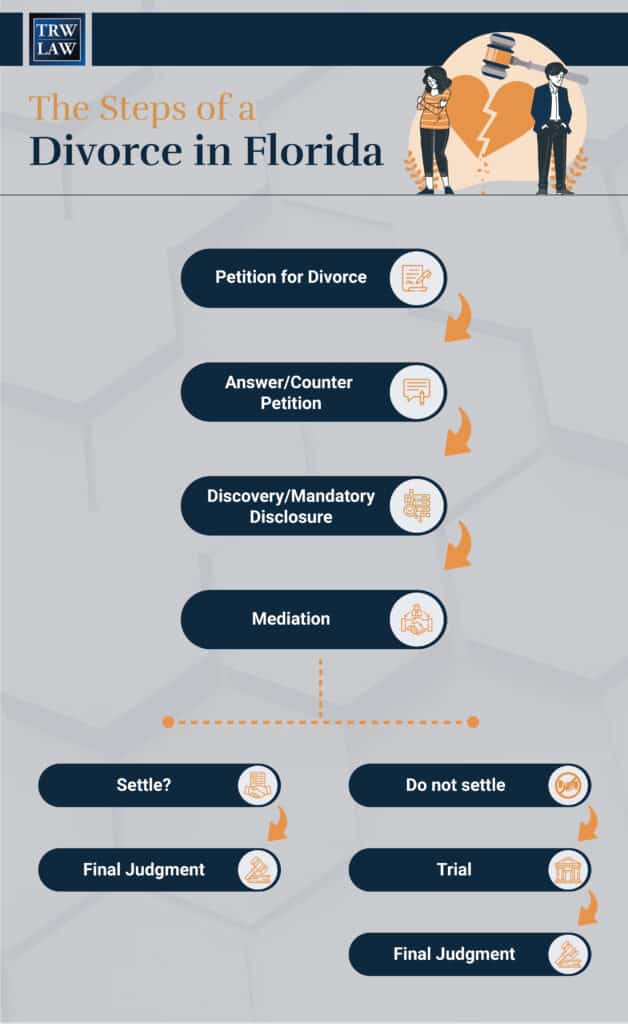
- Discovery: Both sides gather information and evidence through interrogatories, depositions, and document requests.
- Mediation: Couples may be required to attend mediation sessions with a neutral third party to attempt to reach an agreement.
- Hearings and Trials: If no agreement is reached, the case will proceed to court hearings and potentially a trial where a judge will decide on all unresolved matters.
The contested divorce process can be emotionally taxing and financially burdensome. It requires navigating complex legal procedures, often with the assistance of attorneys. This is akin to planning a challenging expedition to an unexplored region, where expert guidance and meticulous preparation are essential. For those facing a contested divorce, seeking legal counsel from a qualified Florida attorney is highly recommended to ensure your rights are protected throughout this intricate journey.
The Legal Process: Steps on Your Path to Resolution
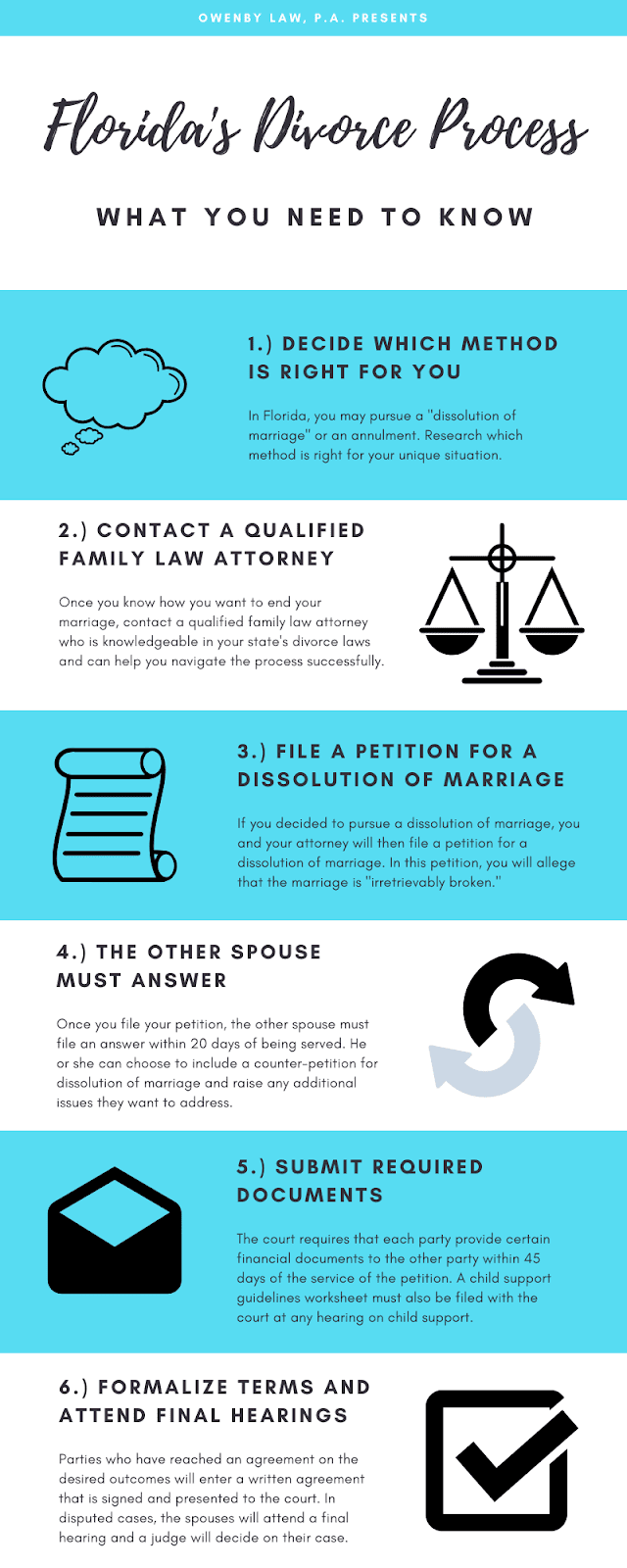
Regardless of whether your divorce is simplified, uncontested, or contested, there are fundamental legal steps that must be followed in Florida. Understanding this procedural roadmap is crucial for a smooth transition.
Filing the Petition for Dissolution of Marriage: The Initial Step
The divorce process officially begins when one spouse, the petitioner, files a Petition for Dissolution of Marriage with the appropriate Florida court. This document formally requests the court to dissolve the marriage and outlines the basic information about the parties, any children, and the grounds for divorce.
Service of Process: Informing Your Spouse
Once the petition is filed, the other spouse, the respondent, must be formally notified. This is known as service of process. The respondent is typically served with a copy of the petition and a summons, informing them of the lawsuit and their obligation to respond. This ensures that both parties are aware of the legal proceedings and have an opportunity to participate. This step is like sending out formal invitations for a significant event – everyone involved needs to be officially notified.
Financial Disclosure: Laying All Cards on the Table
Florida law mandates full financial disclosure from both parties. This means that each spouse must provide a complete and accurate account of their assets, liabilities, income, and expenses. This is a critical step, especially in cases involving the division of property and alimony. Transparency is key, similar to how travel guides provide comprehensive information about destinations to help travelers make informed decisions.
Reaching an Agreement or Going to Trial: The Fork in the Road
As discussed in the “Types of Divorce” section, the path forward diverges based on whether the parties can reach an agreement. If an agreement is reached, it will be formalized in a Marital Settlement Agreement. If no agreement is possible, the case will proceed through hearings and potentially a trial.
Final Judgment of Dissolution of Marriage: The Destination
The culmination of the divorce process is the Final Judgment of Dissolution of Marriage. This legally binding court order officially terminates the marriage and outlines all the terms and conditions agreed upon by the parties or decided by the court. This document serves as the official decree, much like a passport stamp signifies your successful entry into a new phase of life.
Embarking on a divorce, though often challenging, can be navigated with clarity and preparation. By understanding the residency requirements, the different types of divorce available, and the legal steps involved, individuals can approach this significant life event with greater confidence. Just as meticulous planning can transform a daunting journey into a rewarding experience, a well-informed approach to divorce in Florida can lead to a smoother and more positive transition into the future. Whether you are seeking to settle in the vibrant city of Miami or the charming beaches of Clearwater, understanding these legal intricacies will empower you to move forward with your new life.