
California, a state renowned for its unparalleled natural beauty and diverse ecosystems, offers a unique array of outdoor activities, including hunting. For those drawn to the tradition, challenge, and connection with nature that hunting provides, understanding the process for obtaining a license is the essential first step. As a key aspect of California’s rich outdoor tourism, regulated hunting contributes to wildlife management and offers visitors and residents alike a profound experience in the state’s vast wilderness areas, from the desert plains to the dense forests and wetlands. Navigating the requirements ensures a safe, legal, and responsible pursuit of this activity.
Understanding California’s Hunting Regulations
Before you even consider purchasing a license, it’s imperative to familiarize yourself with the regulatory framework established by the California Department of Fish and Wildlife (CDFW). These regulations are designed to ensure hunter safety, promote ethical hunting practices, and maintain healthy wildlife populations across the state. Compliance is not just a legal obligation but a commitment to preserving California’s natural heritage for future generations.
Hunter Education Requirement
The cornerstone of responsible hunting in California is mandatory hunter education. Almost every first-time hunter, regardless of age, must complete and pass a hunter education course certified by the California Department of Fish and Wildlife. This requirement underscores the state’s dedication to safety, conservation, and ethical conduct in the field. The course covers crucial topics such as firearm safety, hunting ethics, wildlife identification, conservation principles, and first aid. It’s an invaluable introduction for newcomers and a critical refresher for those returning to the sport.
Exemptions are rare but do exist, typically for individuals who can provide proof of having held a valid hunting license issued in California or another state in a prior year. However, for most individuals venturing into hunting for the first time in California, the hunter education certificate is non-negotiable. It’s not just a hoop to jump through; it’s a foundational piece of knowledge that enhances the overall hunting experience and ensures public safety.
Residency vs. Non-Residency
The cost of a hunting license in California varies significantly depending on your residency status. California residents typically pay a lower fee than non-residents, reflecting the principle that residents contribute to the state’s conservation efforts through taxes and other means. To qualify as a resident for hunting license purposes, you must have resided in California for six consecutive months immediately prior to the date of applying for a license. Proof of residency, such as a valid California driver’s license or state identification card, will be required.
For those visiting California from out of state—perhaps attracted by its diverse game populations or specific hunting opportunities—non-resident licenses are readily available. While more expensive, they grant the same privileges, provided all other requirements are met. This distinction is vital for accurate budgeting and ensuring you purchase the correct license type for your specific situation.
The Step-by-Step Process for Obtaining Your License
Once you’ve grasped the foundational requirements, the process for obtaining your hunting license in California becomes quite straightforward. Following these steps diligently will ensure a smooth path to your hunting adventure.
Hunter Education Certificate
The first and most critical step is completing your hunter education. The CDFW offers several options to fulfill this requirement. You can enroll in a traditional classroom course, which typically involves several hours of instruction and a final exam. Many also opt for an online course, which allows for greater flexibility, followed by a mandatory in-person “field day” where practical skills and a final written exam are administered. The Hunter Education Program is designed to be accessible, with courses offered regularly throughout the state. Upon successful completion, you will receive a hunter education certificate, which is a prerequisite for purchasing your first hunting license. Keep this certificate safe, as it’s a permanent record of your compliance.
Purchasing Your Hunting License
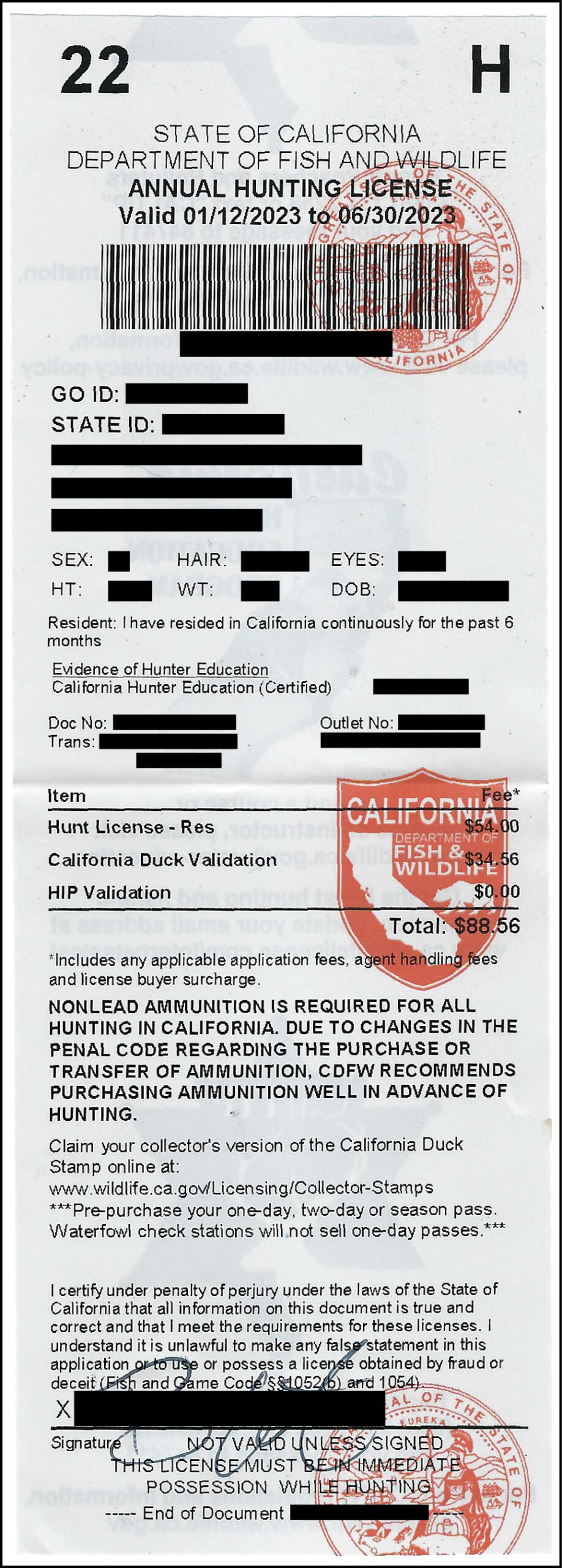
With your hunter education certificate in hand (or proof of previous license), you are ready to purchase your annual hunting license. California offers general hunting licenses that are valid for the calendar year, from July 1 to June 30 of the following year. This annual license is the basic permit that allows you to hunt most legal game species in California, provided you have the appropriate tags and validations for specific species.
The most convenient way to purchase your license is often through the CDFW’s online license sales service, Go Outdoors California. This platform allows you to create an account, enter your hunter education information (or past license details), choose your license type, and complete the purchase securely. You can then print a temporary license immediately, with a permanent license mailed to you. Alternatively, licenses can be purchased in person at CDFW license agents located across the state, including many sporting goods stores, bait and tackle shops, and some general stores. These agents can assist you with the process and verify your documentation on the spot.
Required Documentation
When purchasing your license, whether online or in person, you will need to provide specific documentation:
- Hunter Education Certificate: For first-time buyers in California.
- Proof of Residency: A valid California driver’s license or state ID card. Non-residents will typically need a valid driver’s license or government-issued ID from their home state or country.
- Personal Information: Your full legal name, date of birth, physical address, and other contact details.
- Previous Hunting License: If you are exempt from hunter education due to a prior license, you will need to provide details or a copy of that license.
Ensure all documentation is current and accurate to avoid delays in processing your license.
Endorsements and Tags: What Else You Need
A general hunting license is just the baseline. To pursue specific game species or participate in particular hunting activities, you will almost certainly need additional endorsements and tags. These extra permits are crucial for managing species populations and funding specific conservation efforts.
Specific Game Tags
For big game species such as deer, bear, elk, pronghorn, and bighorn sheep, you will need to purchase specific tags in addition to your annual hunting license. These tags are often allocated through a draw or lottery system, particularly for species with limited quotas like elk or bighorn sheep. Applications for these draws typically open several months before the hunting seasons, so it’s essential to plan well in advance. Deer tags, which are more widely available, are assigned to specific hunting zones throughout California. You must possess the correct tag for the zone and species you intend to hunt. Each tag will specify the season dates, bag limits, and any other special conditions for that particular hunt.
Upland Game Bird Validation
If your hunting interests lie with upland game birds like pheasant, quail, or dove, you will need to purchase an Upland Game Bird Validation. This validation is an additional stamp or endorsement added to your general hunting license. It allows you to legally hunt these species during their respective open seasons. Similar to tags, specific bag limits and regulations apply to each upland game bird species, so always consult the current California Hunting Regulations.
Federal Duck Stamp
For hunters pursuing migratory waterfowl, such as ducks and geese, an annual Federal Duck Stamp is mandatory. This stamp is required by the United States Fish and Wildlife Service, not just California, and a significant portion of the revenue generated from its sales goes directly to conserving wetland habitats for migratory birds and other wildlife. In addition to the Federal Duck Stamp, you will also need a California Duck Validation and register with the Harvest Information Program (HIP). The HIP registration helps biologists track hunter participation and harvest rates, which is vital for managing migratory bird populations across North America.
Where to Purchase and Important Considerations
The availability of different purchasing options adds flexibility to obtaining your licenses and tags. Understanding season dates and land access rules is equally vital for a successful and legal hunting trip.
Online, In-Person, and Via Mail
As mentioned, the most convenient method for most hunters is through the Go Outdoors California online portal. This allows for purchases 24/7 from anywhere with internet access. For those who prefer personal interaction or need immediate assistance, CDFW license agents offer localized service. While less common now, some specific permits or tags might still be available via mail-in applications, so always check the CDFW website for the most current information regarding purchase methods for specific items.
Season Dates and Regulations
California’s diverse climate and ecosystems mean that hunting seasons vary significantly by species and geographic zone. It is absolutely crucial to consult the current California Hunting Regulations, published annually by the CDFW. These regulations detail open seasons, bag and possession limits, legal methods of take, specific zone boundaries, and any special conditions or closures. Hunting outside of designated seasons or without the correct tags is illegal and carries significant penalties. Many hunters download the PDF version of the regulations or use the CDFW mobile app for easy access in the field.
Public vs. Private Lands
Understanding where you can legally hunt is as important as having the right license. California offers vast expanses of public lands, including National Forests like Mendocino National Forest and Bureau of Land Management (BLM) areas, where hunting is generally permitted, subject to specific restrictions. Wildlife Areas and Ecological Reserves managed by the CDFW also offer hunting opportunities, often with specific regulations or permits.
Hunting on private property requires explicit permission from the landowner. It is illegal to hunt on private land without prior consent. Always respect property boundaries and ensure you have clear permission if hunting anywhere other than designated public hunting grounds. Responsible hunters always know their location and the rules governing it.
Embracing California’s Diverse Hunting Opportunities
Securing your hunting license in California opens the door to a truly remarkable outdoor experience. From pursuing deer in the Sierra Nevada foothills to waterfowl hunting in the Central Valley wetlands, or exploring upland game bird opportunities near Sacramento or Los Angeles, the state offers a tremendous variety for hunters. Each season brings new opportunities and challenges, making hunting a dynamic and engaging aspect of California’s robust tourism and outdoor activities portfolio. By diligently following the licensing process and adhering to regulations, hunters contribute directly to the conservation efforts that ensure these resources remain vibrant for generations to come, truly embodying the spirit of responsible outdoor recreation in one of the most ecologically rich states in the United States.
LifeOutOfTheBox is a participant in the Amazon Services LLC Associates Program, an affiliate advertising program designed to provide a means for sites to earn advertising fees by advertising and linking to Amazon.com. Amazon, the Amazon logo, AmazonSupply, and the AmazonSupply logo are trademarks of Amazon.com, Inc. or its affiliates. As an Amazon Associate we earn affiliate commissions from qualifying purchases.