
Understanding the eligibility requirements for the Supplemental Nutrition Assistance Program (SNAP), commonly known as food stamps, in Texas is crucial for many households seeking vital food assistance. The program aims to alleviate hunger and improve nutrition by providing benefits to low-income individuals and families. Navigating the application process and understanding the criteria can seem complex, but a clear breakdown of the requirements can demystify the journey. This guide will explore the key factors that determine eligibility in Texas, focusing on income, household size, assets, and other considerations.
Understanding SNAP Eligibility in Texas
The Texas Department of Health and Human Services (HHSC) administers the SNAP program, ensuring that benefits reach those most in need. Eligibility is determined based on a combination of factors, with income and household size being the most significant. The program operates under federal guidelines established by the United States Department of Agriculture (USDA), but each state, including Texas, has specific parameters for its implementation.
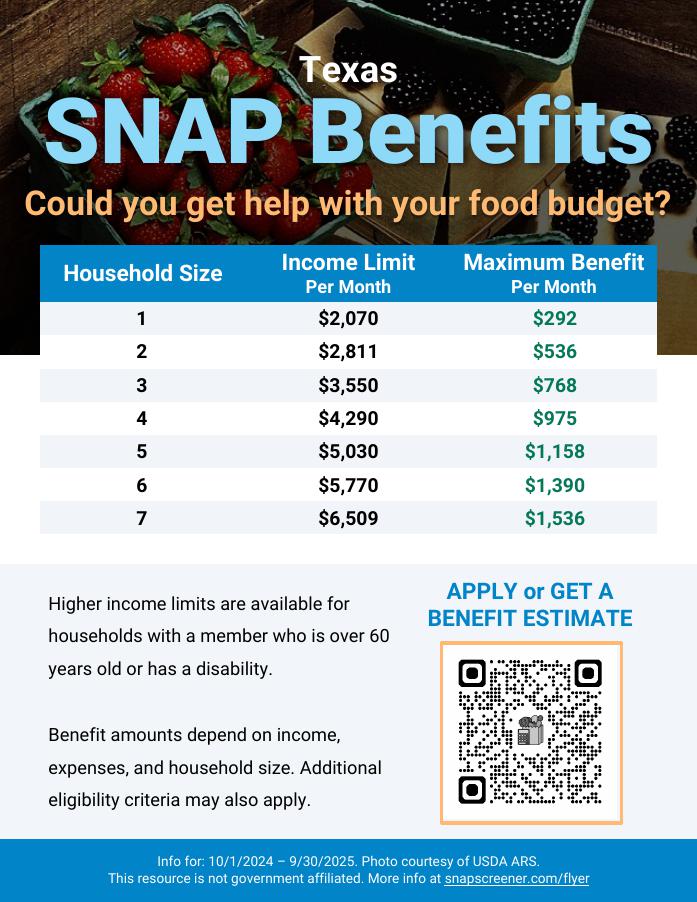
Income Requirements
At the core of SNAP eligibility is the household’s gross and net monthly income.
Gross Monthly Income
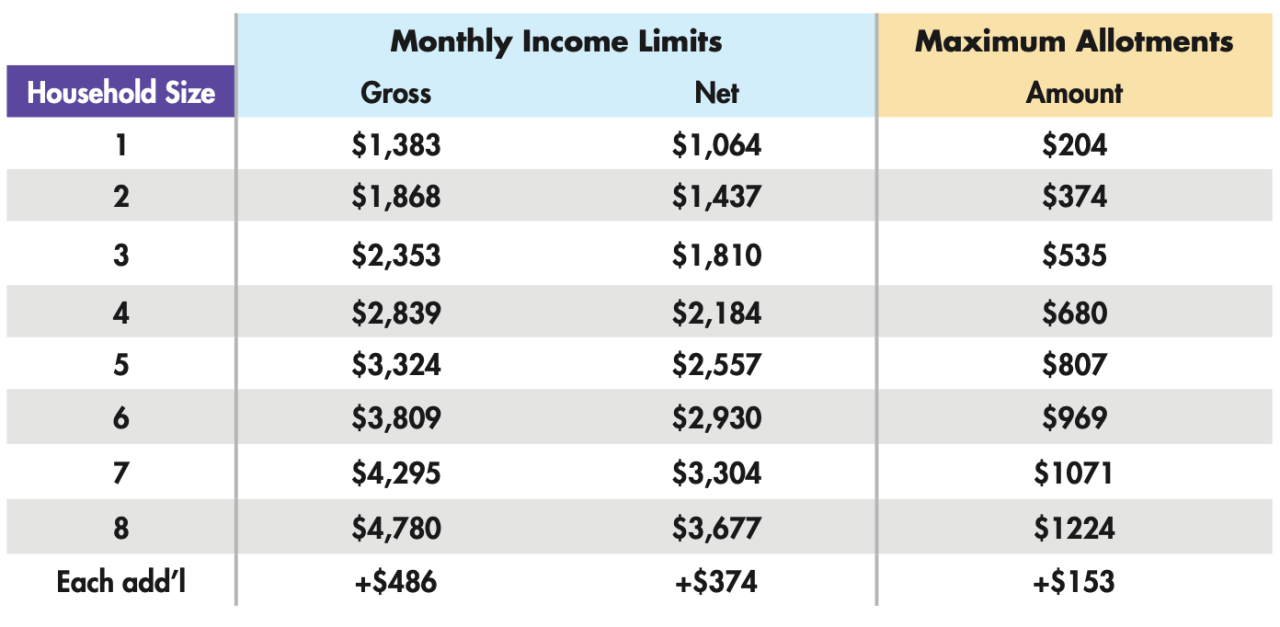
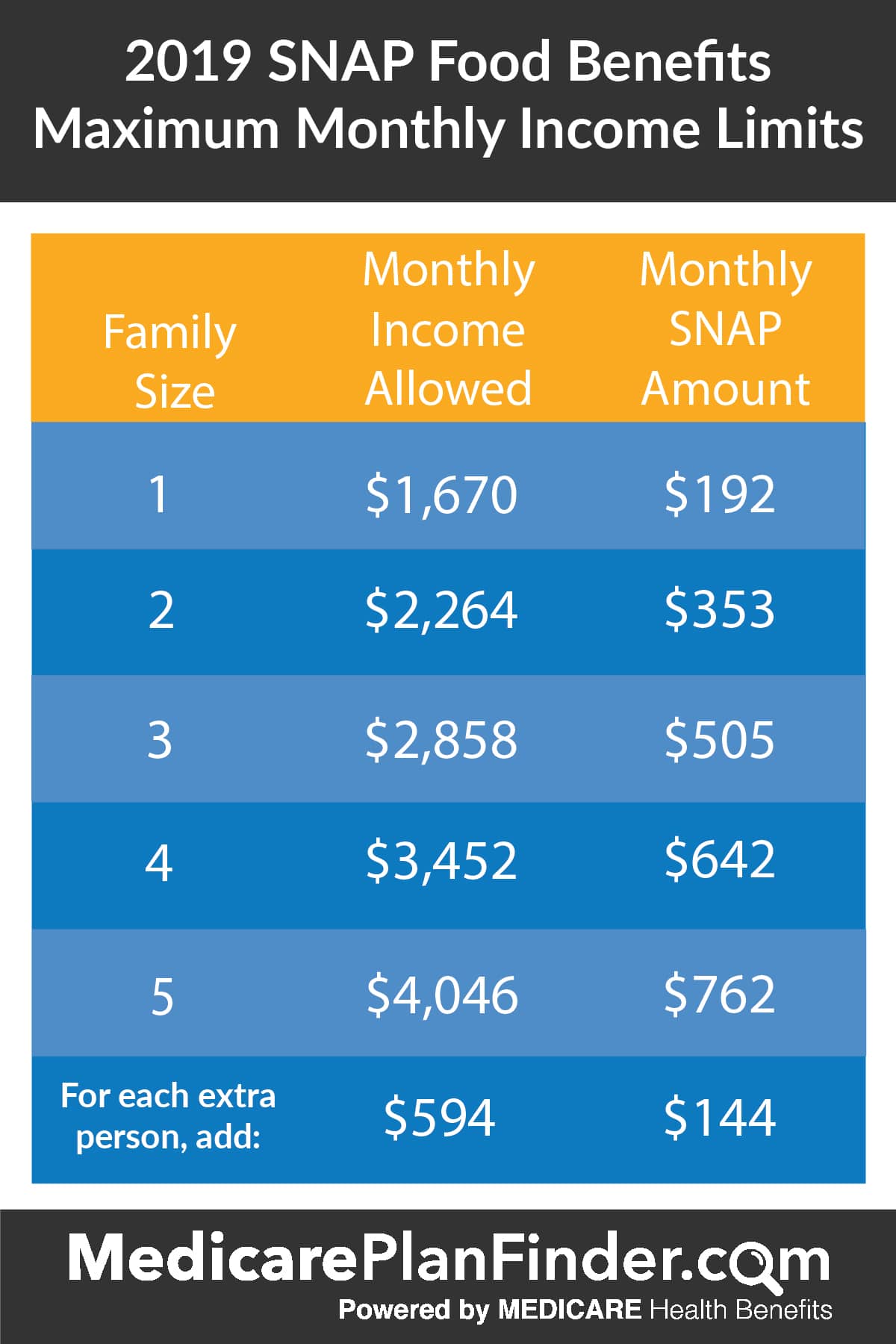
This refers to the total income from all sources before any deductions. For most households, the gross monthly income must be at or below 130% of the federal poverty level for their household size. The exact dollar amount changes annually, so it’s essential to consult the latest guidelines provided by HHSC. Sources of income that are considered include wages from employment, self-employment earnings, unemployment benefits, Social Security benefits, Supplemental Security Income (SSI), veterans’ benefits, retirement income, and child support. Certain types of income are excluded, such as foster care payments, certain scholarships, and loans.
Net Monthly Income
After certain allowable deductions are subtracted from the gross income, the resulting net monthly income is also assessed. This net income must generally be at or below 100% of the federal poverty level for the household size. Allowable deductions can significantly impact eligibility. These commonly include:
- A standard deduction: This is a fixed amount set by the federal government that is applied to all households.
- Earned income deduction: Households with earned income typically receive a deduction of 20% of their gross earned income.
- Dependent care deduction: If a household has to pay for the care of a child or other dependent while they are working or looking for work, this cost can be deducted.
- Medical expense deduction: For elderly or disabled individuals, medical expenses exceeding a certain amount per month can be deducted.
- Housing costs: This includes rent or mortgage payments, property taxes, and homeowner’s insurance. If these costs exceed 50% of the household’s net income after other deductions, the excess can be deducted. This is known as the “excess shelter deduction.”
- Utility costs: If a household pays for heating and cooling costs separately from rent, a standard utility allowance may be deducted.
The specific deductions allowed and their calculation methods are detailed by HHSC and are critical to understanding how income impacts eligibility.
Household Size
The number of people in the household is a fundamental factor in determining eligibility. The income limits are set based on household size, meaning larger households have higher income thresholds. A household is defined as a group of people who live together and purchase or prepare food together. This includes spouses, children, parents, and other relatives, as well as any individuals who are not related but share meals and living expenses. There are specific rules for determining who counts as a household member, particularly concerning children, elderly individuals, and disabled individuals. For instance, children under 18 are generally considered part of their parents’ household, even if they receive their own income.
Asset Limits for SNAP Eligibility
In addition to income, households must also meet certain asset limits to qualify for SNAP benefits. Assets are resources that a household owns and can readily convert to cash.
Countable Assets
For most households applying for SNAP in Texas, there is a limit on countable assets. This limit is currently set at $3,750 for households without an elderly or disabled member. Countable assets include:
- Cash on hand: Any money kept in the home.
- Checking and savings accounts: Balances in bank accounts.
- Stocks and bonds: The current market value of these investments.
- Other liquid assets: Such as money market accounts or certificates of deposit (CDs).
Non-Countable Assets
Certain assets are not counted towards the limit. These typically include:
- The home in which the household resides: The primary residence is an exempt asset.
- One vehicle: Generally, one vehicle is exempt, regardless of its value. Additional vehicles may be exempt if used for essential transportation for work, medical treatment, or essential errands.
- Retirement accounts: Such as 401(k)s, IRAs, and pensions, are usually not counted as they are intended for retirement.
- Life insurance policies: The cash value of life insurance policies is typically excluded.
- Household goods and personal belongings: Items such as furniture, clothing, and appliances are not counted.
- Assets used in a trade or business: Resources essential for self-employment or business operations are often exempt.
Elderly or Disabled Household Exception
Households that include a member who is elderly (age 60 or older) or disabled may have a higher asset limit or be exempt from asset limits altogether. This is to ensure that those with special needs have access to food assistance without being forced to deplete essential resources. The specific criteria for an elderly or disabled member are defined by HHSC.
Special Considerations and Exemptions
Several specific situations can affect SNAP eligibility, including work requirements, student status, and certain immigration statuses.
Work Requirements
For most able-bodied adults between the ages of 18 and 50 without dependents, there are work requirements associated with receiving SNAP benefits. These requirements typically mandate that individuals:
- Register for work with the state workforce agency.
- Participate in a work program if assigned.
- Accept a job offer if one is made.
- Work at least 20 hours per week, or 80 hours per month.
Failure to comply with these work requirements can result in a loss of benefits. However, there are many exemptions to these rules, such as being medically unable to work, caring for a child or incapacitated person, participating in a drug or alcohol treatment program, or being a student enrolled at least half-time. In areas with high unemployment, the work requirement may be waived.
Students
Eligibility for college students can be particularly complex. Generally, students enrolled at least half-time in an institution of higher education are only eligible for SNAP if they meet specific criteria. These criteria often include working at least 20 hours per week, participating in a work-study program, caring for a dependent child, or being enrolled in a program that prepares them for employment. There are also exemptions for students who are veterans, receiving certain types of public assistance, or under 18.
Immigration Status
Individuals who are not U.S. citizens may still be eligible for SNAP benefits if they meet specific immigration status requirements. Eligible non-citizens include lawful permanent residents (green card holders) who have resided in the United States for at least five years, refugees, asylees, and victims of trafficking. Certain qualified non-citizens may receive benefits without the five-year waiting period. Children who are U.S. citizens can receive SNAP benefits even if their parents are not eligible due to their immigration status, provided they meet all other requirements.
The Application Process and Documentation
Applying for SNAP in Texas involves a structured process managed by HHSC. Understanding the steps and required documentation is vital for a smooth application.
How to Apply
Applications can typically be submitted online through the HHSC website, by mail, by fax, or in person at a local HHSC benefits office. It is recommended to apply as soon as possible, as benefits can be retroactive to the date of application if eligibility is established.
Required Documentation
When applying, applicants will need to provide a range of documents to verify their eligibility. These typically include:
- Proof of identity: Such as a driver’s license, state ID, or passport for all adult household members.
- Social Security numbers: For all household members.
- Proof of income: Recent pay stubs, employer statements, unemployment benefit statements, Social Security award letters, or other documentation verifying all sources of income for the past 30 days.
- Proof of expenses: Rent receipts, mortgage statements, utility bills, childcare expenses, and medical expenses for elderly or disabled individuals.
- Proof of assets: Bank statements, statements for stocks, bonds, and other financial accounts.
- Proof of residency: Utility bills, lease agreements, or other documents showing a Texas address.
- Information about household members: Birth certificates or other documents to confirm age and relationship.
- For non-citizens: Alien registration cards or other proof of eligible immigration status.
It is crucial to gather all necessary documents before starting the application to avoid delays. HHSC may request additional information during the review process. Once an application is submitted, a caseworker will review the information and may schedule an interview, either in person, by phone, or via video conference, to discuss the application further. Eligibility is typically determined within 30 days of application submission.
Navigating the SNAP eligibility requirements in Texas requires careful attention to detail regarding income, assets, and household composition. By understanding these factors and preparing the necessary documentation, individuals and families can effectively access this vital program to ensure food security.
LifeOutOfTheBox is a participant in the Amazon Services LLC Associates Program, an affiliate advertising program designed to provide a means for sites to earn advertising fees by advertising and linking to Amazon.com. Amazon, the Amazon logo, AmazonSupply, and the AmazonSupply logo are trademarks of Amazon.com, Inc. or its affiliates. As an Amazon Associate we earn affiliate commissions from qualifying purchases.