
Navigating the process of obtaining a driver’s permit in Texas can seem like a complex undertaking, but with a clear understanding of the requirements and steps involved, it becomes a manageable journey. This guide aims to demystify the process for aspiring drivers, from understanding eligibility to successfully passing the necessary tests. Whether you’re a teenager embarking on your first driving experience or an adult seeking to obtain a Texas permit, this comprehensive overview will equip you with the knowledge you need.
Understanding Texas Driver’s Permit Requirements
The foundational step to acquiring a driver’s permit in Texas is to meet specific eligibility criteria. These requirements are designed to ensure that applicants possess the basic knowledge and are prepared to learn the skills necessary for safe driving.

Age Eligibility
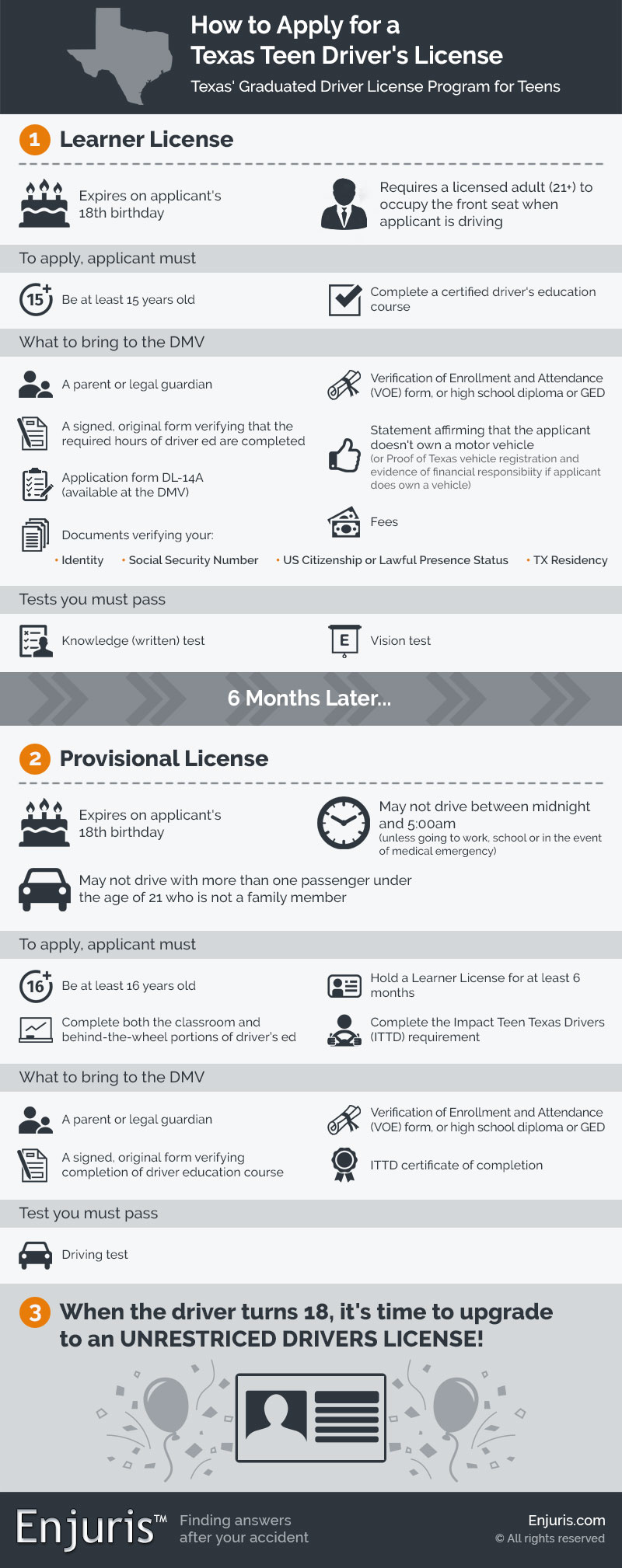
In Texas, the minimum age to apply for a learner’s permit is 15 years old. However, there are distinct pathways and requirements for applicants under and over 18 years of age.
-
Applicants Under 18 Years Old:
- Must be at least 15 years old.
- Must have completed or be currently enrolled in a Texas-approved driver education program. This program typically involves a minimum of 32 hours of classroom instruction and 14 hours of behind-the-wheel training.
- Must have held their permit for at least six months before being eligible for a provisional driver’s license.
- Must complete a Certificate of Completion of a High School Driver Education Program (Form DE-964) or a Parent Taught Driver Education Program (Form DE-964E).
-
Applicants 18 Years Old and Older:
- Must be at least 18 years old.
- While a formal driver education course is not mandatory, it is highly recommended.
- Must complete the Texas Driver Handbook Knowledge Test.
- Must complete a supplemental in-classroom or online adult driver education course, which is a minimum of six hours. Upon completion, they will receive a Certificate of Completion (Form Impact Texas Teen Drivers (ITTD) certificate is also required for those under 18).
Required Documentation
Gathering the correct documentation is a crucial step. The Texas Department of Public Safety (DPS) requires specific forms of identification and proof to process your permit application. It is advisable to have these documents ready before your appointment to avoid delays.
- Proof of Identity and Citizenship: This typically includes original or certified copies of documents such as a U.S. birth certificate, a U.S. passport, a Certificate of Citizenship, or a Consular Report of Birth Abroad.
- Proof of Social Security: Your Social Security card is generally required.
- Proof of Texas Residency: You will need to provide at least two documents proving you reside in Texas. Acceptable documents include utility bills, bank statements, rental agreements, or school transcripts. Ensure these documents display your name and Texas address.
- Proof of Driver Education Completion: As mentioned earlier, this is essential for applicants under 18. This includes the DE-964 or DE-964E form. For adults, the Certificate of Completion for the adult driver education course is needed.
- Impact Texas Teen Drivers (ITTD) Program Certificate: For applicants under 18, completing this program is mandatory. The ITTD program is a free, two-hour informational video course about the dangers of distracted driving. You must complete this program no more than 90 days before taking the driving test.
- Application Form: You will need to complete the Application for a Texas Driver License or Identification Certificate (DL-180). This form can often be downloaded from the Texas DPS website and filled out in advance.
Vision and Knowledge Tests
Before being issued a learner’s permit, all applicants must pass two essential tests administered by the Texas DPS.
- Vision Test: This test assesses your ability to see clearly and detect any visual impairments that could affect your driving. You’ll be asked to read letters on a chart from a specific distance. If you wear glasses or contact lenses, be sure to bring them to your appointment.
- Knowledge Test: This is a multiple-choice exam that evaluates your understanding of Texas traffic laws, road signs, and safe driving practices. The test is based on the information contained in the official Texas Driver Handbook. It’s highly recommended to study this handbook thoroughly before taking the test. The test typically consists of 30 questions, and you must answer at least 21 correctly to pass.
The Application Process: Step-by-Step
Once you’ve confirmed your eligibility and gathered all necessary documentation, the next step is to initiate the application process with the Texas Department of Public Safety.
Scheduling an Appointment
While some Texas DPS Driver License offices accept walk-in applicants, it is strongly recommended to schedule an appointment online. This can significantly reduce your waiting time and ensure a smoother experience. You can typically schedule appointments through the Texas DPS website.
Visiting the Driver License Office

On the day of your appointment, arrive punctually and ensure you have all your required documents organized. The process at the driver license office typically involves:
- Submitting Your Application and Documents: You will present your completed application form and all supporting documents to a DPS representative. They will verify your identity, age, residency, and eligibility.
- Paying the Fee: There is a fee associated with obtaining a driver’s permit. The exact amount can vary, so it’s best to check the Texas DPS website for the current fee schedule. Payment methods accepted may include cash, check, or credit/debit card.
- Taking the Vision Test: As previously mentioned, you’ll undergo a vision screening.
- Taking the Knowledge Test: If you pass the vision test, you will then proceed to take the written knowledge test. Many offices offer the test on a computer.
- Getting Your Photograph Taken: Upon successfully passing both tests and completing the application process, your photograph will be taken for your permit.
- Receiving Your Permit: In most cases, you will receive a temporary paper permit at the office, and your official learner’s permit will be mailed to you within a few weeks.
What to Expect After Obtaining Your Permit
Receiving your learner’s permit is a significant milestone, but it comes with specific restrictions designed to ensure safe learning.
- Supervision Requirements: A learner’s permit holder must always be accompanied by a licensed driver who is at least 21 years old and sitting in the front passenger seat. This supervising driver must hold a valid Texas driver’s license.
- Driving Hours Restrictions: While specific hour requirements vary slightly based on age and completion of driver education, generally, permit holders must complete a certain number of supervised driving hours. For those under 18, this includes a minimum number of nighttime driving hours.
- Prohibited Activities: Permit holders are prohibited from driving between midnight and 5 a.m. unless it’s for school-related activities or work, and they have a note from their employer or school. They are also not permitted to use wireless communication devices, including hands-free devices, while driving, except in emergencies.
The Role of Driver Education Programs
Driver education plays a pivotal role, especially for younger drivers, in preparing them for the responsibilities of driving.
Benefits of Formal Driver Education
- Structured Learning: Driver education programs provide a structured curriculum that covers essential driving skills, traffic laws, and defensive driving techniques in a comprehensive manner.
- Experienced Instructors: Certified instructors offer professional guidance and feedback, helping students develop good driving habits and identify areas for improvement.
- Reduced Risk: Studies have shown that individuals who complete a formal driver education program tend to be safer drivers and have a lower risk of accidents.
- Meeting Legal Requirements: For applicants under 18, completing an approved driver education course is a mandatory requirement for obtaining a provisional driver’s license.
Parent-Taught Driver Education
Texas also offers a Parent-Taught Driver Education (PTDE) program, which allows parents or legal guardians to provide driver education to their teenagers. This program requires the parent to complete a PTDE instructor course themselves. The curriculum and requirements are set by the Texas Education Agency and must be followed diligently.
Preparing for the Tests: Tips for Success
Success on both the knowledge test and ultimately the driving test relies on thorough preparation.
Studying the Texas Driver Handbook
The official Texas Driver Handbook is your primary resource for the knowledge test. It contains all the information you need regarding traffic laws, road signs, and safe driving practices specific to Texas.
- Read It Thoroughly: Don’t just skim the handbook. Read each section carefully and ensure you understand the concepts.
- Focus on Key Areas: Pay close attention to sections on road signs, right-of-way rules, speed limits, and impaired driving.
- Use Practice Tests: Many online resources and the Texas DPS website offer practice knowledge tests. These are invaluable for assessing your readiness and identifying areas where you need more study.
Practicing Driving Skills
While the permit application doesn’t require a driving test, the ultimate goal is to obtain a provisional license, which does. Therefore, consistent practice with a licensed adult is crucial.
- Vary Driving Conditions: Practice in different weather conditions, at different times of the day, and on various types of roads (city streets, highways, rural roads).
- Master Essential Maneuvers: Practice parking, changing lanes, merging onto highways, and navigating intersections.
- Focus on Defensive Driving: Learn to anticipate potential hazards and react safely.
Obtaining your learner’s permit in Texas is a structured but achievable process. By understanding the requirements, gathering the necessary documents, and preparing diligently for the tests, you can confidently embark on your journey toward becoming a licensed driver. Remember that safe driving is a continuous learning process, and your permit is the first step.
LifeOutOfTheBox is a participant in the Amazon Services LLC Associates Program, an affiliate advertising program designed to provide a means for sites to earn advertising fees by advertising and linking to Amazon.com. Amazon, the Amazon logo, AmazonSupply, and the AmazonSupply logo are trademarks of Amazon.com, Inc. or its affiliates. As an Amazon Associate we earn affiliate commissions from qualifying purchases.