
Navigating the legal intricacies of a name change in Texas can seem daunting, but with a clear understanding of the process, it becomes a manageable endeavor. Whether you’re embarking on a new chapter in your life, seeking a fresh identity, or making a correction, this guide will walk you through the essential steps to legally alter your name within the Lone Star State. This process, while requiring attention to detail, is designed to ensure that your new name is officially recognized by all relevant authorities and institutions. Understanding the nuances of this legal journey is crucial for a smooth and successful transition, allowing you to fully embrace your new identity without legal impediments.
Understanding the Texas Name Change Process
The legal framework for changing a name in Texas is primarily governed by the Texas Family Code. The most common method involves petitioning a court for a “Change of Name” order. This is a formal legal document that, once granted, officially changes your name. While there are exceptions for marriage and divorce (where a name change can be incorporated into those proceedings), this guide focuses on the independent court order process, which is applicable in a broader range of circumstances.
Eligibility Requirements
To petition for a legal name change in Texas, you must meet certain criteria. The primary requirement is that you must be a resident of the state. While the exact duration of residency isn’t strictly defined by statute for a name change petition itself, demonstrating established residency is typically expected by the courts. You must also be at least 18 years of age. For minors, the process is different and requires a parent or legal guardian to file the petition on their behalf, with specific consent requirements.
Furthermore, the law prohibits name changes for fraudulent purposes. This means you cannot seek to change your name to evade debts, escape criminal prosecution, avoid child support obligations, or engage in any other deceptive or illegal activity. The court will scrutinize the petition to ensure the motive is legitimate and not for malicious intent.
Grounds for Name Change
The reasons for seeking a legal name change are varied and deeply personal. Common motivations include:
- Personal Preference: Many individuals simply wish to adopt a name that better reflects their identity, personal style, or cultural heritage. This is perhaps the most frequent reason for seeking a name change outside of marriage.
- Dissatisfaction with Current Name: Some individuals may dislike their given name for various reasons, such as it being difficult to pronounce, spell, or having negative associations.
- Gender Transition: Individuals undergoing gender transition often seek to legally change their name to align with their affirmed gender identity. This is a crucial step in affirming their personal identity.
- Simplifying or Correcting a Name: A name might be misspelled on official documents, or an individual might prefer a simpler version of a given name.
- Adoption: While the adoption decree itself legally changes a child’s name, an adult may choose to adopt a new name during the process.
- Separation or Divorce (Separate Process): As mentioned, individuals often change their name back to a maiden or former name during divorce proceedings. This can be handled within the divorce decree itself, simplifying the process. However, if the divorce is finalized, and a name change is still desired, the independent petition process would be necessary.
The Petition for Name Change
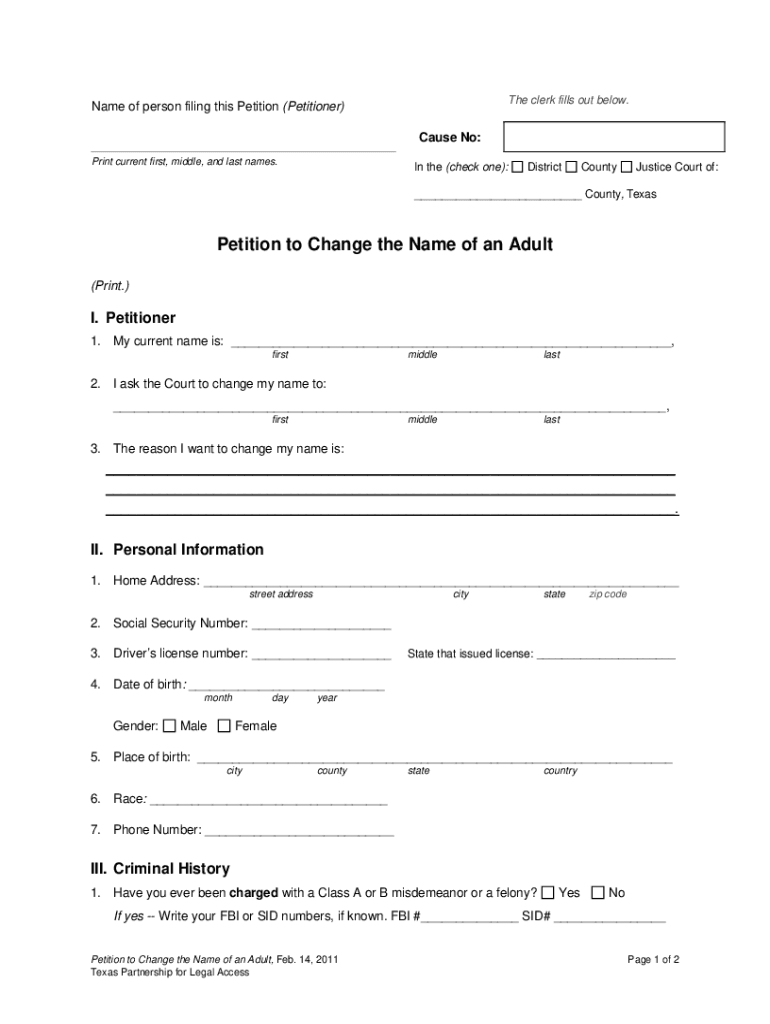
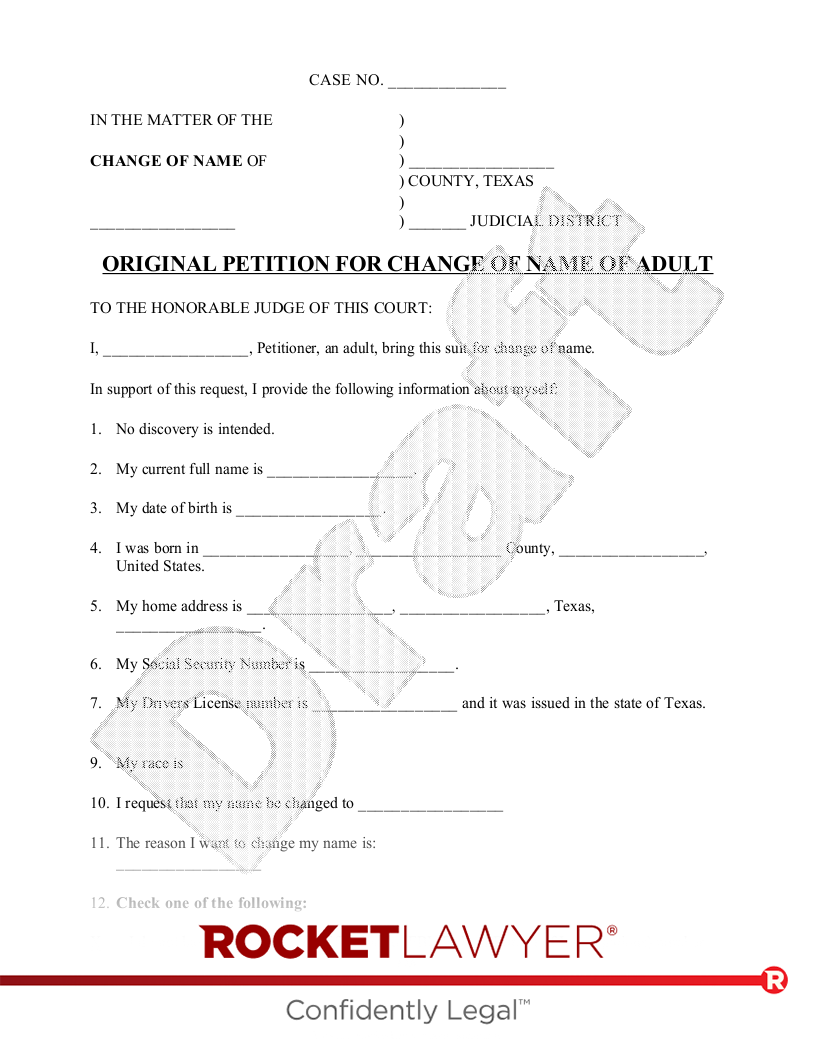
The cornerstone of the legal name change process in Texas is the “Petition for Change of Name.” This document officially initiates the legal proceedings. While specific forms may vary slightly by county, the essential information required is consistent.
- Identifying Information: The petition must include your current full legal name, date of birth, address, and other relevant identifying details.
- Proposed New Name: Clearly state the exact name you wish to legally adopt.
- Reason for Name Change: Provide a concise and truthful explanation for why you are seeking the name change. This is where you articulate your personal grounds, as discussed earlier.
- Affidavit of No Fraudulent Intent: You will be required to sign an affidavit affirming that you are not seeking the name change for any illegal or fraudulent purposes.
- Supporting Documentation: Depending on your situation, you may need to attach supporting documents, such as a birth certificate or a marriage certificate.
It is highly recommended to consult with an attorney or utilize official court forms provided by your local district clerk’s office to ensure the petition is completed accurately. Errors or omissions can lead to delays or dismissal of your petition.
The Court Process and Requirements
Once the petition is filed, the court process begins. This involves several key stages designed to ensure fairness and legality.
Filing the Petition and Fee
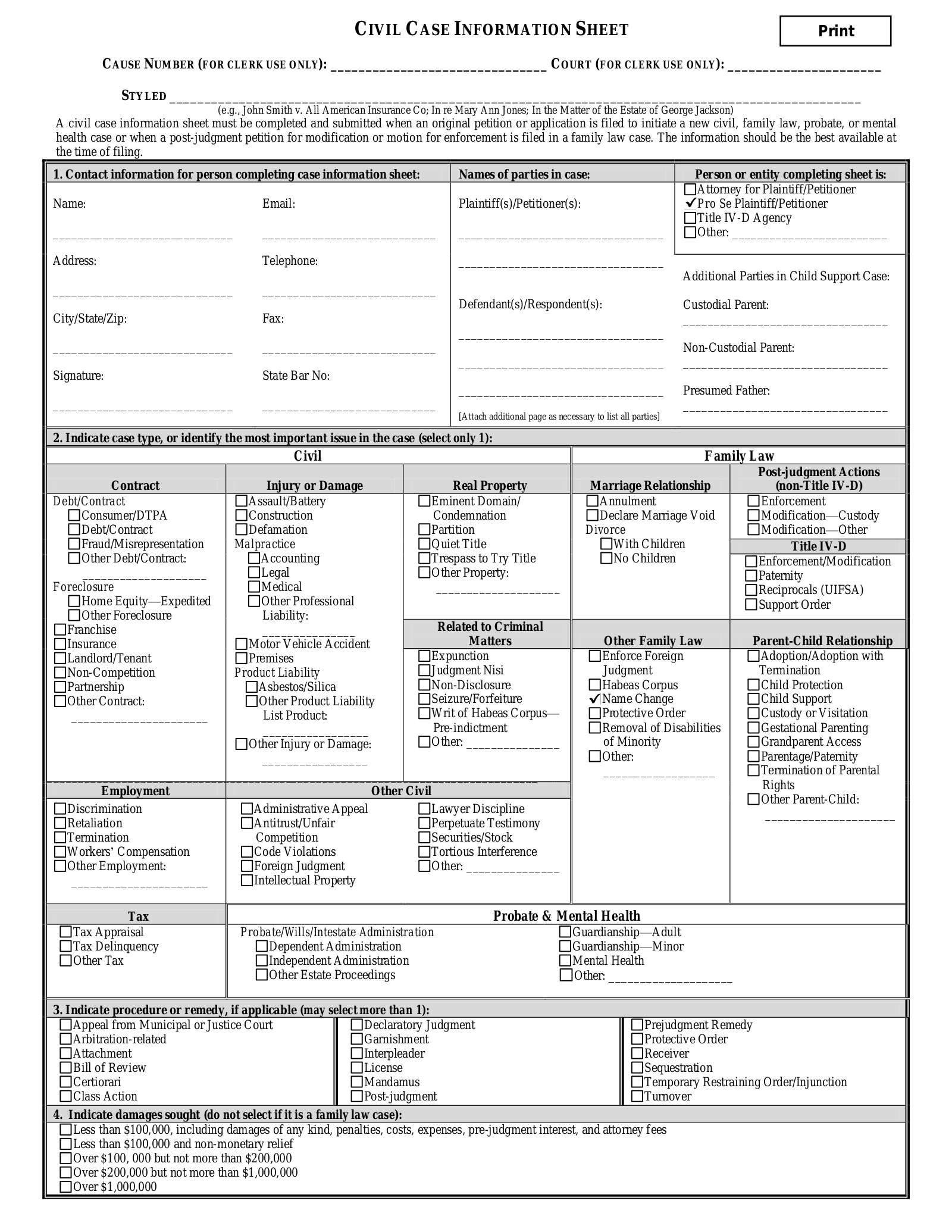
The first step after completing the petition is to file it with the district clerk’s office in the county where you reside. There is a filing fee associated with this process, which can vary by county. If you are unable to afford the fee, you may be able to request a waiver from the court by filing a Statement of Inability to Afford Payment of Court Costs.
Notice Requirements
In most cases, Texas law requires that public notice of your intention to change your name be published. This is typically done to inform any potential creditors or interested parties who might have a legal reason to object to the name change.
- Publication: The court will usually order you to publish a notice of your intended name change in a newspaper of general circulation in your county. The specific requirements for publication, including the content of the notice and the duration of publication, will be provided by the court.
- Waiver of Publication: In certain circumstances, such as cases involving gender transition or if there is a genuine safety concern that publishing the notice would put you at risk, you may be able to petition the court to waive the publication requirement. This is at the judge’s discretion and requires strong justification.
The Court Hearing
After the petition is filed and the notice period has passed (or a waiver has been granted), your case will be scheduled for a court hearing. This is a formal proceeding where a judge will review your petition and hear any objections, if any.
- Judge’s Review: The judge will examine your petition for completeness and accuracy. They will also consider the reasons you have provided for the name change and ensure that there is no indication of fraudulent intent.
- Testimony: You may be asked to appear before the judge and provide sworn testimony to confirm the information in your petition and answer any questions the judge may have.
- Objections: While rare, if someone has a valid legal objection to your name change (e.g., they believe you are attempting to evade legal responsibilities), they may appear at the hearing to voice their objection. The judge will then weigh the arguments before making a decision.
- The Order: If the judge approves your petition, they will sign an “Order for Change of Name.” This is the official court document that legally changes your name. It’s crucial to obtain a certified copy of this order, as you will need it for subsequent steps.
Post-Order Procedures: Updating Your Identity
Receiving your court-ordered name change is a significant milestone, but the process isn’t entirely complete. The true integration of your new name into your life requires updating your identification and records with various institutions.
Social Security Administration (SSA)
The first and perhaps most important step is to update your name with the Social Security Administration. This is essential because your Social Security record is linked to virtually all other forms of identification and employment.
- Form SS-5: You will need to complete Form SS-5, Application for a Social Security Card.
- Proof of Identity and Name Change: You will need to provide original or certified copies of documents proving your identity (e.g., a driver’s license or passport) and your legal name change (your certified court order).
- New Card: The SSA will issue you a new Social Security card with your updated name. This card will not show your old name.
Driver’s License and Identification Cards
Once your Social Security record is updated, you can then proceed to update your state identification.
- Texas Department of Public Safety (DPS): Visit a Texas Department of Public Safety driver license office.
- Required Documents: You will need to bring your certified court order for name change, your current Texas driver’s license or ID, and proof of your updated Social Security record (often your new Social Security card or a confirmation letter).
- New License/ID: You will be issued a new driver’s license or identification card reflecting your legal name change.
Other Important Institutions
Beyond the SSA and DPS, you will need to update your name with numerous other entities. This is a comprehensive, albeit time-consuming, undertaking.
- Passport: If you have a passport, you will need to apply for a new one using the appropriate forms and providing your court order.
- Banks and Financial Institutions: Inform your bank, credit card companies, and any other financial institutions of your name change. You’ll likely need to present your court order to update your accounts.
- Employer: Notify your employer so your payroll records, insurance, and other employment-related documents can be updated.
- Voter Registration: Update your voter registration with your new name.
- Schools and Universities: If you are a student or have attended educational institutions, inform them of your name change.
- Utilities and Service Providers: Update your name for utility bills (electricity, water, gas), phone services, internet, and cable.
- Insurance Companies: Notify your auto, health, life, and homeowner’s insurance providers.
- Medical Providers: Ensure your doctors, dentists, and other healthcare providers have your correct legal name.
- Post Office: Update your mailing address and name with the United States Postal Service.
- Property Records: If you own property, you may need to update your name on deeds and other property records.
- Professional Licenses: If you hold any professional licenses (e.g., medical, legal, teaching), you must update them.
Important Note: Keep certified copies of your court order readily available, as you will likely need to present it to many of these institutions.
Considerations for Specific Circumstances
While the general process is outlined above, certain situations may involve additional considerations or variations.
Name Change for Minors
Changing a minor’s name requires the consent of both parents or legal guardians, unless one parent’s rights have been terminated. The petition must be filed by the parent or guardian on behalf of the child, and the child’s best interests are the primary consideration for the court. It is strongly advised to seek legal counsel when navigating a name change for a minor.
Name Change Due to Marriage or Divorce
As previously mentioned, name changes associated with marriage or divorce can often be handled within those respective legal proceedings, potentially simplifying the process.
- Marriage: When you get married, you can choose to adopt your spouse’s surname or a hyphenated version of your names. This is typically documented on your marriage license.
- Divorce: During divorce proceedings, a party can request to resume their former surname. This is included in the final divorce decree. If the divorce is finalized and you later decide you want to change your name back, you would need to follow the independent petition process described in this guide.
Name Change for Safety or Privacy Concerns
In cases where a name change is sought due to legitimate safety concerns or to protect an individual from harassment or abuse, the court may grant a waiver for the publication requirement. Strong evidence and a compelling argument will be necessary to convince the judge of the need for such a waiver.
Legal Assistance
While it is possible to navigate the name change process independently, seeking legal advice can be invaluable, especially in complex cases or if you are unsure about any aspect of the procedure. An attorney specializing in family law can ensure that your petition is filed correctly, represent you in court, and guide you through the entire process, providing peace of mind and increasing the likelihood of a smooth outcome. They can also help you understand any specific county court rules or nuances that might apply to your situation. Remember, a legal name change is a significant step, and ensuring it is done correctly from the outset is paramount.
LifeOutOfTheBox is a participant in the Amazon Services LLC Associates Program, an affiliate advertising program designed to provide a means for sites to earn advertising fees by advertising and linking to Amazon.com. Amazon, the Amazon logo, AmazonSupply, and the AmazonSupply logo are trademarks of Amazon.com, Inc. or its affiliates. As an Amazon Associate we earn affiliate commissions from qualifying purchases.