
Navigating the intricacies of employment rights can significantly impact one’s lifestyle, particularly in a dynamic state like California. Understanding how paid sick leave operates is crucial for personal well-being, financial stability, and the ability to maintain a healthy work-life balance. For residents and those considering a professional move to California, knowing the nuances of sick pay ensures peace of mind when unexpected health issues arise, or family care is needed.
Understanding Your Right to Paid Sick Leave in California
At the heart of California’s commitment to employee welfare is the Healthy Workplaces, Healthy Families Act of 2014, which mandates paid sick leave for most employees. This foundational law ensures that individuals do not have to choose between their health or the health of a loved one and their livelihood. It’s a cornerstone of a supportive lifestyle, allowing individuals to address personal or family health needs without incurring a significant financial penalty.
Eligibility and Accrual Basics
The broad strokes of eligibility are straightforward: nearly every employee who works for the same employer for at least 30 days within a year in [California](https://lifeoutofthebox.com/california], including part-time, temporary, and seasonal workers, is entitled to paid sick leave. The accrual method is typically one hour of paid sick leave for every 30 hours worked. This means that a standard full-time employee working 40 hours a week would accrue approximately 1.33 hours of sick time per week.
Employers have two primary methods for providing this leave:
- Accrual Method: Employees earn sick leave over time as they work. While accrual begins on the first day of employment, employees must generally wait 90 days before they can use their accrued sick time. This waiting period is standard across the state, ensuring a degree of stability before utilization.
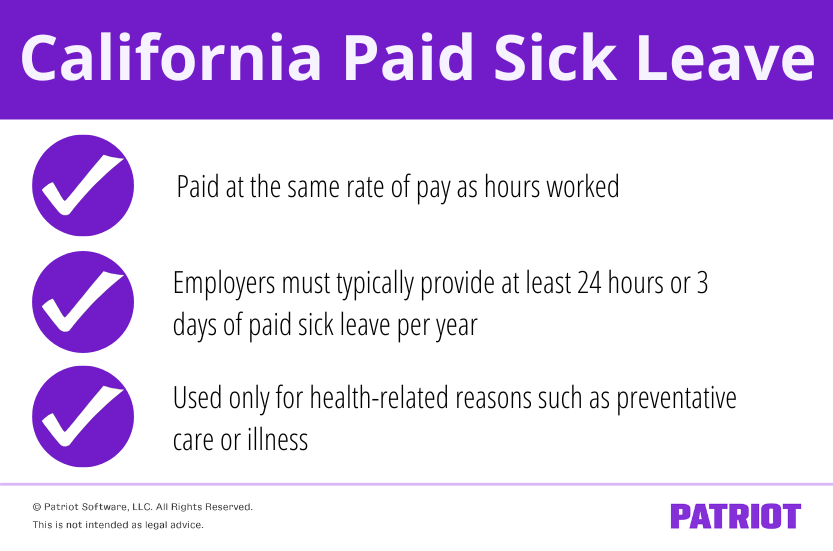
- Upfront Grant Method: Alternatively, employers can provide the entire minimum amount of sick leave at the beginning of each 12-month period (e.g., calendar year, anniversary of employment). If an employer chooses this method, they must grant at least 24 hours (or 3 days) of paid sick leave upfront. This method can offer immediate access to sick time, which can be particularly beneficial for new employees.
It’s important to note that while the law mandates a minimum accrual rate and usage amount, employers are free to offer more generous sick leave policies. This flexibility allows businesses to tailor benefits packages that reflect their culture and attract talent, contributing to a more comfortable and secure professional lifestyle for their employees.
Permissible Uses for Sick Time
The scope of reasons for which sick leave can be used is intentionally broad, reflecting a holistic view of well-being. Employees can use paid sick leave for:
- Their own medical care: This includes diagnosis, care, or treatment of an existing health condition, or preventive care. This ensures individuals can proactively manage their health without fearing income loss.
- Care for a family member: This extends to a child, spouse, parent, grandparent, grandchild, sibling, or registered domestic partner. This provision significantly supports family-oriented lifestyles, allowing individuals to tend to loved ones without undue stress.
- Victims of domestic violence, sexual assault, or stalking: Time can be used for obtaining relief, such as seeking medical attention, psychological counseling, or engaging with legal services. This critical provision supports a safe and secure environment for individuals facing severe personal challenges.
The emphasis is on allowing individuals to prioritize health and safety for themselves and their families, fostering a more compassionate and stable community in California.
Navigating Accrual Caps and Usage Limits
While the right to paid sick leave is robust, there are specific regulations concerning how much sick time an employee can accrue and how much can be used within a given year. Understanding these limits is key to managing one’s personal time off effectively.
State-Mandated Minimums vs. Employer Policies
Under California state law, while employees accrue sick leave continuously, employers can cap the total amount of accrued sick leave an employee can carry over from year to year. The maximum accrual cap allowed by state law is generally 48 hours (or 6 days). However, employers can set a higher cap if they choose, providing greater flexibility and security for employees who might face prolonged health issues.
Regarding usage, employers can limit an employee’s use of sick leave to 24 hours (or 3 days) per 12-month period. This distinction between accrual and usage is vital: an employee might accrue 48 hours but only be able to use 24 hours in a year. Any unused, accrued sick time typically rolls over to the next year, subject to the employer’s accrual cap. This system is designed to provide a baseline level of protection while also allowing businesses to manage their operational needs.
The Rollover Conundrum
The rollover provision is a significant benefit, as it means unused sick time isn’t simply lost at the end of the year. This helps build a safety net, allowing employees to accumulate a buffer of sick hours for more serious or prolonged illnesses. For instance, if an employee uses only one day of sick leave in a year, the remaining two days (if they were granted 3 days upfront or accrued at least 24 hours) would roll over, increasing their available balance for the following year, up to the employer’s accrual cap.
It is critical for employees to review their company’s specific sick leave policy, as it may offer more generous terms than the state minimums. Understanding these specifics helps individuals plan their personal time effectively and ensures they are fully aware of their available resources for maintaining their health and family well-being.
Employer Responsibilities and Employee Protections
The effectiveness of sick pay laws hinges on clear employer responsibilities and robust employee protections. These provisions ensure fairness and prevent retaliation, fostering a more secure working environment that supports a balanced lifestyle.

Notification and Documentation Requirements
Employers in California have specific obligations regarding sick leave:
- Notice to Employees: Employers must provide written notice to employees of their sick leave balances, either on their pay stubs or in a separate written statement provided with payment of wages. This transparency is crucial for employees to track their available leave.
- Posting Requirements: A poster detailing the paid sick leave law must be displayed prominently in the workplace.
- Record Keeping: Employers must keep records documenting hours worked, paid sick leave accrued, and paid sick leave used for at least three years.
When an employee needs to use sick leave, they are generally required to notify their employer. For foreseeable absences, reasonable advance notice is expected. For unforeseeable absences, notice should be given as soon as practicable. Employers cannot require a doctor’s note or other documentation to verify the illness or condition for absences shorter than three consecutive workdays. This rule is designed to reduce barriers to using sick leave and promote trust between employers and employees.
Anti-Retaliation Measures
A core protection within the California sick leave law is the anti-retaliation provision. Employers are strictly prohibited from discriminating against, harassing, or retaliating against any employee for exercising their right to use paid sick leave. This includes firing, demoting, suspending, or otherwise penalizing an employee for taking sick time. If an employee believes they have been retaliated against, they have the right to file a complaint with the Labor Commissioner. This protection is vital for ensuring that employees feel secure in exercising their rights without fear of negative repercussions, thus safeguarding their professional and personal stability.
Specific Scenarios and Local Ordinances
While state law provides a baseline, specific scenarios and local ordinances can add layers of complexity and, often, additional benefits to sick pay entitlements in California.
Impact of Local Laws
Several cities and counties in California have enacted their own paid sick leave ordinances that provide more generous benefits than state law. Cities like San Francisco, Los Angeles, and San Diego, for example, have their own specific rules on accrual rates, caps, and usage. For instance, San Francisco’s ordinance often mandates higher accrual and usage rates and broader definitions of family members for whom leave can be taken.
When state and local laws conflict, the law that provides the greater rights or benefits to the employee generally prevails. Therefore, individuals working in cities with local ordinances must familiarize themselves with both state and local provisions to fully understand their entitlements. This dual layer of protection contributes significantly to a higher standard of living and employee welfare in many urban centers across California.
What Happens When You Leave Your Job?
One common question pertains to sick leave when employment ends. Unlike vacation time, employers in California are generally not required to pay out unused accrued sick leave upon termination, resignation, or retirement. Sick leave is considered a benefit for active employment, designed to provide paid time off when an employee is unwell or needs to care for a family member.
However, if an employee is rehired by the same employer within one year, previously accrued and unused sick leave must be reinstated. This provision encourages stability in employment and provides a safety net for individuals who might return to their previous roles. Understanding this distinction from vacation pay is crucial for financial planning and managing career transitions.
Financial Well-being and Lifestyle Implications
The availability of paid sick leave in California has profound implications for an individual’s financial well-being and overall lifestyle. It’s more than just a legal entitlement; it’s a critical component of personal and family security.
Planning for Unexpected Illness
Life is unpredictable, and illnesses or injuries can strike at any time. Without paid sick leave, an unexpected health issue can lead to a difficult choice between recovering and losing essential income. For many, this could mean falling behind on rent, utilities, or other crucial expenses. California’s sick pay law mitigates this risk, providing a financial buffer that allows individuals to focus on recovery without the added stress of economic hardship. This security is fundamental to maintaining a stable and less stressful lifestyle.
Furthermore, early intervention for health issues is encouraged when employees know they won’t lose pay. This can lead to better health outcomes, preventing minor ailments from escalating into more serious conditions that could necessitate longer absences from work.

Balancing Work and Personal Health
Beyond just illness, the ability to take paid time off for preventive care or to care for a sick family member significantly improves work-life balance. It allows parents to attend to a sick child without sacrificing their earnings, or individuals to schedule annual check-ups, dental appointments, or mental health days without fear of repercussions. This flexibility contributes to a healthier, more sustainable lifestyle, reducing burnout and fostering greater job satisfaction.
In essence, California’s sick pay regulations are designed to support a responsible and compassionate approach to employment. They empower individuals to prioritize their health and family needs, ensuring that working in the Golden State contributes positively to their overall lifestyle and well-being. By understanding these rights, employees can confidently navigate their professional lives, secure in the knowledge that a safety net is in place for life’s inevitable challenges.
LifeOutOfTheBox is a participant in the Amazon Services LLC Associates Program, an affiliate advertising program designed to provide a means for sites to earn advertising fees by advertising and linking to Amazon.com. Amazon, the Amazon logo, AmazonSupply, and the AmazonSupply logo are trademarks of Amazon.com, Inc. or its affiliates. As an Amazon Associate we earn affiliate commissions from qualifying purchases.