
The allure of the Pacific Northwest often conjures images of emerald forests, snow-capped mountains, and a vibrant, cosmopolitan city nestled between Puget Sound and Lake Washington. [Seattle], Washington, a city renowned for its pioneering spirit, innovative industries, and stunning natural beauty, draws travelers from across the globe. But for many, the first question that arises when considering a visit is a practical one: “How far away is [Seattle]?” This inquiry, while seemingly simple, unlocks a spectrum of travel considerations, from the hours spent in transit to the planning involved in reaching this dynamic destination. Understanding the distance and the various modes of travel available is the first step in unlocking the unique experiences that await in the Emerald City.
Navigating the Globe: Distances to Seattle
The vastness of the world means that “far” is a relative term, deeply dependent on your starting point. Whether you’re embarking on an international expedition or a domestic road trip, the journey to [Seattle] will be shaped by geography. For those on other continents, the flight to Seattle-Tacoma International Airport (Sea-Tac) is often the most direct route.
Intercontinental Journeys
From Europe, direct flights to [Seattle] typically range from 9 to 11 hours, with cities like London, Paris, and Amsterdam offering convenient connections. Flights from Asia, particularly from major hubs like Tokyo, Seoul, or Shanghai, can range from 9 to 12 hours, depending on the specific origin city and prevailing wind patterns. For travelers in Australia and New Zealand, the journey is considerably longer, with flight times often exceeding 14 hours, frequently involving a layover in an Asian or North American city. South America presents similar challenges, with distances often necessitating at least one stopover, leading to total travel times that can span 15 to 20 hours or more.
Transcontinental Crossings
Within North America, the distances become more manageable, though still significant for many. From the East Coast of the United States, such as New York City or Miami, direct flights to [Seattle] typically clock in at around 5 to 6 hours. Flights from the Midwest, like Chicago or Minneapolis, are generally shorter, averaging 4 to 5 hours. For those closer to the Canadian border, Vancouver, British Columbia, is a mere 30-minute flight or a few hours’ drive away, making it an easily accessible gateway. Mexico City offers direct flights to [Seattle] that can last around 5 hours, while other major Mexican cities may require a connecting flight.
The Art of Arrival: Modes of Transportation
The answer to “How far away is [Seattle]?” is intricately linked to how you choose to get there. Each mode of transport offers a distinct travel experience, influencing not only the duration of your journey but also your perspective upon arrival.
By Air: The Swift Ascent
For the majority of travelers coming from beyond the immediate region, air travel is the most efficient method. Seattle-Tacoma International Airport serves as a major hub for both domestic and international flights, boasting extensive connections. Airlines such as [Alaska Airlines], [Delta Air Lines], [American Airlines], and [United Airlines] provide a robust network of routes. International carriers like [KLM Royal Dutch Airlines], [Air France], [Lufthansa], [British Airways], and numerous Asian and Pacific airlines also offer direct or one-stop services. The convenience of modern air travel allows for transcontinental journeys to be completed within a single day, minimizing the impact of distance on vacation planning. Upon landing at Sea-Tac, travelers can seamlessly transition to ground transportation, with options ranging from light rail to taxis and ride-sharing services, all leading directly into the heart of [Seattle].

By Road: The Scenic Expedition
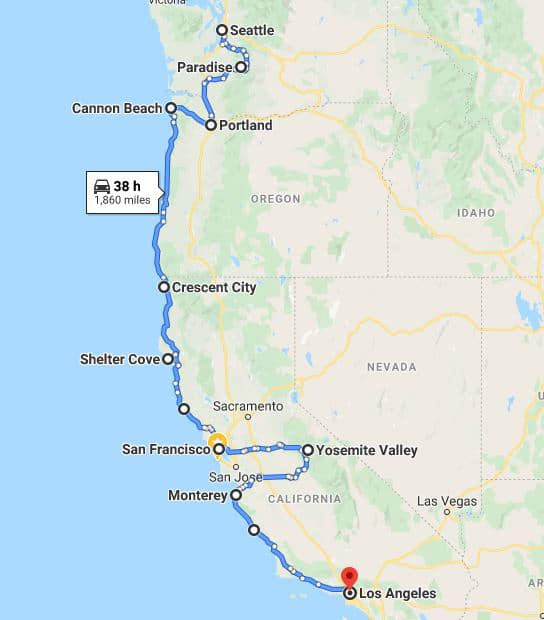
For those who embrace the journey itself, driving to [Seattle] offers a chance to witness the diverse landscapes of North America. The city is well-connected by the U.S. Interstate Highway System. Interstate 5 (I-5) runs north-south, serving as the primary artery connecting [Seattle] to [Portland], Oregon, and [Vancouver], British Columbia, as well as extending south to [California]. Traveling from Southern California, a drive to [Seattle] can take approximately 18 to 20 hours of pure driving time, typically spread over two to three days to allow for rest and exploration. From [Denver], Colorado, the journey eastward might involve routes like I-90, taking around 20 to 22 hours of driving, often requiring multiple days. The appeal of a road trip lies in the freedom to stop at points of interest, experience smaller towns, and appreciate the transition of scenery from arid deserts or vast plains to the verdant forests of the Pacific Northwest.
By Rail: A Nostalgic Passage
Amtrak offers a more leisurely, though often longer, alternative for reaching [Seattle]. The Empire Builder route, for instance, connects [Seattle] with [Chicago] in approximately 46 hours, traversing through the stunning landscapes of Montana and North Dakota. This journey provides a unique perspective, allowing passengers to observe the changing terrain from the comfort of their seats or sleeper compartments. While not as swift as air travel, the train offers a romantic and environmentally conscious way to travel, ideal for those who wish to disconnect and immerse themselves in the journey’s unfolding narrative. The Pacific Surfliner route connects [Seattle] with [San Diego], California, a much longer trip that typically involves transfers and can take upwards of 36 hours, offering a coastal perspective for a significant portion of the travel.
The Impact of Distance on Travel Planning
Understanding how far away [Seattle] is has direct implications for how one plans a visit. The duration of travel dictates the length of the trip, the budget allocated, and the packing considerations.
Time and Budgetary Considerations
For travelers undertaking long-haul flights, the time difference and the sheer length of the journey often necessitate longer stays to make the travel worthwhile. A weekend trip from Europe, for example, is generally impractical due to the significant travel time and jet lag. Instead, a week or more is often allocated for such trips, allowing ample time to recover from travel and explore [Seattle] and its surroundings thoroughly. Conversely, a drive from [Vancouver] might only require a few days for a short visit, allowing for a more spontaneous getaway. Budget is also a key factor. Long-haul flights can represent a substantial portion of a travel budget, while road trips might involve costs for fuel, accommodation along the way, and vehicle maintenance. Rail travel, while potentially offering competitive pricing if booked in advance, also requires budgeting for meals and accommodation.
Packing and Preparation
The distance and mode of transport also influence packing. For those flying, adhering to airline baggage restrictions is paramount. Packing light and efficiently is often key to avoiding extra fees. Travelers on a road trip have more flexibility with luggage space but must consider the changing climates they might encounter. Layering is always advisable for [Seattle]’s unpredictable weather, regardless of the mode of travel. Those opting for train travel might consider packing items that enhance comfort during extended periods, such as travel pillows, books, and entertainment. Regardless of the chosen method, preparing for the specific climate of [Seattle] – which can be characterized by mild, wet winters and warm, dry summers – is essential for a comfortable and enjoyable visit.

Exploring from Afar: Seattle’s Global Reach
The question of “How far away is [Seattle]?” ultimately speaks to the city’s status as a global destination. Its connectivity via air, road, and rail makes it accessible to a wide array of travelers, each bringing their unique perspectives and experiences to the Emerald City. From the bustling international terminals of [Sea-Tac] to the open highways and scenic rail lines, the journey to [Seattle] is a prelude to the discoveries that await. Whether you are a resident of a neighboring state or an international adventurer, the distance is merely a variable in the equation of experiencing the vibrant culture, stunning scenery, and innovative spirit that defines [Seattle], Washington.
LifeOutOfTheBox is a participant in the Amazon Services LLC Associates Program, an affiliate advertising program designed to provide a means for sites to earn advertising fees by advertising and linking to Amazon.com. Amazon, the Amazon logo, AmazonSupply, and the AmazonSupply logo are trademarks of Amazon.com, Inc. or its affiliates. As an Amazon Associate we earn affiliate commissions from qualifying purchases.