
The allure of Vermont, with its picturesque landscapes, charming towns, and vibrant outdoor activities, makes it a perennial favorite for those seeking an escape from the urban bustle of Boston. Understanding the distances involved is the first step in planning a memorable journey to the Green Mountain State. Whether you’re dreaming of crisp autumn foliage, serene winter ski slopes, or the blooming beauty of spring and summer, knowing how far Boston is from various Vermont destinations will help you tailor your trip to perfection. This guide explores the travel times and distances to key Vermont regions, offering insights for a seamless transition from the city to the countryside.
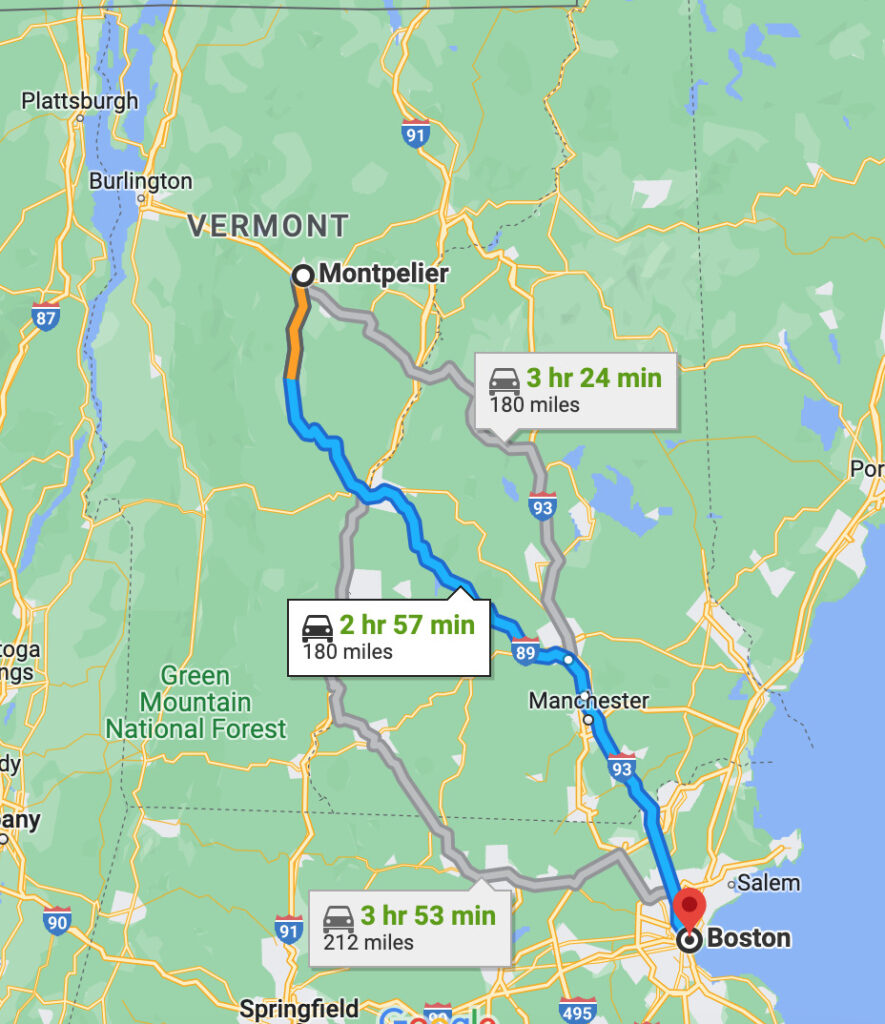
Driving Distances and Times to Popular Vermont Regions
The journey from Boston to Vermont is a relatively short one, typically measured in hours rather than days. This accessibility is a significant draw for day-trippers, weekend adventurers, and those planning longer stays alike. The exact distance and travel time will, of course, depend on your specific destination within Vermont and the traffic conditions you encounter, especially when departing Boston.
Southeastern Vermont: The Gateway to the Green Mountains
Southeastern Vermont, often considered the first region one encounters upon entering the state from Massachusetts, offers a delightful introduction to its unique charm. Towns like Brattleboro and Grafton are prime examples of this region’s appeal.
-
Boston to Brattleboro, Vermont: This is one of the shortest and most direct routes, making Brattleboro an excellent choice for a quick getaway. The drive is approximately 90-100 miles and can take around 1.5 to 2 hours, depending on traffic leaving Boston and the chosen route, most commonly I-90 W to I-91 N. Brattleboro itself is known for its vibrant arts scene, independent shops, and proximity to the Connecticut River.
-
Boston to Grafton, Vermont: Nestled a bit further into the hills, Grafton offers a quintessential Vermont experience with its historic village center and the renowned Grafton Village Cheese company. The drive from Boston to Grafton is about 120-130 miles and typically takes 2.5 to 3 hours via I-90 W to I-91 N, then VT-12 N. This route allows for scenic detours through smaller towns.
-
Boston to Chester, Vermont: Another charming town in the southeastern region, Chester is known for its picturesque village green and antique shops. The distance from Boston is comparable to Grafton, around 120-130 miles, with a travel time of approximately 2.5 to 3 hours.
Central Vermont: Heart of the Mountains and Ski Country
Central Vermont is perhaps the most sought-after region for its world-class ski resorts and its central location within the state. This area is home to some of Vermont‘s most famous mountains and recreational hubs.
-
Boston to Killington, Vermont: For ski enthusiasts, Killington is a major draw. It’s one of Vermont‘s largest ski resorts, offering extensive terrain for all levels. The drive from Boston to Killington is approximately 160-170 miles and typically takes 3 to 3.5 hours, often utilizing I-90 W to I-91 N, and then VT-4 W. This route winds through increasingly scenic countryside as you approach the mountains.
-
Boston to Stowe, Vermont: Renowned for its classic New England charm and excellent skiing on Mount Mansfield, Stowe is a year-round destination. The drive from Boston to Stowe is around 190-200 miles, generally taking 3.5 to 4 hours. The most common route involves I-90 W to I-93 N, then I-89 N towards Burlington, and finally taking the exit for Stowe (US-2 E / VT-100 N). The approach to Stowe is particularly beautiful, especially during fall.
-
Boston to Woodstock, Vermont: A quintessential Vermont village, Woodstock is celebrated for its historic architecture, covered bridges, and upscale atmosphere. It’s also the location of the Billings Farm & Museum. The drive from Boston to Woodstock is about 130-140 miles, taking approximately 2.5 to 3 hours via I-90 W to I-91 N, then VT-106 N.
Northern Vermont: Lake Champlain and the Northeast Kingdom
Northern Vermont offers a more remote and rugged beauty, characterized by the vastness of Lake Champlain and the unspoiled wilderness of the Northeast Kingdom.
-
Boston to Burlington, Vermont: As Vermont‘s largest city, Burlington is a vibrant hub on the shores of Lake Champlain. It offers a lively downtown, craft breweries, and a strong sense of community. The drive from Boston to Burlington is approximately 210-220 miles and typically takes 3.5 to 4 hours via I-90 W to I-93 N, then I-89 N. This is a straightforward interstate drive for the most part.
-
Boston to Montpelier, Vermont: Montpelier is the smallest state capital in the United States and exudes a quiet, historic charm. It’s located conveniently near other central Vermont attractions. The drive from Boston to Montpelier is about 190-200 miles, taking roughly 3.5 to 4 hours via I-90 W to I-93 N, then I-89 N.
-
Boston to the Northeast Kingdom (e.g., St. Johnsbury): For those seeking truly pristine wilderness and a slower pace of life, the Northeast Kingdom is the destination. St. Johnsbury, a gateway to this region, is about 200-210 miles from Boston, with a travel time of around 3.5 to 4 hours via I-90 W to I-93 N, then I-91 N. Reaching more remote areas within the Northeast Kingdom will add further to the travel time.
Factors Influencing Travel Time
While the distances provide a baseline, several factors can significantly influence the actual travel time from Boston to Vermont. Understanding these variables is key to accurate trip planning.
Traffic Conditions
- Departure from Boston: Boston is known for its challenging traffic. Departing during peak rush hours (typically 7-9 AM and 4-6 PM on weekdays) can add considerable time to your journey, especially on major arteries like I-90 (Mass Pike) or I-93. Planning your departure to avoid these times is highly recommended.
- Weekend Travel: Weekends, particularly during peak seasons like fall foliage or ski season, can also see increased traffic volume, both leaving Boston and within Vermont as visitors flock to popular destinations.
- Road Construction: Seasonal road work, especially during the warmer months, can cause unexpected delays on various routes.
Route Selection
The primary routes from Boston to Vermont typically involve:
- I-90 West (Mass Pike) to I-91 North: This is the most common and direct route for accessing much of southern and central Vermont, including Brattleboro, Grafton, Woodstock, and Killington.
- I-90 West (Mass Pike) to I-93 North to I-89 North: This route is often favored for reaching northern Vermont, such as Stowe and Burlington.
- US-2 East/VT-100 North: These scenic state highways are often used for the final approach to specific towns like Stowe and offer beautiful drives but can be slower than interstates.
The choice of route can impact travel time based on current traffic patterns and construction. GPS navigation apps are invaluable for real-time updates and alternative route suggestions.
Season and Weather
The season plays a crucial role in travel times to Vermont:
- Fall Foliage Season (Late September to Mid-October): This is arguably the busiest time for tourism in Vermont. Roads, especially scenic byways, can become congested with leaf-peepers. Expect longer travel times to popular viewing areas.
- Winter Ski Season (December to March): Snowfall can impact driving conditions. While interstates are generally well-maintained, secondary roads can be slow and require winter tires or chains. Delays due to weather are more common during these months.
- Spring and Summer: While generally less prone to significant weather delays, occasional thunderstorms can occur. These seasons offer pleasant driving conditions, though popular areas can still be busy.
Beyond the Drive: Planning Your Vermont Experience
Once you’ve settled on your destination and have a clear idea of the travel time, you can begin to flesh out your Vermont itinerary. The distances from Boston open up a variety of experiences.
Day Trips and Weekend Getaways
For those in the Boston area, many southern and central Vermont towns are accessible for day trips. Brattleboro, with its proximity to Boston, is an ideal candidate for a single-day excursion, allowing for exploration of its downtown and perhaps a short hike. Weekend getaways are perfectly suited for destinations like Woodstock, Grafton, or even Killington for a taste of mountain activities. The shorter travel times allow for more time to enjoy the destination rather than just the journey.
Longer Stays and Road Trips
For a more immersive Vermont experience, longer stays are recommended, especially when venturing into northern Vermont or exploring multiple regions. A week-long trip could encompass a visit to Burlington, a few days in Stowe for hiking or skiing, and perhaps a detour through the scenic Northeast Kingdom. Planning a road trip that connects several of these destinations allows for a comprehensive appreciation of Vermont‘s diverse landscapes and attractions. Consider how the driving distances between various points in Vermont will affect your itinerary.
Considerations for Different Travel Styles
- Luxury Travel: For a more refined experience, consider destinations like Woodstock, with its upscale inns and dining. The drive is manageable, and the reward is a luxurious escape.
- Family Trips: Central Vermont, with its ski resorts and outdoor activities, is excellent for families. Killington and Stowe offer numerous family-friendly lodging and activities. The travel time is also conducive to family road trips.
- Budget Travel: While Vermont can cater to various budgets, exploring smaller towns and utilizing vacation rentals can offer more affordable options. The accessibility from Boston means you can drive and bring your own provisions, saving on dining costs.
The ease of access from Boston makes Vermont an endlessly appealing destination, offering a spectrum of experiences from quaint village exploration to challenging mountain adventures. Understanding the distances and travel times is the essential first step in unlocking the charm of the Green Mountain State.
LifeOutOfTheBox is a participant in the Amazon Services LLC Associates Program, an affiliate advertising program designed to provide a means for sites to earn advertising fees by advertising and linking to Amazon.com. Amazon, the Amazon logo, AmazonSupply, and the AmazonSupply logo are trademarks of Amazon.com, Inc. or its affiliates. As an Amazon Associate we earn affiliate commissions from qualifying purchases.