
The transition from the neon-drenched corridors of the Las Vegas Strip to the silent, crimson-hued spires of Bryce Canyon National Park is one of the most dramatic geographical shifts in North America. For travelers stationed in the entertainment capital of the world, the call of the wild often leads them toward the rugged landscapes of Utah. Understanding the distance, the logistics, and the scenic opportunities between these two iconic locations is essential for any well-planned road trip through the United States southwest.
Understanding the Distance and Drive Time
When calculating the distance from Las Vegas to Bryce Canyon National Park, the numbers vary slightly depending on your starting point within the city and your chosen route. On average, the distance is approximately 260 to 270 miles. For most travelers, this translates to a drive time of four to five hours, assuming minimal stops. However, the journey is far from a monotonous highway slog; it is a vertical ascent from the low Mojave Desert to the high-altitude Colorado Plateau.
The Fastest Route via Interstate 15
The most efficient way to reach the park is via Interstate 15 North. This major artery carries travelers out of Nevada, through a scenic corner of Arizona, and deep into the heart of southern Utah. From Harry Reid International Airport, you will head north, passing the suburban sprawl of North Las Vegas. The road remains relatively flat until you approach the Virgin River Gorge, where the landscape begins to tighten and transform.
Once you reach Cedar City, you will exit the interstate and transition to Utah State Route 14 or Utah State Route 20, depending on current road conditions and seasonal closures. Eventually, you will find yourself on US Route 89, heading south toward Utah State Route 12, which leads directly to the park entrance.
The Scenic Route: Exploring Beyond the Freeway
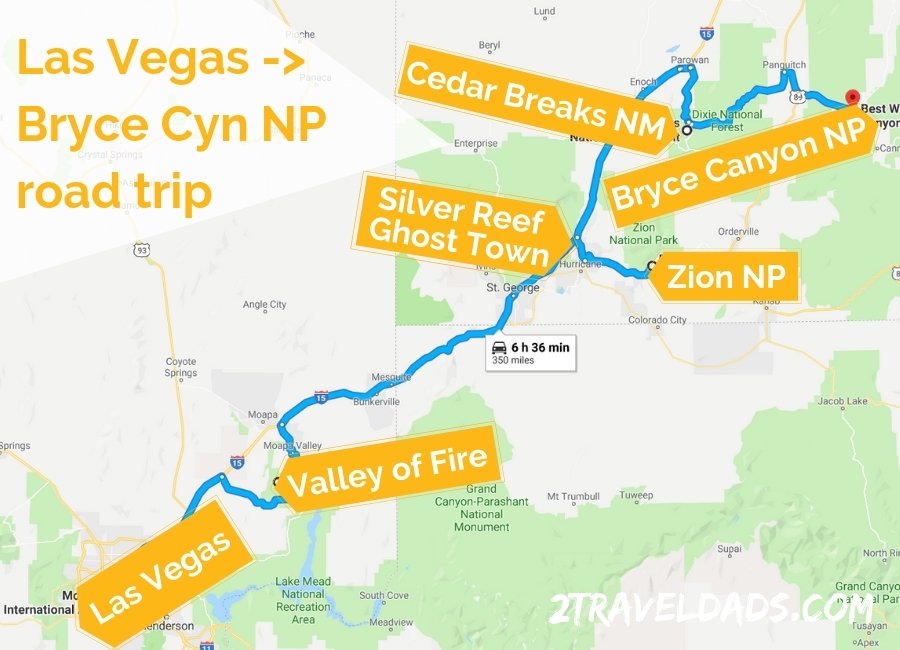
While the interstate is the fastest path, many travelers opt for a more leisurely pace to soak in the regional beauty. An alternative involves taking North-South Highway 93 or diverting through Valley of Fire State Park shortly after leaving Las Vegas. Adding these stops can extend the trip to six or seven hours, but the reward is a deeper connection with the desert’s geological history.
Another popular variation is the “Grand Circle” route, which includes a stop at Zion National Park before continuing to Bryce Canyon National Park. While Zion National Park is closer to Las Vegas (about 160 miles), the drive between Zion National Park and Bryce Canyon National Park is an additional 80 miles of stunning scenery, including the famous Zion-Mt Carmel Tunnel.
Key Stops and Landmarks Along the Journey
The drive from Las Vegas is punctuated by several landmarks that offer a perfect excuse to stretch your legs and experience the local culture of the American West.
Crossing the Virgin River Gorge
Roughly 80 miles into the trip, travelers enter Arizona and find themselves winding through the Virgin River Gorge. This section of Interstate 15 is widely considered one of the most expensive and beautiful stretches of highway in the United States. The road hugs the limestone cliffs, providing a dramatic gateway into the Colorado Plateau. It is a narrow, winding corridor that serves as a spectacular introduction to the rocky terrain ahead.
St. George and the Gateway to Southern Utah
After exiting the gorge, you arrive in St George, a city known for its red rocks and mild climate. St George is an ideal spot for a mid-trip meal or a visit to the St George Utah Temple. For those interested in nature, Snow Canyon State Park is just a short detour away, offering volcanic cones and petrified sand dunes that rival the national parks in beauty.
Red Canyon: The Preamble to Bryce
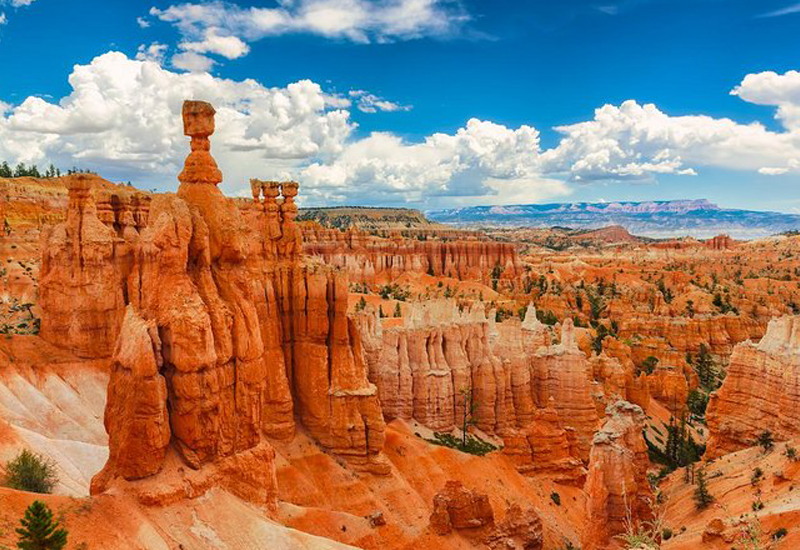
As you turn onto Scenic Byway 12, you will pass through Red Canyon, which is managed by the Dixie National Forest. Many visitors mistake this for Bryce Canyon National Park because of the vibrant orange hoodoos and the two picturesque stone tunnels the road passes through. It is worth stopping at the Red Canyon Visitor Center to get a taste of the geology before reaching the main event.
Best Times and Travel Tips for the Desert Road Trip
Planning a trip of this distance requires attention to the unique environmental factors of the Southwest. The conditions in Las Vegas are rarely indicative of what you will find at Bryce Canyon National Park.
Navigating Seasonal Weather Shifts
Las Vegas sits at an elevation of about 2,000 feet, whereas Bryce Canyon National Park reaches heights of over 9,000 feet at Rainbow Point. This massive elevation gain means that the park is significantly cooler. In the summer, while Las Vegas might be sweltering at 110°F, Bryce Canyon National Park will likely be a comfortable 75°F.
Conversely, winter travel requires extra caution. Interstate 15 and the mountain passes leading to the park can experience heavy snowfall and ice. If you are visiting between November and April, ensure your rental vehicle is equipped for winter conditions and check the National Park Service website for road closures.
Essential Preparation and Vehicle Tips
Before leaving Las Vegas, ensure your vehicle is in top condition. Fuel stations become more sparse once you leave Cedar City. It is also wise to carry plenty of water and snacks, as the high altitude of the Paunsaugunt Plateau can lead to dehydration faster than the desert floor. If you are not keen on driving yourself, several tour operators in Las Vegas offer day trips or multi-day excursions to Utah, though these often involve a very early start and a late return.
Maximizing Your Experience at Bryce Canyon National Park
Once you have completed the four-hour drive, the spectacle of the Bryce Amphitheater awaits. The park is not actually a canyon but a series of giant natural amphitheaters carved into the eastern side of the Paunsaugunt Plateau.
Top Viewpoints and Trails
If you only have one day after your drive from Las Vegas, focus your energy on the main amphitheater. Inspiration Point offers perhaps the most staggering view of the hoodoos—the tall, thin spires of rock that define the park. Sunrise Point and Sunset Point are also essential stops, providing different perspectives as the light shifts across the iron-rich limestone.
For those who want to descend into the forest of stone, the Navajo Loop Trail and the Queens Garden Trail are the most popular choices. These trails allow you to walk among the hoodoos and see the “Wall Street” section of the park, where narrow slot canyons rise high above the trail floor.
Extending the Trip to the Grand Circle
Many travelers find that the distance from Las Vegas warrants more than a single day. If time permits, consider staying in Bryce Canyon City or the nearby town of Panguitch. This allows you to witness the stars, as Bryce Canyon National Park is an International Dark Sky Park.
From here, you are well-positioned to continue east toward Grand Staircase-Escalante National Monument or south toward Kanab and the North Rim of the Grand Canyon. The distance between these wonders is relatively short compared to the initial trek from Nevada, making Bryce Canyon National Park a perfect hub for a broader exploration of the Rocky Mountains region and the Great Basin.
In summary, while the 270-mile journey from the glitz of Las Vegas to the ancient geology of Bryce Canyon National Park requires a full day of travel, it is a path through some of the most diverse and breathtaking landscapes in the world. Whether you choose the speed of Interstate 15 or the winding beauty of the backroads, the destination is more than worth the drive.
LifeOutOfTheBox is a participant in the Amazon Services LLC Associates Program, an affiliate advertising program designed to provide a means for sites to earn advertising fees by advertising and linking to Amazon.com. Amazon, the Amazon logo, AmazonSupply, and the AmazonSupply logo are trademarks of Amazon.com, Inc. or its affiliates. As an Amazon Associate we earn affiliate commissions from qualifying purchases.