
For any traveler planning a visit to the vibrant metropolis of Chicago, one of the most immediate and practical questions revolves around logistics: specifically, how to get from Chicago O’Hare International Airport (ORD) to the bustling heart of Downtown Chicago. This journey is a crucial first step in any Illinois adventure, and understanding the distance, available transportation methods, and typical travel times is essential for a smooth and stress-free experience. While O’Hare is a world-class gateway, it is not immediately adjacent to the city center, necessitating careful planning for both arrivals and departures. This guide delves into all aspects of this important transit, offering insights to help you navigate your way efficiently.

Understanding the Distance and Travel Time
The perceived distance between O’Hare and Downtown Chicago can vary significantly based on the mode of transport and the exact destination within the city center. However, geographically, there’s a clear answer, which then becomes complicated by real-world variables.
The Geographic Reality: Miles and Kilometers
Geographically, Chicago O’Hare International Airport is situated approximately 17 to 18 miles (27 to 29 kilometers) northwest of The Loop, which is the traditional core of Downtown Chicago. This distance makes it one of the closer major international airports to its city center among large North American cities, yet still far enough to require dedicated transit. The exact mileage might vary by a mile or two depending on your precise starting point at the airport and your final destination, whether it’s near Millennium Park, the Magnificent Mile, or the West Loop.
Factors Influencing Travel Duration
While the mileage is fixed, the time it takes to cover that distance is anything but. Several factors play a critical role in determining your actual travel duration:
- Traffic Conditions: Chicago, like any major metropolitan area, is notorious for its traffic, especially during peak commute hours (typically 7:00 AM to 9:00 AM and 4:00 PM to 6:00 PM on weekdays). A journey that might take 30 minutes in the dead of night could easily stretch to 60-90 minutes or more in heavy traffic. Weekends and holidays can also see unexpected surges in road congestion.
- Time of Day/Week: As mentioned, the time you travel is paramount. Early mornings, late evenings, and specific windows on weekends generally offer the fastest road travel times. Midday on a weekday often presents moderate traffic.
- Mode of Transportation: The choice between public transit, taxi, rideshare, or a private car rental will significantly impact both cost and time. Each option has its own average speed and susceptibility to traffic.
- Weather Conditions: Chicago’s weather, particularly in winter, can throw a wrench into travel plans. Snow, ice, or heavy rain can drastically slow down road traffic and even cause delays on public transportation. Always check the forecast if traveling during inclement seasons.
Considering these variables, a realistic travel time between O’Hare and Downtown Chicago can range from 30 minutes (under ideal conditions with minimal traffic) to 90 minutes or more (during peak congestion) when using road transport. Public transportation offers a more predictable, though not always faster, timeline.
Navigating Your Options: Public Transportation
For many travelers, public transportation offers a cost-effective and often efficient way to travel between O’Hare and Downtown Chicago. The city’s comprehensive transit system, managed by the Chicago Transit Authority (CTA), provides a direct and reliable link.
The CTA Blue Line: An Economical Choice
The CTA Blue Line is arguably the most popular and straightforward public transport option. It offers 24/7 service directly from O’Hare to various stops throughout Downtown Chicago and beyond.
- Location: The Blue Line station at O’Hare is conveniently located on the lower level of Terminal 2’s main parking garage. It’s easily accessible via pedestrian tunnels from all domestic terminals (1, 2, and 3) and by shuttle bus from the International Terminal 5. Follow the “Trains to City” signs.
- Travel Time: The typical journey on the Blue Line from O’Hare to Clark/Lake or Washington/Wabash in The Loop takes approximately 45 to 60 minutes. This time is relatively consistent, as the train operates on its dedicated tracks and is not subject to road traffic.
- Cost: A single-ride fare is very affordable. You’ll need a Ventra Card (available for purchase at the station) or a contactless payment method. Multi-day passes are also available and can be a good value if you plan to use CTA extensively during your stay.
- Advantages: Cost-effective, avoids traffic, operates 24/7, direct service to downtown.
- Considerations: Can be crowded during peak hours, involves carrying your luggage onto the train, and may require a transfer to another CTA line or bus if your final destination is not directly on the Blue Line.
Metra Commuter Rail: Limited But Fast
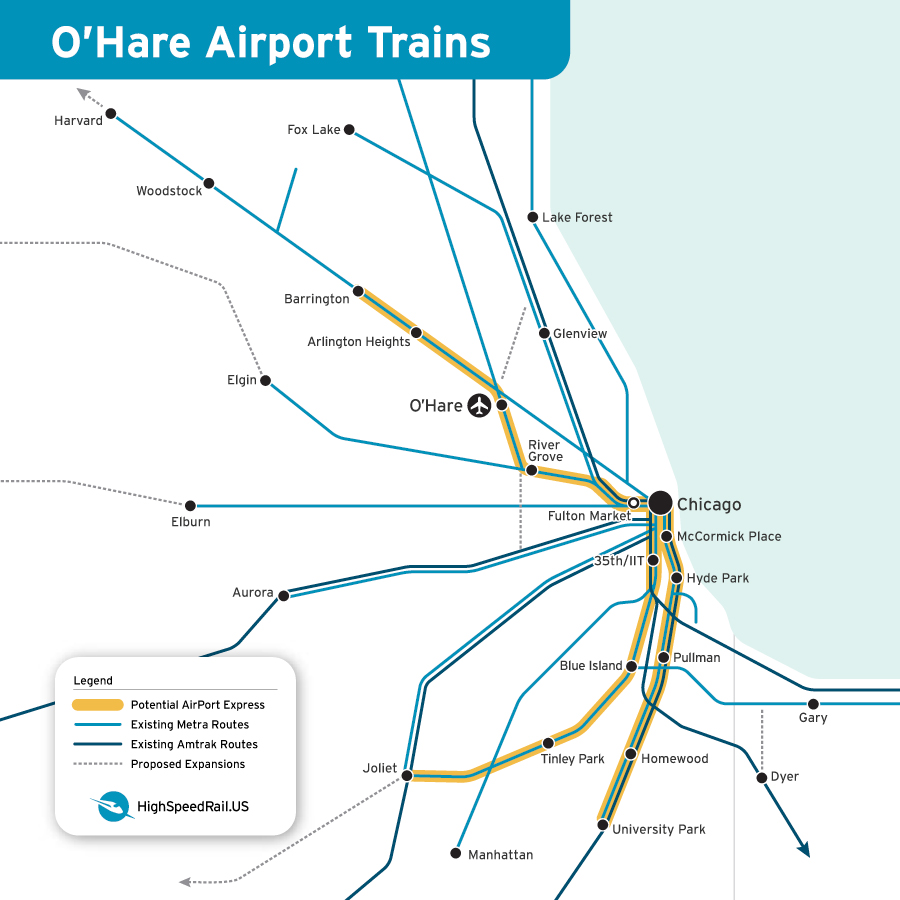
While the Blue Line is the primary rail link to O’Hare, the Metra commuter rail service offers another, albeit less direct, option. The North Central Service (NCS) line stops at the O’Hare Multimodal Facility (MMF), which is connected to the terminals via the Airport Transit System (ATS) shuttle.
- Travel Time: A Metra ride from the MMF to Union Station in Downtown Chicago can be as quick as 30-40 minutes.
- Cost: Fares are typically higher than the CTA Blue Line, dependent on the zone.
- Advantages: Potentially faster than the Blue Line for specific destinations, more comfortable seating.
- Considerations: Much less frequent service, especially on weekends and evenings, and requires an extra transfer from the airport terminals to the MMF via the ATS, adding time and complexity. It’s generally not the preferred choice for most airport transfers unless Union Station is your precise destination and the schedule aligns perfectly.
Convenient Road Transportation
For those who prioritize convenience, privacy, or have significant luggage, various road transportation options are available, offering door-to-door service or the flexibility of a private vehicle.
Taxis and Rideshares: Door-to-Door Service
Taxis and rideshare services like Uber and Lyft offer the most direct point-to-point transport from O’Hare to your Downtown Chicago hotel or residence.
- Availability: Taxis are readily available at designated taxi stands outside each terminal. Rideshare services have specific pick-up zones, often requiring a short walk or shuttle from the terminal (check your app for exact instructions).
- Travel Time: As discussed, travel time is heavily dependent on traffic. Expect anywhere from 30 minutes (off-peak) to 90 minutes or more (peak traffic).
- Cost: This is typically the most expensive option. Taxi fares from O’Hare to Downtown Chicago usually range from $40 to $60, excluding tip and potential surge pricing for rideshares. Tolls and airport surcharges may also apply.
- Advantages: Door-to-door convenience, privacy, suitable for travelers with a lot of luggage or those traveling in a group.
- Considerations: Most susceptible to traffic delays, higher cost, potential for surge pricing with rideshares during high demand.
Airport Shuttles: Shared Rides and Private Transfers
Several companies offer shared-ride shuttle services and private car transfers between O’Hare and Downtown Chicago.
- Shared-Ride Shuttles: These services (e.g., Go Airport Express) pick up multiple passengers heading in the same general direction. They are often cheaper than a private taxi but take longer due to multiple stops.
- Travel Time: Can range from 60 minutes to 2 hours depending on the number of stops and traffic.
- Cost: Typically $25 to $40 per person.
- Private Transfers: For a more premium experience, private car services can be pre-booked. They offer direct, non-stop travel.
- Travel Time: Similar to taxis/rideshares, 30-90 minutes depending on traffic.
- Cost: Generally more expensive than taxis, often starting from $70-$100 or more.
- Advantages: Shared rides offer a balance of cost and convenience; private transfers offer luxury and efficiency.
- Considerations: Shared rides involve waiting for other passengers and multiple stops; private transfers are a higher cost option.
Car Rentals: Freedom and Flexibility
For travelers planning to explore beyond Downtown Chicago or who prefer the independence of their own vehicle, car rentals are available at O’Hare.
- Location: All major car rental agencies operate out of the Rental Car Center, which is accessible via the Airport Transit System (ATS) from all terminals.
- Travel Time: Driving yourself will yield similar travel times to taxis/rideshares: 30-90 minutes depending on traffic.
- Cost: Rental rates vary widely based on vehicle type, duration, and agency. Factor in fuel costs, insurance, tolls, and potentially expensive downtown parking.
- Advantages: Maximum flexibility for exploring Chicago and the surrounding Midwest, convenient for travelers with extensive luggage or specific needs.
- Considerations: Navigation can be challenging in a dense urban environment, parking in Downtown Chicago is expensive and often scarce, and traffic can be a significant source of stress and delay. Not recommended if your primary activities are within walking distance or easy CTA access in the city center.
Choosing the Best Option for Your Trip
The “best” way to get from O’Hare to Downtown Chicago depends entirely on your personal priorities, budget, and travel style.
Budget-Conscious Travelers
For those looking to minimize expenses, the CTA Blue Line is hands-down the most economical choice. It offers reliable service at a fraction of the cost of road transport, making it ideal for backpackers, students, or anyone wanting to save their travel budget for experiences within the city.
Time-Sensitive Travelers
If speed and predictability are your top concerns, especially during potential peak traffic hours, the CTA Blue Line often provides the most consistent travel time. While a taxi or rideshare might be faster in the dead of night, the train’s immunity to road congestion makes its 45-60 minute journey reliable. For very early mornings or late nights when traffic is minimal, a taxi or pre-booked private transfer could be slightly quicker door-to-door.
Travelers with Luggage or Special Needs
Travelers with multiple large bags, families with small children, or those with mobility challenges might find taxis, rideshares, or private shuttles more comfortable and convenient. These options provide a direct drop-off at your accommodation, eliminating the need to navigate escalators, turnstiles, and crowded trains with cumbersome luggage. Shared-ride shuttles can offer a more budget-friendly alternative for this group while still providing a direct service.
Group Travel Considerations
For groups of three or more, the cost of a taxi or rideshare can become comparable to or even cheaper than individual CTA Blue Line fares, especially if you factor in the added convenience of traveling together directly to your destination. Large groups might also consider private vans or larger shuttles for a cohesive and comfortable journey.
First Impressions: Arriving at O’Hare and Exploring Downtown
Your journey from O’Hare to Downtown Chicago is just the beginning of your adventure. Understanding what to expect at both ends can enhance your travel experience.
O’Hare’s Layout and Amenities
O’Hare International Airport is one of the busiest airports in the world, a massive complex with four main passenger terminals. It offers a wide array of amenities, including diverse dining options, shops, lounges, and even an Aeroponic Garden in Terminal 3. Clear signage directs travelers to ground transportation, including the CTA Blue Line, taxis, and rideshare pick-up points. The Airport Transit System (ATS) connects all terminals, the O’Hare Multi-Modal Facility (housing rental cars and Metra station), and remote parking lots, making internal navigation relatively straightforward. Allow ample time for transfers within the airport, especially if flying internationally.
Downtown Chicago’s Accessibility
Once you arrive in Downtown Chicago, you’ll find a highly walkable and well-connected urban core. Many hotels, attractions like the Art Institute of Chicago, Cloud Gate (The Bean), and the Chicago Riverwalk are within easy walking distance of major CTA stations. The CTA “L” train system, with its elevated tracks, and extensive bus network, makes getting around the city center and to surrounding neighborhoods incredibly easy. For those arriving by car, be prepared for urban driving conditions and research parking options in advance, as garage rates can be steep.
In conclusion, the journey from Chicago O’Hare to Downtown Chicago is a manageable one, with a diverse array of transportation choices to suit every budget and preference. By understanding the distance, typical travel times, and the pros and cons of each method, you can make an informed decision that sets the stage for a fantastic visit to the Windy City.
LifeOutOfTheBox is a participant in the Amazon Services LLC Associates Program, an affiliate advertising program designed to provide a means for sites to earn advertising fees by advertising and linking to Amazon.com. Amazon, the Amazon logo, AmazonSupply, and the AmazonSupply logo are trademarks of Amazon.com, Inc. or its affiliates. As an Amazon Associate we earn affiliate commissions from qualifying purchases.