
The California Gold Rush was a pivotal period in American history, indelibly shaping the state of California and profoundly influencing the nation’s westward expansion. While its reverberations were felt for decades, the core years of the Gold Rush spanned from 1848 to 1855. This seven-year window witnessed an unprecedented influx of people, radical technological and societal shifts, and the rapid transformation of a sparsely populated territory into a thriving state. Understanding the specific timeline of this monumental event is crucial to grasping its profound and lasting legacy, from the initial discovery to its gradual decline and the enduring impact it left on the American landscape and psyche.

The Spark: Discovery and the Initial Frenzy (1848-1849)
The story of the California Gold Rush began with a fateful discovery that would forever alter the course of history. Before 1848, California was a remote frontier, recently acquired by the United States following the Mexican-American War. Its population was small, and its future seemed uncertain.
A Fateful Day at Sutter’s Mill
On January 24, 1848, a carpenter named James W. Marshall was overseeing the construction of a sawmill for his employer, John Sutter, along the American River near present-day Coloma. As he inspected the tailrace, where water flowed out from beneath the mill, he noticed glittering flakes in the riverbed. Testing them, he quickly realized they were gold. This discovery at Sutter’s Mill marked the inconspicuous beginning of one of the greatest mass migrations in human history.
Marshall and Sutter initially attempted to keep the discovery a secret, fearing a stampede that would disrupt their agricultural enterprises. However, news of gold travels fast, especially when it promises immense wealth. Within weeks, whispers turned to shouts, and by spring, the local population was abandoning their jobs and homes to seek their fortunes in the Sierra Nevada foothills.
The Spreading Word and the “Forty-Eighters”
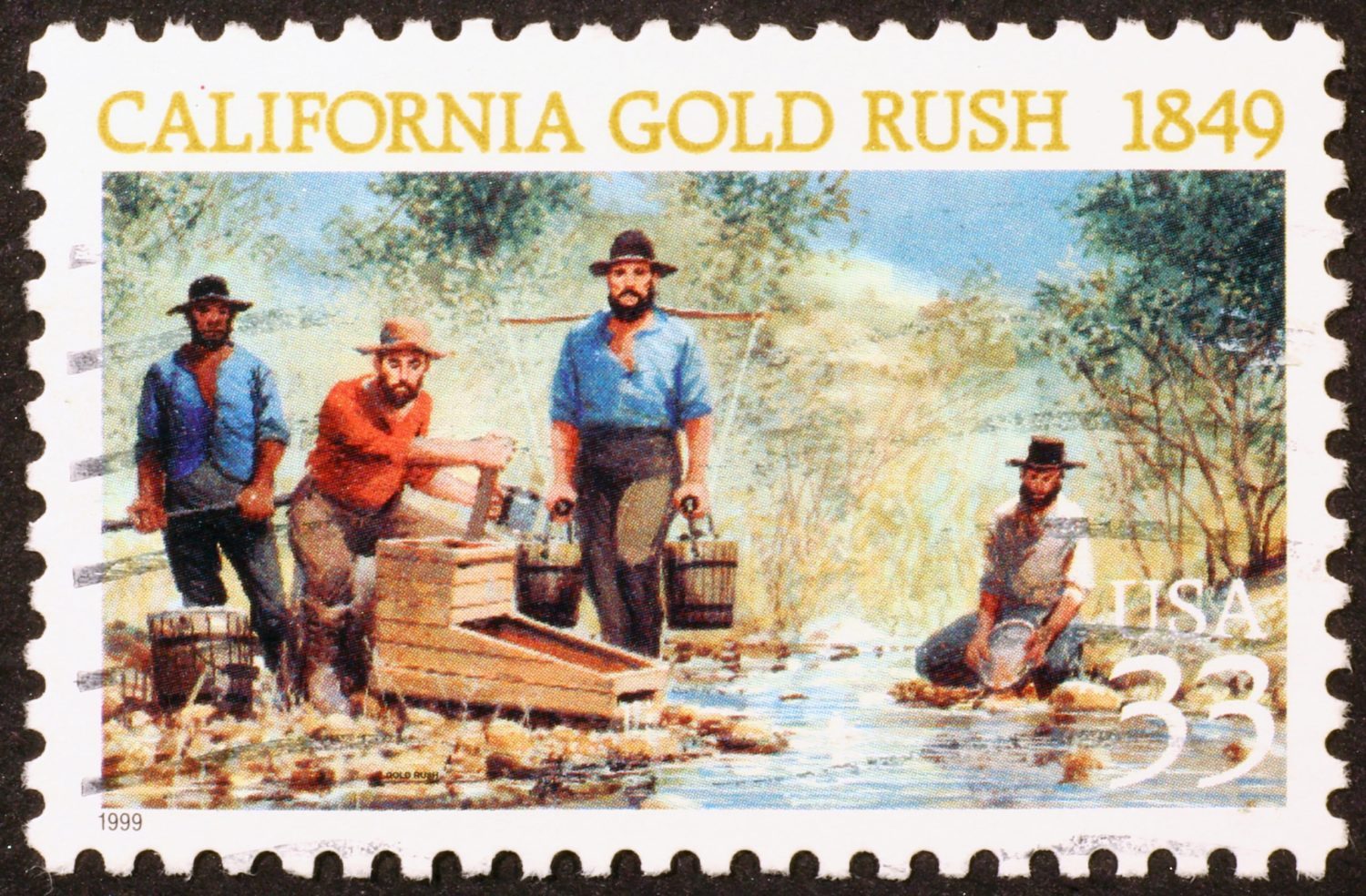
The initial gold seekers, predominantly Californians, were known as “Forty-Eighters.” They quickly descended upon the Sacramento Valley and surrounding areas, employing simple panning techniques to extract easily accessible placer gold from rivers and streams. The early returns were astonishing, with some individuals making more in a day than they would in a year of conventional labor.
The news gradually reached the East Coast, but it was not until President James K. Polk’s address to Congress in December 1848, officially confirming the rich gold finds, that the “gold fever” truly took hold of the nation. Polk displayed a sample of California gold, igniting a widespread frenzy. Newspapers across the country, from New York to Boston, published exaggerated accounts of instant wealth, fueling the imagination and desperation of millions. This official confirmation transformed a local phenomenon into a global sensation, setting the stage for the massive influx of people in the years that followed.
The Great Influx: The “Forty-Niners” and Global Migration (1849-1852)
The year 1849 marked the true beginning of the global migration to California, as hundreds of thousands of “Forty-Niners” — men and women from every corner of the world — embarked on perilous journeys in pursuit of the golden dream. This period represents the peak of the Gold Rush’s human tide, fundamentally altering California’s demographics and infrastructure.
Routes to Riches: Perilous Journeys
Prospective miners faced a daunting journey to reach the gold fields. Three primary routes emerged:
- The Overland Trail: Thousands trekked across the North American continent, enduring harsh deserts, towering mountains of the Sierra Nevada, and hostile encounters. This journey, typically starting from the Midwest and following trails like the California Trail, took months and claimed countless lives due to disease, starvation, and accidents.
- Sea Routes via Cape Horn: For those preferring a maritime journey, sailing around Cape Horn at the southern tip of South America was an option. This voyage was lengthy, expensive, and fraught with dangers, including violent storms and rampant disease in crowded ships. It could take anywhere from four to eight months.
- Sea and Land via Panama: A quicker, though still arduous, alternative was to sail to Panama, cross the narrow Isthmus of Panama by foot or canoe through dense jungle, and then catch another ship up the Pacific coast to California. While faster, this route was notorious for tropical diseases like cholera and malaria.
Each route presented its own set of challenges, yet the allure of gold was strong enough to compel individuals from all walks of life to risk everything for a chance at fortune.
A Melting Pot of Cultures
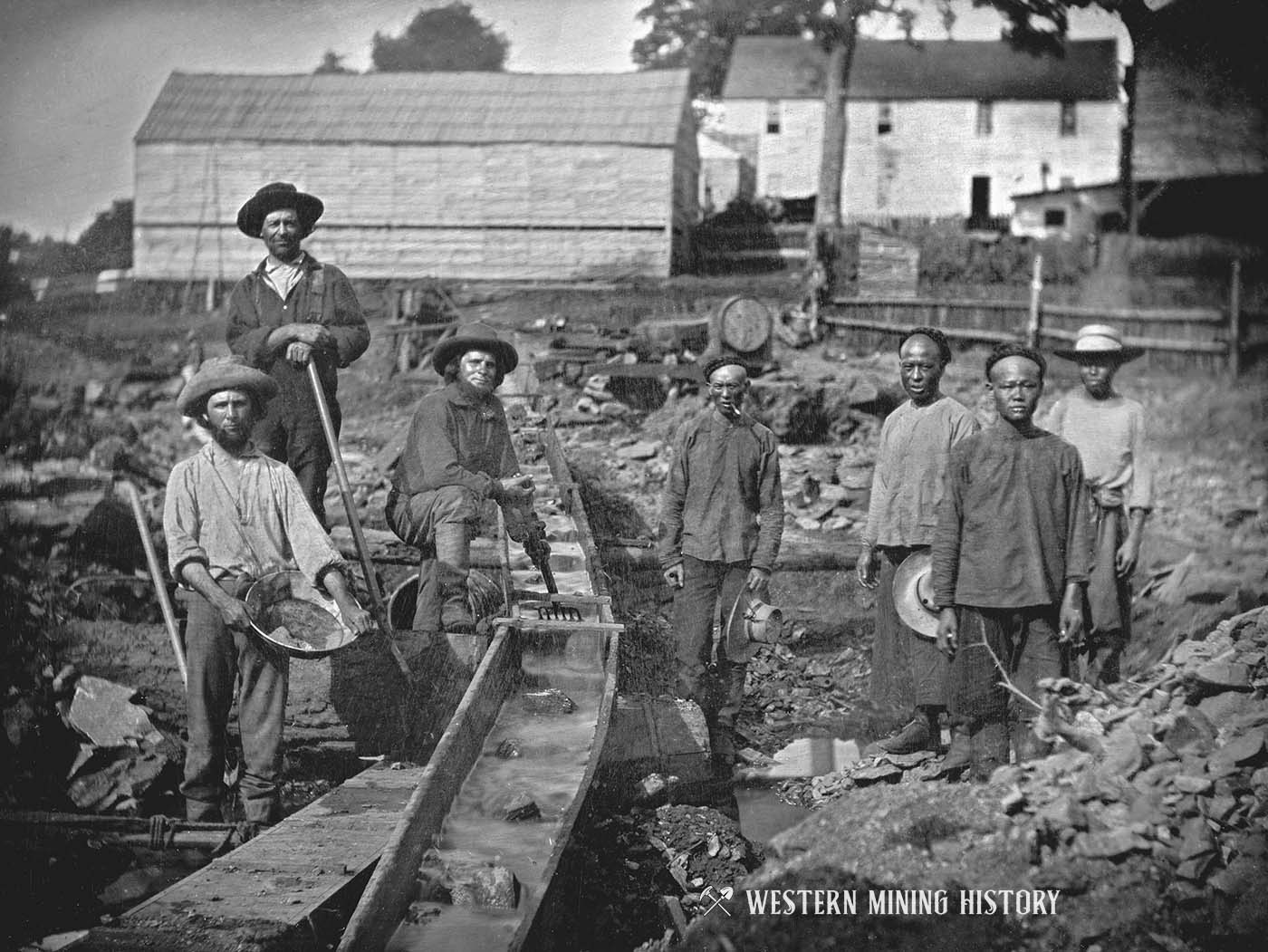
The promise of gold drew an incredibly diverse population to California. While Americans formed the largest group, significant numbers arrived from Mexico, Chile, Peru, Europe (especially France, Germany, and Ireland), and Asia (most notably from China). This unprecedented demographic shift transformed California into a global crossroads, fostering a unique cultural tapestry that continues to define the state today. However, this diversity also led to significant social tensions, xenophobia, and violence against non-white miners.
The Rise of San Francisco and Boomtowns
Prior to the Gold Rush, San Francisco was a sleepy port town called Yerba Buena. By 1850, it had exploded into a bustling metropolis, serving as the primary gateway for immigrants and supplies. Its population skyrocketed from under 1,000 to over 25,000 in just two years. Simultaneously, countless new settlements, known as boomtowns, sprang up overnight throughout the mining regions, such as Sutter Creek, Nevada City, and Grass Valley. These towns were often temporary, built hastily with tents and wooden shacks, and characterized by saloons, gambling houses, and a desperate pursuit of wealth. They embodied the raw, untamed spirit of the Gold Rush, a blend of opportunity and chaos.
Life in the Gold Fields: Hardship, Innovation, and Order (1850-1854)
Life in the gold fields was far from the romanticized image of easy riches. It was a brutal existence characterized by arduous labor, harsh conditions, and often, profound disappointment. Yet, it also spurred innovation and the rapid establishment of governmental structures.
The Evolution of Mining Techniques
The initial phase of the Gold Rush, dominated by individual prospectors using pans and sluice boxes for placer mining, quickly evolved. As easily accessible surface gold dwindled, miners had to dig deeper and process larger volumes of earth.
- Coyote Hooling: Miners would dig a shaft down to bedrock and then tunnel horizontally, mimicking the burrows of coyotes.
- Hydraulic Mining: By the mid-1850s, large-scale operations began using powerful jets of water to blast away hillsides, eroding rock and sediment to expose gold-bearing gravel. While incredibly efficient, this method caused catastrophic environmental damage, silting rivers and destroying agricultural lands downstream.
- Quartz Mining (Hard Rock Mining): As surface gold became scarce, attention turned to the “Mother Lode,” the quartz veins deep within the Sierra Nevada mountains from which the placer gold had eroded. This required significant capital, heavy machinery, and industrial-scale operations, marking a shift from individual enterprise to corporate mining.
These technological advancements required more sophisticated engineering and financial investment, gradually transforming the Gold Rush from a frontier adventure into an industrialized endeavor.
The Social Fabric and the Establishment of Law
The sudden influx of diverse populations into a virtually ungoverned territory created a chaotic environment. With little formal law enforcement, miners often formed their own informal codes of conduct and “mining districts” to regulate claims and resolve disputes. Vigilance committees sometimes took justice into their own hands. This period of self-governance, however, often devolved into mob rule and violence, particularly against ethnic minorities.
The urgent need for order and formal governance played a significant role in California’s rapid transition from a territory to a state. In 1850, less than two years after gold was discovered, California Statehood was granted, largely due to the explosive population growth and the immediate need for a stable legal and political framework. This rapid political development was a direct consequence of the Gold Rush’s transformative power, making California’s admission to the Union one of the fastest in American history.
The Decline and Enduring Legacy (1855 Onwards)
By 1855, the most intense years of the California Gold Rush were largely over. While gold mining continued for decades, the era of easy riches and individual prospecting had largely faded. The focus shifted from independent miners to large-scale industrial operations, and the nature of California itself had been permanently altered.
The Shift from “Rush” to “Industry”
The transition to hydraulic and quartz mining marked the end of the “rush” period. These methods required substantial investment in machinery, infrastructure, and labor, making it impossible for individual prospectors to compete. Mining became a capitalist enterprise, employing wage laborers rather than independent adventurers. Many disillusioned miners either returned home, sought opportunities in other emerging industries, or transitioned into farming or other trades within California. The boomtowns that had once teemed with life either dwindled into ghost towns or evolved into more permanent communities supporting the new industrial mining operations.
Economic and Demographic Transformation
The Gold Rush fundamentally reshaped California’s economy. While gold mining remained significant, the state rapidly diversified. Agriculture, particularly in the fertile valleys, boomed to feed the burgeoning population. Trade and commerce flourished, with San Francisco becoming a major Pacific port. The massive population growth cemented California’s place as a vital component of the United States. Its diverse population, though born of conflict and struggle, laid the foundation for a vibrant, multicultural society. The wealth generated by gold also helped finance the construction of infrastructure, railroads, and cities that would serve as engines of growth for the future.
Cultural and Environmental Impact
The Gold Rush left an indelible mark on American culture, embedding the myth of the rugged individualist and the pursuit of instant wealth into the national psyche. It fueled westward expansion, inspiring future migrations and settlement patterns. Environmentally, however, the impact was devastating. Hydraulic mining in particular caused widespread erosion, silting of rivers, and destruction of habitats, issues that would take generations to address.
Today, historical sites like Columbia State Historic Park and Bodie State Historic Park preserve the stories and physical remnants of this extraordinary era, allowing visitors to glimpse the challenges and triumphs of those who sought their fortune in the golden hills. While the frenzied years of 1848 to 1855 were short-lived, the California Gold Rush established California as a global player, an economic powerhouse, and a beacon for opportunity, forever altering the course of American history.
LifeOutOfTheBox is a participant in the Amazon Services LLC Associates Program, an affiliate advertising program designed to provide a means for sites to earn advertising fees by advertising and linking to Amazon.com. Amazon, the Amazon logo, AmazonSupply, and the AmazonSupply logo are trademarks of Amazon.com, Inc. or its affiliates. As an Amazon Associate we earn affiliate commissions from qualifying purchases.