
Embarking on a journey across the American Midwest often involves navigating significant distances between major urban centers. Among the most frequently inquired routes is the passage between Cleveland, Ohio, and Chicago, Illinois. These two vibrant cities, each with its unique character and appeal, are popular destinations for business travelers, tourists, and residents alike. Understanding the precise distance and the various travel options available is crucial for planning an efficient and enjoyable trip. This guide delves into the geographical separation, exploring the diverse modes of transport that connect the shores of Lake Erie to the bustling heart of the Great Lakes region.
The Direct Distance and Geographic Context
Before delving into the specifics of travel, it’s essential to establish the fundamental geographical separation between Cleveland and Chicago. The distance, however, isn’t a single, immutable number; it varies slightly depending on whether one considers a straight line, the most direct driving route, or specific points of departure and arrival within each metropolitan area.
Straight-Line vs. Driving Distance
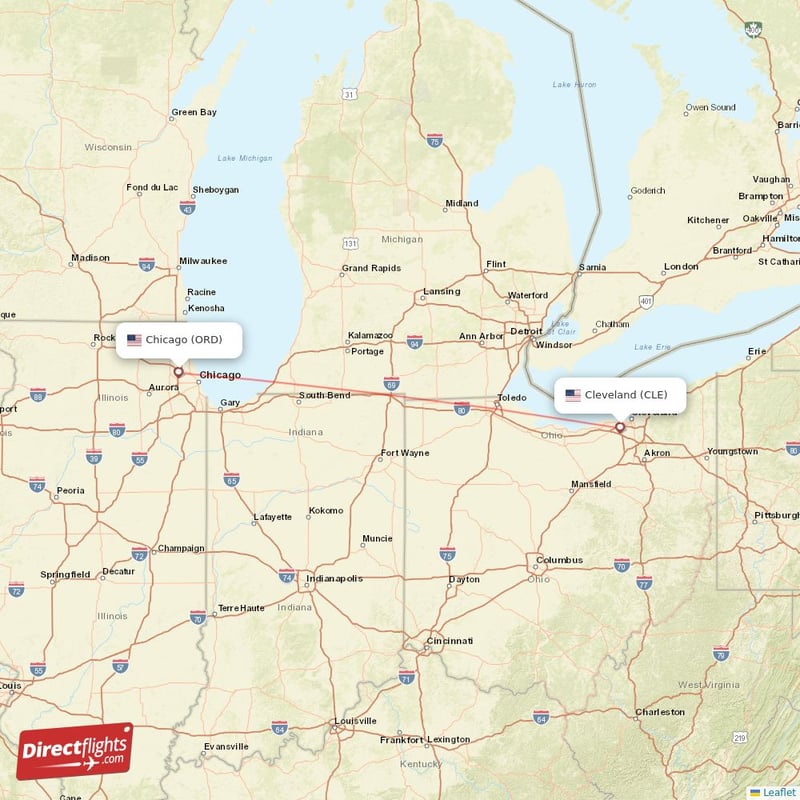
As the crow flies, the air distance between Cleveland and Chicago is approximately 300 to 310 miles (around 480-500 kilometers). This figure is primarily relevant for air travel planning. However, for most travelers, the more practical concern is the road distance. The typical driving route, which accounts for existing highways and infrastructure, spans roughly 350 to 360 miles (560-580 kilometers). This difference highlights the reality of navigating terrain and urban areas, where roads rarely follow a perfectly straight path.
A Corridor of Connection
The journey between Cleveland and Chicago traces a significant corridor through the American Midwestern states. Starting in Ohio, travelers typically traverse the entire width of Indiana before reaching Illinois. Along this route, one passes by or near notable cities such as Toledo in Ohio and Gary in Indiana. This geographical insight helps contextualize the travel time and the experience of moving across this particular segment of the country. Understanding the states and major cities along the way can also influence decisions regarding rest stops, fuel, and potential points of interest, enriching the journey beyond mere transit.
Navigating the Journey: Modes of Transport
Connecting Cleveland and Chicago are several robust transportation options, each offering distinct advantages in terms of cost, speed, comfort, and flexibility. The choice often hinges on individual priorities and travel needs.
Driving: The Most Flexible Option
Driving remains a popular choice for many, offering unparalleled flexibility and the ability to travel on one’s own schedule.
The driving distance, as mentioned, is approximately 350-360 miles. Under ideal conditions, with minimal traffic and a few brief stops, the drive typically takes between 5.5 to 6 hours. However, factors like rush hour traffic, construction, and weather can easily extend this to 7 hours or more.
The primary route involves taking I-90 West out of Cleveland, which then merges with I-80 West (often referred to as the Ohio Turnpike and later the Indiana Toll Road). These interstate highways provide a direct and generally well-maintained path. It’s important for drivers to factor in tolls, particularly on the Ohio Turnpike and Indiana Toll Road, which can add to the overall cost of the trip. Fuel expenses and the need for periodic rest stops also contribute to the total travel budget and time. The freedom to make spontaneous stops, explore towns along the route, or carry extra luggage makes driving an attractive proposition for many.
Flying: The Fastest Route
For those prioritizing speed, flying is undoubtedly the quickest way to travel between Cleveland and Chicago.
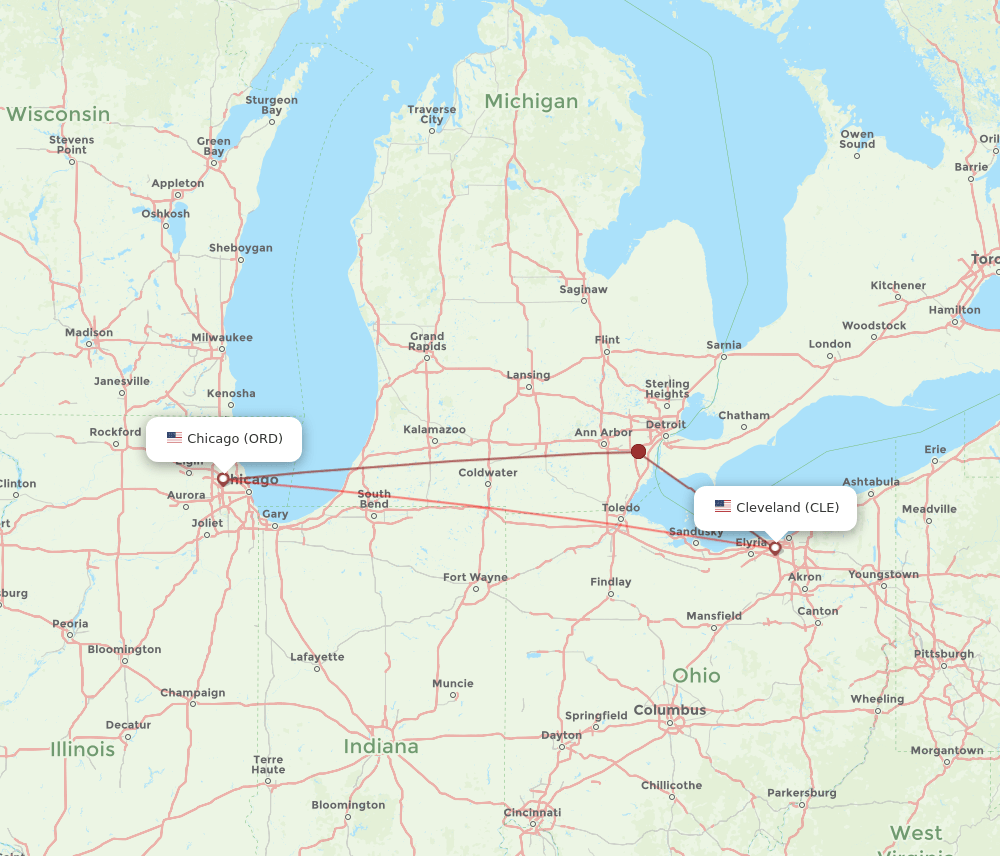
Direct flights between Cleveland Hopkins International Airport (CLE) and Chicago’s O’Hare International Airport (ORD) or Midway International Airport (MDW) typically have an air time of just 1 hour to 1 hour and 15 minutes.
However, the total travel time extends significantly once airport procedures are factored in. Travelers must account for getting to and from the airport, check-in, security screening, boarding, and baggage claim. When all these elements are combined, the door-to-door travel time can easily stretch to 3.5 to 5 hours, comparable to or even slightly longer than a smooth drive, depending on traffic to and from the airports and security wait times. Major airlines like United Airlines and Southwest Airlines offer frequent daily flights, providing numerous options for scheduling. While generally faster, flying often comes with a higher financial cost, encompassing ticket prices, baggage fees, and potentially expensive airport parking or transfers.
Rail Travel: A Scenic and Relaxing Alternative
Train travel offers a unique blend of comfort and convenience, allowing passengers to relax, work, or enjoy the scenery without the stresses of driving or airport formalities. Amtrak provides service between Cleveland and Chicago.
The primary Amtrak route connecting these two cities is often the Lake Shore Limited line. The journey from Cleveland Lakefront Station to Chicago Union Station typically takes between 5.5 to 6.5 hours.
While the actual travel time is comparable to driving, the experience is vastly different. Passengers can enjoy spacious seating, dining car services, and the freedom to move about. This option is particularly appealing for those who prefer not to drive long distances or who want to avoid the congestion and hassle associated with air travel. Booking in advance can secure better fares, and Amtrak often provides Wi-Fi and power outlets, making it a productive travel environment.
Bus Services: The Budget-Friendly Choice
For the most budget-conscious travelers, bus services present an economical way to travel between Cleveland and Chicago.
Operators like Greyhound and FlixBus offer multiple daily departures. The travel time for a bus journey typically ranges from 6 to 8 hours, depending on the number of stops and the specific route taken.
While generally the slowest option, bus travel is often significantly cheaper than flying or taking the train. Bus stations, such as the Cleveland Bus Station and Chicago Bus Station, are usually centrally located, offering convenient access to public transportation upon arrival. Modern bus services often include amenities such as Wi-Fi, power outlets, and comfortable seating, making the longer journey more bearable. This option is ideal for students, backpackers, or anyone looking to minimize travel expenses.
Factors Influencing Travel Time and Experience
Regardless of the chosen mode of transport, several external factors can significantly impact the actual travel time and the overall experience between Cleveland and Chicago. Awareness of these can help in better planning and setting realistic expectations.
Traffic and Time of Day
For both driving and bus travel, traffic is a primary determinant of travel duration. Peak hours, particularly morning and evening commutes in and around both Cleveland and Chicago, can add substantial delays. Weekends and major holidays also tend to see increased road congestion. For air travel, heavy traffic near airports can affect transit times to and from the terminals, potentially leading to missed flights if not adequately planned for. Even trains can experience minor delays due to freight traffic or track work, though this is generally less impactful than road traffic.
Weather Conditions
The Midwestern United States experiences diverse weather patterns that can significantly disrupt travel plans. Winters can bring heavy snowfall, ice, and blizzards, leading to hazardous driving conditions, flight cancellations, or train delays. Summer thunderstorms can also affect air travel, causing delays or reroutes. Always check the weather forecast before embarking on the journey, especially during the colder months, to prepare for potential delays or to consider alternative travel days.
Route Selection and Stops
When driving, the choice of route can slightly alter the distance and time. While the I-90/I-80 corridor is the most direct, some travelers might opt for slightly longer, more scenic routes if time permits. Furthermore, the number and duration of stops for fuel, food, or rest breaks will directly add to the total travel time. Planning these stops strategically can enhance comfort without excessively prolonging the journey.
Choosing Your Journey: Making the Best Decision
The “best” way to travel from Cleveland to Chicago is highly subjective and depends entirely on individual priorities.
Prioritizing Cost, Speed, or Comfort
- For Speed: Flying is the clear winner for in-air time, though door-to-door can be comparable to driving.
- For Cost: Bus services typically offer the lowest fares, especially when booked in advance.
- For Flexibility & Convenience: Driving provides the most control over schedule and route.
- For Relaxation & Experience: Train travel offers a unique, comfortable journey without the stresses of operating a vehicle or navigating airports.
Consider the composition of your travel group (solo, family with children), the amount of luggage you have, and your overall budget. Each mode of transport has its sweet spot.

Practical Tips for a Smooth Trip
Regardless of your chosen method, a few universal tips can ensure a smoother journey. Book tickets or make reservations in advance, especially during peak travel seasons, to secure better prices and availability. Pack essentials like snacks, water, entertainment, and chargers. Always check for real-time updates on traffic, flight statuses, or train delays before and during your travel. Utilize navigation apps for driving and stay informed about any road closures or construction.
In conclusion, the distance between Cleveland, Ohio, and Chicago, Illinois, is a manageable journey of approximately 350-360 miles by road. With a range of travel options from rapid flights to leisurely train rides, and budget-friendly bus trips to flexible self-drives, connecting these two dynamic Midwestern hubs is a straightforward endeavor. By weighing the factors of time, cost, and comfort, travelers can easily select the perfect mode of transport to suit their adventure.
LifeOutOfTheBox is a participant in the Amazon Services LLC Associates Program, an affiliate advertising program designed to provide a means for sites to earn advertising fees by advertising and linking to Amazon.com. Amazon, the Amazon logo, AmazonSupply, and the AmazonSupply logo are trademarks of Amazon.com, Inc. or its affiliates. As an Amazon Associate we earn affiliate commissions from qualifying purchases.