
Traveling between the bustling metropolis of New York and the sun-drenched beaches of Florida is a journey many undertake for various reasons, from seasonal migration to leisure travel. Understanding the distance, available modes of transport, and key considerations is crucial for planning an efficient and enjoyable trip. This guide delves into the geographical span, travel options, and planning essentials to help you navigate the journey from the Empire State to the Sunshine State.
Understanding the Geographic Span
The distance between New York and Florida is substantial, spanning several states and offering diverse landscapes along the way. While a direct, “as the crow flies” measurement provides a baseline, actual travel distances vary significantly based on your specific starting point in New York and your intended destination in Florida, as well as the chosen mode of transport.
Direct Distance vs. Driving Routes
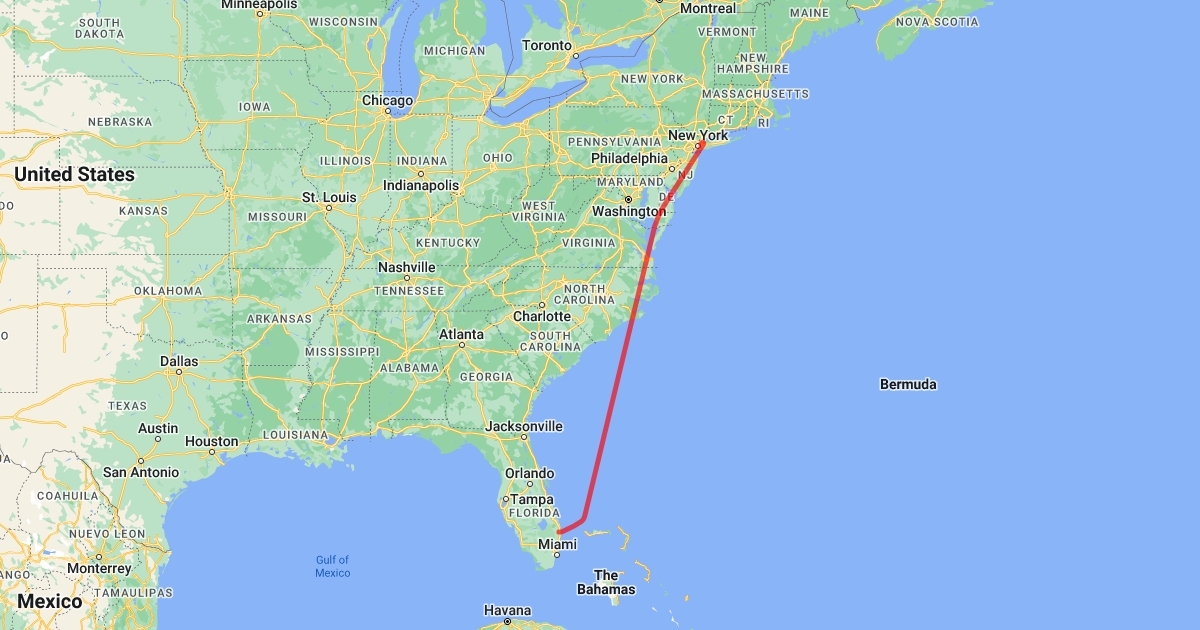
Geographically, the straight-line distance between, for example, New York City and Orlando, Florida, is approximately 950 to 1,000 miles (1,530 to 1,610 kilometers). However, air travel routes will typically cover this direct distance more closely.
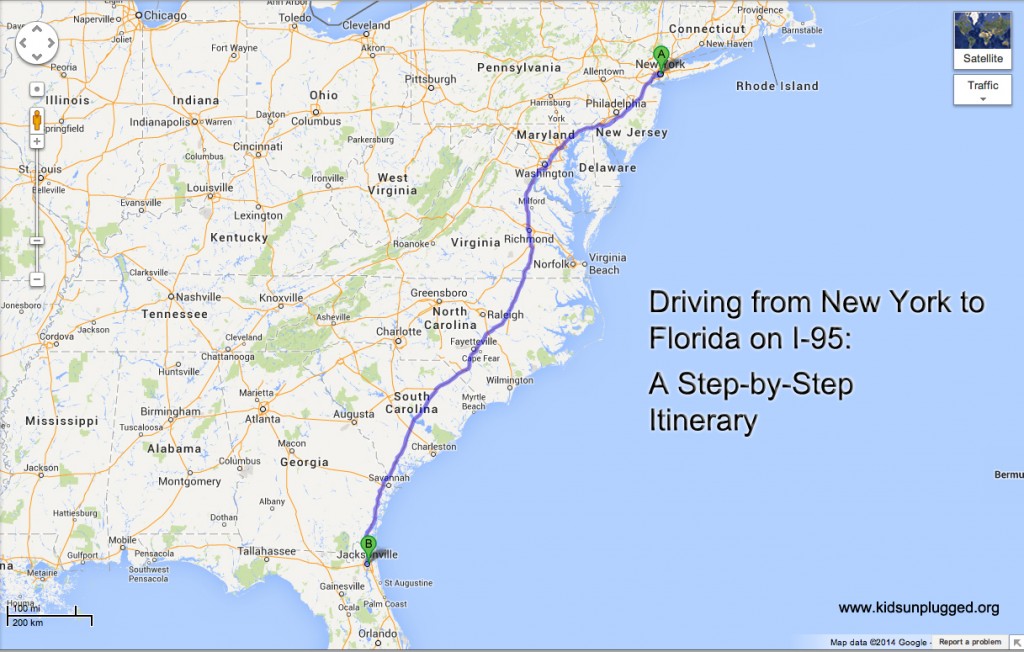
For road travel, the distance naturally increases due to the winding nature of highways and the need to pass through various states. A common driving route from New York City to a central Florida destination like Orlando is typically around 1,070 to 1,150 miles (1,720 to 1,850 kilometers). This journey usually takes between 16 to 20 hours of pure driving time, not accounting for stops, traffic, or overnight stays. To a southern Florida city like Miami, the distance extends to approximately 1,280 to 1,300 miles (2,060 to 2,090 kilometers), requiring about 20 to 22 hours of continuous driving.
Key Cities and States Along the Way
Driving from New York to Florida means traversing a significant portion of the East Coast of the United States. You’ll typically pass through New Jersey, Delaware, Maryland, Virginia, North Carolina, South Carolina, and Georgia before reaching Florida. Major cities often serving as popular stopovers include Philadelphia, Baltimore, Washington D.C., Richmond, Charlotte, Savannah, and Jacksonville. Each offers unique cultural and historical attractions, transforming a long drive into a potential multi-day exploration.
Modes of Travel: Choosing Your Journey
The choice of transportation significantly impacts the time, cost, and overall experience of your trip from New York to Florida.
Air Travel: Speed and Convenience
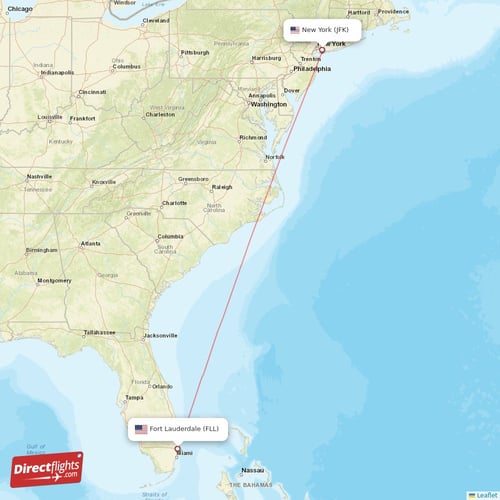
Flying is undeniably the fastest way to cover the distance. Direct flights from major New York area airports like JFK, LaGuardia, or Newark Liberty International Airport to Florida airports such as Orlando International Airport (MCO), Miami International Airport (MIA), Fort Lauderdale-Hollywood International Airport (FLL), or Tampa International Airport (TPA) typically range from 2.5 to 3.5 hours.
While the flight itself is quick, remember to factor in travel time to and from airports, security checks, and potential delays. Despite the shorter travel duration, the entire airport experience can add several hours to your journey, making total door-to-door travel time closer to 6-8 hours. Major airlines like Delta, American Airlines, United, JetBlue, and low-cost carriers like Southwest Airlines and Spirit Airlines offer frequent services on this popular route.
Driving: The Ultimate Road Trip Experience
Driving offers unparalleled flexibility and the opportunity to discover hidden gems along the route. As mentioned, the driving time averages 16-22 hours, depending on the destination within Florida. Most travelers opt to break the journey into two days, incorporating an overnight stay, often in North Carolina, South Carolina, or Georgia.
A road trip requires careful planning for fuel stops, meals, and rest. Costs include gasoline, tolls (which can be significant along I-95), and accommodation for overnight stays. Vehicle maintenance should also be considered before embarking on such a long journey. Companies like Hertz or Enterprise offer rental cars for those who prefer not to use their personal vehicle or need a one-way option.
Train Travel: A Scenic Alternative
Amtrak provides train services connecting New York City’s Penn Station to various Florida cities, including Jacksonville, Orlando, Tampa, and Miami. The Silver Meteor and Silver Star are the primary routes.
Train travel is significantly slower than flying or even driving, with journeys often taking between 20 to 30 hours, depending on the destination. However, it offers a unique, comfortable, and often scenic experience without the stress of driving or airport formalities. Passengers can relax, enjoy dining car services, and even book private rooms for overnight journeys. It’s an excellent option for those who prioritize relaxation and scenery over speed.
Bus Services: Budget-Friendly Options
Bus companies like Greyhound and FlixBus offer the most economical way to travel between New York and Florida. However, it is also the longest travel option, often taking 24 to 30+ hours, depending on transfers and stops.
While budget-friendly, bus journeys can be less comfortable than other options, especially for such long distances. It’s crucial to consider the trade-off between cost savings and comfort and travel time when choosing this mode of transport.
Planning Your Trip: Considerations and Tips
Regardless of your chosen mode of transport, a well-planned trip enhances the experience and minimizes potential headaches.
Best Time to Travel
The peak travel seasons between New York and Florida typically coincide with school holidays, winter (when New Yorkers seek warmth), and spring break. During these times, prices for flights and accommodations tend to be higher, and roads, airports, and train stations can be more crowded.
- Winter (December to February): Popular for escaping New York’s cold, leading to higher demand for Florida travel. Expect warmer temperatures in Florida, but also higher prices.
- Spring (March to May): Pleasant weather in both states. Spring break can cause surges in travel.
- Summer (June to August): Can be hot and humid in Florida, with a higher chance of afternoon thunderstorms and hurricane season concerns. Airfare might be lower, but theme park crowds are often substantial.
- Fall (September to November): Often considered an ideal time to visit Florida due to cooler temperatures, fewer crowds, and lower prices, especially outside of holiday weekends.
Budgeting for Your Journey
Costs can vary widely.
- Flights: Can range from under $100 for budget carriers during off-peak times to $300-$600+ for full-service airlines during peak season. Book in advance for the best fares.
- Driving: Factor in fuel costs (1,000-1,300 miles round trip at an average MPG and fuel price), tolls (potentially $50-$100+ for a one-way trip along I-95), and one or two nights of accommodation if breaking up the drive.
- Train: Amtrak coach fares can be comparable to mid-range flights, starting from $80-$150 one-way, but can easily exceed $300-$500 for sleeper car accommodations.
- Bus: The most economical, typically $50-$100+ one-way.
Always consider hidden costs such as airport parking, taxi/rideshare services, meals during travel, and potential car rental at your destination.
Packing Essentials for Long-Distance Travel
For any long-distance trip, thoughtful packing makes a difference.
- Comfortable Clothing: Especially crucial for driving or train/bus travel.
- Entertainment: Books, downloaded movies/shows, podcasts, music to pass the time.
- Snacks and Drinks: Saves money and provides options, especially for road trips.
- Chargers and Power Banks: Essential for keeping devices alive.
- Travel Documents: ID, tickets, hotel reservations, car rental agreements.
- Personal Comfort Items: Neck pillow, eye mask, earplugs for flights or train/bus rides.
For road trips, an emergency kit, first-aid supplies, and physical maps (in case GPS fails) are also wise additions.
What to Expect: The Experience of Traveling Between New York and Florida
The journey itself is part of the adventure, offering a transition from one distinct American experience to another.
From Urban Bustle to Sunshine State Serenity
Leaving New York means departing from a fast-paced, high-energy environment characterized by iconic skyscrapers, vibrant cultural scenes, and bustling streets. As you travel south, particularly by road or train, the landscape gradually shifts. Urban centers give way to sprawling suburbs, then to more rural stretches, farmlands, and eventually the distinct Southern charm of states like Virginia, North Carolina, and Georgia. The architecture changes, the pace slows, and the climate becomes noticeably warmer and more humid as you approach Florida. Upon arrival, you are greeted by palm trees, beaches, and a relaxed, vacation-oriented atmosphere, a stark contrast to the New York City rhythm.
Roadside Attractions and Stopovers
A road trip from New York to Florida is an opportunity to explore the diverse culture and history of the East Coast. You could stop in Washington D.C. to see the monuments, explore historic Richmond, or enjoy the charming southern hospitality of Charleston, South Carolina, or Savannah, Georgia. These stops can break the monotony of driving and add enriching experiences to your journey. Even simple roadside diners can offer a taste of local cuisine and culture.
Arrival and Local Transportation
Once you arrive in Florida, your transportation needs will depend on your destination. Major cities like Orlando and Miami have extensive public transportation networks, but often, especially for exploring beaches or more spread-out attractions, a rental car or rideshare services are preferred. If you flew in, securing a rental car in advance at the airport is advisable. If you drove, you have the convenience of your own vehicle to explore the Sunshine State.
The journey from New York to Florida is more than just covering distance; it’s a transition between two distinct American experiences. Whether by air, road, or rail, careful planning and an adventurous spirit will ensure a smooth and memorable trip.
LifeOutOfTheBox is a participant in the Amazon Services LLC Associates Program, an affiliate advertising program designed to provide a means for sites to earn advertising fees by advertising and linking to Amazon.com. Amazon, the Amazon logo, AmazonSupply, and the AmazonSupply logo are trademarks of Amazon.com, Inc. or its affiliates. As an Amazon Associate we earn affiliate commissions from qualifying purchases.