
The question “How far is Florida to Alabama?” is a common one for travelers planning journeys across the southeastern United States. Given their contiguous borders, the distance between these two vibrant states is highly variable, depending entirely on the specific starting and ending points of your journey. While they share a coastline along the Gulf of Mexico, the inland stretches can present vastly different travel times and experiences. Understanding this geographical proximity is key to planning an efficient and enjoyable trip, whether you’re embarking on a quick coastal hop or a cross-state odyssey.

Understanding the Geographic Proximity
Florida and Alabama are neighboring states, sharing a significant border that runs roughly from the Gulf of Mexico inland. This shared boundary means that travel between them can range from incredibly short drives to full-day excursions, depending on your chosen origin and destination. The westernmost part of Florida’s panhandle directly abuts Alabama’s southern expanse, making it one of the easiest interstate transitions in the region.
The shortest distance between the two states is effectively zero, as their borders touch. However, for practical travel purposes, we consider the distance between specific cities or points of interest. For instance, Pensacola, Florida, is often considered a gateway city from Florida into Alabama, particularly to coastal destinations like Mobile, Alabama or Gulf Shores, Alabama. Traveling from the more distant parts of Florida, such as Miami or Orlando, naturally entails a much longer journey to reach any point in Alabama. This variability is crucial for travelers to consider when mapping out their itinerary, as it impacts everything from fuel costs to accommodation planning.
Key Routes and Driving Distances
For most travelers, driving is the primary mode of transport between Florida and Alabama, offering flexibility and the opportunity to explore sights along the way. Several key interstates and highways facilitate this travel, with Interstate 10 (I-10) being the most prominent artery connecting the two states along the Gulf Coast.
Short Coastal Hops
The closest major metropolitan areas are found along the Gulf Coast.
- Pensacola, Florida to Mobile, Alabama: This is one of the shortest and most frequent routes. Via I-10, the distance is approximately 55-60 miles, taking about 1 to 1.5 hours, depending on traffic, especially around the Mobile Bay area.
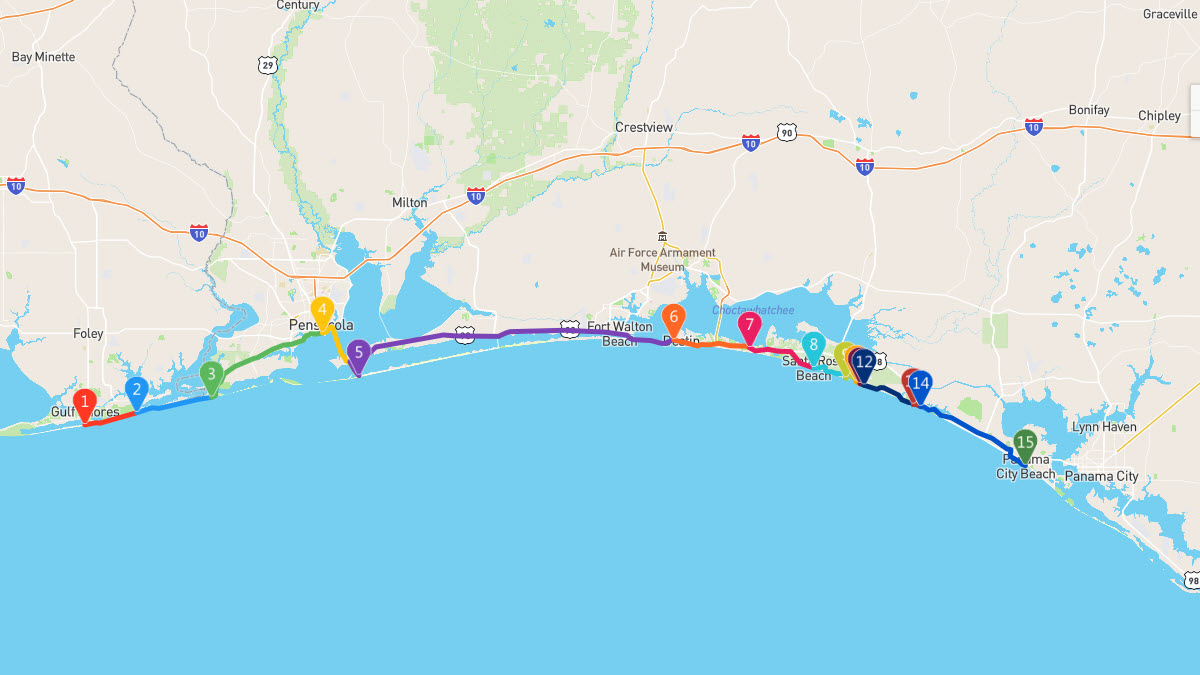
- Pensacola, Florida to Gulf Shores, Alabama: For beachgoers, this route is also popular. It’s roughly 40-45 miles, taking around 1 hour to 1 hour and 15 minutes, often involving scenic drives along US Route 98 or State Road 292 before crossing into Alabama.
Inland Connections
Moving further inland or to state capitals offers different perspectives.
- Tallahassee, Florida to Montgomery, Alabama: As capital cities, these two offer a more central connection. The distance is about 190-200 miles, translating to approximately 3 to 3.5 hours of driving via US-231 N or a combination of I-10 W and I-65 N. This route cuts through rural landscapes, offering a glimpse into the heart of the Southeast.
Longer Journeys from Peninsular Florida
Travelers starting from Florida’s peninsula will face considerably longer drives.
- Orlando, Florida to Birmingham, Alabama: This is a significant journey spanning approximately 530-550 miles. Expect a driving time of 8 to 9 hours without major stops, primarily using I-75 N and I-10 W before connecting to I-65 N in Alabama. This route often necessitates an overnight stop or at least multiple driver changes.
- Miami, Florida to Gulf Shores, Alabama: From the southernmost tip of Florida to Alabama’s Gulf Coast, this drive covers around 730-750 miles. It’s a hefty 11-12 hour drive, often best broken into a two-day trip, following I-75 N and I-10 W.
Factors such as traffic, especially near major cities and during peak seasons, can significantly impact actual travel times. Construction zones, weather conditions (particularly heavy rain or hurricane season), and the frequency of rest stops also play a role in the overall duration of the trip.
Planning Your Road Trip: Considerations for Travelers
A road trip between Florida and Alabama can be an adventure, offering a blend of coastal beauty, historical sites, and southern charm. Careful planning ensures a smooth and enjoyable journey.
Best Times to Travel
The timing of your trip can greatly influence the experience.
- Spring (March-May) and Fall (September-November) are generally considered the best times for a road trip. The weather is milder, humidity is lower, and the intense summer crowds are absent. This makes exploring outdoor attractions and enjoying scenic drives much more pleasant.
- Summer (June-August) sees peak tourist season, especially along the Gulf Coast. Expect higher temperatures, increased humidity, and greater traffic congestion, particularly around popular beach destinations like Panama City Beach, Destin, Gulf Shores, and Orange Beach. This period also coincides with hurricane season, so travelers should stay informed about weather forecasts.
- Winter (December-February) offers cooler temperatures, making it ideal for those escaping colder northern climates. While snow is rare, temperatures can drop, especially inland. Coastal areas remain relatively mild, but beach activities might be limited.
Scenic Drives vs. Fastest Routes
Your priorities for the trip should dictate your route choice.
- For Speed and Efficiency: Interstate 10 (I-10) is undeniably the fastest way to traverse the distance between Florida’s panhandle and southern Alabama. It’s a well-maintained, multi-lane highway designed for swift travel. For longer journeys from central or south Florida, I-75 N connecting to I-10 W is the most direct path.
- For Scenic Beauty and Exploration: If time allows, consider deviating from the interstate. US Route 98 offers a stunning drive along the Florida Emerald Coast, winding through picturesque beach towns like Destin and Seaside before connecting to similar scenic routes into Alabama. These routes provide opportunities to stop at local eateries, unique shops, and beautiful beaches, turning the drive itself into part of the vacation experience.
Must-See Stops Along the Way
The journey between Florida and Alabama is rich with attractions.
- In Florida: Along the panhandle, don’t miss the pristine white sands of the Emerald Coast. Cities like Destin and Panama City Beach are famous for their beaches, water sports, and vibrant dining scenes. Pensacola offers historical sites like the National Naval Aviation Museum.
- In Alabama: The Gulf Shores and Orange Beach area boasts beautiful beaches and family-friendly attractions. In Mobile, explore the historic downtown, visit the majestic Battleship USS Alabama at USS Alabama Battleship Memorial Park, or delve into the city’s rich Mardi Gras history at the Mobile Carnival Museum. Inland, Montgomery offers significant civil rights history, including the Rosa Parks Museum and the Civil Rights Memorial Center.
- Culinary Delights: Both states are renowned for their fresh seafood, particularly shrimp, oysters, and fresh fish. Southern comfort food, including barbecue, grits, and pecan pie, are staples that travelers should savor along their route.
Alternative Travel Options
While driving is the most common way to travel between Florida and Alabama, other options exist for those preferring not to drive or looking for a quicker transit for longer distances.
Flying
For journeys from central or south Florida to central or northern Alabama, flying can save considerable time.
- Major Florida Airports: Orlando International Airport (MCO), Miami International Airport (MIA), Tampa International Airport (TPA), Jacksonville International Airport (JAX), and Pensacola International Airport (PNS) offer numerous connections.
- Major Alabama Airports: Birmingham-Shuttlesworth International Airport (BHM) is the largest. Mobile Regional Airport (MOB) and Montgomery Regional Airport (MGM) serve their respective regions.
Direct flights are available for popular city pairs, significantly reducing travel time compared to driving 8-12 hours. For example, a flight from Orlando to Birmingham might take just 1.5-2 hours in the air, though total travel time including airport procedures will be longer. Cost can be a factor, with airfare sometimes exceeding driving expenses, especially for solo travelers, but it offers unparalleled speed for long distances.
Bus and Train Services
For budget-conscious travelers or those who prefer not to drive, bus and train services offer viable alternatives.
- Bus Services: Companies like Greyhound operate routes connecting various cities in Florida to those in Alabama. While generally more affordable than flying, bus journeys are significantly longer due to multiple stops and indirect routes.
- Train Services: Amtrak offers limited service in this region. The Crescent line, for example, connects New Orleans to New York City via Alabama (Birmingham) and other states, but direct Florida connections are not extensive for north-south travel into Alabama. Travelers might need to combine train travel with other modes to reach their final destination. Train travel offers a comfortable, scenic, and often nostalgic experience, but it requires flexibility with schedules and acknowledges longer travel times.

Beyond the Distance: Exploring the Connection
The proximity between Florida and Alabama isn’t just about miles; it represents a cultural and recreational corridor that draws millions of visitors annually. For many residents of both states, crossing the border is a regular occurrence for leisure, business, or family visits. The shared Gulf Coast region, in particular, fosters a unique bond, with similar coastal ecosystems, economies driven by tourism and fishing, and a relaxed, sun-drenched lifestyle.
Whether you’re seeking the lively resorts of Florida’s panhandle, the historical depth of Mobile, or the serene beaches of Alabama’s Gulf Shores, the journey between these states is an integral part of the experience. The varied distances simply mean a wider array of travel planning possibilities, from a spontaneous weekend getaway to a meticulously planned cross-state adventure. By understanding the geographical nuances and leveraging the diverse transportation options, travelers can fully explore the unique offerings of both Florida and Alabama, making their journey as enriching as their destination.
LifeOutOfTheBox is a participant in the Amazon Services LLC Associates Program, an affiliate advertising program designed to provide a means for sites to earn advertising fees by advertising and linking to Amazon.com. Amazon, the Amazon logo, AmazonSupply, and the AmazonSupply logo are trademarks of Amazon.com, Inc. or its affiliates. As an Amazon Associate we earn affiliate commissions from qualifying purchases.