
Understanding the distance between two major Texan hubs like Houston and Austin is crucial for any traveler planning their journey. While seemingly close on a map, the actual mileage, travel time, and the most efficient routes can vary significantly depending on your chosen mode of transportation and personal preferences. This guide will delve into the specifics, offering insights into the driving distance, alternative travel options, and considerations for making the most of your trip between these vibrant cities. Whether you’re heading to Austin for its renowned live music scene or to Houston for its world-class museums and culinary delights, knowing the ins and outs of the journey will set the stage for a seamless and enjoyable experience.
Driving Distance and Routes
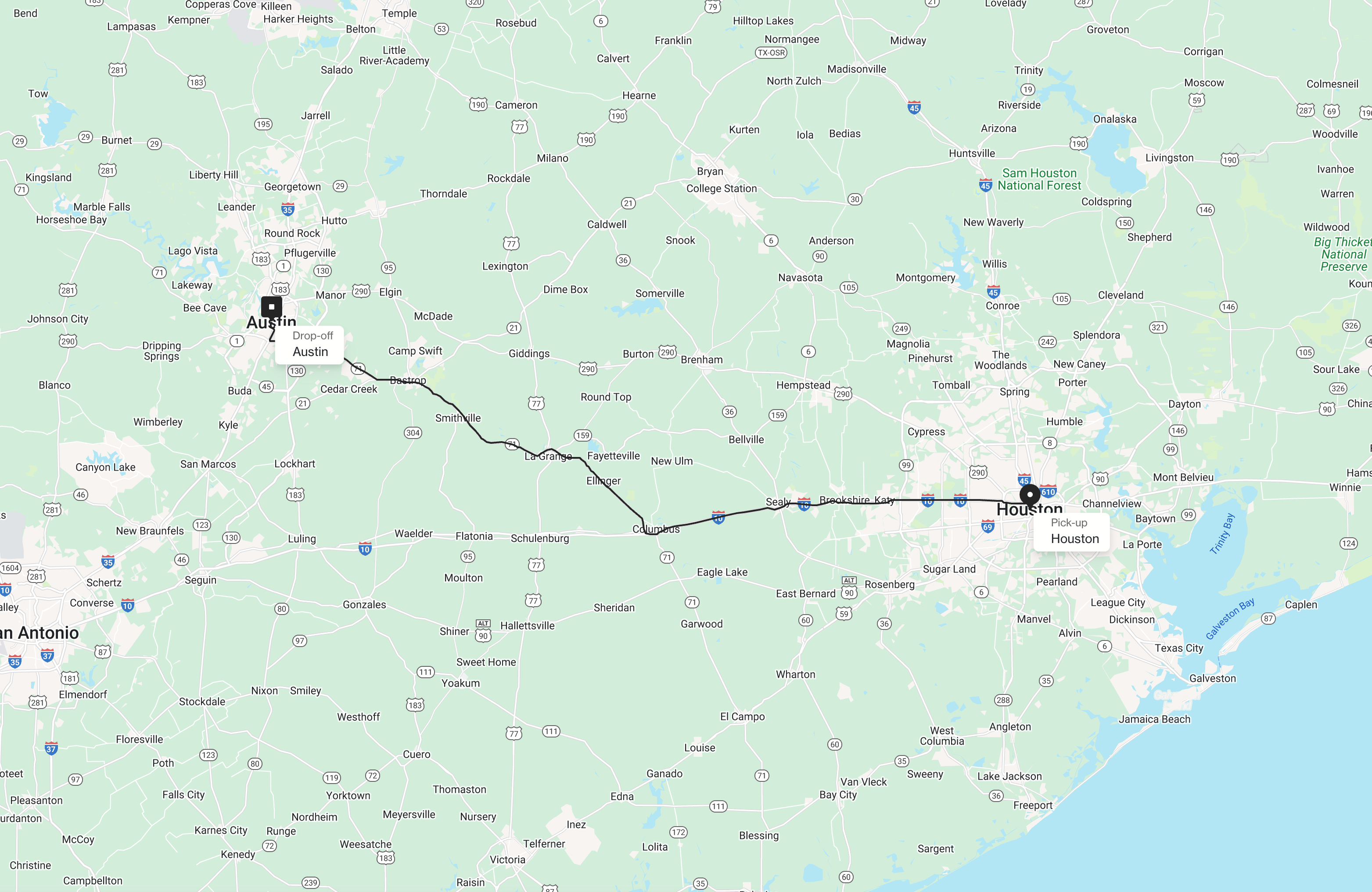
The most common way to travel between Houston and Austin is by car. The primary route is via Interstate 10 West (I-10 W) to U.S. Route 290 West (US-290 W).
Direct Driving Route
The most direct driving route typically covers approximately 165 to 170 miles, depending on your exact starting point in Houston and your final destination in Austin. This distance translates to an average driving time of 2.5 to 3 hours under optimal conditions.
Factors Affecting Travel Time
- Traffic: Both Houston and Austin are major metropolitan areas, and traffic congestion can significantly impact travel times, especially during peak hours. Morning commutes (typically 6:00 AM to 9:00 AM) and evening rush hours (4:00 PM to 7:00 PM) can add considerable time to your journey. Weekends, particularly Friday evenings and Sunday afternoons, can also see increased traffic as people travel between the cities.
- Road Construction: As with any active urban and intercity corridor, road construction projects are a common occurrence. These can lead to temporary lane closures, detours, and slower speeds, extending your travel duration. It’s advisable to check local traffic advisories and navigation apps for real-time updates before and during your drive.
- Weather Conditions: While Texas generally experiences favorable weather, severe thunderstorms or heavy rainfall can occur, particularly during spring and summer. These conditions can reduce visibility and necessitate slower driving speeds, thus increasing travel time.
Alternative Driving Routes
While I-10 W and US-290 W is the most popular, other routes exist, though they are generally longer or less direct. For example, one might consider a route that incorporates parts of U.S. Route 77 North (US-77 N) or State Highway 71 West (SH-71 W). These alternatives might be chosen for scenic value or to avoid specific traffic bottlenecks, but they usually add to the mileage and time.
Preparing for Your Drive
- Vehicle Check: Ensure your vehicle is in good working order, with proper tire pressure, fluid levels, and functioning brakes.
- Navigation: Utilize GPS navigation apps such as Google Maps or Waze for real-time traffic updates and route optimization.
- Stops: Plan for any necessary stops for gas, restrooms, or a meal. Many convenient stops are available along I-10 W, including towns like Columbus and Bastrop.
Air Travel Options
For those seeking to minimize travel time, air travel presents a faster, albeit often more expensive, alternative to driving.
Airports
- Houston: Travelers in Houston have several airport options, including George Bush Intercontinental Airport (IAH), William P. Hobby Airport (HOU), and Ellington Airport (EFD). IAH and HOU are the primary hubs for commercial flights.
- Austin: The main airport serving Austin is Austin-Bergstrom International Airport (AUS).
Flight Durations and Logistics
Direct flights between Houston and Austin are not common due to the short distance. Most travelers opting for air travel will likely need to connect through another hub, which can make the total travel time comparable to driving, especially when factoring in airport procedures. However, if one is already planning to fly into or out of one of these cities for a broader trip, adding a connecting flight might be feasible.
The flight time itself, when available, is typically very short, around 1 hour. However, the overall travel experience involves:
- Travel to the Airport: Getting to your departure airport from your location in Houston.
- Check-in and Security: Arriving at the airport well in advance for check-in, bag drop (if applicable), and security screening.
- Boarding: Waiting for and boarding the flight.
- Flight Time: The actual duration in the air.
- Deplaning and Baggage Claim: Exiting the aircraft and collecting any checked luggage.
- Travel from the Airport: Reaching your final destination in Austin from AUS.
Given these steps, the total door-to-door travel time via air can easily reach 4 to 6 hours, making it less convenient for a simple point-to-point trip between the two cities compared to driving.
Bus and Train Services
For budget-conscious travelers or those who prefer not to drive, bus and train services offer viable alternatives, though they typically involve longer travel times.
Bus Services
Several bus companies operate routes between Houston and Austin. Companies like Greyhound and FlixBus are common providers.
- Departure and Arrival Points: Bus stations are generally located in downtown areas or easily accessible parts of each city. For example, the Houston Bus Station and the Austin Bus Station are key terminals.
- Travel Time: Bus journeys typically range from 3.5 to 5 hours, depending on the specific route, number of stops, and traffic conditions. These services can be a more economical choice, with fares often being significantly lower than airfare or even the cost of gas and potential tolls for driving.
- Amenities: Modern bus services often include amenities such as Wi-Fi, power outlets, and comfortable seating, making the longer journey more bearable.
Train Services
Amtrak offers passenger train services, though direct routes between Houston and Austin are not as straightforward as bus or car travel. The primary Amtrak route that connects these cities usually involves a transfer, often in San Antonio.
- Route and Transfers: Travelers would typically take an Amtrak train from Houston to San Antonio, and then connect to another train service heading to Austin.
- Travel Time: The total travel time for the train journey, including transfers, can be considerably longer than driving or flying, often exceeding 6 to 8 hours.
- Experience: Train travel can offer a more relaxed and scenic experience, allowing passengers to move around, enjoy the views, and avoid the stress of driving in traffic. However, the longer duration and potential for delays make it a choice best suited for those who prioritize a leisurely journey over speed.
Considerations for Your Trip
Beyond the raw distance and travel times, several factors can influence your decision on how to travel between Houston and Austin.
Cost Analysis
- Driving: The cost of driving involves fuel, potential wear and tear on your vehicle, and possible tolls (though tolls are minimal on the most direct route). For a solo traveler or a couple, driving is often the most cost-effective option.
- Bus: Bus tickets are generally the cheapest option, making it ideal for budget travelers.
- Train: Train fares can vary widely depending on booking time and class, but they are often more expensive than bus travel and can sometimes rival or exceed the cost of flying, especially when factoring in the longer travel time.
- Flying: Airfare is typically the most expensive option, especially when including the cost of transportation to and from airports and potential baggage fees.
Travel Preferences
- Flexibility: Driving offers the most flexibility, allowing you to depart and arrive on your own schedule, make spontaneous stops, and carry as much luggage as your vehicle can accommodate.
- Convenience: For those who dislike driving or prefer to relax during transit, bus or train services can be more convenient. Air travel offers speed if a direct flight is available, but the entire airport process can be time-consuming.
- Experience: Some travelers enjoy the road trip experience, the opportunity to see the Texas landscape unfold. Others might prefer the novelty of train travel.

Luggage Restrictions
- Driving: No significant luggage restrictions beyond the capacity of your vehicle.
- Bus/Train: Generally more lenient than airlines, but check specific company policies for size and weight limits.
- Flying: Strict regulations on carry-on and checked baggage, including size, weight, and prohibited items.
Ultimately, the “how far” between Houston and Austin is not just a matter of miles, but a complex calculation involving time, cost, and personal travel style. Understanding these variables will empower you to choose the best method for your next journey between these dynamic Texan cities.
LifeOutOfTheBox is a participant in the Amazon Services LLC Associates Program, an affiliate advertising program designed to provide a means for sites to earn advertising fees by advertising and linking to Amazon.com. Amazon, the Amazon logo, AmazonSupply, and the AmazonSupply logo are trademarks of Amazon.com, Inc. or its affiliates. As an Amazon Associate we earn affiliate commissions from qualifying purchases.