
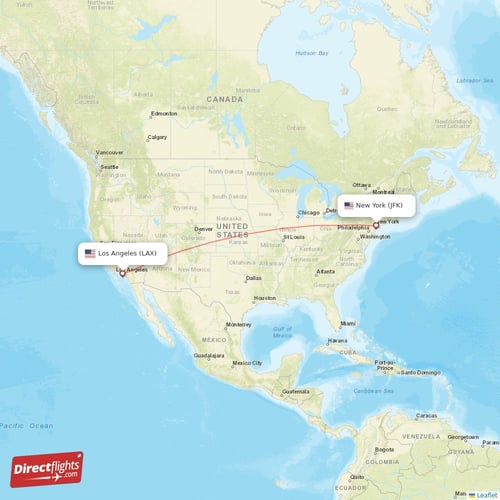
Crossing the United States from coast to coast is a journey that captures the imagination of travelers worldwide. Whether you are flying from the sun-drenched boulevards of Los Angeles to the bustling concrete canyons of New York or vice versa, understanding the mechanics of this transcontinental trek is essential for effective trip planning. Spanning approximately 2,450 miles (3,940 kilometers), this flight is more than just a commute; it is a transition between two distinct cultural and geographic anchors of North America.
Flight Duration: Factors Influencing Your Time in the Sky
When passengers ask about the distance in terms of time, the answer is rarely static. On average, a direct flight from Los Angeles International Airport to John F. Kennedy International Airport typically takes between five and six hours. However, several variables dictate the exact duration of your time in the air.
The Impact of Jet Streams
The most significant factor in flight time is the prevailing wind, specifically the jet stream. Because the jet stream generally flows from west to east, flights departing from California toward the East Coast benefit from a tailwind. This boost can shorten the travel time significantly, sometimes pushing the flight duration closer to the five-hour mark. Conversely, flights heading west from New York City often face a headwind, which requires the aircraft to burn more fuel and spend more time aloft, often extending the journey to six hours or more.
Aircraft Type and Route Efficiency
Modern commercial aviation has refined the routes taken across the continent. Airlines frequently adjust flight paths based on real-time weather patterns and air traffic control requirements. While a Boeing 737 or an Airbus A321 might serve the route with standard speed, the efficiency of the flight path—often referred to as “great circle” routing—ensures that planes take the most direct physical path across the Earth’s curvature. These technological optimizations have made the cross-country flight a routine, highly efficient experience for modern travelers.
Choosing the Right Departure and Arrival Hubs
While the primary travel arteries connect the major hubs, New York and Los Angeles are served by multiple airports, each offering a different experience. Your choice of airport can affect both the flight path and the overall convenience of your journey.
The New York Airport Network
- John F. Kennedy International Airport (JFK): As the primary gateway for international and major transcontinental travel, JFK offers the highest frequency of flights to the West Coast.
- Newark Liberty International Airport (EWR): Located in New Jersey, Newark is a major hub for United Airlines and provides an excellent alternative for those staying in Manhattan or the surrounding areas.
- LaGuardia Airport (LGA): Primarily focused on domestic regional flights, LaGuardia has strict perimeter rules that generally limit non-stop flights to the West Coast, making it a less common choice for this specific trip compared to its counterparts.

Los Angeles Connectivity
- Los Angeles International Airport (LAX): This is the primary long-haul hub for the region, offering the widest range of non-stop options.
- Hollywood Burbank Airport (BUR): For travelers preferring a more intimate, less chaotic airport experience, Burbank offers a convenient alternative, though non-stop flights to New York are less frequent than those from LAX.
Optimizing the Transcontinental Experience
Traveling such a significant distance requires a bit of strategy to ensure comfort and productivity. Whether you are traveling for business or pleasure, the cross-country flight is an opportunity to adjust to the three-hour time zone difference between the Pacific Time Zone and the Eastern Time Zone.
Cabin Class and Comfort
Given the length of the flight, many travelers opt for premium cabin classes. Airlines often feature their premier “transcontinental” services on this route, which include lie-flat seats, high-end dining, and enhanced entertainment systems. Choosing a premium seat can make a significant difference in arriving at your destination refreshed. For those on a budget, selecting an economy seat with extra legroom can also transform the experience, providing the necessary space to stretch out during the long haul.
Managing Jet Lag
The three-hour time shift may seem minor, but it can disrupt sleep patterns, especially for those who travel frequently. To mitigate jet lag:
- Adjust your watch: Change your time zone as soon as you board the plane.
- Stay Hydrated: The pressurized cabin air is notoriously dry; increase your water intake throughout the flight.
- Strategic Napping: If flying from East Coast to West Coast, try to stay awake to sync with the local sunset. If flying east, attempt a brief nap to prepare for a later bedtime.
The Evolution of Air Travel Across the USA
The connectivity between these two iconic cities has evolved significantly over the last several decades. What was once an arduous trek involving multiple days of train or car travel is now a routine five-hour journey. This efficiency has spurred massive growth in tourism, business collaboration, and cultural exchange between the two coasts.
Why This Route Matters
The Los Angeles to New York flight remains the most important domestic air corridor in the United States. It connects the center of the global entertainment industry with the financial and cultural capital of the world. Because of the high demand, airlines such as American Airlines, Delta Air Lines, and JetBlue invest heavily in their fleets serving this route, resulting in high-quality service, frequent departures, and competitive pricing.
Preparing for Your Journey
Before you head to the airport, ensure your documents are in order and consider the transit time to the airport. Both LAX and JFK are known for heavy traffic, and getting to the terminal can sometimes take as long as the flight itself depending on local road conditions. Booking a flight that aligns with off-peak traffic hours in both cities can lead to a much smoother overall travel experience.
As you plan your next trip, remember that distance is not just about the miles; it is about the transition between the vibrant culture of Southern California and the relentless energy of New York. With proper planning, this five-to-six-hour flight is a seamless bridge between two of the most dynamic cities on the planet.
LifeOutOfTheBox is a participant in the Amazon Services LLC Associates Program, an affiliate advertising program designed to provide a means for sites to earn advertising fees by advertising and linking to Amazon.com. Amazon, the Amazon logo, AmazonSupply, and the AmazonSupply logo are trademarks of Amazon.com, Inc. or its affiliates. As an Amazon Associate we earn affiliate commissions from qualifying purchases.