
The transition from the bustling urban core of Los Angeles to the breezy, salt-aired coast of Santa Monica is one of the most iconic journeys in California. For travelers visiting the United States, understanding the logistics of this trip is essential for a seamless West Coast experience. While the physical distance between Downtown Los Angeles and the Pacific Ocean is relatively short, the time it takes to traverse this stretch can vary wildly based on your mode of transport, the time of day, and the specific route you choose to take through the sprawling Los Angeles County landscape.

Navigating the Distance: Routes and Timing
In a straight line, Santa Monica is approximately 14 miles west of Downtown Los Angeles. However, travel in Southern California is rarely measured in miles; it is measured in minutes. Depending on your starting point within the city, the journey can feel like a quick hop or a significant trek across various cultural and geographic zones.
Driving the Santa Monica Freeway
The most direct path for drivers is via the Interstate 10, commonly known by locals as the Santa Monica Freeway. On a clear night with no traffic, you can make the drive in about 20 to 25 minutes. However, during peak rush hours—typically 7:00 AM to 10:00 AM and 3:00 PM to 7:00 PM—this same journey can easily extend to over an hour.
Navigating the Santa Monica Freeway requires a bit of local insight. As you move westward, you will pass through neighborhoods like Mid-City and West Los Angeles. For a more scenic, albeit slower, drive, many travelers opt for Wilshire Boulevard or Santa Monica Boulevard. These surface streets take you through the heart of the Westside, offering glimpses of the diverse architecture and palm-lined avenues that define the region.
Ride-Sharing and Private Transfers
For those who prefer not to navigate the complex highway system of North America, ride-sharing services like Uber or Lyft are ubiquitous. These services provide a stress-free way to reach the coast, allowing you to gaze out the window at landmarks like the Crenshaw District or the Skirball Cultural Center in the distance. While more expensive than public transit, the convenience of door-to-door service to places like the Fairmont Miramar Hotel or the Shutters on the Beach is often worth the cost for leisure travelers.
Public Transportation: The Rail and Bus Connection
For decades, the journey to the beach required a car, but the expansion of the Los Angeles County Metropolitan Transportation Authority, often referred to as Metro, has revolutionized how visitors access the coast. Public transit is now one of the most reliable and eco-friendly ways to bridge the gap between the city center and the sea.
Riding the Metro E Line
The Metro E Line, formerly known as the Expo Line, is a game-changer for travelers. This light rail line runs from 7th Street / Metro Center Station in Downtown Los Angeles all the way to Downtown Santa Monica Station. The total trip takes approximately 45 to 50 minutes, regardless of the gridlock on the nearby freeways.
The Metro E Line is more than just a commute; it is a mini-tour of the city. You’ll pass the University of Southern California (USC) and Exposition Park, home to the Natural History Museum of Los Angeles County. As the train moves further west, it stops in Culver City, a hub for film production and trendy dining. The final stop is just a few blocks away from the famous Santa Monica Pier, making it the ultimate choice for a day of sun and surf.
The Big Blue Bus and Local Routes
Once you arrive in the coastal area, the Big Blue Bus serves as the primary local transit provider. This award-winning bus system connects Santa Monica with surrounding areas like Westwood, Venice Beach, and even Los Angeles International Airport (LAX). If you are staying in Hollywood, you can take the Metro B Line to Downtown Los Angeles and transfer to the Metro E Line, or utilize various express bus routes that traverse the city.
Strategic Stops and Sightseeing Along the Way
The journey from Los Angeles to Santa Monica is filled with opportunities to explore world-class attractions. Instead of rushing to the destination, savvy travelers often break up the trip by visiting landmarks located between the two hubs.
Art and Culture at The Getty Center
Perched high on a hill overlooking the 405 Freeway, The Getty Center is a must-visit destination. While technically located in the Brentwood neighborhood, it sits perfectly between Downtown Los Angeles and the coast. The center features stunning Richard Meier architecture, meticulously manicured gardens, and an extensive collection of European paintings and sculptures. From its plazas, you can see the skyline of Century City and, on a clear day, the shimmering Pacific Ocean itself.
Luxury at Beverly Hills and Rodeo Drive
No trip through Los Angeles is complete without a stop in Beverly Hills. Located just a few miles east of Santa Monica, this world-famous enclave offers a stark contrast to the laid-back beach vibe. A walk down Rodeo Drive allows you to experience the pinnacle of luxury shopping and high-end fashion. Even if you aren’t looking to purchase a designer handbag, the people-watching and window-shopping are quintessentially Californian.
Neighborhood Exploration: Culver City and Sawtelle
If you are traveling via the Metro E Line, a stop in Culver City is highly recommended. You can tour the historic Sony Pictures Studios or grab a meal at the platform shopping complex. Alternatively, the Sawtelle Japantown neighborhood, located near the intersection of the I-10 and the I-405, offers some of the best ramen and Japanese pastries in the city. These stops provide a deeper look into the multicultural fabric of Los Angeles before you reach the seaside.
Arriving at the Coast: Santa Monica and Beyond
Once you cross the city limits into Santa Monica, the atmosphere shifts immediately. The air is cooler, the pace is slower, and the views open up to the horizon. Santa Monica is not just a destination; it is a gateway to the entire California coastline.
The Iconic Santa Monica Pier and Beach
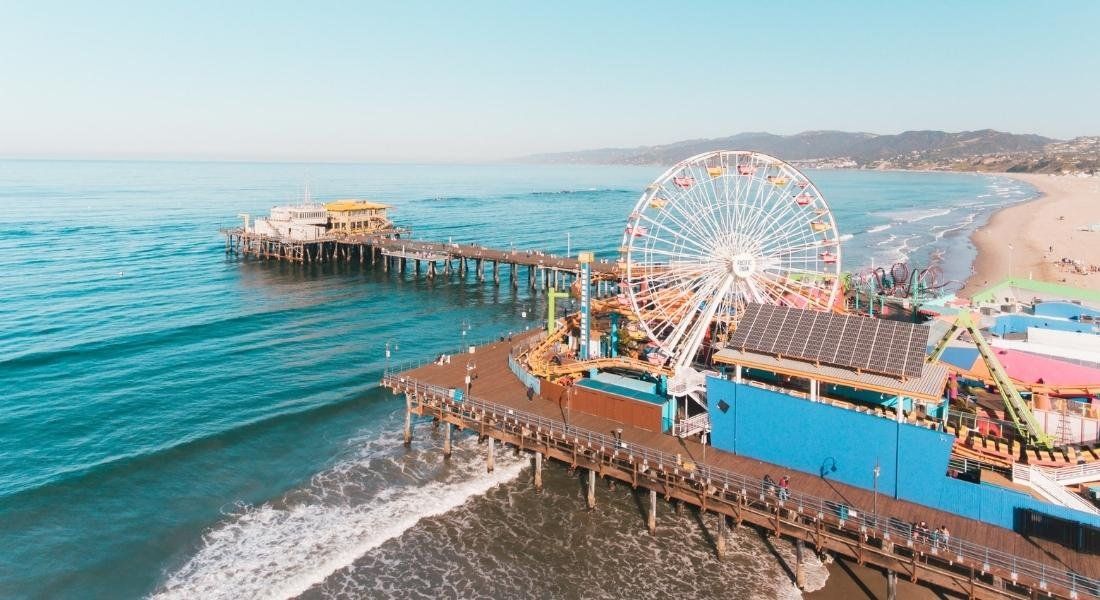
The primary draw for most visitors is the Santa Monica Pier. This historic landmark features the Pacific Park amusement park, home to the world’s only solar-powered Ferris wheel. Standing on the pier, you are at the symbolic end of Route 66, the legendary highway that stretches across the United States.
Below the pier lies Santa Monica State Beach, a vast expanse of sand perfect for sunbathing or playing volleyball. For those who enjoy walking, Palisades Park offers a scenic bluff-top path with panoramic views of the ocean and the Santa Monica Mountains.
Exploring the Third Street Promenade
Just inland from the beach is the Third Street Promenade, a pedestrian-only shopping and dining district. It is a hub of activity where street performers entertain crowds and major retailers like Apple and Tesla have flagship stores. For a more modern shopping experience, Santa Monica Place offers luxury boutiques and an outdoor dining deck with ocean breezes.
Continuing to Venice Beach and Malibu
The beauty of reaching Santa Monica is its proximity to other coastal gems. You can easily rent a bicycle and ride south along the Marvin Braude Beach Trail to Venice Beach. Here, the vibe becomes more bohemian, featuring the famous Muscle Beach and the Venice Canals.
If you head north along the Pacific Coast Highway (PCH), you will quickly find yourself in Malibu. This stretch of road is one of the most beautiful drives in the world, winding between the rugged mountains and the surf. You can stop at Zuma Beach or visit the Getty Villa, a recreation of an ancient Roman country house that holds the Getty collection of antiquities.

Conclusion
The journey from Los Angeles to Santa Monica is a quintessential travel experience that captures the essence of the Golden State. Whether you choose the efficiency of the Metro E Line, the convenience of a ride-share, or the flexibility of a rental car, the transition from the urban energy of the city to the tranquil beauty of the Pacific Ocean is unforgettable. By planning around traffic and perhaps making a few cultural detours at The Getty Center or Beverly Hills, you can turn a simple 14-mile trip into a highlight of your California adventure. Santa Monica awaits with its historic pier, golden sands, and the timeless allure of the sea.
LifeOutOfTheBox is a participant in the Amazon Services LLC Associates Program, an affiliate advertising program designed to provide a means for sites to earn advertising fees by advertising and linking to Amazon.com. Amazon, the Amazon logo, AmazonSupply, and the AmazonSupply logo are trademarks of Amazon.com, Inc. or its affiliates. As an Amazon Associate we earn affiliate commissions from qualifying purchases.