
Planning a trip between two prominent Texas cities, Lubbock and Dallas, often sparks the fundamental question of distance. Understanding this geographical span is crucial for any traveler, whether embarking on a road trip, considering a flight, or simply mapping out their Texas adventure. This guide delves into the various facets of the distance between these two important urban centers, offering insights for efficient and enjoyable travel.
The Driving Distance and Estimated Travel Time
The most common method of travel between Lubbock and Dallas is by car. The direct driving distance is approximately 320 miles, traversing primarily through the heart of Texas. This journey is largely facilitated by major highways, making it a relatively straightforward route for most travelers.
Navigating the Route
The primary route typically involves taking U.S. Highway 84 East from Lubbock towards Snyder, and then continuing onto U.S. Highway 180 East. As you approach the Dallas-Fort Worth metroplex, the route will transition onto Interstate 20 East, which leads directly into Dallas. This highway network is well-maintained and offers numerous opportunities for rest stops, fuel, and dining.
Factors Affecting Travel Time
While the mileage provides a baseline, the actual travel time can fluctuate significantly. The estimated driving time without significant stops is typically between 4.5 to 5.5 hours. However, several factors can influence this:
- Traffic Conditions: The Dallas-Fort Worth metroplex is a bustling area, and traffic congestion, especially during peak hours (mornings and late afternoons on weekdays), can add considerable time to your journey. Entering Dallas from the west on I-20 can become particularly slow.
- Road Construction: As with any major highway system, ongoing road construction projects can lead to temporary detours or lane closures, impacting travel speed. It’s always advisable to check local traffic reports before setting out.
- Weather: Texas weather can be unpredictable. Severe thunderstorms, particularly during spring and summer, can reduce visibility and slow down traffic. Winter weather, while less common, can also create hazardous driving conditions.
- Stops and Breaks: Most travelers will plan for at least one or two stops for fuel, food, or rest. The duration of these stops will, of course, add to the overall journey time. Smaller towns along the route, such as Snyder or Weatherford, offer convenient options for such breaks.
Recommended Driving Strategy
For a more comfortable and efficient drive, consider the following:
- Early Start: Departing from Lubbock in the early morning, ideally before 7:00 AM, can help you avoid the worst of the Dallas morning rush hour.
- Midday Travel: Traveling during the midday hours (between 10:00 AM and 2:00 PM) often presents lighter traffic conditions across most of the route.
- Weekend Travel: While weekend traffic can be lighter overall, popular events in Dallas can create localized congestion.
Flying Between Lubbock and Dallas
For travelers prioritizing speed and efficiency, flying is a viable alternative. Both Lubbock and Dallas are served by airports that facilitate this connection.
Airport Information
- Lubbock Preston Smith International Airport (LBB): Serves the city of Lubbock with domestic flights.
- Dallas/Fort Worth International Airport (DFW): A major international hub serving the Dallas-Fort Worth metroplex, offering a wide range of domestic and international flights.
- Dallas Love Field Airport (DAL): Another significant airport in Dallas, primarily serving domestic routes, notably as a hub for Southwest Airlines.
Flight Duration and Logistics
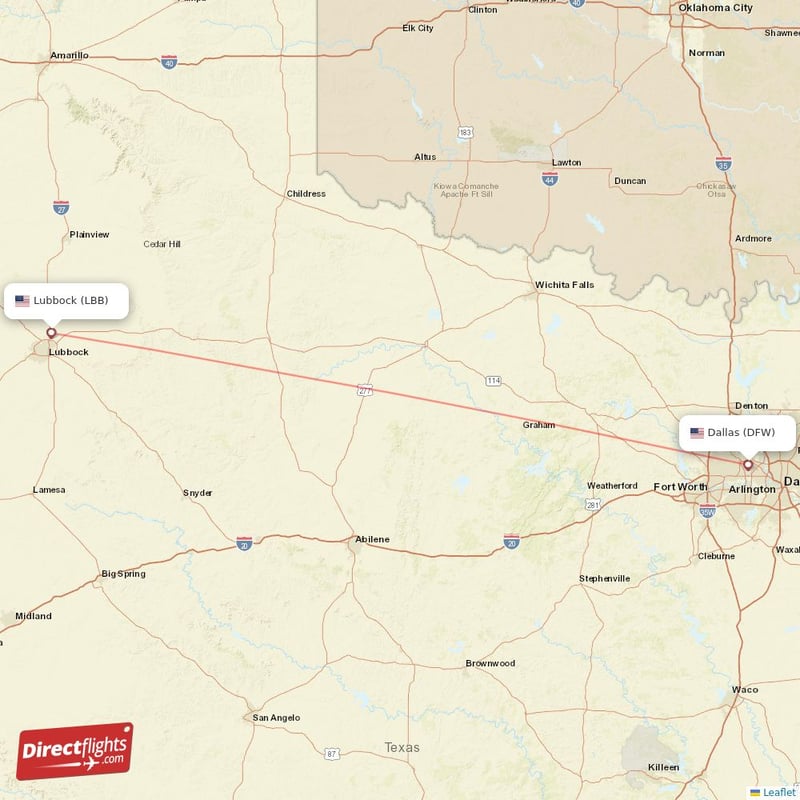
Direct flights between Lubbock Preston Smith International Airport (LBB) and either Dallas/Fort Worth International Airport (DFW) or Dallas Love Field Airport (DAL) are generally short, typically lasting around 1 hour and 15 minutes.
However, it’s crucial to factor in the entire travel process:
- Travel to the Airport: Allow ample time to get to Lubbock Preston Smith International Airport (LBB), usually 30-45 minutes from the city center.
- Airport Procedures: Arrive at the airport at least 1.5 to 2 hours before your departure for domestic flights to allow for check-in, security screening, and boarding.
- Flight Time: The actual airborne time.
- Deplaning and Baggage Claim: Time spent exiting the aircraft and collecting any checked luggage.
- Travel from the Airport: The distance from DFW or DAL to your final destination in Dallas can vary significantly depending on your specific location within the vast metroplex and current traffic conditions. From DFW to downtown Dallas, for example, can take anywhere from 30 minutes to over an hour.
Comparing Driving vs. Flying
When deciding between driving and flying, consider these points:
- Cost: Driving is often more economical for groups or families, especially when factoring in the cost of flights for multiple passengers, airport parking, and potential baggage fees. However, if you find a good flight deal, it can sometimes rival or even beat the cost of gas and wear-and-tear on a vehicle for a single traveler.
- Time: Flying is significantly faster in terms of pure travel time. However, when you account for all the associated airport logistics, the time savings might not be as dramatic as a quick glance at flight duration suggests. Driving, while longer, offers more flexibility with departure times and allows for spontaneous stops.
- Flexibility: Driving offers unparalleled flexibility. You can depart on your own schedule, stop whenever you wish, and carry more luggage without restriction. Flying requires adhering to airline schedules and baggage limitations.
Exploring the Geography and Landscape
The journey between Lubbock and Dallas offers a glimpse into the diverse landscapes of Texas. As you leave the High Plains region of West Texas, characterized by its flat terrain and agricultural dominance, you gradually transition into the more rolling hills and denser vegetation of Central and East Texas.
West Texas Plains to Central Texas Hills
- Initial Stages: The initial leg of the journey west of Fort Worth showcases the expansive, open vistas typical of the West Texas plains. Farmland, primarily cotton and grain, stretches as far as the eye can see. The sky feels vast and often dramatic, especially during sunrise and sunset.
- Transition Zone: As you move eastward, particularly around the Abilene area and beyond, the landscape begins to undulate. The vegetation becomes more varied, with scrub brush giving way to more trees, including mesquite and oak.
- Approaching the Metroplex: The closer you get to the Dallas-Fort Worth area, the more developed the landscape becomes. You’ll pass through numerous suburban towns and witness the increasing density of urban infrastructure. The terrain here is characterized by gentle hills and a more mixed tree population.
Notable Stops Along the Way
While the direct route is efficient, there are points of interest that can enhance the road trip experience:
- Abilene, Texas: Located roughly halfway between Lubbock and Dallas, Abilene offers several attractions. The Frontier Texas! museum provides a look into the Old West, and the Taylor County Expo Center often hosts events.
- Fort Worth, Texas: As you approach the Dallas-Fort Worth metroplex, Fort Worth stands as a major destination in its own right. The historic Stockyards National Historic District, with its cattle drives and Western heritage, is a popular stop. The Cultural District boasts world-class museums like the Kimbell Art Museum and the Modern Art Museum of Fort Worth.
- Weatherford, Texas: A charming town west of Fort Worth, known for its historic courthouse square and its connection to the legendary horse trainer, John “Gallop” Jones.
Planning Your Itinerary: From Lubbock to Dallas
Whether you’re a business traveler needing to reach a meeting in Dallas or a tourist exploring the vastness of Texas, understanding the distance and travel options between Lubbock and Dallas is the first step to a well-executed plan.
Choosing Your Mode of Transport
The decision between driving and flying hinges on your priorities: time, budget, and flexibility.
- For the Time-Conscious: If your primary concern is minimizing travel time, flying into DFW or DAL is the most efficient method, despite the additional airport logistics.
- For the Budget-Savvy and Flexible Traveler: A road trip offers cost savings, especially for groups, and allows for a more personalized experience with the freedom to explore along the way.
- For the Explorer: The drive offers a tangible experience of Texas, allowing you to witness the changing landscapes and perhaps discover charming small towns.
Accommodation Options in Dallas
Upon arrival in Dallas, a wide array of accommodation options awaits, catering to every taste and budget.
- Luxury Stays: The city boasts numerous five-star hotels like The Ritz-Carlton, Dallas and the Hotel Crescent Court, offering unparalleled service, fine dining, and exquisite amenities.
- Boutique Hotels: For a more unique and personalized experience, consider boutique options in neighborhoods like the Arts District or Uptown, offering stylish decor and intimate settings.
- Business-Friendly Hotels: The Dallas business district is well-served by a multitude of hotels that cater to corporate travelers, providing essential amenities like meeting rooms, business centers, and convenient access to commercial areas.
- Extended Stay Options: For longer visits, serviced apartments and extended-stay hotels provide a home-away-from-home feel with kitchen facilities and more space.
Maximizing Your Trip
Regardless of your chosen mode of transport, planning your journey thoughtfully will ensure a smooth transition between Lubbock and Dallas. Consider downloading offline maps for your drive, checking flight statuses regularly, and booking accommodations in advance, especially during major events in Dallas. The roughly 320-mile distance is more than just a number; it’s a gateway to experiencing the diverse character of Texas.
LifeOutOfTheBox is a participant in the Amazon Services LLC Associates Program, an affiliate advertising program designed to provide a means for sites to earn advertising fees by advertising and linking to Amazon.com. Amazon, the Amazon logo, AmazonSupply, and the AmazonSupply logo are trademarks of Amazon.com, Inc. or its affiliates. As an Amazon Associate we earn affiliate commissions from qualifying purchases.