
The question “How Far Is Missouri From New York?” is more than a simple geographical inquiry; it’s the genesis of countless travel plans, road trip adventures, and cross-country explorations. While the exact distance can vary based on the specific starting and ending points within these two expansive states, understanding the general scope is crucial for anyone contemplating a journey between them. This exploration delves into the distances, travel times, and popular routes, painting a comprehensive picture for the prospective traveler.
Understanding the Geographical Span
Missouri and New York, two distinct states in the United States, are separated by a considerable geographical expanse, necessitating careful planning for any form of travel. The primary factor influencing the perceived distance is the mode of transportation.

Driving Distance and Time
For those embarking on a road trip, the driving distance between the easternmost and westernmost points of these states can be substantial. A common route from New York City, the bustling metropolis on the Atlantic coast, to Kansas City, a major hub in western Missouri, typically covers approximately 1,100 to 1,200 miles (1,770 to 1,930 kilometers). This journey is not a single, direct drive but rather a multi-day endeavor.
- Estimated Driving Time: Expect the driving time to be in the range of 17 to 20 hours of pure driving, without accounting for stops for fuel, food, rest, or overnight stays. Realistically, this translates to at least two, and more comfortably three, full days of travel.
- Key Interstate Highways: The most common routes often involve navigating major interstate highways. Travelers might utilize Interstate 80 (I-80) for a significant portion of the journey, which bisects Pennsylvania and Ohio, before connecting to other arteries leading southwest towards Missouri. Alternatively, routes might involve Interstate 70 (I-70), which directly connects cities like Columbus, Ohio, Indianapolis, Indiana, and St. Louis, Missouri, offering a more direct path across the heartland.
- Scenery and Route Variations: The choice of route can significantly impact the scenery and the potential stops along the way. A northern route might offer glimpses of the Great Lakes region, while a more southerly path could traverse the rolling hills of the Appalachian foothills and the Midwest’s agricultural landscapes.
Flight Distance and Time
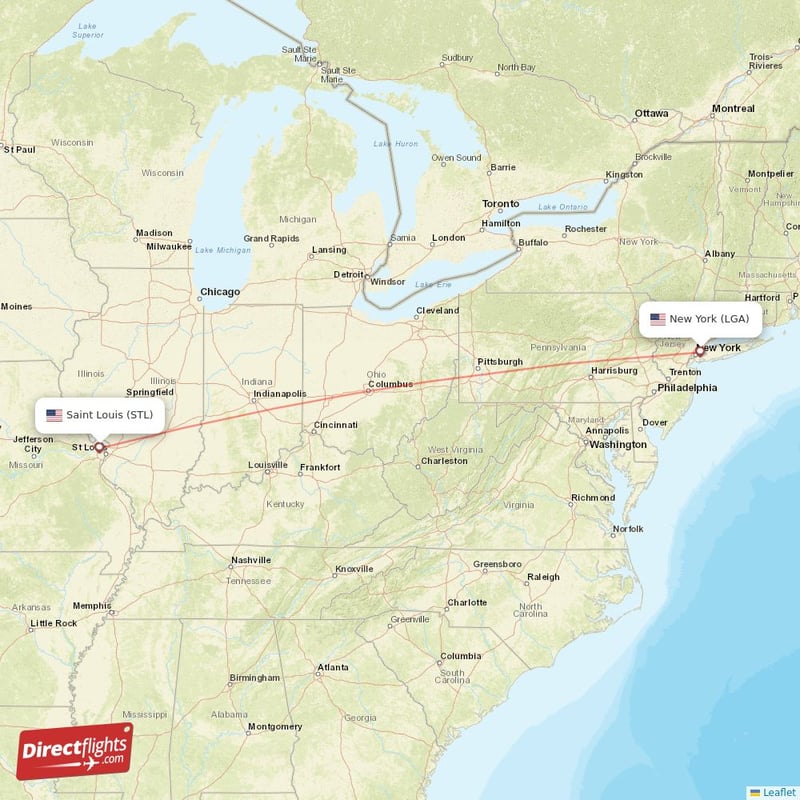
For travelers seeking to bridge the gap more rapidly, air travel is the most efficient option. The direct flight distance between major airports in New York (such as John F. Kennedy International Airport (JFK) or LaGuardia Airport (LGA)) and Missouri (like Lambert-St. Louis International Airport (STL) or Kansas City International Airport (MCI)) is considerably less than the driving distance.
- Great Circle Distance: The approximate great-circle distance (as the crow flies) between New York City and St. Louis is around 800 miles (1,287 kilometers).
- Flight Duration: Direct flights typically range from 2.5 to 3 hours of actual flight time. However, when factoring in travel to and from airports, check-in procedures, security, and potential delays, the total travel time can easily extend to 5 to 7 hours.
- Major Airlines and Airports: Numerous major airlines, including American Airlines, Delta Air Lines, United Airlines, and Southwest Airlines, operate frequent flights between the two states. The primary airports in New York serve as major hubs, while St. Louis and Kansas City are significant regional gateways in Missouri.
Train Travel
While less common for such a long distance compared to flying or driving, train travel offers a unique perspective on the American landscape. The Amtrak network provides routes that can connect New York and Missouri, though it often involves transfers and a longer travel duration.
- Route Complexity: A typical train journey might involve routes like the Lake Shore Limited from New York towards Chicago, followed by a connection on a service like the Southwest Chief or the Missouri River Runner heading towards St. Louis or Kansas City.
- Travel Time: This mode of transport is significantly slower than flying or driving. The total journey can take anywhere from 24 to 36 hours or more, depending on the specific route and connections. It is a journey for those who enjoy the experience of travel itself, offering the opportunity to observe the changing scenery and relax without the pressures of driving.
Navigating the Journey: Practical Considerations
Regardless of the chosen mode of transportation, understanding the practicalities of traveling between Missouri and New York is essential for a smooth and enjoyable trip.
Planning Your Route for Driving

For road trippers, meticulous planning is paramount. The vast distance means more than just a tank of gas.
- Accommodation: Overnight stops will be necessary. Popular cities along common routes include Pittsburgh, Pennsylvania, Columbus, Ohio, Indianapolis, Indiana, and Springfield, Illinois. Booking accommodations in advance, especially during peak travel seasons, is advisable. Many travelers opt for well-known hotel chains like Hilton Hotels & Resorts, Marriott International, or budget-friendly options such as Motel 6 or Days Inn.
- Vehicle Maintenance: Ensure your vehicle is in top condition before embarking on such a long drive. Check tires, brakes, oil, and other essential components. Carrying a basic emergency kit is also a wise precaution.
- Rest Stops and Fuel: Plan for regular stops to combat fatigue and refuel. Major interstate highways are well-equipped with service areas, but it’s always good to have a general idea of upcoming facilities.
- Navigation: While GPS devices and smartphone apps like Google Maps or Waze are indispensable, having a physical map as a backup can be beneficial, especially in areas with spotty cell service.
Optimizing Air Travel
When flying, efficiency and comfort are key considerations.
- Airport Choice: Select airports that offer the most direct flights and convenient ground transportation options at both ends. Newark Liberty International Airport (EWR) in New Jersey also serves the New York metropolitan area and can sometimes offer competitive flight options.
- Booking in Advance: To secure the best fares, booking flights several weeks or even months in advance is generally recommended, particularly for travel during holidays or summer vacation periods.
- Baggage Policies: Be aware of the baggage allowances and fees for your chosen airline, as these can vary significantly.
- Ground Transportation: Upon arrival in Missouri, consider how you will reach your final destination. Rental cars are widely available at major airports, and ride-sharing services like Uber and Lyft are also options in urban areas.
Embracing Train Travel as an Experience
For those choosing the train, the journey itself becomes a significant part of the travel experience.
- Comfort and Amenities: Amtrak offers different seating and sleeping accommodations, from coach seats to private rooms, which can enhance comfort on longer journeys.
- Onboard Services: Many Amtrak trains provide dining cars, lounge cars, and Wi-Fi, allowing passengers to relax, dine, and work while enjoying the passing scenery.
- Flexibility: While slower, train travel offers the flexibility to disembark and explore cities along the route if desired, turning a simple transit into a multi-stop adventure.
Connecting Cultures: What Lies Between
The journey from Missouri to New York, or vice versa, is not merely about covering miles; it’s about traversing diverse American landscapes and experiencing the rich tapestry of cultures that define these regions. From the urban energy of New York to the Midwestern charm of Missouri, the distance is bridged by more than just highways and flight paths.
East Coast Dynamism: The New York Experience
New York State, with its iconic landmarks and bustling metropolises, offers a distinct experience.
- New York City: The global center of finance, fashion, art, and culture, New York City is a city that never sleeps. Attractions range from the towering Empire State Building and the vibrant Times Square to the serene Central Park and world-class museums like the Metropolitan Museum of Art.
- Upstate New York: Beyond the city, New York boasts stunning natural beauty, including the Adirondack Mountains, the Catskill Mountains, and the Finger Lakes region, renowned for its wineries and pristine lakes. Historical sites like the Erie Canal and the battlefields of the American Revolution also dot the landscape.
Heartland Charm: The Missouri Landscape
Missouri, often referred to as the “Show-Me State,” offers a different, yet equally compelling, set of attractions and a unique cultural identity.
- St. Louis: Famous for the majestic Gateway Arch, a symbol of westward expansion, St. Louis also boasts a rich musical heritage, particularly in blues and jazz, evident in areas like the Delmar Loop. The City Museum offers a unique, interactive playground for all ages, and the Missouri Botanical Garden is a world-renowned horticultural attraction.
- Kansas City: Known for its legendary barbecue, vibrant jazz scene (especially along 18th and Vine Streets), and impressive art museums like the Nelson-Atkins Museum of Art, Kansas City provides a lively cultural experience.
- Ozark Mountains: The southern part of Missouri is dominated by the picturesque Ozark Mountains, offering opportunities for outdoor recreation, including hiking, fishing, and exploring caves like Meramec Caverns. The natural beauty and laid-back atmosphere are a stark contrast to the urban intensity of New York.
The distance between Missouri and New York is significant, but it is precisely this distance that allows for a journey of discovery, bridging two distinct yet integral parts of the American narrative. Whether by road, air, or rail, the travel itself becomes an opportunity to witness the vastness and diversity of the United States, appreciating the unique character of each state and the fascinating landscapes that lie between them.
LifeOutOfTheBox is a participant in the Amazon Services LLC Associates Program, an affiliate advertising program designed to provide a means for sites to earn advertising fees by advertising and linking to Amazon.com. Amazon, the Amazon logo, AmazonSupply, and the AmazonSupply logo are trademarks of Amazon.com, Inc. or its affiliates. As an Amazon Associate we earn affiliate commissions from qualifying purchases.