
Understanding the DBA: Your Business Identity in New York
In the bustling landscape of New York‘s commerce, establishing a distinct identity for your business is paramount. A “Doing Business As” (DBA) name, also known as a fictitious name or trade name, allows you to operate your business under a name different from your legal name. For sole proprietors and partnerships, this legal name is typically the owner’s personal name. For corporations or limited liability companies (LLCs), it’s the name registered with the New York Department of State. Filing a DBA in New York is a straightforward process, but understanding its implications and requirements is crucial for compliance and effective business operation.
Why File a DBA in New York?
The decision to file a DBA in New York is often driven by several key business objectives:
- Branding and Marketing: A DBA allows you to create a memorable brand name that resonates with your target audience, distinct from your personal name or legal corporate name. This is particularly important for freelancers, consultants, or small businesses looking to establish a strong market presence. For instance, a freelance graphic designer named Jane Smith might want to operate under “Creative Designs NYC,” projecting a more professional and specialized image.
- Professionalism: Using a business name that clearly reflects your services or products can enhance your professional image and build customer trust. It signals that you are a serious, established entity, even if you are a sole proprietor.
- Expansion and Diversification: If you plan to launch new product lines or services that warrant a separate identity, a DBA can be instrumental. It allows you to test new markets or offerings without having to form a new legal entity. Imagine a restaurant owner who wants to start a catering service; a DBA like “Gourmet Events Catering” would differentiate this venture from their existing eatery.
- Legal and Banking Requirements: Many banks in New York will require a DBA filing to open a business bank account under the fictitious name. This helps to separate personal and business finances, which is essential for accounting and tax purposes. Furthermore, it ensures that contracts and other legal documents are properly associated with the operating name.
- Simplicity: For sole proprietors and general partnerships, filing a DBA is often simpler and less expensive than forming a separate legal entity like an LLC or corporation, especially for businesses with minimal risk.
Key Differences: DBA vs. Legal Entity Name
It’s vital to understand that a DBA does not create a separate legal entity. It is simply a registration that allows you to use an assumed name.
- Liability: Filing a DBA does not shield you from personal liability. If you are a sole proprietor operating under a DBA, your personal assets remain at risk for business debts and lawsuits. This is a significant distinction from forming an LLC or corporation, which provides a legal separation between the business and its owners, thus limiting personal liability.
- Taxation: For sole proprietors and partnerships, income from a DBA is typically reported on the owners’ personal tax returns. The DBA itself is not a taxable entity.
The Filing Process for a DBA in New York
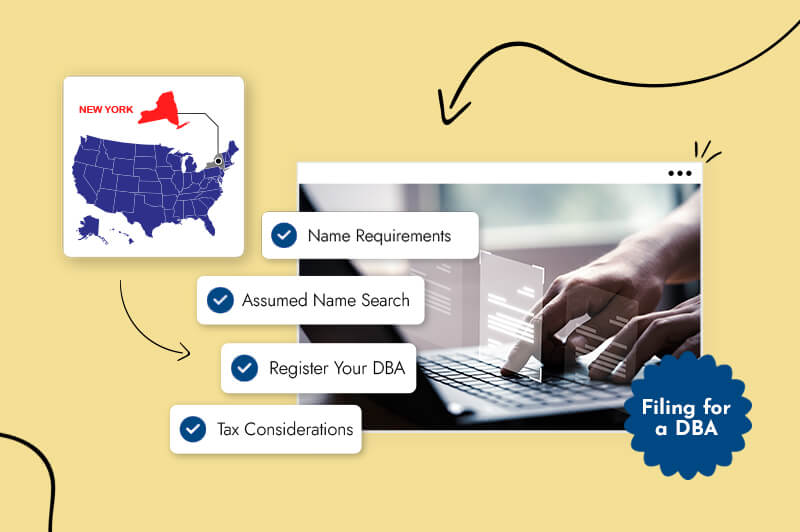
The process for filing a DBA in New York varies slightly depending on the county in which your business is located. New York City, for instance, has specific procedures. Generally, the steps involve the following:
Step 1: Determine Where to File
The primary determinant of where you file your DBA is the location of your business operations.
- Businesses within New York City: If your business is located within any of the five boroughs (New York County/Manhattan, Bronx, Kings County/Brooklyn, Queens, Richmond County/Staten Island), you will file your DBA with the County Clerk’s office for that specific borough. For example, if your business is in Manhattan, you file with the New York County Clerk.
- Businesses Outside New York City: For businesses located in other counties within New York State, you will file with the County Clerk’s office of the county where your principal place of business is located.
- Corporations and LLCs: If you are a corporation or LLC registered with the New York Department of State and wish to conduct business under a different name, you do not file a DBA with the county. Instead, you would typically file a “Certificate of Amendment” or a “Certificate of Assumed Name” with the New York Department of State. This process is distinct from the county-level DBA filing for sole proprietors and partnerships.
Step 2: Conduct a Name Availability Search
Before you can file, you need to ensure that your desired DBA name is not already in use and is not confusingly similar to existing names.
- County Clerk’s Office: The County Clerk’s office will typically conduct a search of their records. However, it is prudent for you to conduct preliminary research beforehand. You can often visit the County Clerk’s website for information or contact them directly to inquire about their search procedures.
- State-Level Search: While county filings are for local operating names, it’s also wise to check the New York Department of State’s Corporation and Business Entity Database to ensure your chosen name doesn’t conflict with a registered corporate or LLC name.
Step 3: Complete the DBA Certificate/Statement
You will need to obtain and complete the appropriate form for filing.
- Form: The form is generally called a “Certificate of Assumed Name” or “Statement of Fictitious Name.” These forms are usually available on the respective County Clerk’s website or can be obtained in person.
- Information Required: The form will typically require the following information:
- The proposed DBA name.
- Your legal name(s) (for sole proprietors and partnerships) or the legal name of your corporation/LLC.
- The address of your business.
- The nature of the business.
- The date the business commenced or is expected to commence operation under the DBA.
- Signatures of the business owner(s).
Step 4: File the Certificate and Pay the Fee
Once completed, you will submit the form to the appropriate County Clerk’s office.
- Submission: You can typically file in person, by mail, or sometimes online through the County Clerk’s portal, depending on the county’s services.
- Filing Fee: There is a filing fee associated with registering a DBA in New York. The exact amount varies by county but is generally a modest sum. Check with the specific County Clerk’s office for the current fee schedule.
Step 5: Publish the DBA Notice (for NYC and some other counties)
This is a critical step that often trips up new business owners. In New York City and some other counties, after filing your DBA, you are required to publish a notice of your DBA in designated newspapers.
- Requirement: This publication requirement is a legal mandate to inform the public about your business operating under an assumed name.
- Designated Newspapers: The County Clerk’s office will provide you with a list of newspapers that are authorized to publish these notices. You will typically need to choose two newspapers – one daily and one weekly.
- Affidavit of Publication: After the notice has been published for the required period (usually a few weeks), the newspapers will provide you with an “Affidavit of Publication.” This affidavit serves as proof that you have met the publication requirement.
- Filing the Affidavit: You must then file this Affidavit of Publication with the County Clerk’s office where you initially filed your DBA. There will be an additional fee for filing the affidavit.
- Failure to Publish: Failure to complete the publication and affidavit filing process can render your DBA registration invalid.
Maintaining Your DBA in New York
Registering your DBA is not a one-time event. There are ongoing responsibilities to ensure your registration remains valid and your business operates compliantly.
Renewal
DBA registrations in New York generally do not have a fixed expiration date, but it is good practice to check with your specific County Clerk’s office for any renewal policies or procedures. The registration remains effective as long as you continue to operate under that name and the information remains accurate.
Updating Your DBA Information
If any of the information on your original DBA filing changes, you must update it. This includes:
- Change of Business Address: If your business moves to a new address within the same county, you will need to file an amendment with the County Clerk’s office. If you move to a different county, you will likely need to file a new DBA in the new county and potentially abandon the old one.
- Change in Ownership: For sole proprietors and partnerships, significant changes in ownership might necessitate refiling.
- Discontinuing Use of the DBA: If you decide to stop using your DBA, you should formally withdraw or cancel your filing with the County Clerk’s office. This is a responsible step to clear public records.
Legal and Banking Compliance
- Bank Accounts: Ensure all your business bank accounts are opened and maintained under the DBA name.
- Contracts and Agreements: All business contracts, invoices, and other official documents should clearly display your DBA name.
- Taxes: Report your business income and expenses accurately, using your DBA name where appropriate on tax forms, though ultimately, it will be linked to your personal Social Security Number (for sole proprietors) or Employer Identification Number (EIN).
- Licenses and Permits: Depending on your industry, you may need to ensure that any required business licenses and permits are also associated with your DBA name.
Common Pitfalls and Best Practices
Navigating the DBA filing process can seem complex, but by being aware of common issues and adhering to best practices, you can ensure a smooth experience.
Common Pitfalls to Avoid
- Assuming DBA is a Legal Entity: Remember, a DBA does not offer liability protection. If this is a concern, consider forming an LLC or corporation.
- Ignoring Publication Requirements: The publication and affidavit filing in New York City and some other counties are mandatory. Failure to comply can invalidate your DBA.
- Using a Confusingly Similar Name: Ensure your chosen DBA name is unique and unlikely to be confused with existing businesses to avoid legal disputes.
- Not Updating Information: Keeping your DBA information current with the County Clerk’s office is essential for compliance.
- Not Filing at All: Operating a business under a fictitious name without filing a DBA can lead to penalties and legal complications.
Best Practices for a Successful DBA Filing
- Start with Research: Thoroughly research your desired name availability at both the county and state levels.
- Consult the County Clerk: If you have any doubts or questions, contact the relevant County Clerk’s office directly. Their staff can provide specific guidance.
- Understand the Publication Rules: Pay close attention to the publication requirements in your county, especially if you are in New York City.
- Keep Records: Maintain copies of all filed documents, publication affidavits, and correspondence with the County Clerk’s office.
- Seek Professional Advice: For complex business structures or if you are unsure about legal implications, consult with a business attorney or accountant in New York. They can offer tailored advice.
By diligently following these steps and understanding the nuances of operating under an assumed name in New York, you can effectively establish and maintain your business’s identity, paving the way for growth and success in this dynamic economic environment.
LifeOutOfTheBox is a participant in the Amazon Services LLC Associates Program, an affiliate advertising program designed to provide a means for sites to earn advertising fees by advertising and linking to Amazon.com. Amazon, the Amazon logo, AmazonSupply, and the AmazonSupply logo are trademarks of Amazon.com, Inc. or its affiliates. As an Amazon Associate we earn affiliate commissions from qualifying purchases.