
The question “How far is New York to London?” transcends a simple measurement of miles or kilometers. While the physical distance is a crucial starting point for any transatlantic journey, it merely scratches the surface of what it means to travel between these two iconic global powerhouses. For seasoned travelers and first-time adventurers alike, understanding this distance involves a deep dive into flight logistics, travel times, the profound cultural differences, and the myriad of experiences awaiting on either side of the Atlantic Ocean.
These two cities, separated by a vast expanse of water, represent pinnacles of urban life, culture, commerce, and tourism. New York, the quintessential American metropolis, buzzes with an energy defined by its soaring skyscrapers, diverse neighborhoods, and relentless pace. London, the historic capital of the United Kingdom, offers a rich tapestry of history, royal pageantry, world-class museums, and a charming blend of ancient traditions and modern trends. Traveling between them isn’t just a physical transition; it’s a journey between two distinct lifestyles, each offering unparalleled attractions and experiences.

This comprehensive guide will not only clarify the literal distance between New York and London but will also explore the practicalities of making this journey, from flight routes and duration to essential travel considerations, accommodation options, and the unique allure of each destination. Whether you’re planning a business trip, a luxury getaway, a family vacation, or a budget-conscious adventure, understanding the nuances of this route is key to a seamless and unforgettable transatlantic experience.
The Geographical and Aerial Divide: Bridging Continents
The perceived distance between New York and London can feel immense, a testament to the sheer scale of the Atlantic Ocean that separates the continents of North America and Europe. However, modern aviation has shrunk this vast expanse, making what was once a multi-week sea voyage an overnight flight.
Unpacking the Numbers: Miles, Kilometers, and Flight Paths
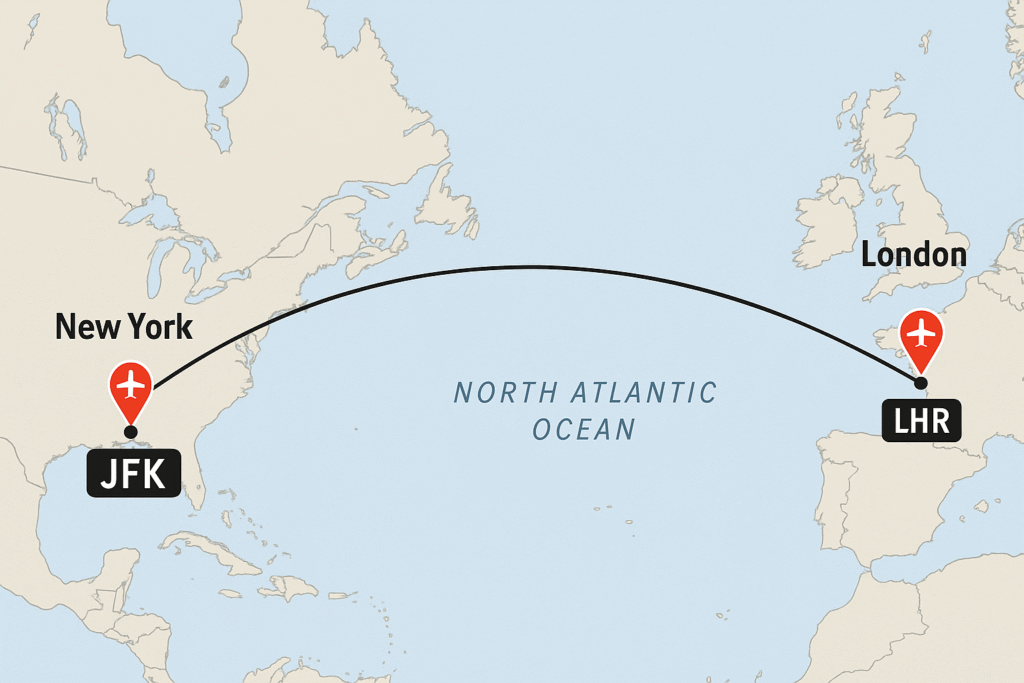
The great-circle distance, which is the shortest distance between two points on the surface of a sphere (or a close approximation like Earth), between New York City and London is approximately:
- 3,456 miles (5,562 kilometers)
- 2,997 nautical miles
This measurement represents the theoretical straight line, often referred to as the “as the crow flies” distance. In reality, commercial airline flight paths deviate slightly from this perfect arc due to factors like air traffic control, prevailing winds (jet streams), and airspace restrictions. Flights from New York to London typically follow a more northerly route, often passing over parts of Canada, Greenland, and Iceland, before descending towards the United Kingdom. These routes are carefully planned to minimize fuel consumption and optimize flight duration, taking advantage of tailwinds when flying eastbound and avoiding strong headwind components when flying westbound.
The exact distance covered by an airplane can vary, but it will generally hover around these figures. While satellites and advanced navigation systems have revolutionized flight planning, the fundamental geographical distance remains a constant. It’s a journey that literally spans continents, crossing multiple time zones and offering a unique perspective on the planet’s curvature when viewed from cruising altitude.
Navigating the Skies: Airlines and Travel Time
A direct flight between New York and London is typically an overnight journey. The average flight time for a non-stop service is:
- Eastbound (New York to London): Approximately 6.5 to 7.5 hours. Flights eastward often benefit from the prevailing jet stream, which acts as a tailwind, shortening the travel time.
- Westbound (London to New York): Approximately 7.5 to 8.5 hours. Flying westward means contending with headwind components from the jet stream, which extends the flight duration.
These times are for the actual air travel, not including the time spent at airports for check-in, security, boarding, or disembarking. When considering the entire door-to-door journey, travelers should factor in an additional 3-4 hours on each end, potentially more if dealing with connecting flights or significant delays.
Several major airlines operate this popular route, offering a range of services from economy to first class. Key carriers include:
- British Airways: A dominant player, offering numerous daily flights from New York’s John F. Kennedy International Airport (JFK) and Newark Liberty International Airport (EWR) to London Heathrow (LHR) and occasionally London Gatwick (LGW).
- Virgin Atlantic: Known for its distinctive style and service, flying primarily between JFK and LHR, as well as EWR and LHR.
- American Airlines: Offers frequent services from JFK and EWR to LHR.
- Delta Air Lines: Another major carrier with strong connections between JFK and LHR.
- United Airlines: Operating out of its hub at Newark Liberty International Airport (EWR) to London Heathrow (LHR).
- Other Airlines: Depending on the season and specific departure/arrival airports, travelers might also find options with carriers like JetBlue (especially for London Gatwick or London Stansted), or codeshare flights with other global alliances.
Travelers departing from New York typically use JFK, EWR, or occasionally LaGuardia Airport (LGA) for domestic connections before an international leg. In London, the primary gateway is Heathrow (LHR), though Gatwick (LGW) and London City Airport (LCY) (for shorter-range flights, often catering to business travelers) also serve transatlantic routes. Choosing the right airport on both ends can significantly impact ground travel time and cost within the respective cities.
From One Metropolis to Another: Exploring New York and London
Beyond the logistics of travel, the journey from New York to London is a transition between two of the world’s most dynamic and culturally rich cities. Each offers a unique flavor, an array of iconic landmarks, and a distinct atmosphere that captivates millions of visitors annually.
The Allure of the Big Apple: New York’s Iconic Charms
New York City, a global hub of finance, fashion, art, and entertainment, is often described as a city that never sleeps. Its skyline is instantly recognizable, dominated by architectural marvels and punctuated by vibrant neighborhoods.
Key New York Landmarks and Attractions:
- Statue of Liberty & Ellis Island: Symbols of freedom and democracy, these are essential stops for understanding America’s immigrant history.
- Empire State Building: An Art Deco masterpiece offering breathtaking panoramic views of the city.
- Times Square: A dazzling, neon-lit crossroads known for its Broadway theaters, bustling crowds, and iconic billboards.
- Central Park: An urban oasis spanning over 843 acres, offering respite from the city’s hustle with serene lakes, walking paths, and cultural attractions.
- Brooklyn Bridge: An architectural marvel connecting Manhattan and Brooklyn, perfect for a scenic walk.
- World-Class Museums: The Metropolitan Museum of Art (The Met), the Museum of Modern Art (MoMA), and the American Museum of Natural History house unparalleled collections.
- 9/11 Memorial & Museum: A poignant tribute to the victims of the September 11, 2001 attacks.
- Rockefeller Center: Home to Top of the Rock observation deck, Radio City Music Hall, and the famous winter ice rink.
New York’s Tourism & Lifestyle:
The city’s vibrant culinary scene caters to every taste, from Michelin-starred restaurants to diverse street food. Its neighborhoods, like Greenwich Village, SoHo, and Harlem, each boast unique character, independent boutiques, and live music venues. New York offers a fast-paced, high-energy lifestyle, ideal for those seeking constant stimulation and a melting pot of cultures.
London’s Timeless Elegance: A City of History and Modernity
Crossing the Atlantic brings you to London, a city where centuries of history meet cutting-edge contemporary culture. The capital of England and the United Kingdom seamlessly blends ancient traditions with a cosmopolitan flair.
Key London Landmarks and Attractions:
- Buckingham Palace: The official residence of the monarch, famous for the Changing of the Guard ceremony.
- Houses of Parliament & Big Ben: Iconic symbols of British democracy and timekeeping, standing majestically along the River Thames.
- Westminster Abbey: A UNESCO World Heritage Site and the traditional coronation and burial place for British monarchs.
- Tower of London & Tower Bridge: A historic castle with a dark past, home to the Crown Jewels, situated beside one of the world’s most recognizable bridges.
- World-Class Museums: The British Museum, National Gallery, Victoria and Albert Museum, and Tate Modern offer unparalleled collections of art, history, and culture.
- London Eye: A giant Ferris wheel providing stunning views of the city skyline.
- Hyde Park: One of London’s Royal Parks, perfect for a stroll, boating, or simply relaxing.
- The Shard: Western Europe’s tallest building, offering an observation deck with panoramic views.
London’s Tourism & Lifestyle:
From the theatre district of the West End to the eclectic stalls of Camden Market, London offers a diverse range of experiences. Its culinary scene is a melting pot of global flavors, complemented by traditional pubs and sophisticated dining. The city’s lifestyle balances history with innovation, offering a more measured pace than New York but with no less to explore.
Planning Your Transatlantic Journey: Accommodation, Culture, and Lifestyle
A successful journey from New York to London extends far beyond booking a flight. It involves careful consideration of where you’ll stay, how you’ll immerse yourself in local culture, and how your trip aligns with your desired lifestyle and budget.
Choosing Your Stay: Hotels, Resorts, and Unique Accommodations
Both New York and London boast an extensive range of accommodation options, catering to every preference and price point. From luxurious five-star hotels to charming boutique guesthouses, serviced apartments, and budget-friendly hostels, finding the right place is crucial for enhancing your travel experience.
Luxury Travel:
For those seeking opulent amenities and impeccable service, both cities offer world-renowned luxury hotels. In New York, iconic establishments like The Plaza Hotel on Central Park South, the St. Regis New York, or the Waldorf Astoria New York provide an unforgettable stay. London counters with equally prestigious options such as The Ritz London, The Savoy, Claridge’s, or The Langham, London, each offering a blend of historic grandeur and modern comfort. Many luxury hotels feature exclusive suites, fine dining restaurants, spas, and concierge services designed to cater to every whim.
Boutique Hotels & Unique Stays:
If you prefer personalized service and distinct character, consider boutique hotels in vibrant neighborhoods. In New York, areas like Greenwich Village, SoHo, or the Meatpacking District offer stylish choices. London’s equivalent can be found in districts like Marylebone, Shoreditch, or South Kensington, each with unique villas or apartments converted into charming accommodations. These often provide a more intimate experience, reflecting the local culture and design aesthetic.
Budget Travel & Family Trips:
For budget-conscious travelers or family trips, both cities offer ample choices. Chain hotels like Hilton, Marriott, or Hyatt provide reliable standards and loyalty programs. Serviced apartments or apartment rentals through platforms like Airbnb are excellent for longer stays or families needing more space and self-catering facilities. Hostels, particularly in neighborhoods popular with younger travelers, offer dorm-style or private rooms at very affordable rates. When booking accommodation, always compare reviews, consider proximity to public transport, and check for included amenities like Wi-Fi or breakfast.
Embracing Local Culture and Cuisine
Immersing yourself in the local culture is a cornerstone of any meaningful trip. Both New York and London are celebrated for their diverse cultural landscapes and exceptional culinary scenes.
New York Culture & Food:
- Performing Arts: Catch a Broadway show, experience jazz in Harlem or Greenwich Village, or witness world-class performances at Lincoln Center.
- Art & Fashion: Explore galleries in Chelsea and Lower East Side, or discover cutting-edge fashion in SoHo.
- Cuisine: From iconic New York-style pizza and bagels to Michelin-starred dining experiences, authentic ethnic eateries in Flushing or Jackson Heights, and trendy rooftop bars. Don’t forget the classic New York cheesecake!
- Tips: Embrace the walking culture, utilize the subway system, and be open to spontaneous discoveries in the city’s countless neighborhoods.
London Culture & Food:
- History & Heritage: Visit royal palaces like Kensington Palace, explore historic markets like Borough Market, and witness traditional ceremonies.
- Performing Arts: Enjoy a show in the West End, attend a concert at the Royal Albert Hall, or explore independent theatre.
- Cuisine: Indulge in traditional British fare like fish and chips or a Sunday roast, experience afternoon tea, or explore the global culinary landscape from Indian curries to modern European cuisine. Pub culture is also a vital part of the London experience.
- Tips: Master the Tube (underground railway), take advantage of free museums, and don’t be afraid to venture beyond the main tourist hotspots to discover local gems like Notting Hill or Brixton.

Tailoring Your Trip: Luxury, Budget, and Beyond
Defining your travel lifestyle is key to planning your transatlantic adventure.
- Luxury Travel: Focus on premium flight classes, five-star hotels, private tours, exclusive dining experiences, and high-end shopping in areas like Fifth Avenue in New York or Bond Street in London.
- Budget Travel: Look for economy flights (often found during off-peak seasons), stay in hostels or budget hotels, utilize public transport extensively, enjoy free attractions (many museums in London are free!), and explore street food markets.
- Family Trips: Prioritize accommodations with family-friendly amenities (e.g., connecting rooms, pools, kitchens). Plan itineraries that include parks (Central Park, Hyde Park), interactive museums (e.g., New York Hall of Science, Science Museum London), and age-appropriate activities.
- Business Stays: Choose hotels with business centers, fast Wi-Fi, and convenient access to financial districts (Wall Street, City of London). Consider factors like early check-in/late check-out options and streamlined airport transfers.
The journey from New York to London is more than just crossing a physical distance; it’s an opportunity to bridge cultures, experience diverse urban lifestyles, and create lasting memories. With careful planning and an open mind, this transatlantic adventure promises to be an enriching experience, connecting two of the world’s most magnificent cities.
LifeOutOfTheBox is a participant in the Amazon Services LLC Associates Program, an affiliate advertising program designed to provide a means for sites to earn advertising fees by advertising and linking to Amazon.com. Amazon, the Amazon logo, AmazonSupply, and the AmazonSupply logo are trademarks of Amazon.com, Inc. or its affiliates. As an Amazon Associate we earn affiliate commissions from qualifying purchases.