
Florida, a state renowned for its sun-drenched beaches, vibrant cities, and diverse ecosystems, offers a wealth of experiences for both residents and visitors. Among its many jewels are Miami, a bustling metropolis on the southeastern coast famous for its Latin flair, Art Deco architecture, and dynamic nightlife, and Sarasota, a sophisticated cultural hub on the southwestern Gulf Coast, known for its pristine beaches, thriving arts scene, and elegant charm. For travelers looking to explore the distinct beauty of both regions, understanding the distance and travel logistics between these two popular destinations is paramount for effective trip planning.
Whether you’re moving between a cultural retreat and an urban adventure, or simply navigating the state for business or pleasure, the journey from Sarasota to Miami involves a significant cross-state transit. This article delves into the precise distances, various modes of transport, typical travel times, and crucial factors that can influence your journey, providing a comprehensive guide for anyone planning to travel between these iconic Florida cities. From the fastest driving routes to public transportation options and even the feasibility of flying, we will equip you with all the necessary information to make your travel seamless and enjoyable.
Understanding the Distance: Geographical Context
The geographical span between Sarasota on the Gulf Coast and Miami on the Atlantic coast represents a considerable traverse across the lower half of the Florida peninsula. While the state might appear relatively compact on a map, the practicalities of travel, including road networks and natural barriers, significantly impact the actual distance and time taken.
Straight-Line vs. Driving Distance
When considering the “how far” question, it’s essential to distinguish between the straight-line (as-the-crow-flies) distance and the actual driving distance, which is dictated by available roads and highways. The straight-line distance between Sarasota and Miami is approximately 100-110 miles (160-177 kilometers). This direct measurement, however, is largely irrelevant for ground travel due to the expansive Everglades National Park and other natural and developed areas that roads must circumvent or traverse.
The driving distance is considerably longer. On average, the journey by road spans approximately 220 to 240 miles (354 to 386 kilometers), depending on the specific starting point in Sarasota and the destination within the sprawling Miami metropolitan area. This difference highlights the importance of planning for the actual road network rather than a direct aerial path.
Key Routes and Highways
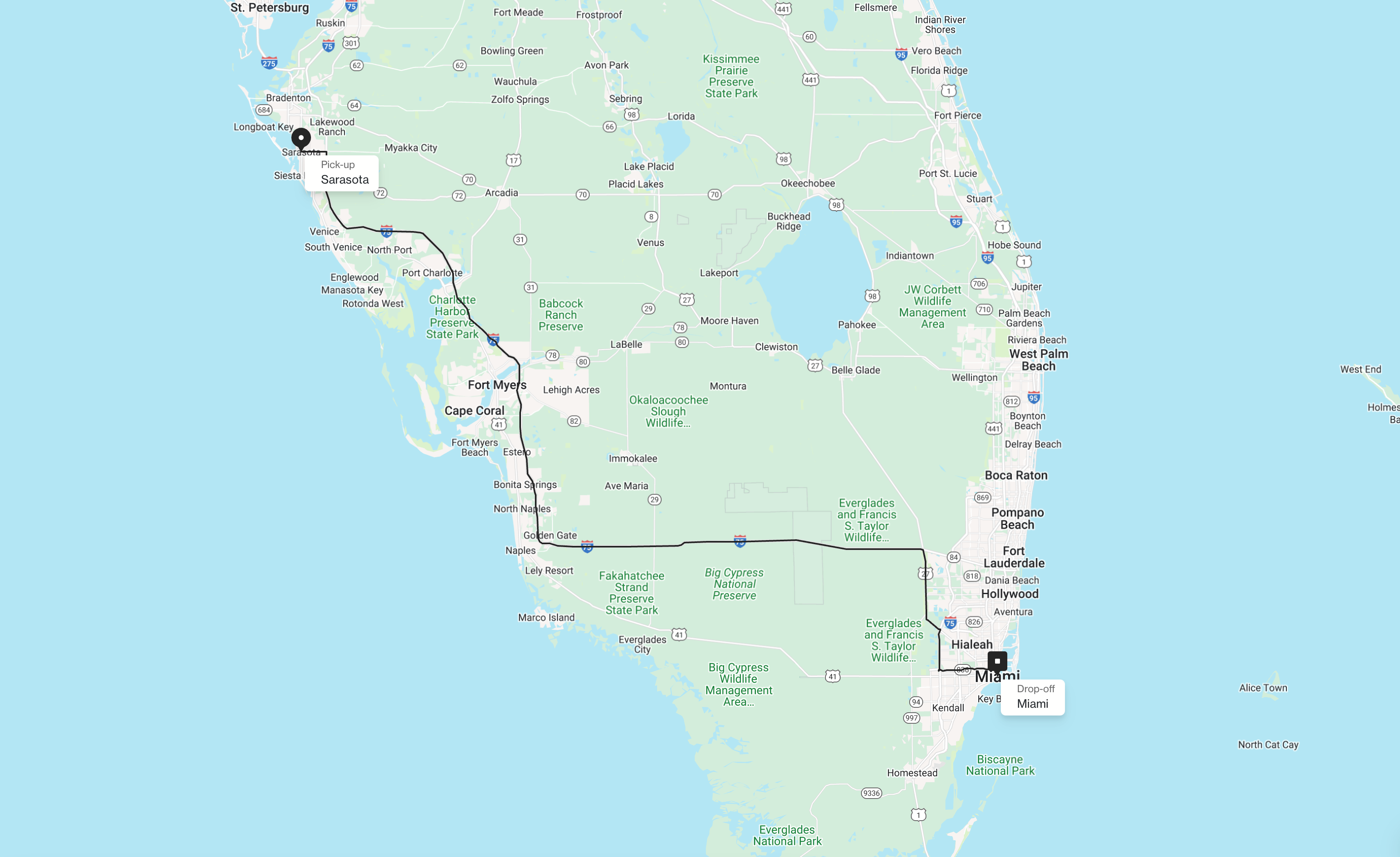
The primary arterial connecting Sarasota and Miami is Interstate 75, often referred to as “Alligator Alley” for the segment that cuts directly across the Everglades. This is by far the most direct and frequently used route for ground transportation between Florida’s west and east coasts in the southern part of the state.
Starting from Sarasota, travelers typically head south on I-75. After passing Naples, the highway turns eastward, transforming into “Alligator Alley” (also designated as I-75 East) as it crosses the Everglades towards Fort Lauderdale and ultimately Miami. While other routes exist, such as using US-27 or more local roads, they generally add significant time and are less efficient for direct travel between the two major cities, making I-75 the default choice for most drivers.
Navigating the Journey: Travel Time and Modes of Transport
The choice of transportation heavily influences both the total travel time and the overall experience of journeying between Sarasota and Miami. Each mode presents its own set of advantages and disadvantages concerning speed, cost, convenience, and comfort.
Driving: The Most Common Method
Driving is overwhelmingly the most popular way to travel between Sarasota and Miami due to its flexibility and the relatively direct route offered by I-75. The typical driving time, without significant stops or heavy traffic, ranges from 3.5 to 4.5 hours. This estimate covers the approximately 220-240 miles mentioned earlier.
Factors that can influence driving time include:
- Traffic: Peak travel times, particularly around major holidays, weekends, or daily rush hours in and around Miami and Sarasota, can easily extend the journey by 30 minutes to over an hour.
- Tolls: The “Alligator Alley” segment of I-75 is a toll road. While not significant in cost, ensuring you have a SunPass transponder or cash ready can prevent delays at toll booths.
- Stops: Fuel stops, rest breaks, or grabbing a meal will naturally add to the total travel duration.
- Roadwork: Construction projects on I-75 are common and can occasionally lead to lane closures and slowdowns.
Despite these variables, driving offers unparalleled freedom to explore, make impromptu stops, and transport luggage easily, making it the preferred choice for many travelers.
Public Transportation: Buses and Trains
For those who prefer not to drive, public transportation options are available, though they generally involve longer travel times and less direct routes compared to driving.
- Buses: Greyhound operates bus services between Sarasota and Miami. A typical bus journey can take anywhere from 5 to 8 hours, often involving transfers in cities like Fort Myers or Fort Lauderdale. While more economical than driving (especially when factoring in gas and tolls), the extended travel time and multiple stops make it a less efficient option for those on a tight schedule. Bus stations are also often located in downtown areas, requiring additional transport to reach final destinations.
- Trains: Direct train service between Sarasota and Miami is not available. Amtrak serves Florida, but a train journey would involve significant detours, likely north through cities like Tampa or Orlando, and then south to Miami. This would result in a very long, multi-segment trip, making it impractical for most travelers seeking to go directly between Sarasota and Miami. Train travel is generally not recommended for this specific route if efficiency is a concern.
Flying: Is it Viable?
While both Sarasota and Miami have international airports, flying between them is rarely the most practical or time-efficient option for most travelers.
- Airports: Sarasota is served by Sarasota-Bradenton International Airport (SRQ), while Miami is served by Miami International Airport (MIA) and nearby Fort Lauderdale-Hollywood International Airport (FLL).
- Flight Duration: A direct flight itself would be very short, perhaps 45 minutes to an hour. However, the true travel time involves much more:
- Getting to SRQ from your Sarasota location.
- Arriving at the airport at least 1-2 hours before departure for check-in and security.
- The actual flight.
- Deplaning and collecting luggage at MIA or FLL.
- Traveling from MIA/FLL to your final destination within Miami.
- Overall Time and Cost: When all these factors are considered, the total door-to-door time often equals or exceeds the driving time, usually around 4-6 hours, and at a significantly higher cost due to airfare and airport transfers. Flying typically only becomes a viable option if connecting to an international flight from Miami, if you have extreme time constraints, or if there are exceptional deals on direct flights that bypass long layovers. For a simple point-to-point journey within Florida, it’s generally not recommended.
Factors Influencing Your Travel Experience
Beyond the basic distance and modes of transport, several practical considerations can significantly impact the quality and duration of your trip from Sarasota to Miami. Awareness of these factors can help in better planning and a smoother journey.
Traffic Considerations
Florida is a populous state, and its major roadways, especially around urban centers, can experience substantial congestion.
- Urban Rush Hours: Both Sarasota and Miami have peak traffic periods during weekday mornings (typically 7-9 AM) and afternoons (4-6 PM). Exiting Sarasota or entering the Miami-Fort Lauderdale metropolitan area during these times can add considerable delays.
- Weekend and Holiday Travel: I-75, particularly the “Alligator Alley” segment and approaches to coastal cities, sees increased volume during weekends and major holidays. Snowbird season (winter months) also brings a significant influx of visitors to Florida, contributing to heavier traffic.
- Accidents and Construction: Unexpected accidents or ongoing road construction can cause sudden bottlenecks. Utilizing real-time navigation apps (like Google Maps or Waze) is highly recommended for up-to-the-minute traffic updates and alternative route suggestions.
Toll Roads and Costs
The most direct route via I-75 involves crossing “Alligator Alley,” which is a toll road.
- Toll Collection: Florida’s toll system is largely electronic. The easiest way to pay is with a SunPass transponder, which offers discounted rates. Many rental cars come equipped with a SunPass or a similar toll program, though check the terms as administrative fees may apply.
- Cash and Toll-by-Plate: Some toll plazas still accept cash, but many are cashless, using “Toll-by-Plate” technology where a bill is mailed to the vehicle’s registered owner. This usually incurs higher rates and potential administrative fees.
- Cost: The toll for Alligator Alley is relatively modest, typically a few dollars. However, if your route takes you onto other toll roads in the Miami area (e.g., Florida’s Turnpike, Dolphin Expressway), these costs can accumulate. Factor these into your budget, especially if you are traveling frequently.
Opportunities for Scenic Stops
While the primary goal might be to reach Miami efficiently, the journey itself offers glimpses into Florida’s unique landscape.
- Everglades National Park: Driving “Alligator Alley” provides a unique opportunity to see the vastness of the Everglades. There are several rest areas and observation points, such as the Everglades National Park Oasis Visitor Center near the midway point, where you can stretch your legs, use facilities, and perhaps spot some wildlife like alligators and various bird species.
- Small Towns: If time permits for a slight detour, charming small towns like Immokalee (north of Naples) offer a taste of rural Florida life, though this would significantly extend travel time. For most, sticking to the I-75 route with its designated rest stops is the most practical balance between efficiency and enjoying the scenery.
Planning Your Trip: Practical Advice
Effective planning can transform a long journey into a smooth and enjoyable experience. Here are some practical tips for traveling between Sarasota and Miami.
Best Time to Travel
Optimizing your departure time can significantly impact your journey.
- Avoid Rush Hours: Aim to depart Sarasota before 7 AM or after 9 AM on weekdays to avoid local morning traffic. Similarly, plan to arrive in the Miami area outside of the 4-6 PM weekday afternoon rush.
- Mid-Week Advantage: Traveling on a Tuesday, Wednesday, or Thursday typically encounters lighter traffic than Fridays, Saturdays, and Sundays, especially during peak tourist seasons.
- Seasonal Considerations: Florida’s winter months (November to April) see an increase in tourist traffic. If traveling during this period, allow extra time and expect more crowded roads. Summer, while hotter and prone to afternoon thunderstorms, often has lighter overall traffic unless it’s a holiday weekend.
Essential Packing Tips for a Road Trip
For those opting to drive, a few preparations can enhance comfort and safety:
- Navigation: Ensure your GPS or smartphone navigation is updated and fully charged. Consider having an alternative, like a physical map, in case of signal loss.
- Snacks and Drinks: Pack a cooler with water and snacks, especially for the “Alligator Alley” stretch where service options are sparse.
- Entertainment: Audiobooks, podcasts, or a curated music playlist can make the miles fly by.
- Emergency Kit: Basic items like jumper cables, a first-aid kit, a flashlight, and a tire pressure gauge are always good to have.
- SunPass: If you don’t have one, consider purchasing a SunPass transponder before your trip to save money and time on toll roads.

Choosing the Right Mode for Your Needs
The best mode of transport depends on your individual priorities:
- Driving: Ideal for flexibility, carrying luggage, traveling with family or groups, and those who enjoy road trips. It offers the best balance of cost and time efficiency for most.
- Bus: A good option for budget-conscious solo travelers who are not in a hurry and prefer to avoid driving. Be prepared for longer travel times and potential transfers.
- Flying: Generally not recommended for direct travel between Sarasota and Miami due to the total time investment and cost, unless connecting to other flights.
In conclusion, while Sarasota and Miami are both in Florida, they are separated by a significant driving distance of approximately 220-240 miles. The journey typically takes 3.5 to 4.5 hours by car via I-75. Careful planning, especially concerning traffic and tolls, will ensure a smooth and enjoyable transition between these two distinct and captivating Florida destinations.
LifeOutOfTheBox is a participant in the Amazon Services LLC Associates Program, an affiliate advertising program designed to provide a means for sites to earn advertising fees by advertising and linking to Amazon.com. Amazon, the Amazon logo, AmazonSupply, and the AmazonSupply logo are trademarks of Amazon.com, Inc. or its affiliates. As an Amazon Associate we earn affiliate commissions from qualifying purchases.