
The question of “how far” between Seattle, Washington, and Vancouver, British Columbia, is more than just a matter of miles or kilometers; it’s an inquiry into the fascinating journey that connects two of North America’s most vibrant Pacific Northwest metropolises. For travelers contemplating a cross-border adventure, understanding this distance—and the various ways to traverse it—is the first crucial step in planning an unforgettable trip. This article serves as your comprehensive guide to bridging the gap between these dynamic cities, offering insights into practical travel logistics, duration, and the unique experiences each mode of transport offers.
Unveiling the Distance: Seattle to Vancouver
At first glance, the proximity of Seattle to Vancouver, British Columbia might suggest a quick hop across the border. However, the true travel distance and time are influenced by a myriad of factors, from the specific routes taken to border wait times and chosen modes of transportation.
The Straight-Line vs. Practical Travel Distance
As the crow flies, the approximate linear distance between downtown Seattle and downtown Vancouver is around 115 miles (185 kilometers). This direct measurement, however, rarely reflects the reality of ground travel. When planning a trip, travelers must account for roads, natural barriers, and the international border crossing.
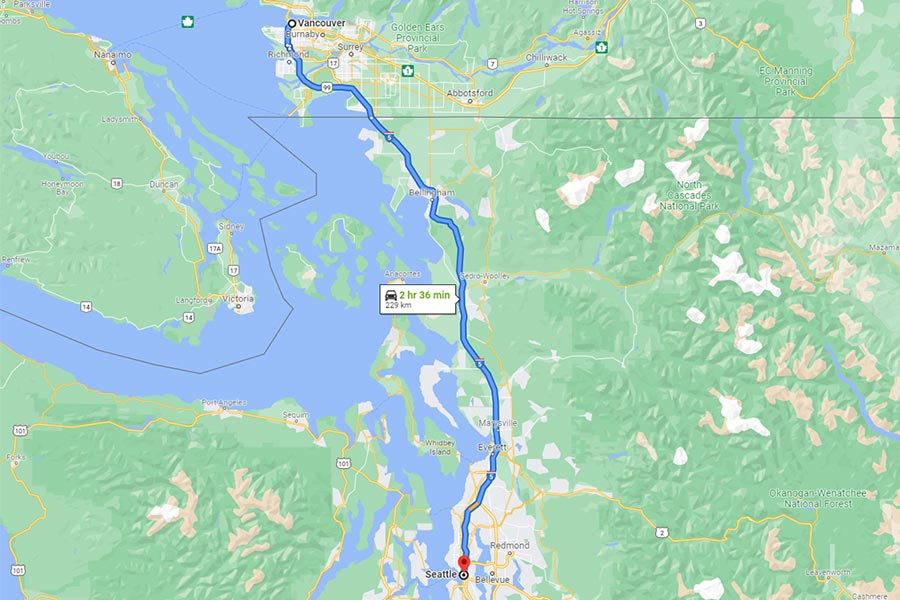
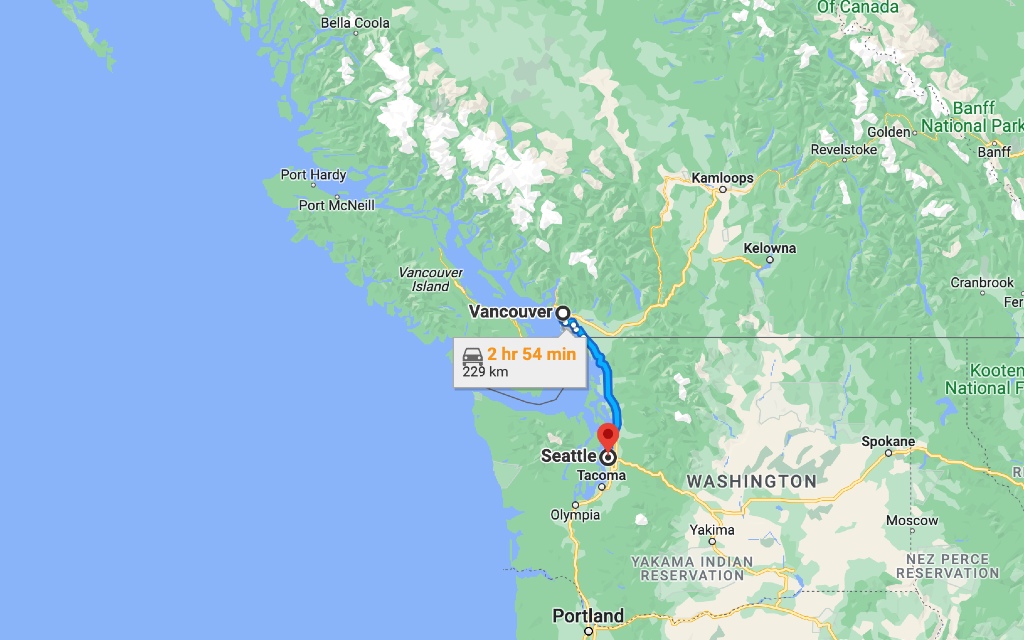
The practical driving distance typically ranges between 140 to 175 miles (225 to 280 kilometers), depending on the exact starting and ending points within each metropolitan area and the specific border crossing utilized. This variation underscores the importance of not just knowing the geographical separation but also the actual routes available to connect these two major urban centers.
Geographical Context and Border Dynamics
The journey between Seattle and Vancouver, British Columbia is intrinsically linked by the Interstate 5 (I-5) corridor, a vital artery that runs north-south, culminating at the U.S.-Canada border. This border isn’t merely a line on a map but a significant checkpoint that requires careful navigation. The vast majority of the journey hugs the coastline or inland plains, offering glimpses of the diverse landscape that defines the Pacific Northwest. Travelers will pass through fertile valleys, past dense forests, and occasionally catch views of the Salish Sea, all contributing to a scenic and engaging travel experience. Understanding this geographical context helps set expectations for the journey, highlighting that it’s more than just a drive; it’s an international passage.
Navigating the Journey: Your Transport Options
Connecting Seattle and Vancouver, British Columbia offers travelers a range of transportation choices, each with its own advantages in terms of cost, convenience, speed, and scenic appeal.
By Road: The Classic Cross-Border Drive
Driving is arguably the most popular way to travel between Seattle and Vancouver, British Columbia. The main route is via I-5 North from Seattle, which seamlessly transitions into British Columbia’s Highway 99 after crossing the border. The driving time without factoring in border waits typically ranges from 3 to 4 hours. However, peak travel times, holidays, and unforeseen border delays can extend this significantly, sometimes adding an extra hour or two.
Travelers have several border crossing options, with the Peace Arch Border Crossing and the Pacific Highway Border Crossing being the most common. The Peace Arch is known for its beautiful park setting but can experience long queues, while the Pacific Highway (truck crossing) is often seen as a quicker alternative, especially for commercial traffic, though it’s open to passenger vehicles as well. Always check real-time border wait times through official channels before departing.
Renting a car offers flexibility, allowing travelers to explore destinations along the way, such as the charming city of Bellingham or the scenic Skagit Valley. Ensure your rental agreement permits cross-border travel into Canada and that you have the necessary insurance coverage.
Public Transit: Bus and Train Alternatives
For those who prefer to relax and let someone else do the driving, bus and train services provide convenient and often more economical alternatives.
- Bus Services: Multiple bus companies, including FlixBus and Quick Shuttle, offer regular services between downtown Seattle and downtown Vancouver, as well as to Seattle-Tacoma International Airport (SEA) and Vancouver International Airport (YVR). The journey duration by bus is typically between 4 to 5 hours, inclusive of a stop at the border for customs and immigration procedures. These services often provide comfortable seating, Wi-Fi, and power outlets, making them a practical choice for budget-conscious travelers or those without a car.
- Train Travel with Amtrak Cascades: The Amtrak Cascades route offers a uniquely scenic travel experience. This train journey traces the Salish Sea coastline, offering breathtaking views of bays, islands, and occasionally, glimpses of marine wildlife. The train ride from Seattle’s King Street Station to Vancouver’s Pacific Central Station takes approximately 4 hours and 30 minutes. While slightly longer than driving, the comfort, lack of personal driving stress, and panoramic vistas make it a highly favored option. Customs and immigration checks are conveniently conducted on board, simplifying the border crossing process. Amtrak Cascades provides a café car, business class seating, and ample space to stretch out, transforming the journey itself into part of the travel experience.
Taking to the Skies: Air Travel Considerations
While driving, bus, and train are the most common modes of transport, flying is an option for those prioritizing speed, especially if connecting from further afield. Flights between Seattle-Tacoma International Airport (SEA) and Vancouver International Airport (YVR) are short, usually lasting around 45 minutes to an hour of flight time.
However, when factoring in airport check-in, security procedures, travel to and from airports, and potential delays, the total door-to-door travel time can often rival or exceed that of ground transportation, particularly for city-center to city-center journeys. Given the relatively short distance, flying is generally less cost-effective than other options unless booked well in advance or if a traveler needs to connect to other flights. For most travelers, ground options provide a more efficient and often more enjoyable transit experience between Seattle and Vancouver, British Columbia.
Essential Travel Tips for a Smooth Cross-Border Experience
Regardless of your chosen mode of transport, international travel between the United States and Canada requires adherence to specific protocols. A little preparation can go a long way in ensuring a seamless journey.
Mastering the Border Crossing
The border crossing is the most critical juncture of your trip.
- Documentation: All travelers must carry a valid passport. U.S. and Canadian citizens can also use enhanced driver’s licenses or NEXUS cards for expedited processing. For non-U.S. or non-Canadian citizens, ensure you have the necessary visas or Electronic Travel Authorizations (eTA) for Canada if required, in addition to your passport.
- Declare Everything: Be prepared to truthfully declare all goods, currency, and any other items as requested by border officials. Failure to do so can result in fines or entry denial.
- Check Wait Times: Utilize online resources such as the U.S. Customs and Border Protection (CBP) website or the Canada Border Services Agency (CBSA) website for real-time border wait times, especially during peak travel periods. This can help you choose the least congested crossing or adjust your departure time.
Currency, Connectivity, and Customs
- Currency Exchange: While many places in Vancouver, British Columbia accept U.S. dollars, it’s always best to have some Canadian currency or rely on credit cards with no foreign transaction fees. The exchange rate is usually more favorable when withdrawing Canadian dollars from an ATM in Canada.
- Mobile Connectivity: Verify your mobile plan’s roaming capabilities for international travel. Consider purchasing a local SIM card or an e-SIM if you plan an extended stay to avoid high roaming charges.
- Customs Regulations: Be aware of import restrictions, especially regarding agricultural products, firearms, and certain medications. Consult official government websites for the most up-to-date information before you travel.
Choosing Your Adventure: Factors to Consider
Deciding on the best way to travel from Seattle to Vancouver, British Columbia depends heavily on individual preferences and priorities.
Time vs. Cost vs. Scenery
- Time Efficiency: If speed is paramount and budget less of a concern, flying might seem appealing, but ground transport can often be quicker door-to-door. Driving offers the most control over departure and arrival times, while buses and trains run on fixed schedules.
- Cost-Effectiveness: Bus travel is typically the most budget-friendly option. Train tickets can be competitive, especially when booked in advance, and driving costs include fuel, potential tolls, and parking. Flights, unless heavily discounted, tend to be the most expensive.
- Scenic Value: The Amtrak Cascades train journey is widely celebrated for its stunning coastal views. Driving also offers scenic stretches, particularly if you venture slightly off I-5. Bus travel provides a practical view of the landscape but is less focused on panoramic beauty.
Seasonal Impact on Travel
The season in which you travel can significantly influence your experience.
- Summer (June-August): Peak travel season. Expect longer border waits, higher prices for accommodations and transport, and potentially crowded attractions. The weather is generally warm and sunny, ideal for sightseeing.
- Spring (April-May) and Fall (September-October): Shoulder seasons offer a good balance of pleasant weather, fewer crowds, and more moderate prices. These seasons can be particularly beautiful, with blooming flowers in spring and vibrant foliage in fall.
- Winter (November-March): Off-peak season. Expect colder temperatures, rain, and potentially snow. Border waits are usually shorter, and prices lower. Some mountain passes might require special tire equipment if driving to surrounding areas.
Embracing the Journey Between Two Iconic Cities
The distance between Seattle and Vancouver, British Columbia is easily traversable, offering a gateway to explore the rich cultural tapestry and stunning natural beauty of the Pacific Northwest. Whether you opt for the freedom of the open road, the communal ease of a bus, the scenic allure of a train, or the swiftness of air travel, each mode of transport provides a unique perspective on the journey. By understanding the practicalities of cross-border travel and choosing the option that best suits your style, you’re not just covering a distance; you’re embarking on an integral part of your adventure. The cities may be distinct, but the journey connecting them is an experience in itself, inviting travelers to discover the links that bind these two vibrant destinations.
LifeOutOfTheBox is a participant in the Amazon Services LLC Associates Program, an affiliate advertising program designed to provide a means for sites to earn advertising fees by advertising and linking to Amazon.com. Amazon, the Amazon logo, AmazonSupply, and the AmazonSupply logo are trademarks of Amazon.com, Inc. or its affiliates. As an Amazon Associate we earn affiliate commissions from qualifying purchases.