
Embarking on a California adventure often involves a delightful dilemma: choosing between the cinematic magic of Universal Studios Hollywood and the timeless enchantment of Disneyland Park. For many travelers, the ultimate dream is to experience both iconic theme parks during a single visit. But a crucial question frequently arises: “How far is Universal Studios from Disneyland in California?” Understanding the distance and the best ways to navigate between these two major attractions is key to crafting a seamless and unforgettable Southern California itinerary.
This guide delves into the precise distance, explores various transportation options, and offers strategic planning advice to help you maximize your dual-park experience. Whether you’re a family planning an epic vacation, a couple seeking thrilling adventures, or a solo traveler eager to explore California’s best, knowing the logistics will transform your trip from a mere visit into an extraordinary journey through the heart of California’s entertainment capital.
The Proximity Paradox: Understanding the Distance
While both Disneyland and Universal Studios Hollywood are titans of the theme park world, they are not located side-by-side. They reside in different counties within Southern California, each offering a distinct flavor of the region’s vibrant culture and entertainment industry. Knowing the exact distance and the factors that influence travel time is crucial for effective trip planning.
The Straightforward Answer: Miles and Kilometers
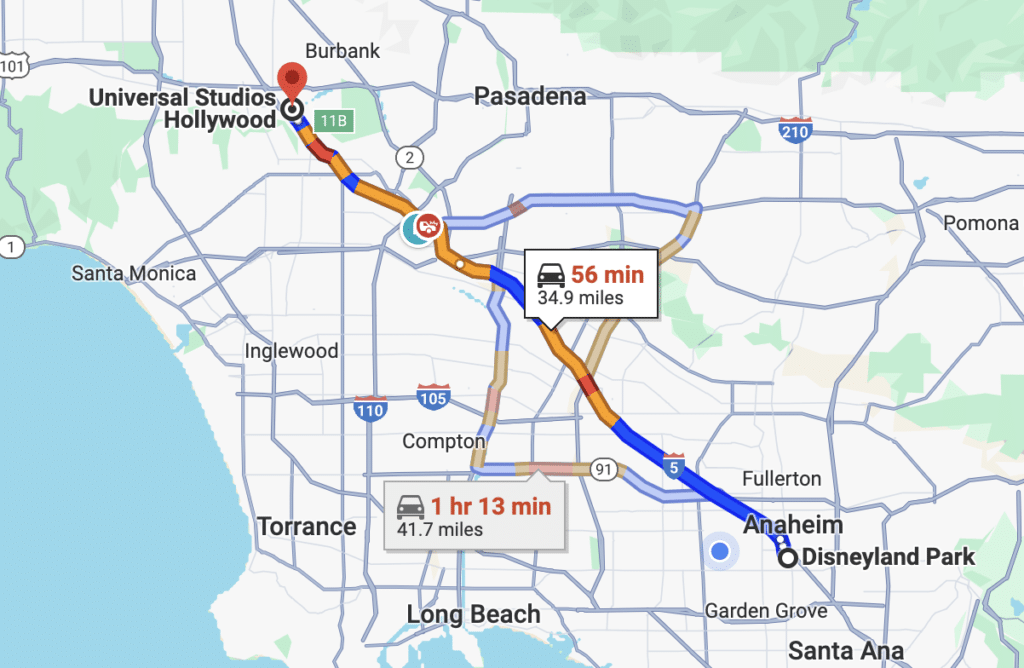
Disneyland Park is nestled in Anaheim, Orange County, while Universal Studios Hollywood is situated in Universal City, part of Los Angeles County. The approximate driving distance between the two parks is around 35 to 40 miles (56 to 64 kilometers), depending on the specific route taken and the starting/ending points within each resort area.
Under ideal traffic conditions, a drive between these two landmarks can take anywhere from 45 minutes to an hour. However, it is imperative to understand that “ideal traffic conditions” are a rarity on Southern California freeways.
More Than Just Miles: Factors Affecting Travel Time
The actual time it takes to travel between Universal Studios Hollywood and Disneyland can fluctuate wildly due to several critical factors:
- Traffic Congestion: Los Angeles is renowned for its heavy traffic. Peak hours (typically 6:00 AM-10:00 AM and 3:00 PM-7:00 PM on weekdays) can easily double or triple your travel time, turning a 45-minute drive into a 1.5- to 2-hour ordeal. Weekends, especially during midday, can also experience significant slowdowns.
- Day of the Week: Mid-week travel (Tuesday, Wednesday, Thursday) generally offers the lightest traffic, while Fridays and Sundays are often the most challenging due to weekend travel patterns.
- Time of Day: Leaving very early in the morning (before 6:00 AM) or late in the evening (after 8:00 PM) typically allows for the quickest commutes.
- Special Events and Holidays: Local events, concerts, sporting events, and major holidays (e.g., Christmas, Thanksgiving, New Year’s Eve) can create unprecedented traffic jams, significantly impacting travel times.
- Roadwork and Accidents: Unexpected incidents like road construction or accidents can cause sudden and prolonged delays, even outside of peak hours.
Given these variables, it’s wise to budget at least 1.5 to 2 hours for travel between the parks, especially if you plan to move during the middle of the day. This buffer allows for unforeseen delays and reduces stress, ensuring you arrive at your destination refreshed and ready to enjoy the magic.
Navigating Your Journey: Transportation Options
Choosing the right mode of transportation between Disneyland and Universal Studios Hollywood is paramount for a smooth trip. Your decision will depend on your budget, desired level of convenience, group size, and tolerance for traffic. Here’s a breakdown of the most popular options:
Driving Yourself: Freedom and Flexibility
For many, driving their own vehicle or a rental car offers the most independence.
- Pros:
- Flexibility: You control your schedule, departure times, and stops along the way.
- Privacy: Enjoy personal space and the ability to listen to your own music or podcasts.
- Convenience for Families: Easier to transport luggage, strollers, and other family essentials.
- Cons:
- Traffic Stress: Navigating Southern California freeways, particularly Interstate 5 (I-5) which is the primary route, can be stressful and time-consuming.
- Parking Fees: Both theme parks charge substantial daily parking fees (often $30+), which can add up if you’re visiting for multiple days or moving between parks.
- Navigation: While GPS is helpful, unfamiliarity with the area can still lead to wrong turns or missed exits.
If you choose to drive, ensure your rental car includes a navigation system or use a reliable smartphone app like Google Maps or Waze to monitor real-time traffic conditions.
Ride-Sharing Services: Convenience at Your Fingertips
Services like Uber and Lyft have become incredibly popular for their door-to-door convenience.
- Pros:
- No Driving Stress: Sit back and relax, letting someone else navigate the traffic.
- No Parking Fees: You’re dropped off directly at the park entrance (or designated ride-share zones), eliminating parking concerns and fees.
- On-Demand Service: Available almost instantly, offering flexibility for spontaneous travel.
- Cons:
- Cost: While convenient, ride-sharing can be expensive, especially during peak travel times when “surge pricing” is in effect. A one-way trip can range from $50 to $100+, depending on demand and vehicle type.
- Availability: While generally abundant, wait times can increase during very busy periods or late at night.
- Car Seats: If traveling with young children, you’ll need to confirm if a car seat option is available through the app, which can be less reliable than bringing your own or using a shuttle service.
Always check estimated fares before confirming your ride, and consider sharing a ride if you’re traveling solo or as a couple to potentially save money.
Shuttles and Tour Buses: Guided Comfort
Several private shuttle services and tour operators specialize in transporting guests between Anaheim and Hollywood attractions.
- Pros:
- Stress-Free: Professional drivers handle navigation and traffic.
- No Parking Worries: Drop-off and pick-up are usually near the park entrances.
- Pre-Booked: You can secure your transportation in advance, providing peace of mind.
- Cost-Effective for Groups: Can sometimes be more economical than ride-sharing for larger groups.
- Cons:
- Fixed Schedules: Shuttles operate on set timetables, which may not align perfectly with your desired departure or arrival times.
- Multiple Stops: Some shuttles may make additional stops at hotels, increasing overall travel time.
- Less Flexible: Not as spontaneous as ride-sharing or driving yourself.
Look for reputable companies like Karmel Shuttle or other independent tour operators. Check their websites for current schedules, pricing, and pick-up/drop-off locations.
Public Transportation: A Budget-Friendly Adventure

While not the quickest or most direct option, public transportation offers an authentic, budget-conscious way to travel. This typically involves a combination of trains and buses.
- Pros:
- Cost-Effective: Significantly cheaper than driving or ride-sharing.
- Local Experience: Offers a glimpse into local life and allows you to avoid traffic jams by utilizing dedicated train lines.
- Eco-Friendly: A greener way to travel.
- Cons:
- Time-Consuming: Requires multiple transfers and can take 2-3 hours or more, depending on connections.
- Complexity: Navigating different bus and train lines can be confusing for first-time visitors.
- Limited Hours: Public transit may have reduced service late at night or very early in the morning.
Typical Route:
- From Disneyland in Anaheim, take a local bus (e.g., Anaheim Resort Transportation (ART)) to the Anaheim Regional Transportation Intermodal Center (ARTIC).
- From ARTIC, take an Amtrak Pacific Surfliner train or a Metrolink train north towards Los Angeles Union Station.
- At Los Angeles Union Station, transfer to the Metro B Line (Red Line) subway.
- Take the Metro B Line to the Universal City/Studio City station.
- From there, a free tram or a short walk will take you up the hill to Universal Studios Hollywood’s main entrance.
This option is best suited for intrepid travelers with ample time and a desire for a truly local experience.
Making the Most of Your Dual-Park Adventure: Planning Your Stay
Visiting both Disneyland and Universal Studios Hollywood requires more than just knowing the distance; it demands strategic planning regarding accommodation, itinerary, and overall tourism approach.
Strategic Accommodation Choices
Where you choose to stay can significantly impact the convenience and cost of your trip.
-
Stay Near Disneyland (Anaheim):
- Pros: Abundance of hotels catering to all budgets, from luxury resorts like the Grand Californian Hotel & Spa and the Disneyland Hotel to more budget-friendly Good Neighbor Hotels. Many are within walking distance or a short shuttle ride to the parks. Access to Disney California Adventure Park as well.
- Cons: Requires daily travel to Universal Studios Hollywood, adding commute time.
- Ideal for: Families with young children, those prioritizing multiple days at Disneyland Resort, or travelers who prefer a more contained vacation experience.
-
Stay Near Universal Studios (Hollywood/Universal City):
- Pros: Proximity to Universal Studios Hollywood, Universal CityWalk, and various Hollywood attractions. Hotels like the Sheraton Universal Hotel and Universal Hilton offer direct access.
- Cons: Requires daily travel to Disneyland, typically a longer and more traffic-prone journey. Fewer budget options directly adjacent to the park compared to Anaheim.
- Ideal for: Those spending more time exploring Los Angeles and its famous landmarks, or travelers who want a more urban and entertainment-focused base.
-
Split Your Stay:
- Pros: Minimizes travel time on your park days. Allows you to fully immerse yourself in each area’s distinct atmosphere and amenities.
- Cons: Involves checking in and out of two hotels, packing and unpacking twice, and potentially higher overall accommodation costs.
- Ideal for: Travelers with longer itineraries (5+ days) who want a truly immersive experience without excessive commuting.
Many hotels in both Anaheim and Hollywood offer suites or apartments suitable for families or longer stays, often with excellent amenities such as pools and complimentary breakfast. Utilize booking platforms and reviews to find the best fit for your needs.
Crafting Your Itinerary: Time Management and Tickets
Attempting to visit both Universal Studios Hollywood and Disneyland Park in a single day is highly discouraged. It’s logistically challenging, incredibly rushed, and you won’t fully enjoy either experience.
- Allocate Dedicated Days: Plan at least one full day for Universal Studios Hollywood and at least two full days for Disneyland Resort (to cover Disneyland Park and Disney California Adventure Park).
- Consider Park Hopper Options: Disneyland Resort offers Park Hopper tickets that allow you to visit both Disneyland Park and Disney California Adventure Park on the same day. However, this is distinct from hopping between Universal Studios and Disneyland, which requires separate admission tickets for each.
- Purchase Tickets in Advance: Always buy your tickets online beforehand to save time at the entrance gates and often secure better pricing. Look for multi-day passes if applicable, as they typically offer better value.
- Utilize Early Entry/Late Stays: If staying at a resort hotel, take advantage of early entry privileges. Plan to stay until closing to experience the full magic, especially the evening shows and parades.
- Build in Travel Time: Crucially, dedicate a separate morning or afternoon for travel between your Anaheim and Hollywood bases if splitting your stay, or for the round trip if staying in one location. Don’t plan a full park day on a travel day.
- Leverage Technology: Download the official park apps for wait times, show schedules, and mobile food ordering (e.g., My Disneyland App, Universal Studios Hollywood App).
Beyond the Parks: Exploring Southern California
Your dual-park adventure offers a fantastic springboard for exploring more of Southern California’s diverse attractions and local culture.
- Near Universal Studios Hollywood:
- Hollywood Walk of Fame: Stroll down the iconic boulevard and spot your favorite stars.
- Griffith Observatory: Enjoy breathtaking panoramic views of Los Angeles and the Hollywood Sign.
- Santa Monica Pier and Venice Beach: Experience classic California beaches, vibrant boardwalks, and stunning sunsets.
- Beverly Hills: Window shop along Rodeo Drive and spot celebrity homes.
- Near Disneyland (Anaheim/Orange County):
- Knott’s Berry Farm: Another popular theme park offering a mix of thrill rides and old-west charm.
- Orange County Beaches: Explore charming coastal towns like Huntington Beach, Newport Beach, and Laguna Beach.
- Downtown Disney District: An entertainment, dining, and shopping promenade located just outside Disneyland Park.
These additional destinations can enrich your travel experiences, adding variety to your theme park heavy itinerary and showcasing the best of Southern California.
Lifestyle and Budget Considerations
The way you approach your Universal Studios and Disneyland trip can vary significantly based on your lifestyle and budget preferences.
Luxury vs. Budget Travel
- Luxury Travel: If budget is less of a concern, opt for premium accommodations like the Grand Californian Hotel & Spa at Disneyland Resort or a boutique hotel in Hollywood. Utilize ride-sharing services like Uber Black or private car services for seamless transfers. Consider VIP tours at the parks for expedited access and exclusive experiences. Fine dining options and premium souvenirs will complete the upscale experience.
- Budget Travel: For those mindful of costs, public transportation is your most economical choice, despite the time investment. Look for budget hotels or apartments further from the park entrances but with good public transport links. Pack snacks and drinks, and utilize mobile ordering for quick-service meals to save money on dining. Buying multi-day park tickets can offer savings over single-day purchases.

Family Trips and Business Stays
- Family Trips: Prioritize comfort and convenience. Consider suites with separate sleeping areas or kitchenettes. Shuttles or private car services with car seats might be preferable over public transport. Build in rest days or half-days to prevent burnout, especially for younger children. Research kid-friendly attractions within each park, such as Super Nintendo World at Universal Studios or Star Wars: Galaxy’s Edge at Disneyland.
- Business Stays: If you’re in California for business and want to squeeze in a park visit, efficiency is key. Stay at hotels with excellent business amenities and easy access to transportation. Ride-sharing is often the best choice for quick transfers. Focus on one park for a half or full day rather than trying to do both to avoid added stress. Consider visiting during off-peak seasons if possible to minimize crowd impact.
Ultimately, whether you’re planning a luxury travel experience or a budget-friendly adventure, a well-thought-out plan will ensure your trip meets your expectations.
The distance between Universal Studios Hollywood and Disneyland in California is manageable, but it requires careful consideration of travel time, transportation, and accommodation. With approximately 35-40 miles separating these two entertainment giants, the journey typically takes 45 minutes to 2 hours, heavily dependent on the notorious Southern California traffic.
By weighing your options – from the flexibility of driving and the convenience of ride-sharing to the structured comfort of shuttles and the economical adventure of public transport – you can select the best fit for your travel style and budget. Remember, strategic planning, including dedicated days for each park and thoughtful accommodation choices, is the cornerstone of a successful dual-park vacation. Embrace the planning process, and you’ll unlock an incredible travel experience, immersing yourself in the magic and thrills that only California’s premier theme parks can offer. Happy travels!
LifeOutOfTheBox is a participant in the Amazon Services LLC Associates Program, an affiliate advertising program designed to provide a means for sites to earn advertising fees by advertising and linking to Amazon.com. Amazon, the Amazon logo, AmazonSupply, and the AmazonSupply logo are trademarks of Amazon.com, Inc. or its affiliates. As an Amazon Associate we earn affiliate commissions from qualifying purchases.