
Venturing through the vibrant landscape of South Florida often involves navigating its key metropolitan hubs. For many travelers and residents alike, a common question arises: “How far is West Palm Beach to Miami, Florida?” This seemingly straightforward query opens the door to a deeper exploration of geographic realities, diverse transportation options, and the myriad factors that can shape your journey between these two dynamic cities. Whether you’re planning a day trip, a business commute, or a leisurely exploration of the Sunshine State’s eastern coast, understanding this route is crucial for an efficient and enjoyable experience. From bustling urban centers to serene coastal stretches, the path connecting West Palm Beach and Miami is more than just miles on a map; it’s an artery pulsating with life, commerce, and tourism.

The Geographic Reality: Unpacking the Distance
The distance between West Palm Beach and Miami is a common consideration for anyone planning travel within South Florida. While a straight-line measurement provides a baseline, real-world travel involves roads, traffic, and specific destinations within each expansive city. Understanding these nuances is key to accurately estimating your journey.
Straight Line vs. Road Distance
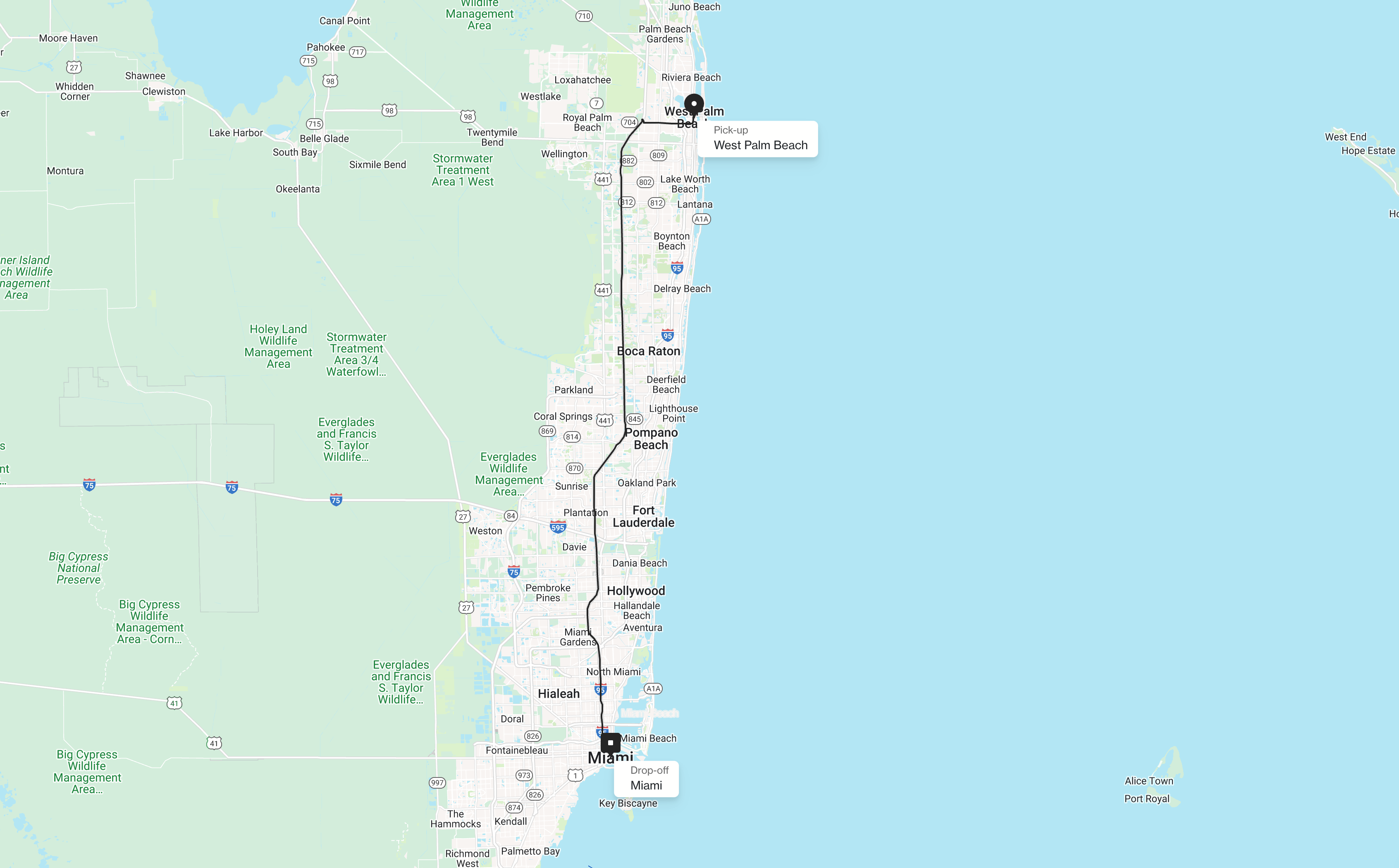
As the crow flies, the distance between the city centers of West Palm Beach and Miami is approximately 60-65 miles (96-105 kilometers). This direct measurement, however, rarely reflects the actual travel distance by land. When driving, the road distance is significantly longer due to the winding nature of highways and the need to navigate through various communities. The typical driving distance hovers around 65-75 miles (105-120 kilometers), depending on your exact starting point in Palm Beach County and your ultimate destination in Miami-Dade County. For instance, traveling from Downtown West Palm Beach to Downtown Miami will usually fall within this range, while a trip from north West Palm Beach to South Miami could extend beyond it.
Key Interstates and Highways
The primary arterial route connecting West Palm Beach and Miami is Interstate 95 (I-95). This major north-south highway runs parallel to the Atlantic coast, serving as the backbone for travel throughout Florida’s eastern seaboard. I-95 is generally a multi-lane highway, but it is also one of the busiest stretches of road in the state. Travelers might also consider the Florida’s Turnpike as an alternative, though it runs slightly inland and involves tolls. While the Turnpike can sometimes offer less congestion, the additional distance and tolls make I-95 the preferred route for most. Both highways provide direct access, but the choice often comes down to current traffic conditions, willingness to pay tolls, and specific destination points.
Estimated Travel Time (Without Traffic)
Under ideal conditions, meaning light traffic and clear roads, the driving time from West Palm Beach to Miami typically ranges from 1 hour and 15 minutes to 1 hour and 45 minutes. This estimate accounts for the approximately 70-mile journey at highway speeds. However, it’s crucial to understand that these “ideal conditions” are often fleeting, especially during peak travel times. The actual journey time can fluctuate significantly, as will be discussed in further detail. Planning your travel outside of rush hour — typically early mornings, late evenings, or mid-day — can help you get closer to these optimal travel times.
Navigating the Journey: Transportation Options
Traveling between West Palm Beach and Miami offers a variety of transportation choices, each with its own set of advantages and considerations regarding cost, convenience, and travel time. Your preferred mode of transport will likely depend on your budget, schedule, and personal preferences.
Driving: The Most Popular Choice
Driving remains the most flexible and popular method for traversing the distance between these two South Florida cities. With direct access via Interstate 95, drivers can enjoy the freedom to depart at their leisure and reach specific destinations without transfers.
- Pros: Unmatched flexibility, door-to-door service, ability to carry luggage, and the option to explore along the way.
- Cons: Susceptible to traffic congestion (especially during rush hour), parking challenges in urban areas, fuel costs, and potential for tolls.
- Tips:
- Tolls: Be aware that some routes, particularly Florida’s Turnpike, require tolls. SunPass is the electronic toll collection system in Florida and can save you time and money compared to cash lanes.
- Rental Cars: If you’re visiting and don’t have your own vehicle, numerous rental car agencies are available at Palm Beach International Airport (PBI) and Miami International Airport (MIA), as well as within both cities.
- Navigation Apps: Utilize real-time navigation apps like Google Maps or Waze to monitor traffic conditions and choose the fastest route.
Public Transportation: Brightline Train
For a faster, more comfortable, and often more predictable journey, the Brightline train service is an excellent alternative. Brightline offers high-speed rail service connecting West Palm Beach, Boca Raton, Fort Lauderdale, and Miami, with plans for future expansion to Orlando.
- Advantages: Significantly reduces travel time compared to driving during peak hours (often under 70 minutes), avoids traffic entirely, provides comfortable seating, Wi-Fi, and food/beverage service.
- Stations:
- West Palm Beach Station: Located in Downtown West Palm Beach, easily accessible.
- MiamiCentral Station: Situated in Downtown Miami, offering convenient connections to local public transport like Metromover and Metrorail.
- Considerations: Ticket prices can be higher than bus travel but competitive with driving costs when factoring in fuel, tolls, and parking. You’ll also need to arrange transportation to and from the Brightline stations.
Buses and Ride-Shares
Budget-conscious travelers or those without access to a car have other viable options.
- Buses: Services like Greyhound offer intercity bus travel between West Palm Beach and Miami. While generally the most economical choice, bus journeys are typically longer than driving or taking the train due to multiple stops and adherence to road traffic.
- Ride-Shares: Uber and Lyft are readily available in both cities. A ride-share from West Palm Beach to Miami can be convenient for door-to-door service but can be quite expensive, especially during surge pricing. It’s often more economical for groups splitting the fare.
- Air Travel: For this specific route, air travel between Palm Beach International Airport (PBI) and Miami International Airport (MIA) or Fort Lauderdale-Hollywood International Airport (FLL) is highly impractical. The short distance means that the time spent on airport security, check-in, and flight would far outweigh any time saved, not to mention the significantly higher cost.
Factors Influencing Travel Time and Experience
While the raw distance between West Palm Beach and Miami is a constant, the actual time it takes to traverse this route can vary dramatically. Several external factors play a significant role in shaping your travel experience. Being aware of these elements can help you plan more effectively and mitigate potential delays.
Traffic Patterns: Rush Hour Realities
The most impactful factor on travel time between these two South Florida cities is traffic congestion. The I-95 corridor is notorious for its heavy volume, particularly during traditional rush hour periods.
- Morning Rush Hour: Typically from 6:30 AM to 9:30 AM, especially for southbound travel towards Miami as commuters head to work.
- Evening Rush Hour: Generally from 3:30 PM to 6:30 PM, primarily for northbound travel from Miami back towards West Palm Beach.
During these peak times, a journey that might otherwise take 1 hour 30 minutes can easily extend to 2 hours, or even 2 hours 30 minutes, or more in severe cases. This is particularly true when passing through Broward County, which lies between Palm Beach County and Miami-Dade County and includes densely populated areas like Fort Lauderdale.
Time of Day and Day of Week
Beyond rush hour, the general time of day and day of the week significantly affect traffic.
- Weekdays vs. Weekends: Weekday travel, outside of rush hour, is often heavier than weekend travel. However, weekends can see increased tourist traffic, especially during special events or holiday periods. Sunday afternoons, for example, can be surprisingly busy as people return home from weekend getaways.
- Mid-day: Traveling between 10:00 AM and 2:00 PM on a weekday often offers the least congested conditions.
- Late Evenings/Early Mornings: Driving late at night or very early in the morning almost guarantees minimal traffic, making for the fastest possible journey.
Road Construction and Special Events
Florida is a state of constant development, and road construction is a perpetual reality. While authorities strive to minimize disruption, construction zones can narrow lanes, reduce speed limits, and cause bottlenecks. It’s advisable to check local traffic reports before embarking on your journey, especially for major projects on I-95.
Additionally, special events in either West Palm Beach, Fort Lauderdale, or Miami can dramatically impact traffic. Major sporting events, concerts, festivals, or even boat shows can draw significant crowds and cause localized congestion and road closures. Being aware of such events and adjusting your travel schedule accordingly can save you considerable time and frustration.
Your Starting and Ending Points within Each City
Both West Palm Beach and Miami are sprawling metropolitan areas. The time it takes to get from your specific starting point to the highway, and then from the highway to your final destination, can add a substantial amount of time to your overall journey. For example, traveling from the northernmost parts of West Palm Beach to South Miami will naturally take longer than a trip from Downtown West Palm Beach to Brickell in Miami. Factor in local traffic within the cities themselves, parking search times, and potential detours to get a realistic estimate of your total travel duration.
Making the Most of Your Trip: Stopovers and Attractions
While the goal might be to get from West Palm Beach to Miami efficiently, the journey along the South Florida coast offers numerous opportunities for interesting stopovers and quick detours. Transforming a simple commute into a mini-adventure can enrich your travel experience, showcasing the diverse appeal of the region.
Coastal Gems Along the Way
The route largely follows the beautiful Florida coastline, passing through several vibrant cities and towns, each with its own unique charm.
- Delray Beach: Just south of West Palm Beach, Delray Beach is renowned for its Atlantic Avenue, a bustling street lined with art galleries, boutiques, and diverse restaurants leading directly to the ocean. It’s a perfect spot for a coffee break or a stroll on the beach.
- Boca Raton: Known for its upscale ambiance and pristine beaches, Boca Raton offers attractions like Mizner Park, an outdoor lifestyle center with shopping, dining, and cultural events. Its Mediterranean-revival architecture provides a scenic backdrop for a brief stop.
- Fort Lauderdale: Often called the “Venice of America,” Fort Lauderdale is approximately halfway between West Palm Beach and Miami. It’s a major hub with a vast network of canals, a beautiful beachfront, and lively Las Olas Boulevard, which is excellent for dining and people-watching. If time permits, a water taxi tour is a fantastic way to experience the city.
- Pompano Beach: Nestled between Boca Raton and Fort Lauderdale, Pompano Beach boasts a newly redeveloped pier area, family-friendly beaches, and a thriving watersports scene. It’s a less crowded alternative for a beach break.
Quick Detours and Points of Interest
Even if you’re on a tighter schedule, a quick detour off Interstate 95 can add an interesting dimension to your journey.
- Nature and Parks: Many state parks and nature preserves are easily accessible from the highway. For example, Hugh Taylor Birch State Park in Fort Lauderdale offers a peaceful escape with nature trails and lagoon access, perfect for a short leg-stretch.
- Shopping: For those who enjoy retail therapy, numerous shopping centers are located directly off I-95 exits, including the Town Center at Boca Raton or the Galleria at Fort Lauderdale.
- Local Eateries: Instead of generic highway rest stops, consider exiting into one of the smaller towns for a taste of local South Florida cuisine. Many eateries in Delray Beach or Fort Lauderdale offer fresh seafood and diverse menus.
Incorporating a stopover can break up the drive, allow you to recharge, and provide a glimpse into the unique character of Florida’s eastern coast. Whether it’s a gourmet meal, a relaxing walk on the beach, or a quick cultural immersion, these intermediate destinations can make the overall journey as enjoyable as the final destination itself.
Why Travel Between West Palm Beach and Miami?
The consistent flow of people between West Palm Beach and Miami underscores the significant interconnectedness of these two major South Florida cities. This movement is driven by a diverse array of purposes, from daily necessities to grand adventures. Understanding these motivations highlights why the question of “how far” remains so relevant for so many.
Business Commutes
Both West Palm Beach and Miami are robust economic hubs, each with distinct industries and employment opportunities. Miami boasts a thriving international finance sector, a booming tech scene, and a strong presence in trade and logistics due to its port. West Palm Beach, on the other hand, is increasingly a destination for financial services, real estate, and healthcare, often attracting businesses and residents seeking a slightly less dense urban environment. This dynamic creates a significant commuter population traveling between the two cities for work, meetings, and business expansions. Professionals often reside in one city and work in the other, making efficient transit a daily necessity. The Brightline train, in particular, has become a game-changer for business travelers, offering a productive and stress-free alternative to driving through traffic.
Leisure and Tourism
South Florida is a premier global destination for leisure and tourism, and visitors frequently explore both West Palm Beach and Miami within a single trip.
- West Palm Beach’s](https://lifeoutofthebox.com/west-palm-beach) Appeal: Tourists are drawn to West Palm Beach for its upscale shopping on Worth Avenue in Palm Beach (the island directly across from West Palm Beach), cultural institutions like the Norton Museum of Art, and vibrant entertainment districts such as Clematis Street and Rosemary Square. Its quieter, more relaxed luxury appeals to those seeking an elegant escape.
- Miami’s](https://lifeoutofthebox.com/miami) Allure: Miami captivates with its iconic South Beach, vibrant Art Deco architecture, bustling nightlife, diverse culinary scene, and cultural hotspots like Wynwood Walls and Little Havana. It serves as a gateway to Latin America and offers a high-energy urban experience.
Many vacationers choose to split their time, enjoying the distinct flavors of both cities, making the journey between them an integral part of their travel itinerary.
Airport Access
South Florida is served by three major international airports: Palm Beach International Airport (PBI) in West Palm Beach, Fort Lauderdale-Hollywood International Airport (FLL) in Broward County, and Miami International Airport (MIA) in Miami. Travelers often fly into one airport and out of another, or they might reside closer to one city but find better flight deals or more convenient routes from an airport in the other. For instance, a resident of West Palm Beach might commute to Miami International Airport for a wider array of international flights, or a visitor arriving at Miami International Airport might head straight to West Palm Beach for their vacation starting point. This constant interchange for air travel significantly contributes to the traffic and demand for efficient transportation options between the two cities.
In essence, the route between West Palm Beach and Miami is a crucial conduit for a region that thrives on movement, connection, and exploration. Whether for work, play, or onward journeys, understanding this path is fundamental to experiencing the best of South Florida.
Conclusion: Bridging the Distance with Ease
The journey between West Palm Beach and Miami, Florida, is a frequently traveled route, typically spanning 65-75 miles. While the geographical distance remains constant, the actual travel time is a dynamic variable, heavily influenced by factors such as traffic congestion during rush hour, the day of the week, and unforeseen road conditions.
Fortunately, South Florida offers a robust selection of transportation methods to bridge this gap. Driving via Interstate 95 provides unparalleled flexibility, albeit with the caveat of potential traffic delays. For those prioritizing speed and comfort, the Brightline high-speed rail offers a modern, efficient alternative, bypassing road congestion entirely. Additionally, bus services and ride-share options provide accessible choices for various budgets and preferences.
Ultimately, navigating from West Palm Beach to Miami is a manageable and often scenic endeavor. By planning your journey with an awareness of peak travel times, leveraging real-time navigation tools, and selecting the transportation method best suited to your needs, you can ensure a smooth and enjoyable experience. Whether you’re commuting for business, embarking on a leisure trip, or simply exploring the vibrant tapestry of South Florida, the path between these two iconic cities is readily accessible and filled with opportunities for discovery.
LifeOutOfTheBox is a participant in the Amazon Services LLC Associates Program, an affiliate advertising program designed to provide a means for sites to earn advertising fees by advertising and linking to Amazon.com. Amazon, the Amazon logo, AmazonSupply, and the AmazonSupply logo are trademarks of Amazon.com, Inc. or its affiliates. As an Amazon Associate we earn affiliate commissions from qualifying purchases.