
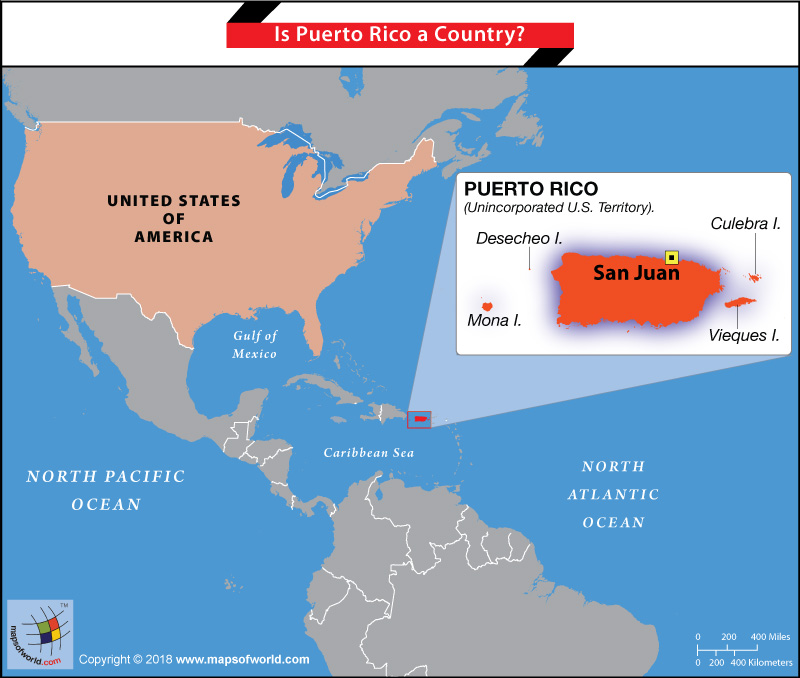
Puerto Rico, a vibrant Caribbean archipelago, holds a unique and often misunderstood political status within the framework of the United States. Far more than just a tourist destination, its relationship with the mainland is a complex tapestry woven from historical treaties, legislative acts, and ongoing debates about self-determination. Understanding this status is crucial for anyone planning a visit, appreciating its rich culture, or simply seeking a deeper understanding of the American political landscape. Puerto Rico is an unincorporated territory of the United States, meaning it belongs to the U.S. but is not considered an integral part of the country in the same way a state is. This distinction carries significant implications for its residents, its governance, and its relationship with the federal government.

Historical Roots: From Spanish Colony to U.S. Territory
The story of Puerto Rico’s connection to the United States begins at the close of the 19th century. For over 400 years, the island was a Spanish colony, a legacy that has profoundly shaped its language, architecture, and traditions. However, the landscape of global power shifted dramatically with the Spanish-American War in 1898. As a consequence of the war, Spain ceded Puerto Rico, along with Cuba and Guam, to the United States under the Treaty of Paris. This marked a pivotal moment, transferring sovereignty from Spain to the U.S. and initiating a new chapter in the island’s history.
The Treaty of Paris and Its Immediate Aftermath
The signing of the Treaty of Paris on December 10, 1898, formally ended the Spanish-American War. Spain relinquished all claim to Cuba and ceded Guam and Puerto Rico to the United States. The treaty, however, did not grant Puerto Ricans U.S. citizenship. Initially, Puerto Rico was under military rule, but this was soon replaced by civilian government. The Foraker Act of 1900, also known as the Organic Act of 1900, established a framework for civil government in Puerto Rico and formally classified it as an unincorporated territory. This act laid the groundwork for the island’s unique political status, distinguishing it from the incorporated territories that were on a direct path to statehood.
The Jones-Shafroth Act and Citizenship
A significant milestone in the relationship between Puerto Rico and the United States was the passage of the Jones-Shafroth Act in 1917. This act granted statutory U.S. citizenship to all Puerto Ricans, a landmark decision that conferred a significant level of integration. However, it is important to note that this was a statutory grant, meaning it was established by an act of Congress rather than being constitutionally guaranteed as it would be for citizens born in a U.S. state. Despite this, it fundamentally altered the rights and responsibilities of Puerto Ricans, including their ability to serve in the U.S. military. This act also established a Bill of Rights for the island and provided for a locally elected Senate.
Understanding “Unincorporated Territory”
The designation of Puerto Rico as an “unincorporated territory” is the cornerstone of its complex relationship with the U.S. This classification, first articulated in the Supreme Court case Downes v. Bidwell (1901), means that the U.S. Constitution does not automatically apply in full to Puerto Rico. Instead, Congress has the authority to decide which parts of the U.S. Constitution, if any, will be extended to the territory. This power grants Congress considerable control over Puerto Rico’s governance and its inhabitants’ rights.
Congressional Authority and Plenary Powers
Under the U.S. Constitution, specifically the Territorial Clause, Congress has “plenary power” over U.S. territories. This means Congress possesses broad, almost absolute, authority to govern territories like Puerto Rico. Congress can legislate directly for the territory, create its governing structures, and determine the extent to which federal laws apply. This power has been exercised throughout history through various organic acts and subsequent legislation, shaping Puerto Rico’s economic, social, and political landscape. The implications of this are profound, as decisions affecting millions of U.S. citizens residing in Puerto Rico are made by a legislative body in which they have no voting representation.
Differences from U.S. States
The distinctions between Puerto Rico and the 50 U.S. states are significant and multifacetted. While Puerto Ricans are U.S. citizens, they generally cannot vote in U.S. presidential elections unless they reside in a U.S. state. They also do not have voting representation in the U.S. Congress; instead, they elect a Resident Commissioner who can vote in committees but not on the House floor. Furthermore, while Puerto Rico receives some federal funding, it often receives less than U.S. states for programs like Medicaid and Supplemental Security Income (SSI). Federal income taxes are generally not levied on income earned in Puerto Rico by its residents, but they do pay other federal taxes, such as Social Security and Medicare taxes.
Governance and Political Status Debates
The governance of Puerto Rico is a unique blend of local autonomy and federal oversight. The island has a governor elected by its residents, a bicameral legislature, and its own judicial system. However, ultimate authority rests with the U.S. Congress. This division of power has fueled decades of debate about Puerto Rico’s political status, with various factions advocating for different solutions.
Local Governance Structures
Puerto Rico operates under its own constitution, ratified by the U.S. Congress in 1952. This constitution establishes a framework for a representative democracy with a separation of powers among the executive, legislative, and judicial branches. The governor serves as the head of the executive branch, while the Legislative Assembly, composed of the Senate and the House of Representatives, makes laws. The judiciary is headed by the Supreme Court of Puerto Rico. Despite these local institutions, federal law and U.S. federal courts have jurisdiction over certain matters, and ultimately, Congress can override local laws or impose new ones.
The Push for Statehood, Independence, or Enhanced Autonomy
The question of Puerto Rico’s political future has been a recurring theme in its history. There are three primary aspirations: statehood, independence, and enhanced self-governance within its territorial status (often referred to as “free association” or “commonwealth status” with greater autonomy).
- Statehood: Proponents of statehood argue that it would provide Puerto Rico with full political equality, equal representation in Congress, and equitable treatment in federal programs. They believe it would boost the economy through increased federal investment and integration into the U.S. market.
- Independence: Advocates for independence envision Puerto Rico as a sovereign nation, free from U.S. federal authority. They emphasize national identity and self-determination, aiming to forge unique international relationships and control their own destiny.
- Enhanced Commonwealth Status: This option seeks to maintain a connection with the U.S. but with significantly expanded powers for Puerto Rico, including greater control over its economy, immigration, and international trade agreements, while still retaining U.S. citizenship and defense.
Referendums on political status have been held periodically, with varying levels of participation and differing outcomes, but no definitive consensus has been reached that would compel action from the U.S. Congress. The ongoing debate reflects deep-seated desires for self-determination and a resolution to the inherent inequalities associated with territorial status.
The Economic and Social Implications
Puerto Rico’s territorial status has profound economic and social ramifications, shaping everything from its infrastructure and development to the daily lives of its residents. While it benefits from access to the U.S. market and certain federal programs, it also faces economic challenges that are, in part, linked to its political standing.
Economic Landscape and Federal Programs
Puerto Rico’s economy has historically relied on manufacturing, pharmaceuticals, and more recently, tourism. Its status as a territory allows for duty-free trade with the mainland U.S., a significant advantage for businesses. However, it has also been subject to U.S. federal laws that have impacted its economic development, such as the Jones Act, which requires goods shipped between the U.S. and Puerto Rico to be transported on U.S.-flagged vessels. This has been a point of contention, with many arguing it increases shipping costs and hinders economic growth.
Federal programs, such as those for education, infrastructure, and healthcare, are present in Puerto Rico, but often with limitations compared to states. For instance, the funding formulas for programs like Medicaid have historically provided less support to Puerto Rico than to U.S. states, contributing to disparities in healthcare access and quality. The island’s significant debt crisis, which emerged in the early 21st century, further complicated its economic situation, leading to federal oversight and restructuring efforts.
Cultural Identity and U.S. Citizenship
Despite its political ties to the United States, Puerto Rico maintains a distinct and rich cultural identity. The Spanish language is widely spoken, alongside English, and vibrant traditions in music, dance, cuisine, and religious practices are deeply ingrained in the island’s social fabric. The concept of U.S. citizenship for Puerto Ricans is a source of pride and connection for many, allowing for freedom of movement to the mainland and participation in American society. However, for others, the lack of full political rights and representation fuels a strong desire for greater sovereignty or a redefinition of their relationship with the U.S. This duality – being both American citizens and bearers of a unique cultural heritage – is a defining characteristic of the Puerto Rican experience.
Visiting Puerto Rico: Travel Considerations
For travelers, understanding Puerto Rico’s status as a U.S. territory simplifies many logistical aspects of a visit. It means that traveling to Puerto Rico from the U.S. mainland is considered domestic travel.
Entry Requirements and Currency
Since Puerto Rico is a U.S. territory, U.S. citizens do not need a passport to travel between the mainland U.S. and the island. Identification such as a driver’s license or state ID is sufficient for boarding flights. The U.S. dollar is the official currency, eliminating the need for currency exchange. This ease of travel makes Puerto Rico an accessible destination for Americans seeking a Caribbean escape without the complexities of international travel.
Legal and Administrative Framework
Federal laws of the United States generally apply in Puerto Rico, though there are exceptions and local adaptations. This means that common U.S. regulations regarding safety, commerce, and civil rights are in effect. For visitors, this translates to a familiar legal and administrative environment. However, it’s always advisable for travelers to be aware of local customs and any specific regulations that may apply within the island’s jurisdiction. The island’s infrastructure, while subject to ongoing development and recovery efforts, is largely integrated with U.S. standards, particularly in popular tourist areas like San Juan and Ponce.

A Unique Blend of Culture and American Convenience
Puerto Rico offers travelers a unique opportunity to experience a vibrant Caribbean culture with the convenience and familiarity of U.S. governance. From the historic streets of Old San Juan and the bioluminescent bays of Fajardo to the lush rainforest of El Yunque National Forest, the island provides a diverse range of attractions. Visitors can enjoy world-class resorts, indulge in the island’s distinctive cuisine, and immerse themselves in its lively music and festivals, all while navigating a travel environment that is largely congruent with their experiences within the continental United States. This combination of distinct cultural identity and American accessibility is precisely what makes Puerto Rico such a captivating and unique destination.
LifeOutOfTheBox is a participant in the Amazon Services LLC Associates Program, an affiliate advertising program designed to provide a means for sites to earn advertising fees by advertising and linking to Amazon.com. Amazon, the Amazon logo, AmazonSupply, and the AmazonSupply logo are trademarks of Amazon.com, Inc. or its affiliates. As an Amazon Associate we earn affiliate commissions from qualifying purchases.