
Navigating the legal landscape of divorce can often feel like planning a complex international journey, filled with uncertainty, a multitude of steps, and varying timelines. While the prospect of a Florida divorce might seem daunting, understanding the typical duration is crucial for managing expectations and planning your future. This guide aims to demystify the process, offering insights into the factors that influence how long a divorce takes in the Sunshine State, drawing parallels to the planning and execution involved in organizing a memorable travel experience.
The duration of a divorce in Florida is not a fixed entity; it’s a dynamic process influenced by a variety of factors, much like the duration of a trip can depend on the destination, the chosen activities, and the accommodation. At its core, Florida law distinguishes between two main types of divorce: uncontested divorce and contested divorce. Each carries its own timeline, and understanding this fundamental difference is the first step to gauging how long your own divorce might take.
The Uncontested Divorce: A Smooth Sailing Journey
An uncontested divorce is akin to booking a package tour where all elements are pre-arranged and agreed upon. In this scenario, both spouses are in complete agreement on all significant aspects of the dissolution of their marriage. This includes, but is not limited to, the division of marital assets and debts, child custody and visitation schedules (if applicable), and alimony.
Key Elements of an Uncontested Divorce in Florida
For a divorce to be classified as uncontested in Florida, several criteria must be met:
- Mutual Agreement on All Issues: This is the cornerstone. Both parties must have a signed Marital Settlement Agreement (MSA) that outlines their consensus on every pertinent issue.
- No Disputes Over Children: If there are minor children, both parents must agree on parental responsibility (legal custody), timesharing schedules, and child support. This is often the most emotionally charged aspect and requires significant compromise.
- No Disputes Over Finances: Agreement on the equitable distribution of all assets (like bank accounts, real estate, vehicles, retirement funds) and liabilities (credit card debt, mortgages) is paramount. Spousal support or alimony must also be mutually agreed upon, if applicable.
- Filing and Documentation: Both parties must cooperate in filing the necessary legal documents with the court. This includes the Petition for Dissolution of Marriage, the MSA, and any other required forms.
The Timeline of an Uncontested Florida Divorce
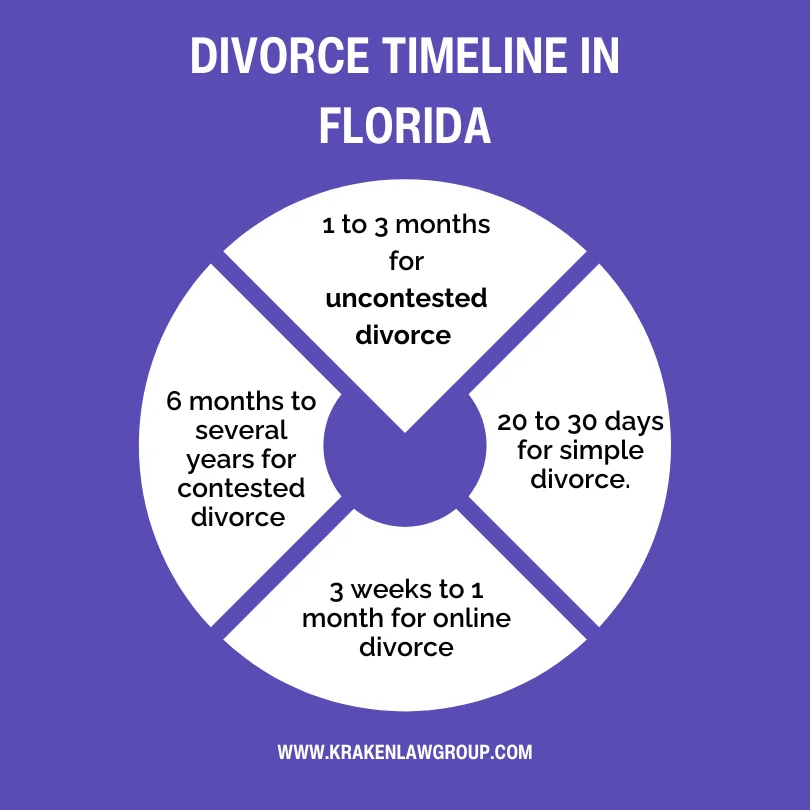
Once all parties are in agreement and have a signed MSA, the process in Florida is generally streamlined. Florida law mandates a mandatory waiting period of 20 days from the date the Respondent is served with the Petition or the date the Respondent files an Answer or other response. This means that even if both parties are in complete agreement and all paperwork is ready on day one, the divorce cannot be finalized before this 20-day period has elapsed.
Therefore, the quickest an uncontested divorce can be finalized in Florida is typically around 20 days. However, this is an ideal scenario. In reality, factors such as court dockets, the time it takes for attorneys (if involved) to draft and finalize documents, and the court clerk’s processing times can extend this period slightly. It’s not uncommon for an uncontested divorce to be finalized within 30 to 60 days from the initial filing, assuming all paperwork is in order and both parties are cooperative.
Planning an uncontested divorce is much like booking a last-minute getaway to a popular destination. If everything aligns perfectly – availability, pricing, and your schedule – you can be on your way swiftly. However, even with perfect planning, minor delays are possible.
The Contested Divorce: A More Complex Expedition
A contested divorce is a journey that involves navigating uncharted territories and requires significant negotiation, and potentially, a lengthy expedition. Unlike an uncontested divorce, where spouses agree, a contested divorce arises when one or more issues remain unresolved between the parties. These unresolved issues can significantly prolong the divorce process.
Common Points of Contention in Florida Divorces
When couples cannot agree, the court must step in to make decisions. This often leads to disputes over:
- Child Custody and Timesharing: Disagreements over who will have primary physical custody, how parental responsibility will be shared, and the specific timesharing schedule can become highly contentious. This often involves evaluations, mediation, and court hearings.
- Alimony and Spousal Support: The amount and duration of alimony are frequent sources of conflict. Florida law outlines various types of alimony, and determining eligibility and the appropriate amount can be complex, often requiring detailed financial analysis.
- Division of Marital Property and Debts: While Florida is an equitable distribution state, meaning marital assets and debts are divided fairly (not necessarily equally), disputes can arise over what constitutes marital property, the valuation of assets (especially complex ones like businesses or investments), and the allocation of debts.
- Business Valuations and Hidden Assets: If one or both spouses own businesses, or if there’s suspicion of hidden assets, the divorce process can become significantly more complicated and expensive, often requiring forensic accountants and business valuators.
The Extended Timeline of a Contested Florida Divorce
The duration of a contested divorce in Florida can vary dramatically. There is no set time limit, as the process is dictated by the complexity of the issues, the willingness of the parties to negotiate, and the court’s schedule.
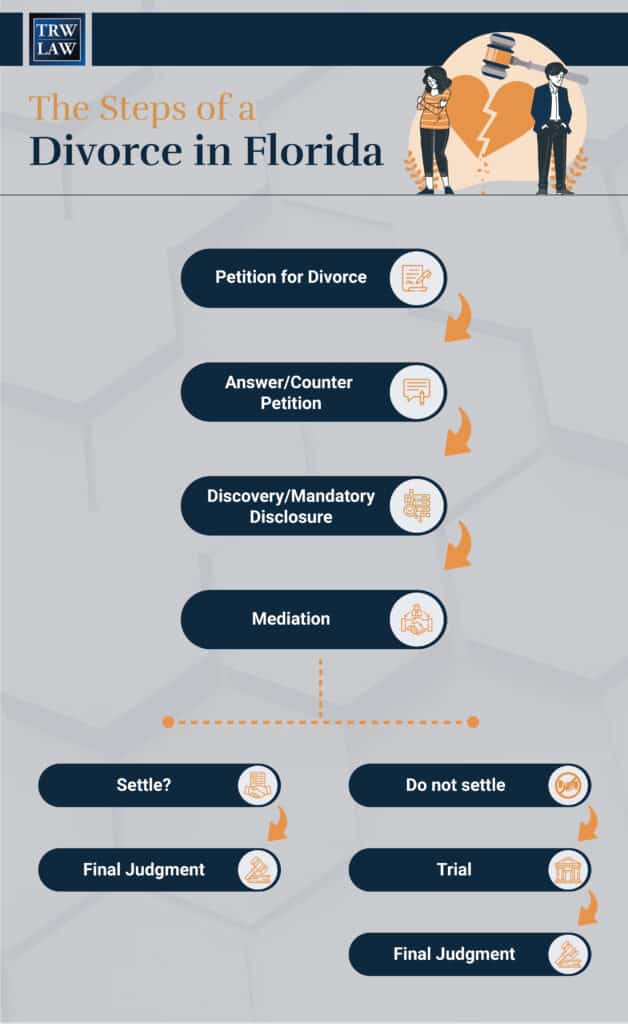
The initial steps of filing the Petition and serving the Respondent are similar to an uncontested divorce. However, after the Respondent files an Answer, the case enters the discovery phase.

The Discovery Phase: Gathering Evidence
This phase involves exchanging information and evidence between the parties. It can include:
- Interrogatories: Written questions that must be answered under oath.
- Requests for Production: Requests for documents and other tangible evidence.
- Depositions: Out-of-court sworn testimonies of parties and witnesses.
- Subpoenas: Legal orders to compel the production of documents or testimony from third parties.
The discovery phase can take months, especially in complex cases involving extensive financial documentation, multiple properties, or businesses. This is akin to meticulously planning an extended adventure, requiring extensive research, booking multiple flights, and securing varied accommodation like resorts, villas, and perhaps even a long-term apartment rental.
Mediation and Court Hearings
If discovery does not lead to a settlement, the case will likely proceed to mediation. Florida courts often mandate mediation before a final hearing. Mediation is a process where a neutral third party helps the couple attempt to reach an agreement. While mediation can resolve many issues, it is not always successful.
If mediation fails, the case will be set for a final hearing or trial. These hearings can be lengthy, involving the presentation of evidence, witness testimony, and legal arguments. The court will then issue a final judgment.
The entire process for a contested divorce can take anywhere from six months to over a year, and in very complex or acrimonious cases, it could even extend beyond that. Cases involving significant assets, like a luxury resort or a valuable art collection, or intricate child custody disputes, will naturally take longer to resolve.
Factors Influencing Divorce Duration in Florida
Regardless of whether your divorce is contested or uncontested, several key factors can significantly impact the overall timeline. These are the variables that can either expedite or delay your travel plans to a new chapter of your life.
Heading3: The Role of Legal Representation and Cooperation
- Legal Counsel: The presence and approach of legal counsel can play a crucial role. Experienced attorneys can guide clients through the process efficiently, ensuring all legal requirements are met promptly. However, if attorneys are overly aggressive or if there is a lack of cooperation between opposing counsel, it can lead to delays. Conversely, attorneys who prioritize amicable resolution can expedite the process, especially in uncontested matters. Think of your lawyer as your travel agent; a good one can secure the best deals and smoothest transitions, while a less efficient one might lead to missed connections and unexpected detours.
- Client Cooperation: The willingness of both parties to cooperate is perhaps the most significant factor. If spouses can communicate respectfully, even during a contested divorce, and are willing to compromise, the process will naturally be faster. Proactive engagement with legal requirements, prompt responses to requests for information, and a genuine desire to reach a resolution are invaluable. This mirrors the ease of travel when all passengers are ready at the gate, rather than those who are holding up the boarding process.
Heading3: Complexity of Assets and Child-Related Issues
- Financial Complexity: The more complex a couple’s financial situation, the longer the divorce is likely to take. Cases involving multiple properties, significant investments, businesses, pensions, or overseas assets require thorough investigation, valuation, and negotiation. This is akin to planning a multi-city European tour, with intricate logistics for flights, hotels, and local culture experiences in each location, compared to a simple beach vacation.
- Child Custody and Support Disputes: As mentioned earlier, issues involving minor children are often the most emotionally charged and legally complex. Disagreements over parental responsibility, timesharing schedules, and child support can lead to extensive court involvement, including evaluations by professionals specializing in child development and family dynamics. This adds layers of complexity, much like incorporating unique experiences or visiting specific landmarks that require advance booking and detailed itineraries.
Heading3: Court Availability and Procedural Requirements
- Court Backlogs: Court systems, particularly in larger counties in Florida, can experience significant backlogs. This means that obtaining hearing dates, mediation sessions, and final judgments can take longer than anticipated. The court’s schedule is an external factor that can influence the pace of your divorce, much like airline schedules or the availability of your preferred accommodation in a popular tourist season.
- Procedural Hurdles: Florida divorce law has specific procedural requirements that must be followed. Failure to adhere to these rules, such as improper service of process or missing filing deadlines, can lead to delays. Understanding and meticulously following these procedures is essential for a smooth and timely resolution, much like ensuring you have the correct visa and travel documents before embarking on an international trip.
Planning Your Post-Divorce Life: Embracing New Experiences
While the duration of a divorce in Florida can be uncertain, focusing on the eventual outcome can provide a sense of direction. The end of a marriage, though often painful, can also be the beginning of a new chapter, an opportunity to explore new aspects of lifestyle, perhaps indulging in luxury travel you’ve always dreamed of, or embracing budget-friendly adventures that offer unique cultural insights.
Whether you envision solo travel to explore new destinations, family trips that create lasting memories, or even business stays in exciting cities, the resolution of your divorce allows you to re-engage with these aspirations. The legal process, while consuming, is a temporary phase. The goal is to reach a fair resolution that allows both parties to move forward with their lives.
Consider the possibilities: imagine staying in a charming boutique hotel in Savannah, exploring the vibrant local culture of New Orleans, or marveling at the architectural wonders of Chicago. The freedom to plan such experiences is what awaits at the end of the divorce proceedings. Even simple pleasures, like finding the perfect resort for a relaxing getaway or a comfortable apartment for a longer stay, become attainable once the legal complexities are resolved.
Ultimately, the time it takes to divorce in Florida is a journey with variable endpoints. By understanding the factors at play, being prepared for the process, and approaching it with a spirit of cooperation, you can navigate this transition as smoothly as possible, paving the way for your future adventures, be they grand explorations of landmarks or quiet retreats in beautiful natural settings.
LifeOutOfTheBox is a participant in the Amazon Services LLC Associates Program, an affiliate advertising program designed to provide a means for sites to earn advertising fees by advertising and linking to Amazon.com. Amazon, the Amazon logo, AmazonSupply, and the AmazonSupply logo are trademarks of Amazon.com, Inc. or its affiliates. As an Amazon Associate we earn affiliate commissions from qualifying purchases.