
Embarking on a road trip through [Texas] is an adventure unlike any other, promising vast landscapes, diverse cultures, and unforgettable experiences. But for many first-time visitors or those planning a cross-country journey, the most pressing question is often: “How long does it really take to drive through [Texas]?” The answer, much like the state itself, is anything but simple. [Texas]’s immense size means that merely traversing its borders can be a multi-day affair, while truly experiencing its myriad attractions could take weeks. This guide will delve into the various factors that influence your driving time, offering insights into efficient routes, scenic detours, and how to transform a simple drive into an epic [Texas] road trip.
The Straight Answer: A Race Against the Clock
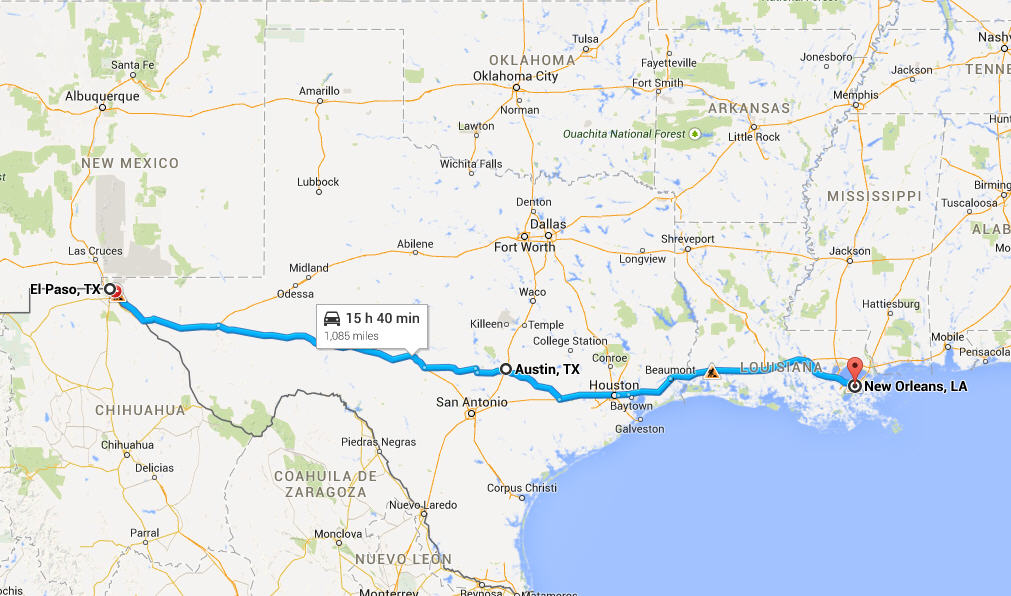
For those whose primary goal is to get from one side of [Texas] to the other as quickly as possible, minimizing stops and maximizing highway speed, the journey is still substantial. [Texas] spans roughly 800 miles from east to west and north to south, making it the largest state in the contiguous [United States].
Non-Stop Driving Across Texas
Let’s consider a few primary routes to illustrate the minimum driving times:
- East to West (e.g., [Texarkana] to [El Paso]): This route, primarily following [I-20] and then [I-10], covers approximately 850 miles. At an average speed of 65-70 mph, a continuous drive would take roughly 12 to 13 hours. However, this calculation doesn’t account for mandatory fuel stops, quick restroom breaks, or any unexpected traffic delays, particularly around major metropolitan areas like [Dallas], [Fort Worth], and [San Antonio].
- North to South (e.g., [Amarillo] to [Brownsville]): This journey, often utilizing [US-83] or a combination of interstates like [I-27] and [I-35], stretches for about 750-800 miles. Driving non-stop, you’d be looking at approximately 11 to 12 hours of continuous driving. This route also presents challenges with potential congestion through cities such as [Waco], [Austin], and [San Antonio].
It’s crucial to understand that these figures represent theoretical, non-stop driving. In reality, maintaining such a pace is impractical and unsafe. Even the most determined drivers will need to stop for gas, food, and rest, adding at least 2-3 hours to any full-day itinerary. Therefore, attempting to cross [Texas] in a single day is an exhausting endeavor that we do not recommend if you wish to enjoy your trip or arrive refreshed at your destination.
Beyond the Miles: Factors Influencing Your Texas Drive Time
While the sheer distance is the most obvious factor, several other elements play a significant role in determining how long your drive through [Texas] will actually take. Considering these aspects allows you to tailor your journey to your preferences, whether you prioritize speed or exploration.
Route Selection: From Interstate Hustle to Scenic Detours
The choice of your route dramatically impacts your travel time.
- Interstates: Major interstates like I-10, I-20, I-35, and I-45 offer the quickest way to cover ground. They are designed for efficient travel, often with higher speed limits. However, they can also be prone to heavy traffic, especially near urban centers like [Houston], [Dallas], and [Austin].
- U.S. Highways and State Roads: For those seeking a more leisurely pace and a deeper immersion into [Texas]’s diverse landscapes, secondary highways like [US-83], [US-87], and [US-287] offer scenic alternatives. These routes often take you through charming small towns, past historic landmarks, and allow for spontaneous stops. While they add significant time to your journey due to lower speed limits and more intersections, they unlock a different side of [Texas] that interstates often bypass. For example, a drive through the [Texas Hill Country] on state roads can add hours but reward you with stunning views, wineries, and unique local culture. Similarly, venturing into [Big Bend National Park] or along the [Gulf Coast Scenic Byway] will significantly extend your trip but provide unparalleled natural beauty.
Pacing Your Journey: One Day, Two Days, or More?
Realistically, most travelers will spread their drive across multiple days.
- One-Day Sprint (Not Recommended): As discussed, attempting to cross [Texas] in one day is feasible only for the most urgent journeys and comes at the cost of extreme fatigue and no sightseeing.
- Two-Day Drive: A more sensible approach for traversing the state would involve two days of driving, with an overnight stay roughly halfway. This breaks the journey into manageable 6-7 hour driving segments per day, allowing for proper rest and short stops. For an East-West route, a stop in [San Antonio] or [Fort Worth] would be ideal. For a North-South trip, [Waco] or [Austin] could serve as excellent mid-points.
- Three Days or More: This is where the magic of a [Texas] road trip truly begins. Dedicating three or more days allows you to incorporate significant sightseeing, explore multiple cities, and embrace the local lifestyle. This pacing transforms the drive from a mere transit into a vacation itself, allowing you to appreciate the vastness and variety of the Lone Star State. This duration is particularly recommended for families or those on a luxury travel itinerary, where comfort and experiences take precedence over speed.
The Impact of Stops: Sightseeing, Meals, and Rest
Every stop adds time, but these are often the most memorable parts of your journey.
- Major Attractions: Want to visit the [NASA Johnson Space Center] in [Houston]? Explore the [Alamo] and stroll the [San Antonio Riverwalk]? Delve into history at the [Sixth Floor Museum] in [Dallas]? Hike in [Big Bend National Park] or relax on [Padre Island National Seashore]? Each of these iconic landmarks demands several hours, if not a full day, significantly extending your travel time. Even a quick stop to photograph the [State Capitol Building] in [Austin] takes time.
- Culinary Delights: [Texas] is a foodie paradise. Stopping for authentic [BBQ] in a small town, savoring [Tex-Mex] in [San Antonio], or enjoying a classic [Texas] steak requires a minimum of an hour per meal. These culinary detours are integral to the [Texas] experience and should be factored into your schedule.
- Breaks and Rest: Regular breaks are essential for safe driving. Every 2-3 hours, drivers should stop for at least 15-30 minutes to stretch, refuel (both the car and themselves), and avoid driver fatigue. These seemingly small stops accumulate over a long drive.
Transforming a Drive into a Texas Road Trip Adventure
Instead of merely driving through [Texas], consider turning your journey into a memorable road trip that taps into the state’s rich tapestry of travel, tourism, and landmarks.
Iconic Routes and Must-See Destinations
Designing a themed route can enhance your experience significantly.
- East to West: The Southern Charm to Desert Vistas
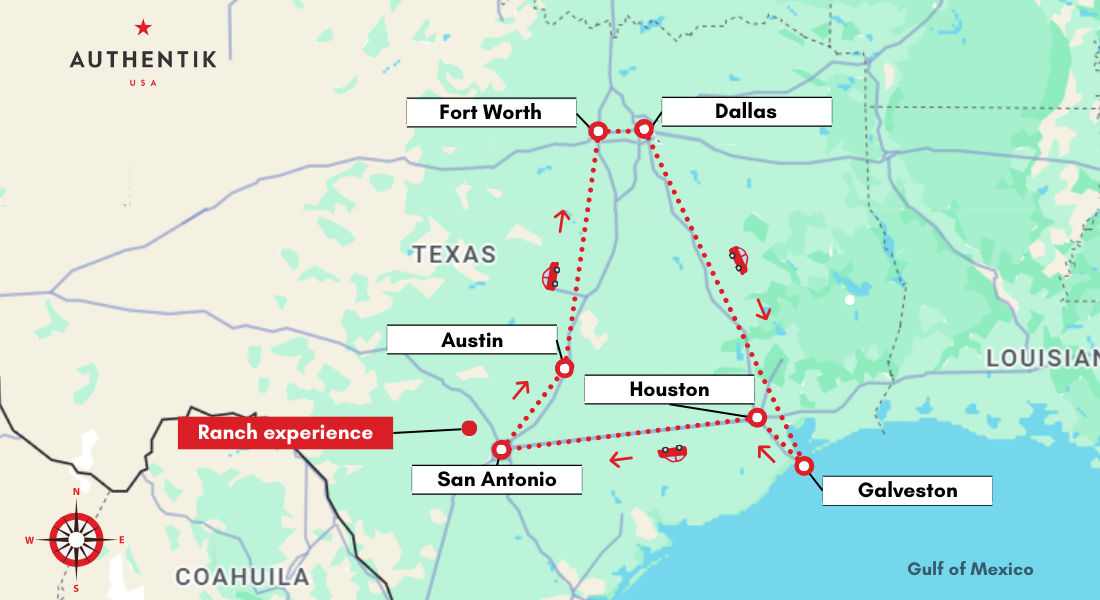
Starting from [Houston], known for its vibrant culinary scene and the [Space Center Houston], head west to [San Antonio], a city steeped in history with its famous [Alamo] and enchanting [San Antonio Riverwalk]. From there, venture north to [Austin], the [Live Music Capital of the World], offering unique entertainment and fantastic food. Continue west, perhaps stopping in [Fort Davis] to visit the [McDonald Observatory] before reaching [El Paso], where you can explore the [Franklin Mountains State Park]. This route allows for a blend of urban exploration, historical immersion, and natural beauty. - North to South: Panhandle Plains to Gulf Coast Beaches
Begin your journey in [Amarillo] in the Panhandle, famous for [Cadillac Ranch]. Drive south through [Fort Worth], where the [Stockyards National Historic District] offers a glimpse into the Old West. Continue to [Dallas] for its modern skyline and historical sites like the [Sixth Floor Museum]. Further south, a stop in [Waco] to visit [Magnolia Market at the Silos] is popular. Conclude your trip on the beautiful [Gulf Coast] in [Galveston], enjoying the beaches and the [Galveston Island Historic Pleasure Pier]. - The Texas Hill Country Loop: For those with more time, a loop through the [Texas Hill Country] from [Austin] is a delight. Explore charming towns like [Fredericksburg] (known for its wineries and German heritage), Bandera, and [San Marcos] (for its clear spring-fed rivers). This route is perfect for those who appreciate scenic drives, local culture, and outdoor activities.
Accommodation Along the Way: From Budget-Friendly to Luxury Escapes
The type of accommodation you choose can significantly impact your road trip experience and budget. [Texas] offers a vast array of options, catering to every lifestyle and preference.
- Luxury & Boutique Stays: Cities like [Austin], [Dallas], and [Houston] boast numerous upscale hotels and resorts, such as the [Hyatt Regency] or [Omni Hotels], offering premium amenities and services. In the [Texas Hill Country], you can find luxurious bed and breakfasts or boutique hotels with vineyard views. The [Gulf Coast] also features lavish beachfront resorts.
- Mid-Range & Family-Friendly: Across the state, you’ll find plenty of comfortable and convenient options from well-known hotel chains. These are ideal for family trips, providing amenities like pools and complimentary breakfast.
- Budget & Unique Stays: For budget travelers, motels are readily available in almost every town. Alternatively, consider unique accommodations like historic hotels, charming guesthouses in small towns, or even camping in one of [Texas]’s many state parks, especially if you’re exploring areas like [Big Bend National Park]. Planning and booking accommodation in advance, especially during peak seasons or major events, is always a wise decision.
Culinary Journey: Savoring the Flavors of Texas
No road trip through [Texas] is complete without indulging in its legendary cuisine. Food is a vital part of the local culture and tourism experience.
- Texas BBQ: A pilgrimage to a renowned [BBQ] joint is a must. From the smoky briskets of [Central Texas] (like [Franklin Barbecue] in [Austin] or [Kreuz Market] in [Lockhart]) to the diverse offerings across the state, the flavor is unparalleled.
- Tex-Mex: Experience the vibrant flavors of [Tex-Mex] cuisine, particularly in [San Antonio] and along the border regions. Tacos, enchiladas, and fajitas are staples.
- Steak: Being cattle country, [Texas] is synonymous with excellent steak. Many steakhouses offer locally sourced, perfectly cooked cuts.
- Gulf Coast Seafood: Along the [Gulf Coast], fresh seafood reigns supreme. Enjoy oysters, shrimp, and various fish dishes.
- Kolaches: Don’t forget to try a [Kolache], a sweet or savory pastry with Czech origins, especially popular in [Central Texas] towns.
These culinary stops are not just about eating; they are about experiencing the heart and soul of [Texas] culture.
Planning Your Ultimate Texas Driving Experience
To make the most of your [Texas] road trip, thoughtful planning is essential.
Best Time to Drive Through Texas
- Spring (March-May) and Fall (September-November): These are generally considered the ideal seasons, offering pleasant temperatures and beautiful scenery, especially in the [Texas Hill Country] with its wildflowers in spring.
- Summer (June-August): Be prepared for intense heat, particularly in West [Texas]. Air conditioning in your vehicle is non-negotiable, and staying hydrated is crucial.
- Winter (December-February): While generally mild in South [Texas], the Panhandle and North [Texas] can experience freezing temperatures and even ice storms, which can impact driving conditions.
- Events: Be aware of major events like [SXSW] in [Austin] or [Rodeo Houston], which can lead to inflated accommodation prices and heavy traffic.
Essential Road Trip Tips
- Vehicle Maintenance: Before embarking on your journey, ensure your vehicle is in top condition. Check tires, fluids, and brakes.
- Navigation: Utilize reliable navigation apps like [Google Maps] or [Waze] for real-time traffic updates and route planning.
- Emergency Kit: Carry an emergency kit with basic tools, a first-aid kit, water, and non-perishable snacks.
- Hydration and Snacks: Keep plenty of water and snacks in the car, especially when traveling through less populated areas where services might be sparse.
- Roadside Assistance: Have a roadside assistance plan in place for peace of mind.
Budgeting for Your Texas Road Trip
Your budget will depend heavily on your lifestyle choices, from luxury travel to budget-friendly adventures. Key expenses include:
- Fuel: Given the distances, fuel will be a significant cost.
- Accommodation: This can range from budget motels to luxury resorts.
- Food: From quick fast-food stops to gourmet dining experiences.
- Attractions & Activities: Entrance fees for parks, museums, and entertainment.
- Souvenirs: A little something to remember your [Texas] adventure.
In conclusion, “How long does it take to drive through [Texas]?” is a question with a deeply personal answer. While a non-stop traverse can be accomplished in 11-13 hours, truly experiencing the state demands more time. Whether you opt for a two-day dash or a week-long exploration, [Texas] offers an unparalleled diversity of experiences. Embrace the journey, plan wisely, and prepare to be captivated by the Lone Star State’s vast horizons and rich culture.
LifeOutOfTheBox is a participant in the Amazon Services LLC Associates Program, an affiliate advertising program designed to provide a means for sites to earn advertising fees by advertising and linking to Amazon.com. Amazon, the Amazon logo, AmazonSupply, and the AmazonSupply logo are trademarks of Amazon.com, Inc. or its affiliates. As an Amazon Associate we earn affiliate commissions from qualifying purchases.