
Evicting a tenant in California is a complex legal process that can be lengthy and emotionally draining for property owners. Unlike simpler landlord-tenant disputes, eviction, formally known as an “unlawful detainer” action, involves strict adherence to state laws and often local ordinances. Understanding the various stages and potential timelines is crucial for anyone managing long-term accommodation, from individual landlords to property management companies. The duration of an eviction can vary significantly based on numerous factors, including the reason for eviction, the tenant’s response, and the specific court’s caseload.
Understanding the California Eviction Process
The eviction process in California is designed to protect both landlord and tenant rights, ensuring due process before a tenant can be removed from their accommodation. It’s not simply a matter of asking a tenant to leave; a series of legal steps must be followed.
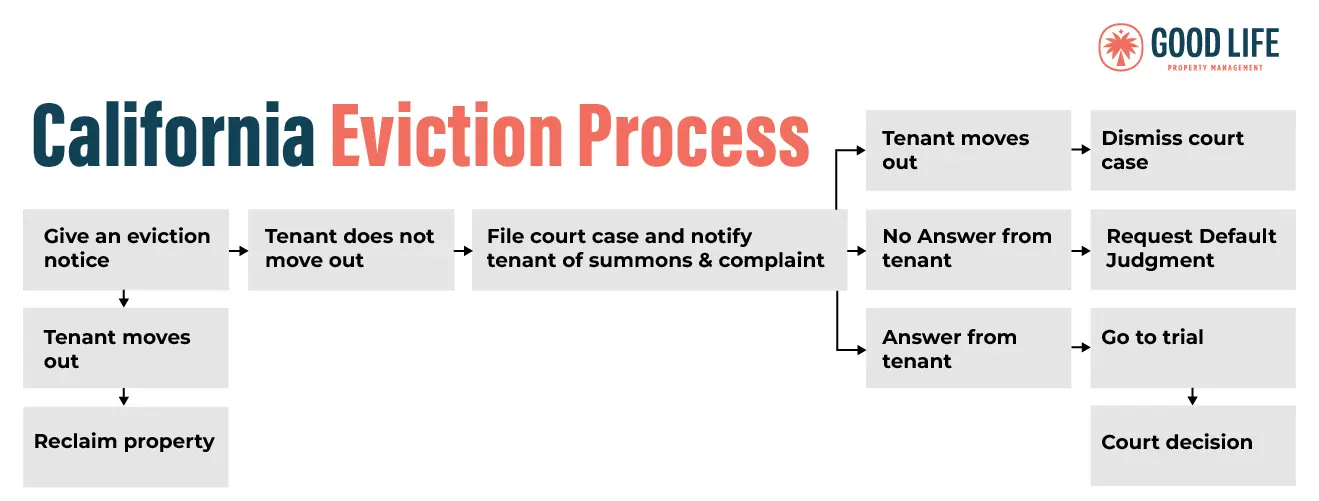
The Unlawful Detainer Action
An unlawful detainer lawsuit is the legal mechanism landlords use to evict a tenant in California. This action is filed in superior court and is considered a summary proceeding, meaning it is intended to be heard and decided more quickly than other types of lawsuits. However, “quickly” in legal terms can still mean several weeks or even months. The core purpose of an unlawful detainer is to regain possession of the rental property and, in many cases, recover unpaid rent or damages.
Key Players and Their Roles
Several parties are involved in an eviction proceeding:
- Landlord (Plaintiff): The property owner or manager initiating the eviction.
- Tenant (Defendant): The individual or individuals being evicted from the accommodation.
- Court: The superior court of the county where the property is located, responsible for overseeing the legal process.
- Sheriff’s Department: Law enforcement responsible for physically removing a tenant if a court-ordered eviction is granted.
- Attorneys: Legal representatives for both landlords and tenants, often crucial for navigating the complexities of eviction law.
Stages and Timelines of an Eviction
The eviction process is typically broken down into distinct stages, each with its own timeline. These timelines are minimums and can often be extended due to various circumstances.
1. Notice to Quit
The first formal step is serving the tenant with a written notice to quit. The type of notice depends on the reason for eviction:
- 3-Day Notice to Pay Rent or Quit: Used for non-payment of rent. The tenant has three calendar days to pay the overdue rent in full or move out.
- 3-Day Notice to Perform Covenants or Quit: Used for lease violations (e.g., unauthorized pets, excessive noise). The tenant has three calendar days to correct the violation or move out.
- 3-Day Notice to Quit (No Cure): Used for serious, incurable lease violations (e.g., illegal activity, substantial damage to property). The tenant must move out within three days with no option to cure.
- 30-Day or 60-Day Notice to Quit: Used to end a month-to-month tenancy without cause. A 30-day notice is for tenancies of less than one year, while a 60-day notice is for tenancies of one year or more. Specific “just cause” eviction rules in some cities and AB 1482 (Tenant Protection Act of 2019) can modify these requirements significantly, often requiring a specific reason for termination and relocation assistance.
Timeline: 3, 30, or 60 days, depending on the notice type. This period begins the day after the notice is properly served.
2. Filing the Lawsuit (Unlawful Detainer Complaint)
If the tenant does not comply with the notice, the landlord can file an unlawful detainer complaint with the superior court. This involves preparing and submitting legal documents, including the complaint, a copy of the notice served, and the lease agreement.
Timeline: This step typically takes a few days to a week to prepare and file after the notice period expires. Court clerks then issue a summons.
3. Tenant’s Response and Court Proceedings
Once the complaint is filed, it must be “served” to the tenant by a registered process server. The tenant then has a limited time to respond:
- 5 Calendar Days: If personally served.
- 10 Calendar Days: If served by “substituted service” (e.g., leaving it with another adult at the residence and mailing it).
If the tenant does not respond within this timeframe, the landlord can request a default judgment, which can expedite the process. If the tenant files an answer, a court trial will be scheduled. Discovery (exchanging information) may occur, and negotiations for settlement are common.
Timeline:
- Service of Complaint: 1-5 days.
- Tenant’s Response: 5-10 days.
- Default Judgment (if no response): 5-10 days for court processing after request.
- Trial (if tenant responds): Can range from 2-6 weeks to get a court date, plus the duration of the trial itself (usually 1-3 days). Some courts can be significantly backlogged, extending this wait time.
4. Judgment and Writ of Possession
If the landlord wins the unlawful detainer case, the court will issue a judgment in their favor. Following the judgment, the landlord requests a “Writ of Possession,” which is the legal order instructing the sheriff to remove the tenant.
Timeline:
- Issuance of Judgment: Immediately after trial or default.
- Request and Issuance of Writ of Possession: 1-3 days after judgment.
5. Sheriff’s Lockout
The sheriff’s department then serves the tenant with a “5-Day Notice to Vacate” (also known as the “levy”). If the tenant still has not moved out after these five calendar days, the sheriff will return to physically remove the tenant and restore possession of the accommodation to the landlord.
Timeline:
- Sheriff’s Notice to Vacate: 5 days.
- Sheriff’s Lockout: Typically occurs on the 6th day or soon after, depending on the sheriff’s schedule.

Total Estimated Timeline: In a best-case scenario with no delays, a straightforward eviction in California can take approximately 30-45 days from the initial notice to the sheriff’s lockout. However, with any complications, such as a tenant filing an answer, court backlogs, or legal defenses, the process can easily stretch to 2-3 months, and in complex cases, even 6 months or more.
Factors Influencing Eviction Duration
Several variables can significantly impact the timeline of an eviction in California.
Type of Tenancy and Lease Agreement
A clear, well-drafted lease agreement can streamline the process by explicitly outlining terms and conditions. Month-to-month tenancies or verbal agreements can sometimes introduce ambiguities that may complicate proceedings.
Reason for Eviction (Non-payment vs. Lease Violation)
Evictions based on non-payment of rent are often the most straightforward because they involve clear financial evidence. Evictions for lease violations can be more contentious, requiring landlords to prove the violation occurred and was not cured. No-fault evictions, especially in rent-controlled jurisdictions or under statewide rent control, have additional requirements and often longer notice periods.
Tenant’s Legal Response and Defenses
A tenant who retains legal counsel and actively defends themselves in court can significantly prolong the process. Common tenant defenses include:
- Improper service of notice or complaint.
- Breach of the implied warranty of habitability (landlord failed to maintain safe and livable conditions).
- Retaliation for tenant exercising legal rights.
- Discrimination.
- Procedural errors by the landlord.
Each defense requires the landlord to respond and prove their case, adding time and legal costs.
Court Backlogs and Local Ordinances
Court calendars can be heavily backlogged, especially in populous areas like Los Angeles or San Francisco, delaying trial dates. Furthermore, many California cities have their own rent control and “just cause” eviction ordinances that add layers of complexity and often extend notice periods or require additional steps like relocation assistance. These local laws can dramatically impact the length and feasibility of an eviction.
Settlement Attempts
During any stage of the eviction, both parties may attempt to negotiate a settlement. This could involve the tenant agreeing to move out by a certain date in exchange for a waiver of back rent, or the landlord agreeing to certain repairs. While settlements can resolve disputes out of court, the negotiation period itself can add time to the overall process.
Navigating Eviction in Specific Jurisdictions
The “one size fits all” approach to eviction in California is a myth. Local regulations can profoundly alter the timeline and requirements.
Rent Control Cities
Cities with rent control ordinances, such as San Francisco, Oakland, Berkeley, and parts of Los Angeles, have stricter “just cause” eviction rules. This means a landlord typically needs a specific, legally recognized reason to evict, even for a month-to-month tenancy. These rules often include longer notice periods and may require landlords to pay relocation assistance to tenants, further complicating and extending the process.
Los Angeles vs. San Francisco Nuances
While both Los Angeles and San Francisco are major California cities with robust tenant protections, their specific ordinances differ. Los Angeles has the Rent Stabilization Ordinance (RSO) which governs many rental units, requiring specific grounds for eviction and relocation assistance in many cases. San Francisco’s Rent Ordinance is famously stringent, providing strong tenant protections and often requiring detailed administrative hearings before a court eviction can even proceed for certain reasons. These local frameworks often add weeks or months to an eviction timeline compared to areas without such comprehensive protections.
Strategic Considerations for Property Owners
Given the potential length and complexity, property owners engaging in long-term accommodation management should approach evictions strategically.
Importance of Legal Counsel
Retaining an attorney specializing in landlord-tenant law is highly recommended. An experienced lawyer can ensure all notices are properly served, complaints are correctly filed, and court procedures are strictly followed, minimizing the risk of procedural errors that could delay or even invalidate the eviction. They can also represent the landlord in court, handle settlement negotiations, and advise on compliance with local and state laws.

Documentation and Due Diligence
Thorough documentation is paramount. Landlords should maintain meticulous records of:
- Lease agreements and any amendments.
- Communication with tenants (emails, letters, texts).
- Rent payment records.
- Notices served.
- Evidence of lease violations (photos, videos, witness statements).
- Repair requests and maintenance performed.
Such documentation is critical evidence in court and can significantly strengthen a landlord’s case, potentially shortening the overall eviction timeline by making the outcome more predictable. Due diligence in tenant screening can also mitigate the chances of needing an eviction in the first place, ensuring that reliable tenants occupy the accommodation.
LifeOutOfTheBox is a participant in the Amazon Services LLC Associates Program, an affiliate advertising program designed to provide a means for sites to earn advertising fees by advertising and linking to Amazon.com. Amazon, the Amazon logo, AmazonSupply, and the AmazonSupply logo are trademarks of Amazon.com, Inc. or its affiliates. As an Amazon Associate we earn affiliate commissions from qualifying purchases.