
Embarking on a journey across the vast expanse of the Pacific Ocean reveals the true scale of the world’s largest body of water. For travelers departing from the tropical volcanic peaks of Hawaii and setting their sights on the coral-fringed shores of New Caledonia, the voyage is as much about the logistics of island hopping as it is about the destination. While both archipelagos share a common oceanic backdrop, they are separated by thousands of miles and the invisible boundary of the International Date Line. Navigating the air routes between Honolulu and Noumea requires a strategic understanding of regional hubs, airline partnerships, and the unique geography of the South Pacific.
Understanding the Trans-Pacific Route from Hawaii to New Caledonia
The distance between Hawaii and New Caledonia is approximately 3,700 miles (nearly 6,000 kilometers). Despite being located in the same ocean, there are currently no direct commercial flights connecting these two points. This absence of a “straight line” path means that travelers must rely on connecting flights through major gateways in the Southern Hemisphere or East Asia.
The Geographic Distance and Flight Paths
Hawaii sits in the Northern Hemisphere as a gateway between North America and Asia, while New Caledonia, a special collectivity of France, is nestled in Melanesia. To bridge this gap, aircraft must traverse the equator. The flight path typically follows a southwest trajectory from Daniel K. Inouye International Airport. Because the route crosses the International Date Line, travelers will “lose” a day when flying from Hawaii to New Caledonia, though they will effectively “gain” it back on the return journey.
Typical Flight Durations and Connection Points
Since a direct flight would theoretically take about 8 to 9 hours, the actual travel time is significantly longer due to layovers. Depending on the chosen connection point, a total journey can range from 15 hours to over 30 hours. Most itineraries involve a primary long-haul leg followed by a regional hop. The efficiency of the trip depends heavily on the synchronization of schedules at hubs like Sydney, Auckland, or Nadi. For those departing from Honolulu, the total time spent in the air usually averages around 12 to 14 hours, with the remaining time spent on the ground during transfers.
Navigating Layovers and Stopover Cities
Choosing the right layover city is the most critical decision when planning a trip to New Caledonia. Each hub offers a different experience, varying wait times, and distinct airline options.
Connecting via Australia and New Zealand
The most common routes involve flying south to Australia or New Zealand.
- The Sydney Route: Many travelers opt to fly from Honolulu to Sydney on carriers like Hawaiian Airlines or Qantas. This leg takes approximately 10 hours. From Kingsford Smith Airport, a connecting flight to La Tontouta International Airport in Noumea takes just under 3 hours.
- The Auckland Route: Flying via New Zealand is another popular choice. The flight from Hawaii to Auckland is roughly 9 hours. Air New Zealand and Aircalin frequently operate the subsequent 2.5-hour flight to New Caledonia.
- The Brisbane Alternative: While less frequent than Sydney, Brisbane serves as a secondary Australian gateway, offering a short 2-hour hop to Noumea.
The Fiji and French Polynesia Alternatives
For those looking to remain strictly within the island chains of the Pacific Ocean, connections through Fiji or French Polynesia are viable, though often less frequent.
- The Fiji Route: Fiji Airways operates flights from Honolulu to Nadi (about 6.5 hours). From Nadi, travelers can catch a flight to Noumea with Aircalin, which takes about 2 hours. This is often the most geographically direct route.
- The Papeete Route: Occasionally, routes may open up through Tahiti. Flying from Hawaii to Papeete connects two major Polynesia hubs. However, the subsequent flight from French Polynesia to New Caledonia is a longer haul across the South Pacific and may not run daily.
Airline Options and Travel Logistics
The complexity of the trip means that most travelers will interact with multiple airlines. Coordinating these tickets under a single booking is highly recommended to protect against delays.

Major Carriers and Codeshares
Aircalin is the international airline of New Caledonia and plays a central role in almost every itinerary. They maintain strong codeshare agreements with Air France, Qantas, and Air New Zealand.
- Hawaiian Airlines: As the primary carrier out of Honolulu, they provide the essential link to Australia and New Zealand.
- Fiji Airways: Offers a boutique experience and is a member of the Oneworld connect program, making it a favorite for mileage collectors.
- Jetstar: For budget-conscious travelers, Jetstar offers low-cost flights from Hawaii to Sydney, though travelers must be mindful of baggage fees and separate terminal transfers.
The Role of East Asian Hubs
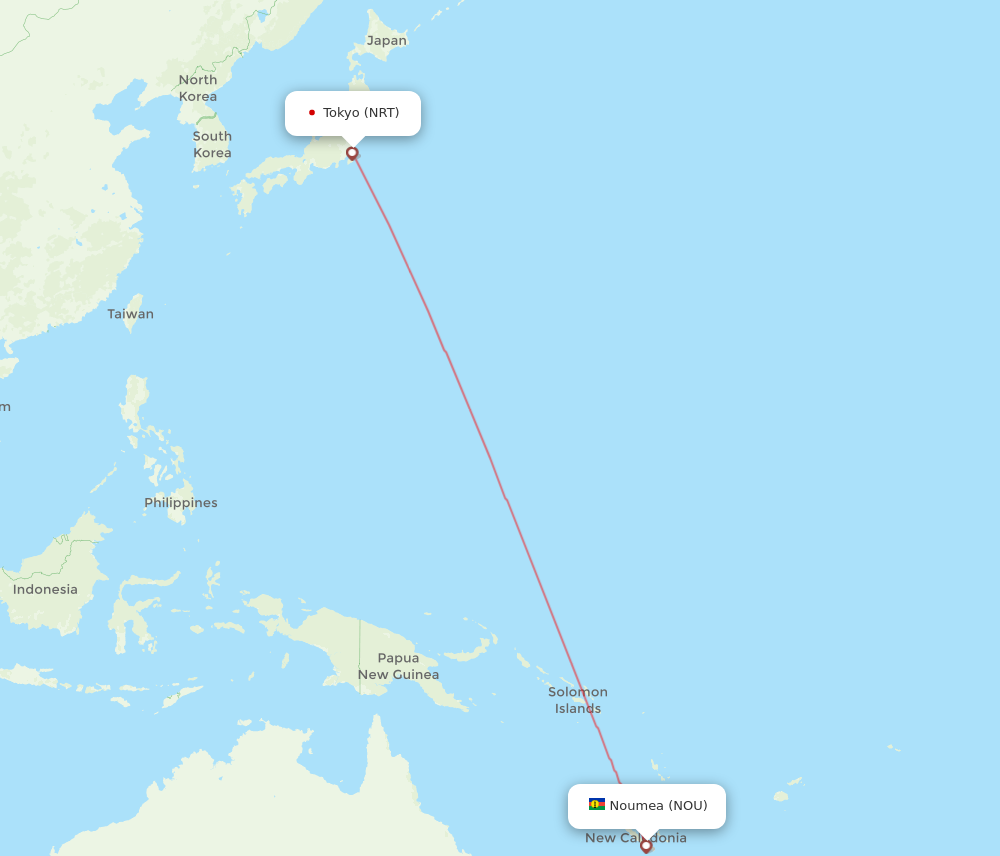
In some instances, particularly when searching for business class availability or specific alliance miles, travelers might find routes through Japan. Flying from Honolulu to Tokyo (Narita International Airport or Kansai International Airport) takes about 8 to 9 hours. From Japan, Aircalin operates a direct flight to Noumea that takes roughly 8.5 hours. While this “backtracking” adds several hours to the total journey, it is a high-quality route often utilized by travelers who prefer the service standards of Japan Airlines or All Nippon Airways.
Preparing for the Journey: Tips and Time Zones
A flight from Hawaii to New Caledonia is a marathon, not a sprint. Success lies in preparation and understanding the unique temporal shifts involved in trans-equatorial travel.
Crossing the International Date Line
The most confusing aspect of this trip is the time change. Hawaii follows Hawaii-Aleutian Standard Time (UTC-10), while New Caledonia uses New Caledonia Time (UTC+11). This 21-hour difference means that New Caledonia is effectively one day ahead of Hawaii but only three hours “behind” on the clock if you ignore the date. When you depart Honolulu on a Monday morning, you will likely arrive in Noumea on Tuesday afternoon.
Visa and Entry Requirements
Travelers should be aware that even if they do not intend to leave the airport during their layover, they must meet the entry or transit requirements of the connecting country.
- Australia: Many nationalities require an Electronic Travel Authority (ETA) or a transit visa even for a short connection.
- New Zealand: The NZeTA is mandatory for most international travelers transiting through Auckland.
- New Caledonia: As a French territory, entry requirements are generally aligned with the Schengen Area, though it is not part of the Schengen Agreement. Citizens of the United States, Canada, and the European Union typically do not need a visa for short stays.
Packing and Comfort for Long-Haul Travel
Given the likelihood of spending a night in an airport or on a plane, packing for comfort is essential. The temperature variation between the humid air of Hawaii, the air-conditioned cabins of long-haul jets, and the potentially cooler winter air of Sydney or Auckland (if traveling during the Southern Hemisphere winter) requires layered clothing. Additionally, ensure that all electronics are charged and that you have a universal power adapter, as New Caledonia uses the European-style Type C and E plugs, which differ from the Type A and B plugs used in Hawaii.
The Arrival Experience at La Tontouta
Upon finally arriving at La Tontouta International Airport, travelers are greeted by a modern facility located about 45 minutes to an hour north of Noumea. The airport serves as the primary gateway for all international arrivals.
Transportation to the Capital
Since the airport is a significant distance from the city center, it is wise to pre-book a shuttle service or arrange for a rental car. The drive to Noumea offers a first glimpse of the “Grande Terre,” the main island of New Caledonia, characterized by its red soil and mountainous spine. The transition from the Americanized Pacific atmosphere of Hawaii to the distinctly French-Melanesian vibe of New Caledonia is immediate and fascinating.
Best Times to Fly
To minimize travel stress, consider the seasonal weather patterns of both locations. Hawaii is a year-round destination, but New Caledonia experiences a cooler period from June to August and a cyclone season from December to March. Finding the “sweet spot” in April, May, October, or November can result in smoother flights with less turbulence and more predictable connection times.
Ultimately, while the flight from Hawaii to New Caledonia is an endurance test of trans-Pacific travel, the reward is an encounter with one of the most unique and bio-diverse archipelagos on the planet. By carefully selecting layovers in Sydney or Auckland, managing the time zone jump, and coordinating with regional carriers like Aircalin, travelers can turn a complex itinerary into a seamless adventure across the Pacific Ocean.
LifeOutOfTheBox is a participant in the Amazon Services LLC Associates Program, an affiliate advertising program designed to provide a means for sites to earn advertising fees by advertising and linking to Amazon.com. Amazon, the Amazon logo, AmazonSupply, and the AmazonSupply logo are trademarks of Amazon.com, Inc. or its affiliates. As an Amazon Associate we earn affiliate commissions from qualifying purchases.