
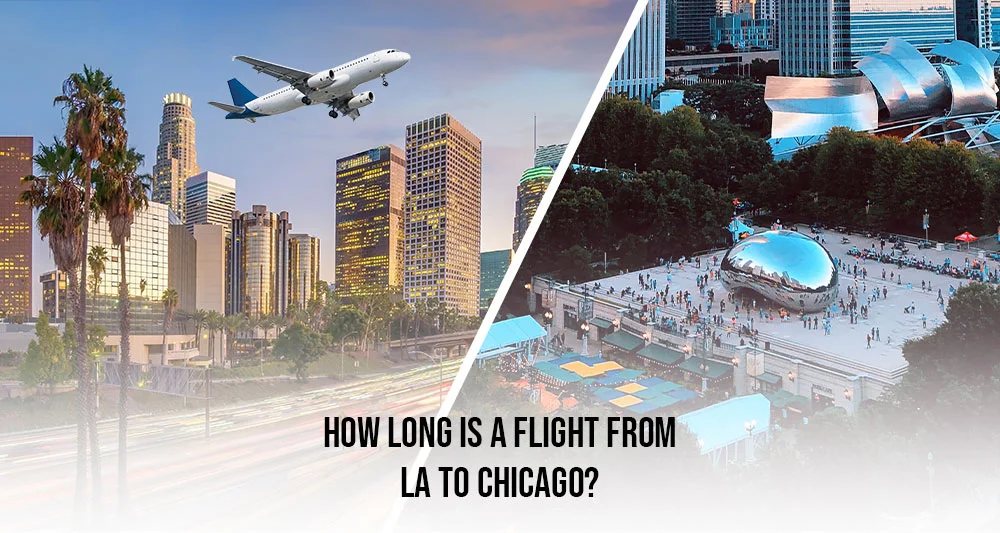
Traversing the vast expanse of the continental United States from the sun-drenched shores of Los Angeles to the bustling metropolis of Chicago is a common journey for business travelers, tourists, and individuals reconnecting with family. While the thought of covering nearly 1,745 miles (approximately 2,808 kilometers) by air might seem daunting, modern aviation has streamlined this route into a remarkably efficient passage. Understanding the duration of this flight, along with the myriad factors that influence it, is crucial for effective travel planning. From aircraft technology to prevailing weather patterns and air traffic control demands, several elements coalesce to determine precisely how long you’ll spend in the air and en route between these two iconic American cities.
The Direct Route: Los Angeles to Chicago in the Air
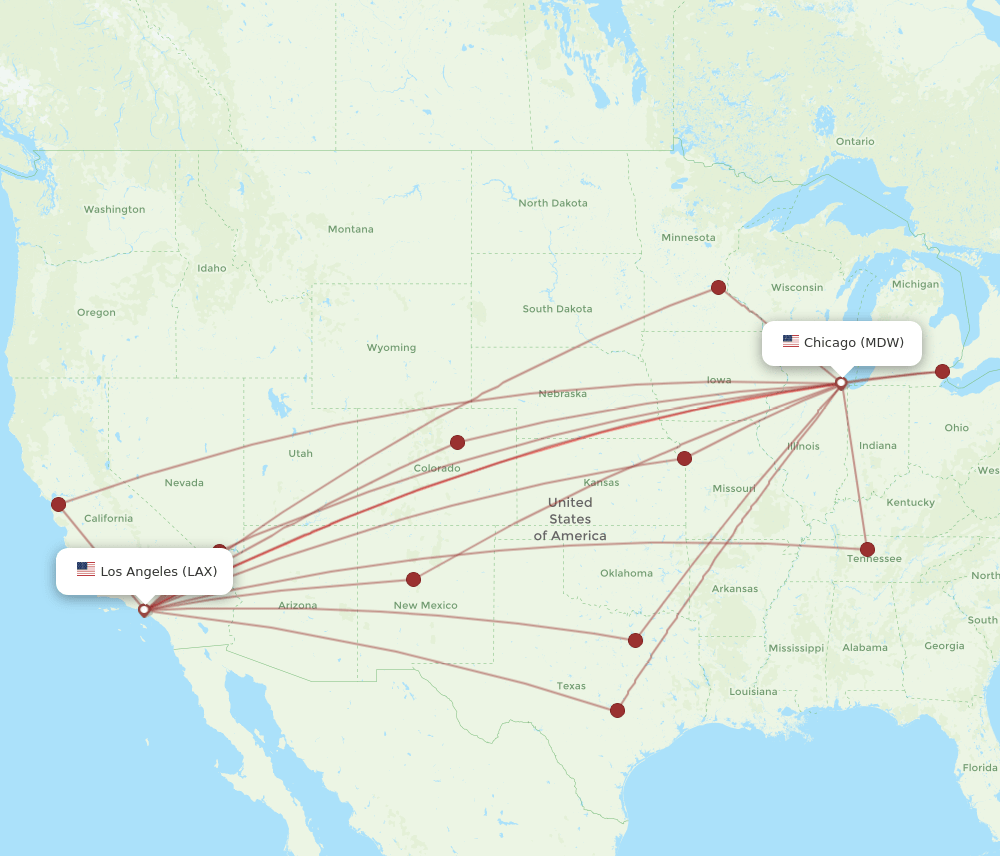
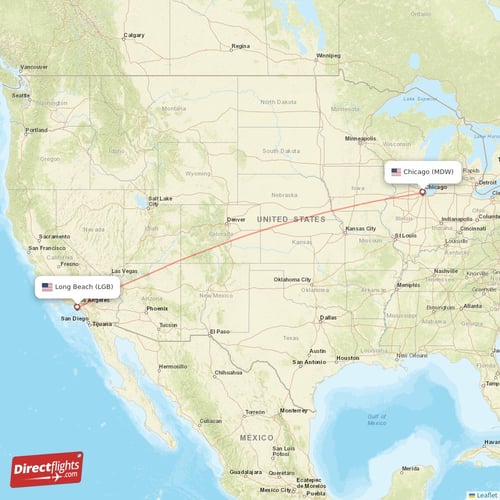
For most travelers, the most straightforward and preferred option for journeys between major cities like Los Angeles and Chicago is a direct flight. These non-stop services offer the quickest transit time, minimizing layovers and the associated hassles. The flight path typically follows a great circle route, which is the shortest distance between two points on the surface of a sphere, taking aircraft generally northeastward from California across states such as Nevada, Utah, Colorado, Nebraska, and Iowa before descending into Illinois.
The average direct flight time from Los Angeles International Airport (LAX) to either O’Hare International Airport (ORD) or Midway International Airport (MDW) in Chicago typically ranges from 3 hours and 45 minutes to 4 hours and 30 minutes. This duration represents the “block time” or “gate-to-gate” time, which includes taxiing, takeoff, flight, and landing. The actual “airtime” – the period spent airborne – is usually slightly less, often closer to 3 hours and 30 minutes to 4 hours. This relatively short timeframe makes the LA to Chicago route a popular and efficient option for coast-to-coast travel.
Unpacking the Variables: What Affects Your Flight Time?
While the average provides a good baseline, several critical factors can cause fluctuations in the actual flight duration. Understanding these variables can help travelers anticipate potential delays or quicker-than-expected arrivals.
Aircraft Type and Performance
Different aircraft models possess varying cruising speeds and operational efficiencies. The Los Angeles to Chicago route is primarily serviced by narrow-body jets such as the Boeing 737 series or the Airbus A320 family. These aircraft are optimized for medium-haul domestic routes and generally maintain similar cruising speeds. However, slight differences in engine power, aerodynamic design, and the airline’s specific operational parameters can lead to minor variations in flight time. Larger wide-body aircraft, while less common for this specific domestic route, might offer slightly faster transit due to their higher cruising altitudes and speeds, but their use is typically reserved for longer-haul international or transcontinental flights where passenger volume dictates.
Wind Conditions and Jet Stream
One of the most significant natural factors influencing flight time is wind. Aircraft flying eastward across the United States often benefit from the powerful westerly jet stream, a high-altitude band of fast-moving air. When flying with a tailwind (wind from behind), the aircraft’s ground speed increases, shortening the flight duration. Conversely, flying westward (e.g., Chicago to Los Angeles) typically involves encountering headwinds, which can significantly extend flight times, sometimes by 30 minutes to an hour or more. For the LA to Chicago route, favorable tailwinds are common, contributing to the relatively swift eastward journey.
Air Traffic Control (ATC) Demands
Air traffic control plays a pivotal role in managing the flow of aircraft in congested airspace. Both LAX and ORD are among the busiest airports in the world, serving millions of passengers annually. Peak travel times, weather events impacting other regions, or unexpected operational issues can lead to ground delays at departure or holding patterns upon arrival. Pilots are instructed to fly at specific altitudes and speeds, and sometimes to follow longer routings to avoid congested areas or integrate smoothly into the arrival queue. These ATC instructions are critical for safety but can add minutes to the overall flight duration.
Weather Conditions and Turbulence
Beyond strong winds, other weather phenomena can impact flight times. Thunderstorms, heavy rain, snow, or fog can necessitate deviations from direct flight paths, re-routing aircraft to avoid severe weather cells. While these diversions are rare for the entire journey, they can add extra miles and, consequently, extra minutes. Turbulence, while not typically altering flight duration, can cause pilots to adjust altitude or speed for passenger comfort, which might have a marginal effect on overall timing.
Major Airlines and Their Typical Flight Durations
Several major airlines offer daily direct flights between Los Angeles and Chicago, each with its own scheduling and operational nuances. While their advertised flight times are generally consistent, slight variations can occur based on their specific flight plans and aircraft assignments.
Flights to O’Hare International Airport (ORD)
O’Hare is Chicago’s largest airport and a major hub for several legacy carriers.
- United Airlines: As a primary hub carrier at ORD, United Airlines operates numerous daily flights. Their direct flights from LAX to ORD typically range from 4 hours to 4 hours and 20 minutes.
- American Airlines: Also maintaining a significant presence at O’Hare, American Airlines offers frequent direct services. Their scheduled flight times are usually similar to United’s, falling within the 4 hours to 4 hours and 20 minutes window.
- Delta Air Lines: While not a hub carrier at ORD, Delta Air Lines provides several direct flights daily, with durations generally around 4 hours and 10 minutes to 4 hours and 30 minutes.
- Spirit Airlines & Alaska Airlines: These carriers also offer direct service to ORD, with scheduled times usually between 4 hours and 15 minutes to 4 hours and 35 minutes.
Flights to Midway International Airport (MDW)
Midway is smaller and closer to downtown Chicago, primarily serving low-cost carriers.
- Southwest Airlines: Southwest is the dominant carrier at MDW, operating many direct flights from LAX. Their scheduled direct flight times are typically in the range of 3 hours and 55 minutes to 4 hours and 15 minutes. Due to Midway’s generally less congested airspace compared to O’Hare, arrival and departure delays can sometimes be marginally shorter, though this is not always a guarantee.
When booking, it’s always advisable to check the specific airline’s advertised flight duration for your chosen flight, as schedules can be adjusted seasonally or based on operational changes.
Navigating Layovers: The Connecting Flight Scenario
While direct flights are the fastest, connecting flights remain a viable and often more economical option for travelers. These flights involve at least one stop, usually in another major hub city, before continuing to the final destination.
Common layover cities for the Los Angeles to Chicago route include:
- Denver International Airport (DEN)
- Dallas/Fort Worth International Airport (DFW)
- Phoenix Sky Harbor International Airport (PHX)
- Las Vegas Harry Reid International Airport (LAS)
The total travel time for connecting flights can vary significantly based on the layover duration. A short, efficient layover might add only 1.5 to 2 hours to your overall journey, bringing the total time to 5-6 hours. However, longer layovers, whether intentional or due to scheduling, can extend the total travel time to 8 hours or more. When considering a connecting flight, always factor in the time needed for deplaning, navigating the connecting airport, and re-boarding, especially if you have a tight connection window. While connecting flights may offer cost savings or specific airline loyalty benefits, they demand more patience and planning for the overall journey.
Tips for a Smooth Journey: From Takeoff to Touchdown
Beyond merely knowing the flight duration, several travel strategies can enhance your journey from Los Angeles to Chicago, ensuring a more comfortable and efficient experience.
Strategic Booking and Departure Times
When booking your flight, consider that early morning flights often experience fewer delays than those later in the day, as air traffic and weather patterns tend to build up. If punctuality is paramount, an early departure can be a wise choice. Also, factor in the time zone change: Chicago is in the Central Time Zone, two hours ahead of Los Angeles’ Pacific Time Zone. This means a 9:00 AM departure from LAX arriving at 1:30 PM Chicago time will feel like an 11:30 AM arrival to your body clock. Account for this shift in your arrival plans.
Navigating Airport Security and Boarding
Both LAX and ORD are massive airports that require ample time for check-in and security. Arriving at least 2 hours before a domestic flight is a standard recommendation, especially during peak travel periods. Utilizing services like TSA PreCheck or Clear can significantly expedite your passage through security, allowing for a more relaxed pre-flight experience. Pay attention to boarding announcements and gate changes, which are common at busy hubs.
Enhancing In-Flight Comfort
For a flight lasting around four hours, ensuring personal comfort is key. Hydration is vital; drink plenty of water before and during the flight. Consider bringing a neck pillow, eye mask, and noise-canceling headphones to create a more serene environment. Airlines typically offer Wi-Fi and in-flight entertainment, but having your own pre-downloaded movies, podcasts, or books can be a reliable backup. Stretching and moving around the cabin when permitted can also help prevent stiffness on a longer domestic flight.
Efficient Arrival and Ground Transportation
Upon arrival at ORD or MDW, have a plan for ground transportation into Chicago. O’Hare is well-connected to downtown via the CTA Blue Line, while Midway offers the more direct CTA Orange Line. Taxis, rideshares, and shuttle services are also readily available. Knowing your preferred method of transport and its location at the airport can save valuable time and reduce post-flight stress, completing your seamless journey from the West Coast to the Midwest.
LifeOutOfTheBox is a participant in the Amazon Services LLC Associates Program, an affiliate advertising program designed to provide a means for sites to earn advertising fees by advertising and linking to Amazon.com. Amazon, the Amazon logo, AmazonSupply, and the AmazonSupply logo are trademarks of Amazon.com, Inc. or its affiliates. As an Amazon Associate we earn affiliate commissions from qualifying purchases.