
The dream of trading the vibrant, neon-lit skyline of Miami for the crystalline, turquoise waters of the Bahamas is a classic Caribbean escape. For many travelers, the allure of a quick oceanic transit is the ultimate convenience. However, determining how long that boat ride actually takes depends on several critical factors: your vessel of choice, your departure point, and your specific destination within the expansive Bahamas archipelago.
Understanding Distance and Logistics
The distance from Miami to the closest point of the Bahamas—specifically the island of Bimini—is approximately 50 to 60 nautical miles. While this distance appears relatively short on a map, the “ride time” can fluctuate wildly based on the mechanical capabilities of your craft and the temperament of the Atlantic Ocean.

The Speed Factor
The most significant variable in your travel time is the speed of your boat. A high-performance sport fishing boat or a luxury ferry can slice through the waves at 25 to 35 knots, while a standard sailing vessel might struggle to maintain 6 to 8 knots.
- Fast Ferries: Operators running high-speed catamarans can typically bridge the gap between Florida and Bimini in as little as two to three hours.
- Private Yachts: Depending on the size and horsepower of the yacht, a trip to Nassau or the Exumas can take anywhere from six to ten hours.
- Sailing Vessels: Those opting for a leisurely pace should prepare for a full-day journey or an overnight passage, often taking 12 to 18 hours or more depending on wind conditions.
The Impact of Sea Conditions
Even the fastest boat cannot outrun the sheer power of the Gulf Stream. This powerful, warm ocean current flows northward between the Florida coast and the Bahamas.
Navigating the Gulf Stream
If the wind is blowing against the current, it creates “stacking” waves—choppy, steep, and uncomfortable conditions that force even the most experienced captains to slow down significantly. A transit that might take three hours on a “flat-calm” day can easily stretch into five or six hours if the weather shifts. Travelers must always consult marine forecasts, as crossing the Gulf Stream is an endeavor that requires respect for Nature.
Selecting Your Destination: Beyond the Horizon
The Bahamas is not a single island; it is a nation composed of over 700 islands and cays. Where you intend to dock will dictate your travel time far more than just the speed of your engine.
Short-Haul Destinations
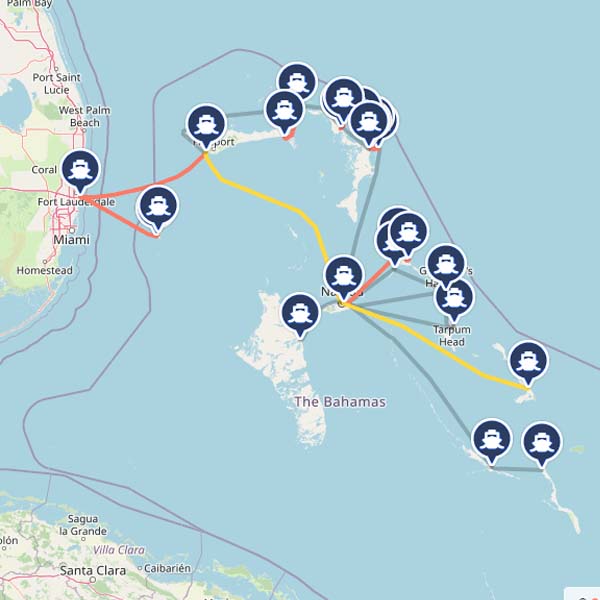
If your objective is to get to the Bahamas as quickly as possible, your best bet is Bimini or Grand Bahama. These are the closest landmasses to Miami. From a standard dock in South Florida, you can be enjoying a Bahamian rum punch within three hours of clearing the Government Cut channel.
Mid-Range and Long-Haul Destinations
If you are aiming for the capital, Nassau, located on the island of New Providence, you are looking at a much longer journey.
- Nassau: Roughly 180 nautical miles from Miami. Even on a fast boat, expect a 6-to-8-hour voyage.
- The Exumas: For those traveling further into the Exumas, the journey can easily exceed 200 nautical miles. This usually requires a multi-day trip or a very fast, fuel-efficient vessel capable of long-distance cruising.
Essential Preparation for Boat Travel
Crossing international waters between the United States and the Bahamas is not as simple as hopping on a bus. Regardless of how long the ride takes, your arrival time at your resort or marina will be heavily influenced by administrative procedures.
Customs and Immigration
Upon arrival in the Bahamas, you must clear Customs and Immigration at an official Port of Entry. Depending on the busyness of the port—such as Bimini Bay Marina or Atlantis Paradise Island—this process can add anywhere from 30 minutes to two hours to your travel time.
Necessary Documentation
To ensure your transition from Miami is as seamless as possible, ensure you have:
- Valid passports for all passengers.
- Clearance forms for the vessel.
- Up-to-date registration and insurance documents.
- A Bahamas cruising permit.
Tips for a Comfortable Crossing
Even if the boat ride is relatively short, the physical experience of being on the water can be exhausting. To ensure your trip remains a pleasure rather than a chore, consider these expert tips:
Monitor the Weather Cycles
The best time to cross is during the “windows” of calm weather. Often, the early morning hours provide the smoothest seas before the afternoon thermal winds kick in. If you are prone to seasickness, check the wave period; a longer wave period (the time between crests) is significantly more comfortable than short, punchy, frequent waves.
Fuel Management
The Bahamas can be expensive when it comes to fuel. It is often more cost-effective to fill up in Miami or Fort Lauderdale before heading out. Always calculate your “burn rate” and ensure you have at least a 25% reserve of fuel in case of unexpected current drag or the need to navigate around adverse weather.

Choose Your Vessel Wisely
If you are not the owner of a boat, chartering or booking a ticket on a ferry service is the standard approach. For those seeking luxury, there are private charter services available in Miami that cater specifically to the Bahamas route. These services offer a more personalized experience, often providing snacks, drinks, and a flexible itinerary that allows you to stop at hidden cays along the way.
Ultimately, the ride from Miami to the Bahamas is an adventure in itself. Whether you reach Bimini in three hours or take an entire day to sail toward Nassau, the transition from the bustling urban landscape of Florida to the tranquil, sun-drenched islands of the Bahamas is a journey well worth every minute spent on the water. By planning for the transit time, respecting the sea, and having your paperwork in order, you transform a simple commute into a memorable component of your Caribbean holiday.
LifeOutOfTheBox is a participant in the Amazon Services LLC Associates Program, an affiliate advertising program designed to provide a means for sites to earn advertising fees by advertising and linking to Amazon.com. Amazon, the Amazon logo, AmazonSupply, and the AmazonSupply logo are trademarks of Amazon.com, Inc. or its affiliates. As an Amazon Associate we earn affiliate commissions from qualifying purchases.