
Embarking on a journey from the mist-covered evergreen landscapes of the Pacific Northwest to the sun-drenched shores of Hawaii is a bucket-list transition for many travelers. While both regions boast incredible natural beauty, the contrast between the rugged coastline of Washington and the tropical volcanic arches of the central Pacific Ocean is profound. For those planning this escape, the most common question is logistical: how long will it take to get there? Understanding the nuances of flight durations, airline options, and seasonal variations is essential for a seamless transition from the shadows of Mount Rainier to the palm-fringed beaches of the islands.

Breaking Down the Journey: Flight Times from the Pacific Northwest
The flight from Seattle to the various islands of Hawaii is one of the most popular long-haul domestic routes in the United States. On average, a direct flight from Seattle-Tacoma International Airport to the islands takes approximately 6 hours and 15 minutes. However, this is not a fixed number, as several factors can influence the time spent in the air.
Direct Flights vs. Connecting Routes
If you are flying non-stop, you can expect to be in your seat for anywhere between 5 hours and 45 minutes to nearly 7 hours. The variation often depends on which specific island you are visiting. A flight to Honolulu is typically the benchmark, but routes to the westernmost islands like Kauai may take slightly longer than a flight to the Big Island.
For travelers who cannot find a direct flight or are looking to save on airfare, connecting flights are a common alternative. These usually involve a layover in California hubs such as San Francisco or Los Angeles. Opting for a connection can extend your total travel time to anywhere from 9 to 12 hours, depending on the length of the layover. While more time-consuming, these routes sometimes offer the chance to stretch your legs at San Francisco International Airport before the final over-water leg.
The Impact of Winds and Jet Streams
One of the most fascinating aspects of transpacific travel is the influence of the jet stream. When flying westbound from North America to Hawaii, aircraft often encounter headwinds. These winds can slow the plane down, making the outbound flight from Seattle significantly longer than the return trip.
On the return leg, flying eastbound toward the mainland, planes are often pushed by these same tailwinds. It is not uncommon for a return flight from Daniel K. Inouye International Airport to Seattle-Tacoma International Airport to take only 5 hours and 30 minutes, shaving nearly an hour off the travel time experienced during the outbound journey.
Gateway Airports: Where You’ll Land in the Islands
While many people use “Hawaii” as a singular destination, the flight duration and arrival experience differ based on which island you choose as your base. Seattle offers direct service to the four major islands, each served by its own primary airport.
Honolulu, Oahu: The Major Hub
Honolulu, located on the island of Oahu, is the most frequent destination for flights departing from the Pacific Northwest. The flight to Daniel K. Inouye International Airport is roughly 6 hours. As the primary gateway to the state, this airport offers the most frequent daily connections. Upon landing, travelers are just a short drive away from the world-famous Waikiki Beach and the historic Diamond Head crater.
Kahului, Maui: The Valley Isle
Flights to Maui land at Kahului Airport. The flight time from Seattle to Kahului is very similar to the flight to Oahu, typically clocking in at about 6 hours and 10 minutes. This island is a favorite for those seeking a mix of luxury resorts and dramatic landscapes, such as the sunrise views at Haleakala National Park.
Lihue, Kauai: The Garden Isle
For those heading to the lush, green landscapes of Kauai, the destination is Lihue Airport. This flight is often one of the longer direct routes from Seattle due to the island’s position further west in the archipelago. Expect a duration of approximately 6 hours and 30 minutes. Once you arrive, the stunning vistas of Waimea Canyon State Park and the Na Pali Coast await.
Kona, The Big Island: Volcanic Landscapes
Direct flights also serve the western side of the Big Island, landing at Ellison Onizuka Kona International Airport. The flight time to Kona is generally around 6 hours and 20 minutes. The airport itself is unique, featuring an open-air terminal that immediately immerses travelers in the tropical climate of Kailua-Kona.
Choosing Your Carrier: The In-Flight Experience from Seattle
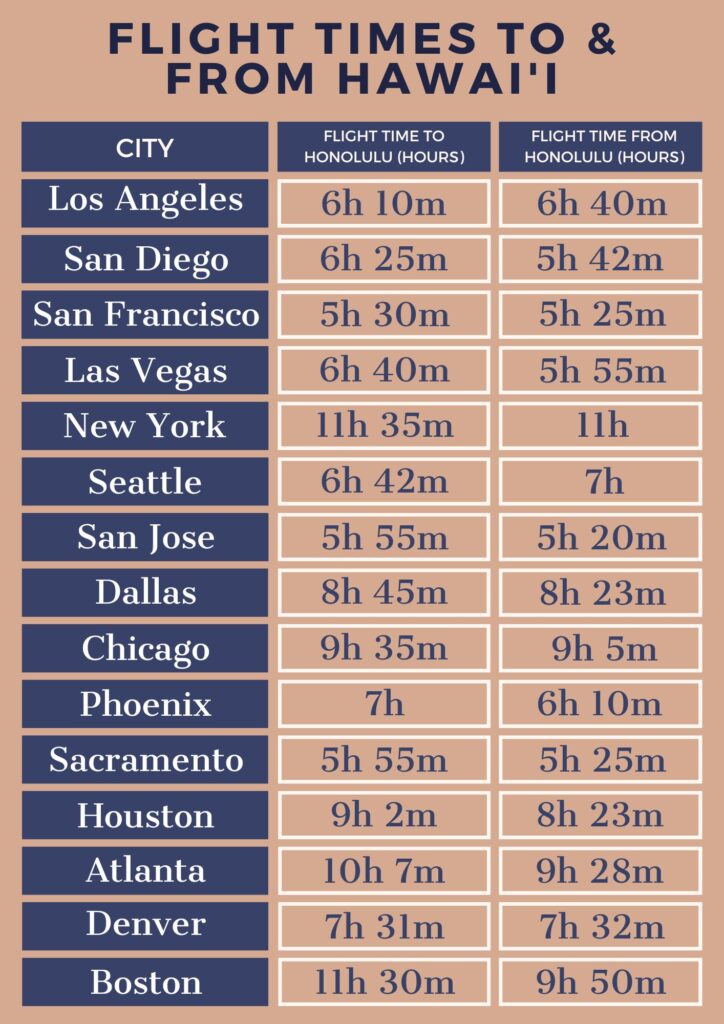
Several major airlines dominate the corridor between Seattle and the Hawaiian Islands, each offering a different level of service and amenities that can make the six-hour flight feel much shorter.
Alaska Airlines and Hawaiian Airlines
Alaska Airlines treats Seattle as its primary hub, offering the most extensive schedule to the islands. Their flights are known for reliability and a strong loyalty program. Onboard, travelers often find Pacific Northwest inspired snacks and a robust digital entertainment system.
On the other hand, Hawaiian Airlines provides an “island vibe” the moment you step onto the aircraft. They are one of the few domestic carriers that still provides complimentary meals in economy class on these routes, often featuring island-inspired cuisine. Their service is a great way to start the vacation early, with many flights featuring Maui brewed beers and tropical cocktails.
Delta Air Lines and United Airlines
Both Delta Air Lines and United Airlines operate significant routes from Seattle-Tacoma International Airport. Delta Air Lines often utilizes wide-body aircraft on these routes, which can provide a more comfortable and spacious cabin environment. United Airlines also offers competitive pricing, particularly for those who are members of their MileagePlus program. For those looking for a low-cost option, Southwest Airlines has recently expanded its presence in the region, often requiring a stop in California but offering the benefit of two free checked bags.
Essential Preparation for Your Transpacific Flight
Flying across the Pacific Ocean requires a bit more preparation than a standard domestic hop across the United States. Because the flight is almost entirely over water, there are specific logistics to keep in mind.
Navigating Seattle-Tacoma International Airport
As one of the busiest airports in the country, Seattle-Tacoma International Airport can be bustling. Travelers should arrive at least two to three hours before their flight to Hawaii. Most flights to the islands depart from either the North Satellite or the South Satellite terminals. Be sure to check your gate early, as the underground train system takes a few minutes to navigate.
Agricultural Inspections and Documentation
While Hawaii is part of the United States, it has very strict agricultural rules to protect its unique ecosystem. Before landing, you will be required to fill out a State of Hawaii Agricultural Declaration Form. On your return trip to Seattle, your luggage will go through an agricultural scan before you can even check in at the airport in Honolulu or Kahului. This is to ensure that no invasive species or prohibited fruits are transported back to the mainland.
Time Zone Adjustments
Seattle operates on Pacific Standard Time, while Hawaii operates on Hawaii-Aleutian Standard Time. Notably, Hawaii does not observe Daylight Saving Time. This means that during the summer months, there is a three-hour time difference between Seattle and Honolulu. In the winter, the difference shrinks to just two hours. This relatively small gap makes Hawaii an ideal destination for Pacific Northwest travelers, as jet lag is significantly less severe than flying to Europe or Asia.
Understanding Seasonal Variations and Best Times to Travel
The duration of your flight and the overall travel experience can change depending on when you choose to visit. While Hawaii is a year-round destination, Seattle residents often flock to the islands during the winter to escape the “Big Dark.”
Winter Travel: Escaping the Rain
Between December and March, demand for flights from Washington to Hawaii peaks. During this time, the jet stream is often at its strongest, which can lead to slightly longer flight times when heading west. However, this is also the best time for whale watching in Maui. If you are traveling during the winter holidays, it is advisable to book months in advance, as direct flights from Seattle to Lihue or Kona fill up rapidly.
Summer and Shoulder Seasons
The summer months are also popular, particularly for families. Flight times tend to be more consistent during this period. For those seeking the best balance of flight availability and lower prices, the shoulder seasons—specifically late April to early June and September to November—are ideal. During these windows, you might find that the 6-hour journey is not only shorter due to calmer winds but also more affordable.

Arrival Tips for the Pacific Traveler
Once you touch down at Daniel K. Inouye International Airport or Kahului Airport, the humidity and warmth will be an immediate departure from the Seattle climate. To make the most of your first day, many travelers recommend booking a morning flight. A 9:00 AM departure from Seattle-Tacoma International Airport will land you in Honolulu around noon local time, leaving you a full afternoon to explore Diamond Head or relax by the pool.
Whether you are heading to the Big Island to see the volcanoes or to Kauai to hike the Na Pali Coast, the six-hour flight from Seattle is a manageable gateway to paradise. By understanding the logistics of the trip, from the impact of the jet stream to the specific amenities of carriers like Hawaiian Airlines and Alaska Airlines, you can ensure that your journey across the Pacific Ocean is as enjoyable as the destination itself.
LifeOutOfTheBox is a participant in the Amazon Services LLC Associates Program, an affiliate advertising program designed to provide a means for sites to earn advertising fees by advertising and linking to Amazon.com. Amazon, the Amazon logo, AmazonSupply, and the AmazonSupply logo are trademarks of Amazon.com, Inc. or its affiliates. As an Amazon Associate we earn affiliate commissions from qualifying purchases.