
Planning a trip to Boston, Massachusetts, often involves a crucial first question: “How long will it take to get there?” The answer is far from static, influenced by a myriad of factors ranging from your departure city to the type of flight and even the time of year. Understanding these variables is key to setting realistic expectations and optimizing your travel itinerary to one of America’s most historic and vibrant cities.
Understanding Flight Duration Factors
The perceived simplicity of flight time belies a complex interplay of geographical, operational, and environmental elements. Knowing these can help you estimate your journey more accurately.
Origin City and Distance
Naturally, the most significant determinant of flight duration is the distance between your starting point and Boston Logan International Airport (BOS). A flight from a neighboring state will be considerably shorter than one originating from the West Coast or an international destination. For instance, a direct flight from New York City could be as short as an hour, while a journey from Los Angeles might extend to six hours. International flights, particularly those crossing oceans, introduce additional complexities, including time zone changes and longer travel times.
Direct vs. Connecting Flights
Direct flights, which proceed non-stop from origin to destination, offer the shortest actual “flight time.” However, they are not always available or the most cost-effective option, especially for travelers departing from smaller airports. Connecting flights, which involve one or more layovers, add significant time to your overall journey. A one-hour direct flight could become a four-hour ordeal with a layover, while a six-hour direct flight might stretch to ten or twelve hours with connections. The duration of the layover itself, along with potential delays at connecting airports like Chicago O’Hare or Atlanta Hartsfield-Jackson, can dramatically inflate total travel time.
Aircraft Type and Speed
While commercial airliners generally cruise at similar speeds, there are subtle differences between aircraft types. Larger, wide-body jets like the Boeing 747 or Airbus A380 might have slightly different average speeds or operational ranges compared to smaller narrow-body planes such as the Boeing 737 or Airbus A320 commonly used for domestic routes. These differences, while typically not adding or subtracting hours from a flight, can contribute to variations of 15-30 minutes on longer routes.
Weather and Air Traffic Control
Unpredictable elements like adverse weather conditions (headwinds, thunderstorms, snowstorms) can significantly impact flight duration. Strong headwinds, common on westbound transatlantic flights, can add substantial time to a journey. Similarly, heavy air traffic in busy corridors or around major hubs can lead to holding patterns, where planes circle awaiting clearance to land, extending flight times. Air traffic control (ATC) restrictions, often implemented to manage congestion or for safety reasons, also play a role in adjusting flight paths and speeds, contributing to variations in scheduled arrival times.
Typical Flight Times to Boston from Major Hubs
Boston Logan International Airport serves as a major gateway to the Northeast, receiving flights from across the United States and around the globe.
Domestic Flights
For travelers within the United States, flight times to Boston vary widely:
- Northeast Corridor: From cities like New York (e.g., JFK or LGA), Philadelphia (PHL), or Washington D.C. (DCA or IAD), direct flights typically range from 1 hour to 1 hour 30 minutes. These are some of the shortest routes into BOS.
- Midwest: From major Midwest hubs such as Chicago (ORD or MDW), Detroit (DTW), or St. Louis (STL), direct flights generally take between 2 hours and 3 hours.
- Southeast: Travelers from Atlanta (ATL), Miami (MIA), or Orlando (MCO) can expect direct flight durations of approximately 2 hours 30 minutes to 3 hours 30 minutes.
- Southwest: From cities like Dallas (DFW or DAL) or Houston (IAH or HOU), direct flights typically range from 3 hours 30 minutes to 4 hours 30 minutes.
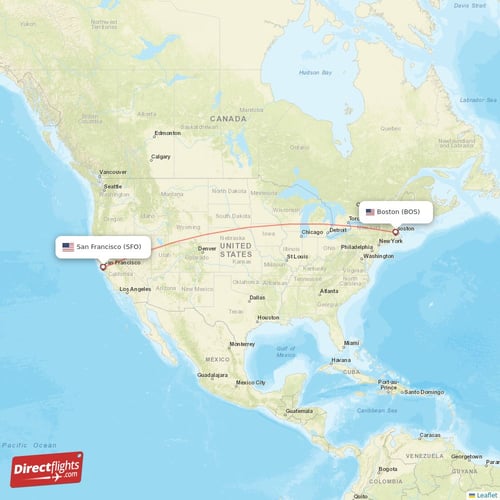
- West Coast: The longest domestic direct flights originate from the West Coast, including cities like Los Angeles (LAX), San Francisco (SFO), or Seattle (SEA). These journeys can take between 5 hours 30 minutes and 6 hours 30 minutes.
International Flights
Boston is a popular destination for international visitors, with direct routes from many global cities:
- Europe:
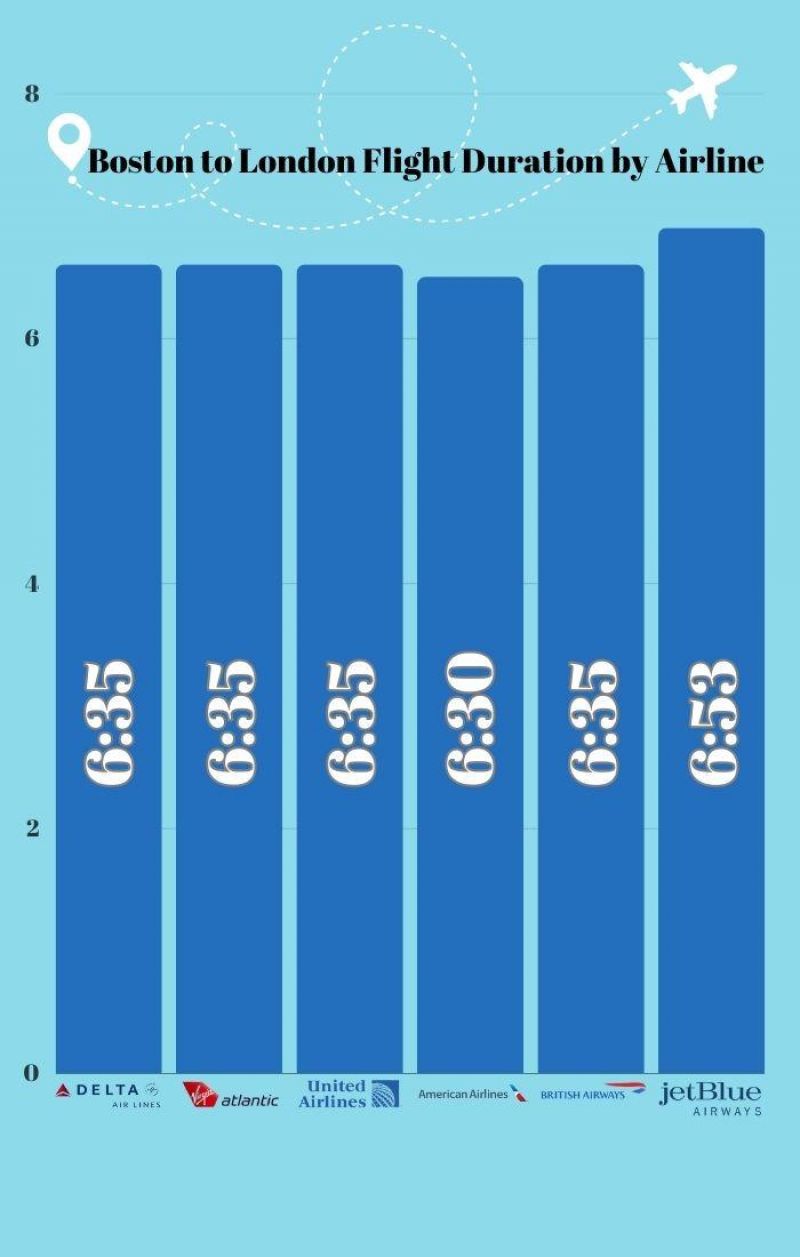
- London (LHR): Approximately 6 hours to 7 hours
- Dublin (DUB): Approximately 6 hours to 6 hours 30 minutes
- Paris (CDG): Approximately 7 hours to 7 hours 30 minutes
- Frankfurt (FRA): Approximately 7 hours 30 minutes to 8 hours
- Amsterdam (AMS): Approximately 7 hours to 7 hours 30 minutes
- Rome (FCO): Approximately 8 hours to 8 hours 30 minutes
- Canada: From cities like Toronto (YYZ) or Montreal (YUL), direct flights are typically 1 hour 30 minutes to 2 hours.
- Mexico/Caribbean: Flights from popular vacation spots like Cancun (CUN) or San Juan (SJU) usually take around 4 hours to 4 hours 30 minutes.
- Asia/Middle East: There are fewer direct flights from these regions to Boston. Travelers from Tokyo (NRT or HND) or Dubai (DXB) would typically involve a connecting flight, extending total travel time significantly, often exceeding 15-20 hours. When direct flights are available, they would be among the longest, potentially 13-16 hours from Tokyo or 12-14 hours from Dubai.
Navigating Connecting Flights to Boston
For many travelers, a connecting flight is an unavoidable part of the journey to Boston. Strategizing your connections can make a substantial difference in your overall travel experience.
Common Layover Cities
When flying to Boston, common domestic layover cities include major airline hubs like Atlanta (Delta Air Lines), Charlotte (American Airlines), Chicago (United Airlines and American Airlines), Denver (United Airlines), and Dallas/Fort Worth (American Airlines). Internationally, layovers might occur in major European gateways like London, Dublin, or Amsterdam before connecting to Boston.
Minimizing Layover Time
While layovers add to the total journey time, choosing flights with shorter connection times can help. An ideal domestic layover is typically 1.5 to 2 hours, allowing sufficient time to deplane, navigate the airport, and board the next flight without undue rush. For international connections, especially if you need to clear customs and immigration, a minimum of 2.5 to 3 hours is highly recommended. Always check the airport layout and typical gate distances for your specific connection to ensure feasibility.
Planning for International Connections
If your international journey involves a layover in another U.S. city before reaching Boston, be aware that you will likely need to clear U.S. Customs and Border Protection at your first point of entry into the United States, not at Boston. This means collecting your luggage, going through customs, and then re-checking it for your connecting flight. Factor in ample time for this process, as it can be lengthy, especially during peak travel periods.
Airlines Serving Boston Logan International Airport
Boston Logan International Airport (BOS) is a major hub, served by a comprehensive array of domestic and international carriers, offering numerous options for travelers.
Major Domestic Carriers
Almost every major U.S. airline operates extensive services to and from Boston. JetBlue Airways has a significant presence at BOS, treating it as a focus city, offering numerous direct routes across the country. Delta Air Lines, American Airlines, United Airlines, and Southwest Airlines also operate extensive networks, providing competitive options for travelers from nearly every corner of the U.S. Other regional and low-cost carriers like Spirit Airlines, Frontier Airlines, and Alaska Airlines also offer routes to Boston, particularly from their respective hubs.
International Airlines
BOS is well-connected to Europe and parts of the Americas by a diverse group of international airlines. Prominent carriers include Aer Lingus (from Dublin), Air France (from Paris), British Airways (from London), Lufthansa (from Frankfurt and Munich), and KLM Royal Dutch Airlines (from Amsterdam). Other airlines such as Turkish Airlines, Qatar Airways, and Emirates also offer direct or codeshare flights, expanding the reach of Boston to the Middle East and beyond, often via European hubs. For Canadian connections, Air Canada is the primary carrier, while various Caribbean and Mexican airlines provide seasonal or year-round service.
Optimizing Your Travel Experience to Boston
Beyond simply knowing the flight duration, thoughtful planning can enhance your entire journey to Boston.
Best Times to Fly for Shorter Durations
While actual flight time is primarily dictated by distance, choosing when you fly can indirectly affect your total travel time by minimizing delays. Early morning flights often experience fewer delays than those later in the day, as they are less susceptible to ripple effects from previous flight disruptions or increasing air traffic congestion. Similarly, flying during off-peak seasons (e.g., late fall or early spring, avoiding major holidays) can sometimes mean fewer crowds and potentially smoother airport operations, though weather can also be a factor during these times.
Tips for Managing Long Flights
For longer flights to Boston, especially those from the West Coast or international destinations, comfort and preparation are key.
- Stay Hydrated: Drink plenty of water and avoid excessive caffeine or alcohol, which can contribute to dehydration.
- Move Around: Get up and stretch or walk the aisle every hour or two to promote circulation and prevent stiffness. Compression socks can also be beneficial.
- Bring Entertainment: Load up your devices with movies, TV shows, podcasts, or e-books. Many airlines offer in-flight entertainment, but having your own backup is always a good idea.
- Comfort Essentials: A neck pillow, eye mask, and earplugs can significantly improve your ability to rest on board. Dress in loose, comfortable layers.
- Manage Jet Lag: If flying internationally, try to adjust your sleep schedule to Boston’s time zone a few days before departure. Once you arrive, expose yourself to natural light and try to stick to the local schedule, even if you feel tired.

What to Expect Upon Arrival at Boston Logan International Airport
Upon landing at BOS, the process of exiting the airport varies. Domestic travelers will proceed directly to baggage claim and ground transportation. International arrivals will first go through U.S. Customs and Border Protection. Depending on the time of day and the number of arriving flights, this process can take anywhere from 30 minutes to over two hours. BOS offers various ground transportation options, including taxis, ride-sharing services, the MBTA “T” subway (Blue Line), and a free airport shuttle bus service connecting to the Silver Line (another bus rapid transit line) and the Blue Line. Familiarizing yourself with these options beforehand can ensure a smooth transition from your flight to your final destination in Boston.
LifeOutOfTheBox is a participant in the Amazon Services LLC Associates Program, an affiliate advertising program designed to provide a means for sites to earn advertising fees by advertising and linking to Amazon.com. Amazon, the Amazon logo, AmazonSupply, and the AmazonSupply logo are trademarks of Amazon.com, Inc. or its affiliates. As an Amazon Associate we earn affiliate commissions from qualifying purchases.