
Navigating the administrative aspects of vehicle ownership is a crucial, albeit often overlooked, part of enjoying the freedom and convenience that owning a car provides, especially in a state as vast and diverse as Florida. For those who call the Sunshine State home, or for individuals looking to purchase a vehicle there, understanding the appearance and contents of a Florida car title is paramount. This document is not merely a piece of paper; it is the legal proof of ownership, a cornerstone in any transaction involving a vehicle, and a key identifier for its rightful owner. The specific design and information contained within a Florida title are standardized by the Florida Department of Highway Safety and Motor Vehicles (FLHSMV), ensuring consistency and clarity for all parties involved.
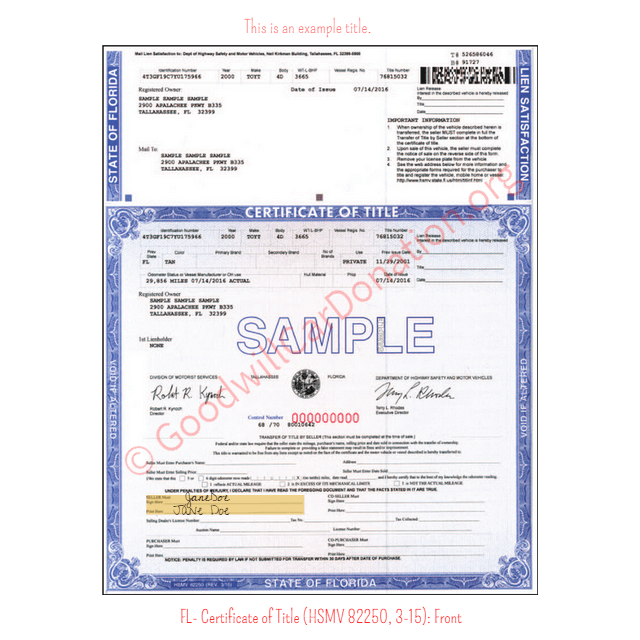
The Anatomy of a Florida Car Title
A Florida car title is a multi-faceted document, meticulously designed to contain essential information about the vehicle and its ownership history. Its physical appearance is intentionally structured to be both informative and secure, making it difficult to counterfeit. Typically printed on specialized paper with security features such as watermarks or microprinting, a genuine Florida title is a critical legal instrument. Understanding its various sections is key to deciphering its significance.
Key Identifying Information
The most prominent aspect of a Florida car title is the wealth of identifying information it presents. This section serves to uniquely distinguish the vehicle and its owner from all others.
Vehicle Details
At the forefront are the details pertaining to the vehicle itself. This includes the Vehicle Identification Number (VIN), a 17-character alphanumeric code that is the universal identifier for any motor vehicle. Alongside the VIN, the title will clearly state the year, make, and model of the vehicle. For instance, you might see “2022 Toyota Camry.” Other critical details such as the vehicle’s body style (e.g., Sedan, SUV, Truck) and its color are also prominently displayed. The odometer reading at the time of title issuance or transfer is another vital piece of information, indicating the vehicle’s mileage.
Ownership Information
This section details who legally owns the vehicle. It includes the full legal name(s) of the owner(s), their mailing address, and often their driver’s license number. For jointly owned vehicles, all owners’ names will be listed. The title will also specify if the ownership is held by an individual, a business, or a trust. Understanding this section is crucial when buying or selling a vehicle, as it dictates who has the legal authority to transfer ownership.
Lienholder Information
If the vehicle was purchased with the assistance of a loan, the title will indicate the presence of a lienholder. This is typically a bank or financial institution that has a legal claim on the vehicle until the loan is fully repaid. The lienholder’s name and address will be clearly stated. The title will be marked as “lien satisfied” once the loan is paid off, and the lienholder will be removed from the document. This is a critical step in establishing clear title.
Security Features and Design Elements
To prevent fraud and ensure the authenticity of the document, Florida car titles incorporate several security features. These elements are designed to be difficult for counterfeiters to replicate, providing a layer of protection for vehicle owners and the state’s motor vehicle system.
Watermarks and Special Paper
Genuine Florida titles are printed on specialized paper that often features a distinctive watermark. This watermark is usually visible when the document is held up to light and may incorporate the state seal or other unique patterns. The quality of the paper itself is also a distinguishing factor, often feeling more substantial than standard printing paper.
Microprinting and Holograms
More advanced security measures can include microprinting, where tiny text or patterns are embedded within the design, often only visible under magnification. Some jurisdictions also employ holograms or other security foils that change appearance when viewed from different angles, further deterring forgery. While the specific security features can evolve over time with technological advancements, their presence signifies a legitimate title.
Unique Identification Numbers
In addition to the VIN, the title itself may have a unique document identification number assigned by the FLHSMV. This number serves as another layer of traceability and helps in tracking the history and validity of the title.
Information Contained on the Title
Beyond the identifying marks of the vehicle and its owner, a Florida car title contains a wealth of critical data that governs its use and transferability. Each piece of information plays a specific role in the legal framework of vehicle ownership.
Title Brands and Status
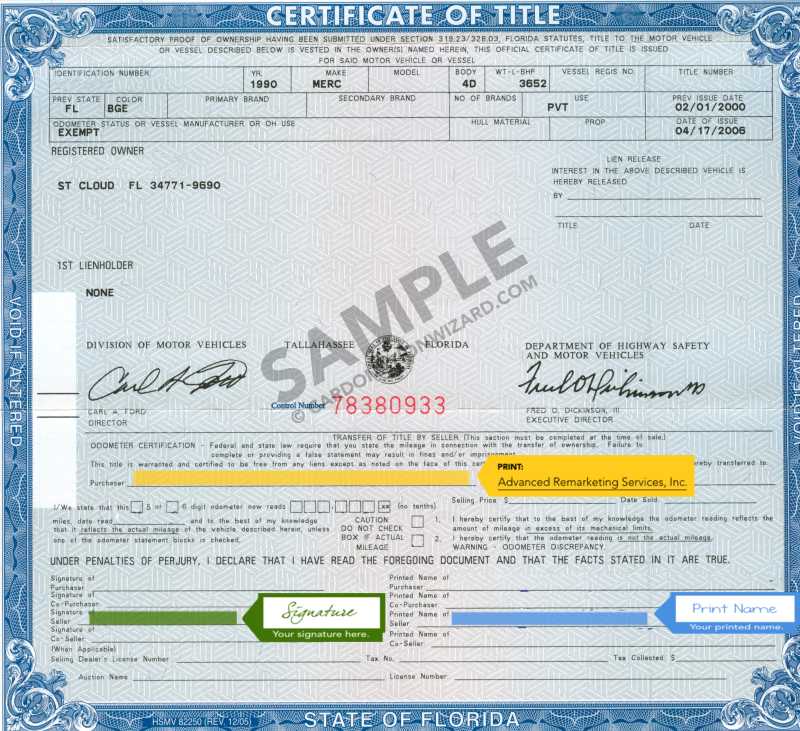
One of the most important sections of a Florida car title details any “brands” associated with the vehicle. These brands are notations that indicate a significant history or condition of the vehicle, which can affect its value and insurability. Common brands include:
- Salvage: The vehicle has been declared a total loss by an insurance company due to damage (e.g., from an accident, flood, or fire) and has been rebuilt.
- Rebuilt/Reconstructed: The vehicle has been rebuilt from a salvage title.
- Flood: The vehicle has sustained damage from flooding.
- Fire: The vehicle has sustained damage from a fire.
- Lemon Law Buyback: The vehicle was repurchased by the manufacturer due to defects under the state’s Lemon Law.
- Odometer Rollback: The odometer reading has been tampered with.
The presence of certain brands significantly impacts the vehicle’s market value and may require specific inspections or certifications before it can be legally driven or resold. A clear title, free of these brands, generally indicates a vehicle with no major reported damage history.
Transaction History
While not always explicitly detailed in a comprehensive history, a Florida title reflects recent ownership transfers. Each time ownership changes hands, the title is updated. This section may show the previous owner’s name, the new owner’s name, and the date of the transfer. For older vehicles, you might only see the most recent owner listed, with prior history potentially available through a separate vehicle history report from services like Carfax or AutoCheck. The FLHSMV maintains records of all title issuances and transfers.
Legal Disclaimers and Signatures
The title document typically includes legal disclaimers and areas for signatures. These are crucial for validating the transfer of ownership. When a vehicle is sold, both the seller and the buyer must sign the title in the designated areas. The seller is attesting that they are the legal owner and are transferring all rights to the buyer. The buyer is acknowledging receipt of the title and their assumption of ownership. Notarization may be required in certain circumstances, especially for out-of-state titles or specific transaction types. These signatures create a legally binding agreement.
The Importance of a Florida Car Title
A Florida car title is more than just a piece of paper; it is the legal bedrock of vehicle ownership. Its accurate representation and secure handling are vital for a multitude of reasons, ranging from basic personal use to complex financial and legal matters.
Proof of Ownership
The primary function of a car title is to serve as irrefutable proof of ownership. Without a valid title, you cannot legally claim ownership of a vehicle. This is essential for a variety of everyday activities, such as registering your vehicle, obtaining insurance, and renewing your license plate tags at the Florida Department of Motor Vehicles. It is the document that law enforcement would verify in cases of theft or disputes over ownership.
Facilitating Vehicle Transactions
Whether buying, selling, or trading in a vehicle, the title is the key document that enables the transaction. A clear title, free of liens or encumbrances, allows for a smooth transfer of ownership. Buyers rely on the title to ensure they are purchasing a vehicle with a clean history and that the seller has the legal right to sell it. Conversely, sellers need to ensure they properly transfer the title to avoid any lingering legal responsibilities associated with the vehicle. This process is especially important when dealing with vehicles purchased from private sellers or out-of-state dealers.
Securing Financing and Insurance
Financial institutions require a lien-free title as collateral when providing loans for vehicle purchases. The title is recorded with the lienholder’s information, giving them a legal claim to the vehicle until the debt is satisfied. Similarly, insurance companies often request a copy of the title to verify ownership and ensure accurate policy details. In the unfortunate event of a total loss, the title’s condition (especially any “brands”) will significantly influence the insurance payout.
Obtaining and Replacing a Florida Car Title
Understanding how to obtain a title for a new or newly acquired vehicle, and what to do if your title is lost or damaged, is a critical part of responsible vehicle ownership in Florida. The FLHSMV provides clear procedures for these processes.
New Title Applications
When you purchase a new vehicle from a dealership, they typically handle the initial title and registration process on your behalf. For private sales or vehicles purchased out-of-state, you will need to apply for a Florida title. This usually involves submitting an application form (Form HSMV 82040), the previous owner’s title (properly assigned), proof of Florida insurance, and payment of applicable fees and taxes. If the vehicle was previously titled in another state, you will also need to provide a VIN inspection by a law enforcement officer or authorized inspector.
Replacing a Lost or Damaged Title
Losing your car title can be a stressful experience, but Florida law provides a straightforward process for obtaining a duplicate. You will need to complete an Application for Duplicate or Lost in Transit Title (Form HSMV 82101) and submit it to your local county tax collector’s office, along with the required fees. If there is a lienholder listed on the original title, their signature or authorization will be required for the duplicate to be issued. It is important to replace a damaged or lost title as soon as possible to avoid potential complications during future transactions.

Transferring Title After Purchase
Once you have purchased a vehicle, you have a limited timeframe, typically 30 days, to transfer the title into your name and register the vehicle. This involves presenting the properly assigned title from the seller, along with other required documentation such as proof of insurance and identification, to the county tax collector’s office. Failure to transfer the title within the specified period can result in penalties and late fees. This ensures that the vehicle is legally registered under your name, making you accountable for its operation on Florida roads.
LifeOutOfTheBox is a participant in the Amazon Services LLC Associates Program, an affiliate advertising program designed to provide a means for sites to earn advertising fees by advertising and linking to Amazon.com. Amazon, the Amazon logo, AmazonSupply, and the AmazonSupply logo are trademarks of Amazon.com, Inc. or its affiliates. As an Amazon Associate we earn affiliate commissions from qualifying purchases.