
The California Coast is a geographical marvel, a sinuous ribbon of land where continent meets ocean, renowned globally for its dramatic beauty and diverse ecosystems. Often romanticized in literature and cinema, its sheer scale and varied character prompt many to ponder its precise dimensions. While a straightforward question, the answer involves nuances of measurement and interpretation, ultimately revealing a coastline far more intricate than a simple straight line.
Defining the California Coast’s Length
Determining the exact length of any coastline is a complex task, influenced by the fractal nature of shorelines—the more closely one measures, the longer it appears due to countless indentations, peninsulas, and bays. However, official bodies provide widely accepted figures based on standardized methodologies.

The Official Measurement
According to the National Oceanic and Atmospheric Administration (NOAA), the shoreline of California, measured with a relatively high degree of precision, extends approximately 840 miles (1,352 kilometers). This measurement typically follows the general outline of the mainland coast, including major indentations but generally smoothing over smaller features like individual rocks or tidal pools.
When considering the intricate detail of estuaries, bays, and offshore islands, the “general coastline” figure can expand significantly. Some sources, particularly when accounting for all tidal shorelines of sounds, bays, and islands, estimate the total length to be closer to 3,427 miles (5,515 kilometers). This more expansive figure captures the true complexity and extent of the interface between land and sea, revealing the rich tapestry of habitats and features that define this iconic landmark. For the purposes of understanding the continuous, accessible coastal stretch, the 840-mile figure is most commonly cited and understood. This extensive length contributes significantly to the state’s geographical identity and its ecological importance.
Factors Influencing Coastal Length
The discrepancy in figures highlights the challenge of coastal measurement. Factors include:
- Scale of Measurement: A surveyor measuring every cove and beach will arrive at a longer figure than one using a broader, less detailed approach.
- Inclusion of Islands: Whether the shorelines of islands like the Channel Islands are included dramatically alters the total. The 840-mile figure typically refers to the mainland coast, while the larger figure often incorporates these significant offshore territories.
- Dynamic Nature: Coasts are not static. Erosion, accretion, and human interventions (like building jetties or replenishing beaches) constantly reshape the shoreline, albeit gradually.
Regardless of the precise number, the length of the California Coast is undeniably vast, stretching from the temperate rainforests near the Oregon border in the north to the arid landscapes bordering Mexico in the south.
A Journey Along the Golden State’s Edge
This expansive coastline is not homogenous; it is a tapestry of varied landscapes, each segment possessing its own unique geological features, climate, and ecological characteristics, making it one of the most remarkable natural landmarks on Earth.
Northern California’s Rugged Beauty
The northernmost stretch of the California Coast is characterized by its wild, untamed beauty. Here, ancient Redwood National Park forests meet the Pacific, creating a landscape of colossal trees, misty canyons, and windswept beaches. The coastline is often dramatic, with towering sea stacks, rocky cliffs, and secluded coves carved by relentless ocean forces. Towns like Eureka and Mendocino dot this rugged expanse, offering glimpses into a slower, more nature-centric way of life. This region experiences significant rainfall, contributing to lush vegetation and powerful river systems that empty into the ocean, shaping estuaries vital for migratory birds and marine life. The geological activity here is pronounced, with active fault lines contributing to the dramatic elevation changes and a coastline constantly being sculpted by seismic forces and erosion.
Central Coast’s Iconic Vistas
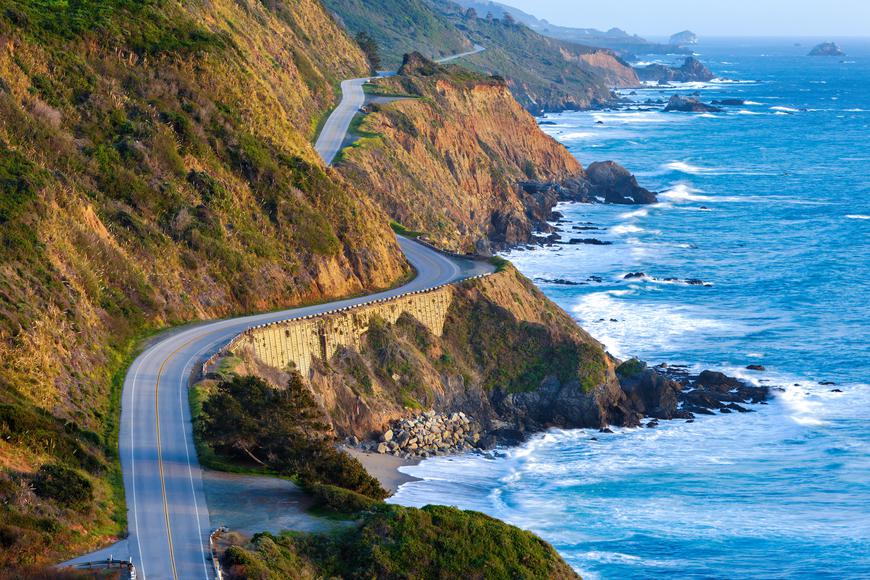
Moving south, the Central Coast offers some of the most iconic and frequently photographed sections of the entire California Coast. Big Sur, a rugged and sparsely populated stretch, is globally renowned for its steep cliffs plunging into the Pacific, winding coastal highways, and breathtaking panoramic views. This segment is a testament to the raw power of geological uplift and marine erosion, where granite mountains meet the ocean with dramatic flair. Further south, the coastline softens somewhat, revealing charming towns like Carmel-by-the-Sea and the historic fishing village of Monterey, home to the famous Monterey Bay Aquarium. The area around San Francisco Bay introduces a different coastal dynamic, where urban development meets significant natural features like the Golden Gate Strait and the vast bay itself. This mid-section of the coast transitions from the cold, turbulent waters of the north to increasingly milder conditions, influencing the marine biodiversity found offshore.
Southern California’s Sun-Drenched Shores
The Southern California coastline is synonymous with sun, surf, and extensive sandy beaches. From the upscale shores of Santa Barbara to the bustling urban beaches of Los Angeles and the vibrant coastal communities of San Diego, this section is characterized by wide, inviting sandy expanses punctuated by bluffs and iconic piers. While less rugged than the north, this region still boasts significant natural landmarks, such as the La Jolla tide pools and the scenic cliffs of Torrey Pines State Natural Reserve. The climate here is Mediterranean, supporting unique coastal scrub ecosystems and acting as a crucial wintering ground for various bird species. Offshore, the warm waters support a different array of marine life, including pods of dolphins and whales that migrate along this extensive route. The geology here features softer sedimentary rocks, leading to more gradual slopes and extensive sandy deposits, yet still punctuated by areas of dramatic cliff faces, especially where urban development encroaches on the natural edge.
Ecological and Geological Significance
The immense length and varied topography of the California Coast are foundational to its ecological and geological importance, making it a living laboratory for natural processes.
Diverse Ecosystems
The California Coast is a biodiversity hotspot. Its varying ocean temperatures, influenced by the California Current, upwelling phenomena, and freshwater inputs, create a mosaic of marine habitats. From kelp forests teeming with fish, sea otters, and seals to sandy intertidal zones rich with invertebrates and migratory birds, the ecological richness is staggering. Estuaries and wetlands, particularly abundant in the Central and Southern parts, serve as critical nurseries for fish and vital stopovers for millions of birds on the Pacific Flyway. The terrestrial ecosystems immediately adjacent to the coast also show remarkable diversity, from redwood forests to chaparral and coastal sage scrub, each adapted to specific microclimates and soil conditions dictated by proximity to the ocean and varying elevations.
Geological Formations
Geologically, the California Coast is a dynamic zone situated at the active boundary of the Pacific and North American tectonic plates. This tectonic activity is responsible for the dramatic mountain ranges that often run parallel to the coast, the significant uplift that forms towering cliffs, and the ongoing seismic activity. Features like the San Andreas Fault run through or near coastal areas, shaping the landscape in profound ways. Erosion by waves and wind continuously sculpts the shoreline, creating sea arches, caves, and stacks, particularly evident in areas like Big Sur and parts of the Northern Coast. The deposition of sediments from inland rivers creates the sandy beaches that define much of Southern California. This interplay of constructive and destructive geological forces ensures that the California Coast remains a constantly evolving landmark.
The Coast as a Cultural and Historical Landmark
Beyond its natural grandeur, the California Coast holds deep cultural and historical significance, having been inhabited and shaped by diverse human communities for millennia.
Indigenous Heritage
For thousands of years, indigenous peoples thrived along the California Coast. Tribes such as the Chumash, Miwok, Pomo, and Kumeyaay developed rich cultures intimately connected to the ocean’s resources and the coastal landscape. Their sophisticated knowledge of marine life, sustainable resource management practices, and intricate trade networks left an indelible mark on the land. Numerous archaeological sites along the coast bear testament to their long presence and deep cultural heritage, from shell middens to ceremonial grounds, highlighting the coast not just as a physical boundary but as a sacred and central element of their lifeways.

Exploration and Development
The arrival of European explorers, notably Juan Rodríguez Cabrillo in 1542, marked a new chapter for the California Coast. Later, the Spanish mission system profoundly altered the coastal landscape and indigenous societies. In subsequent centuries, the coast became a focal point for economic development, from whaling stations and fishing ports to the bustling harbors of Los Angeles and San Francisco that facilitated trade and migration during the Gold Rush and beyond. Today, the California Coast is a highly valued resource, balancing conservation efforts with the demands of a large population and significant economic activity, including tourism, shipping, and recreation. Its vast length continues to be a defining feature of California’s identity, a landmark that tells stories of geological power, ecological resilience, and human history.
LifeOutOfTheBox is a participant in the Amazon Services LLC Associates Program, an affiliate advertising program designed to provide a means for sites to earn advertising fees by advertising and linking to Amazon.com. Amazon, the Amazon logo, AmazonSupply, and the AmazonSupply logo are trademarks of Amazon.com, Inc. or its affiliates. As an Amazon Associate we earn affiliate commissions from qualifying purchases.