
Embarking on a journey from the bustling urban landscape of Chicago to the sun-drenched desert vistas of Phoenix is a popular route for both business and leisure travelers within the United States. Whether you’re escaping the Midwest winters for the warmth of the Southwest, planning a family vacation, or heading to a corporate meeting, understanding the intricacies of this flight path is crucial for a smooth and enjoyable travel experience. This comprehensive guide delves into everything you need to know about the flight duration, factors influencing it, airport choices, time zone considerations, and essential travel tips, all while offering insights into the vibrant attractions and diverse accommodation options awaiting you in Phoenix.
The question of “How long is the flight from Chicago to Phoenix?” might seem straightforward, but the answer encompasses a variety of factors that can impact your overall travel time. From the specific airline and aircraft type to prevailing weather conditions and whether you opt for a direct or connecting flight, each element plays a significant role. Our aim is to provide you with a detailed overview, ensuring you can plan your trip with confidence and maximize your time exploring either end of this dynamic journey.
Unpacking the Direct Flight Duration
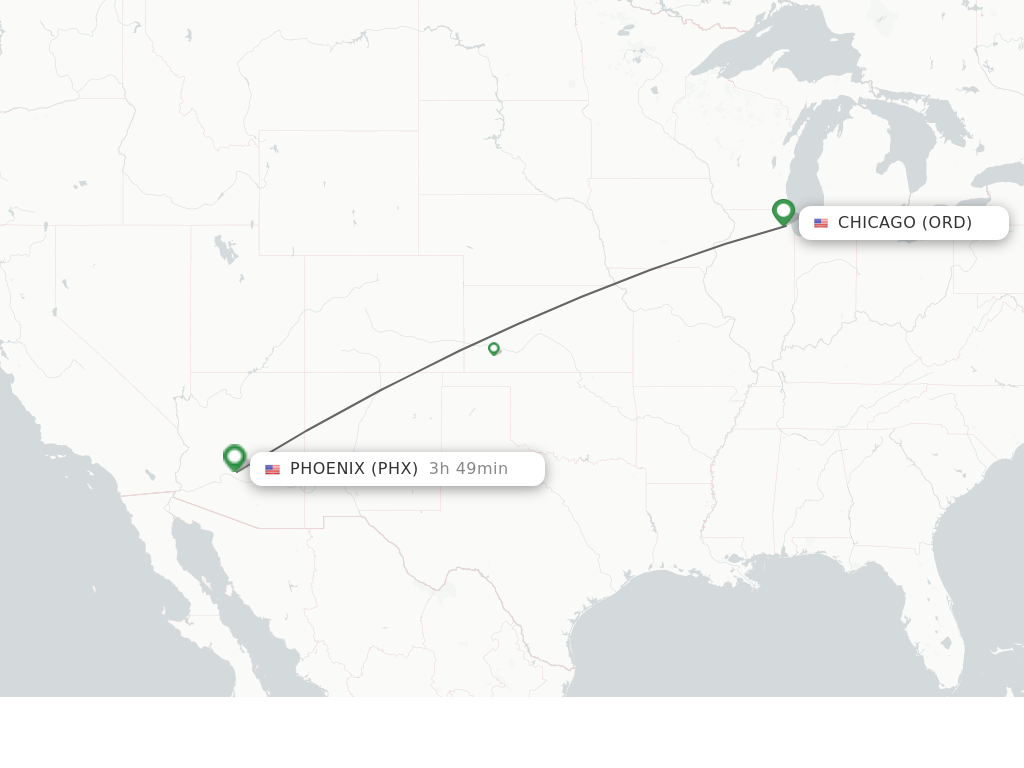
For most travelers, the fastest and most convenient way to traverse the approximately 1,450 miles (2,333 kilometers) between Chicago, Illinois, and Phoenix, Arizona, is via a direct flight. These non-stop services are the backbone of this popular route, offering efficiency and minimal hassle.
Key Factors Influencing Your Flight Time
A direct flight from Chicago to Phoenix typically ranges from 3 hours and 50 minutes to 4 hours and 15 minutes. However, this timeframe is not static and can be influenced by several variables:
- Wind Speed and Direction: Perhaps the most significant natural factor, tailwinds (winds blowing in the same direction as the flight) can shave off considerable time, while headwinds can extend the journey. Flights traveling west, like from Chicago to Phoenix, often contend with prevailing westerly winds, which can slightly increase flight times compared to eastbound journeys.
- Air Traffic Control (ATC) and Route Optimization: Busy airspace around major hubs like Chicago’s O’Hare International Airport or Phoenix Sky Harbor International Airport can lead to ground delays, holding patterns, or diversions from the most direct flight path. Air traffic controllers work to optimize routes for safety and efficiency, but congestion is a reality of modern air travel.
- Aircraft Type: Different aircraft models have varying cruising speeds. A newer, more aerodynamic jet might complete the journey slightly faster than an older model. While the difference might only be a few minutes, it contributes to the overall flight duration.
- Specific Flight Path: Although generally direct, minor adjustments to the flight path can occur due to weather systems, temporary airspace restrictions, or other operational considerations, leading to slight variations in total time aloft.
Understanding these factors helps set realistic expectations for your travel day. While airlines provide estimated flight times, it’s always wise to account for minor fluctuations.
Major Airlines and Airports on the Route
Travelers have several reputable airlines and airport options when flying between these two major cities, contributing to competitive pricing and varied schedules.
Departing from Chicago:
- O’Hare International Airport (ORD): As one of the busiest airports in the world, ORD offers the most frequent direct flights to Phoenix. It serves as a major hub for American Airlines and United Airlines, providing numerous daily non-stop options. Travelers seeking a full-service experience, including options for premium economy or first class, will find ample choices here.
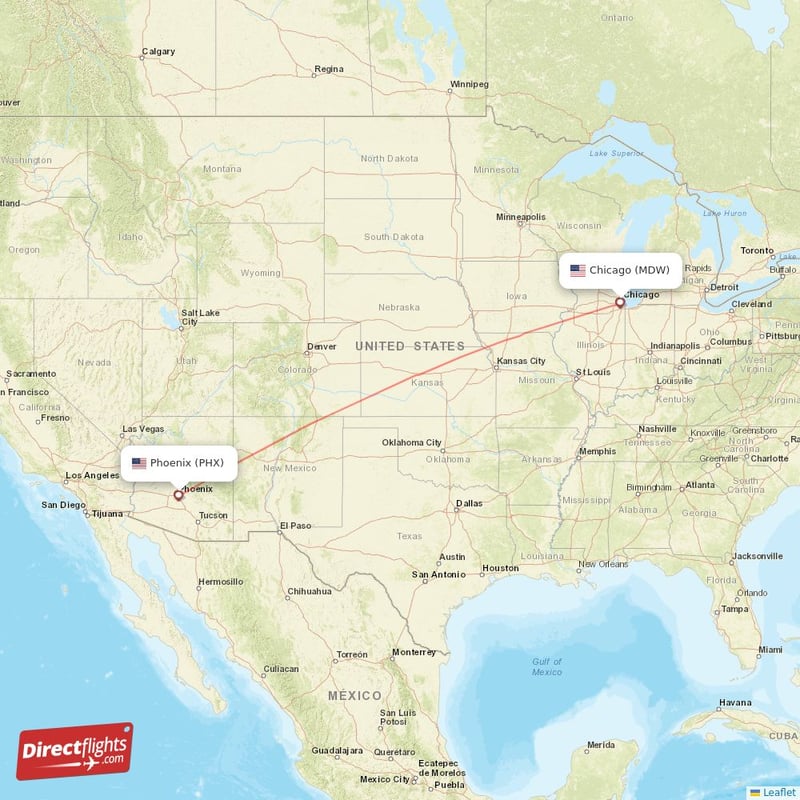
- Midway International Airport (MDW): A smaller, but often more convenient alternative for those living closer to downtown Chicago, MDW is a primary base for Southwest Airlines. Southwest is renowned for its customer-friendly policies, including two free checked bags, making it a popular choice for leisure travelers and families.
Arriving in Phoenix:
- Phoenix Sky Harbor International Airport (PHX): This is the main gateway to the Phoenix metropolitan area and the only airport with direct flights from Chicago. PHX is a hub for American Airlines and a focus city for Southwest Airlines, offering excellent connectivity to various parts of the Valley of the Sun. The airport is efficiently designed, with a convenient Sky Train system connecting terminals to rental car facilities and light rail.
In addition to American Airlines, United Airlines, and Southwest Airlines, other carriers like Spirit Airlines, Frontier Airlines, Alaska Airlines, and Delta Air Lines also offer direct or connecting services on this route, providing a wide array of choices for different budgets and preferences. When booking, consider not just the flight duration but also baggage allowances, seat comfort, and in-flight amenities to match your travel lifestyle.
Navigating Indirect Routes and Layover Logistics
While direct flights offer maximum convenience, connecting flights present a viable alternative, often translating into significant cost savings, especially during peak travel seasons. However, the trade-off is, naturally, an extended overall travel time.
The Calculus of Connecting Flights
The total duration of a connecting flight from Chicago to Phoenix can vary widely, typically ranging from 6 to 10+ hours. This considerable variance stems primarily from the length of the layover. A short layover of 1-2 hours might add minimal time to your journey, while longer layovers (3+ hours) can significantly extend it.
Travelers often opt for connecting flights for several reasons:
- Cost Savings: Connecting flights are frequently cheaper than direct options, making them attractive for budget-conscious travelers or those with flexible schedules.
- Route Flexibility: Sometimes, direct flights might not be available at your preferred time or from your preferred airport (e.g., from Midway if Southwest doesn’t offer a direct option on your chosen day).
- Airline Preference: You might prefer a specific airline that doesn’t offer direct service on this route but has excellent connecting options through their hubs.
- Opportunity for Exploration: For some, a longer layover can be an opportunity to briefly experience another city, especially if the layover airport offers convenient access to nearby attractions.
When choosing a connecting flight, it’s essential to consider the minimum connection time recommended by the airport and airline to ensure you have enough time to transfer between gates, especially if your connecting flight departs from a different terminal. Missing a connection can lead to unforeseen expenses and delays, impacting your overall travel experience.
Popular Layover Hubs and What to Expect
A multitude of cities serve as common layover hubs for flights between Chicago and Phoenix. These airports are generally major airline hubs, equipped with amenities to make your wait more comfortable.
Some of the most frequently used layover cities include:
- Denver, Colorado: As a major hub for United Airlines and Southwest Airlines, Denver International Airport (DIA) is a common stop. Its modern facilities, diverse dining options, and stunning views of the Rocky Mountains provide a pleasant layover experience.
- Dallas/Fort Worth, Texas: Dallas/Fort Worth International Airport (DFW) is one of the largest airports in the world and a major hub for American Airlines. Its extensive terminal network means travelers should allow ample time for connections, but it also boasts a wide array of shops, restaurants, and lounges.
- Las Vegas, Nevada: Harry Reid International Airport (LAS) is a popular hub for Southwest Airlines and other low-cost carriers. Its vibrant atmosphere reflects the city it serves, with plenty of entertainment and dining options.
- Salt Lake City, Utah: Salt Lake City International Airport (SLC) is a hub for Delta Air Lines and offers a more compact and often less congested experience compared to larger hubs.
When faced with a longer layover, utilize airport amenities such as lounges (if you have access), charging stations, and free Wi-Fi. Many airports also feature art installations, local shops, and even spas, transforming what could be a tedious wait into a mini-experience. If the layover is significantly long (6+ hours), consider leaving the airport to explore a nearby attraction, but always ensure you have enough time to return, clear security, and make your connecting flight without stress.
Time Zones and Their Impact on Your Journey
One often-overlooked aspect of travel between Chicago and Phoenix is the time zone difference, which can impact your perceived arrival time and initial plans upon landing.
Understanding the Chicago to Phoenix Time Shift
Chicago operates on Central Time (CT), while Phoenix observes Mountain Standard Time (MST) year-round. Crucially, Arizona does not observe Daylight Saving Time.
This means the time difference varies depending on the time of year:
- During Daylight Saving Time (roughly March to November): Chicago (Central Daylight Time, CDT) is two hours ahead of Phoenix (Mountain Standard Time, MST). For example, 12:00 PM CDT in Chicago is 10:00 AM MST in Phoenix.
- Outside Daylight Saving Time (roughly November to March): Chicago (Central Standard Time, CST) is one hour ahead of Phoenix (Mountain Standard Time, MST). For example, 12:00 PM CST in Chicago is 11:00 AM MST in Phoenix.
The most common scenario for travelers from Chicago to Phoenix is during Daylight Saving Time. This means that a flight departing Chicago at 8:00 AM CDT and lasting 4 hours would land in Phoenix at approximately 10:00 AM MST (8:00 AM departure + 4 hours flight = 12:00 PM CDT, which is 10:00 AM MST). This effectively makes your arrival feel earlier than your departure, which can be a pleasant surprise for travelers.
Minimizing Jet Lag and Maximizing Your Arrival
While the 1-2 hour time difference between Chicago and Phoenix is relatively minor and typically doesn’t cause severe jet lag, it’s still good practice to adjust your internal clock gradually.
- Adjust Before You Fly: A few days before your trip, try shifting your sleep schedule by an hour or two towards Phoenix time.
- Hydrate and Avoid Alcohol/Caffeine: Staying well-hydrated during your flight is crucial for overall well-being and can help your body adapt more quickly.
- Embrace the Sun: Upon arrival in Phoenix, expose yourself to natural sunlight as much as possible. This helps reset your circadian rhythm, signaling to your body that it’s daytime.
- Plan Accordingly: When planning activities, dining reservations, or meeting times for your first day in Phoenix, always refer to the local time. The “gained” hours on arrival mean you might feel ready to tackle more activities than anticipated. For those arriving in the afternoon, this often provides ample time to check into your accommodation and enjoy an early evening exploring.
Essential Travel Tips for a Smooth Journey
A successful trip involves more than just knowing your flight time; it requires careful planning and smart travel practices. Here are some essential tips for your journey from Chicago to Phoenix.
Planning Ahead: Booking, Timing, and Packing
- Book in Advance: Especially if you’re traveling during peak seasons, such as winter in Phoenix (when many flock to escape colder climates) or summer in Chicago (for festivals and events), booking your flights and accommodation well in advance can secure better rates and ensure availability. Tools for comparing hotels and booking flights can be invaluable.
- Consider Time of Day: Morning flights often face fewer delays than afternoon or evening flights due to cascading effects of earlier air traffic. However, a red-eye flight (late-night departure) can save you a night of accommodation and allow you to arrive in Phoenix early, ready to start your day after a few hours of sleep on the plane.
- Pack Light and Smart: Airlines have varying baggage policies and fees. Checking your airline’s specific rules regarding carry-on and checked luggage can save you money and hassle at the airport. Given the climate in Phoenix, light clothing is generally appropriate. If planning outdoor activities like hiking, bring appropriate footwear.
- Check-in Online: Most airlines offer online check-in 24 hours before departure. This can save you time at the airport and allow you to proceed directly to security if you don’t have checked bags.
In-Flight Comfort and Airport Navigation
- Utilize Airport Amenities: Both O’Hare, Midway, and Sky Harbor offer a wide range of dining, shopping, and lounge options. Arriving a bit early can allow you to grab a bite, relax, and ensure you’re at your gate on time. For luxury travelers, airport lounges can provide a tranquil escape before boarding.
- Stay Hydrated: The cabin air on planes can be very dry. Drink plenty of water before and during your flight to prevent dehydration, which can contribute to fatigue.
- Dress in Layers: While Phoenix is warm, plane cabins can vary in temperature. Dressing in layers allows you to adjust to changing conditions and ensures comfort throughout your flight.
- Entertainment: Although a relatively short flight, having a book, downloaded movies, or music on hand can make the journey more enjoyable, especially if your airline doesn’t offer extensive in-flight entertainment.
- Power Up: Fully charge your devices before heading to the airport. While many planes offer charging ports, they aren’t always guaranteed or functional. A portable power bank can be a lifesaver.
By adhering to these tips, you can transform a routine flight into a seamless part of your travel adventure, setting a positive tone for your visit to Phoenix.
Exploring Your Destination: Phoenix’s Allure
Once your flight from Chicago lands in Phoenix, a world of desert beauty, vibrant culture, and endless activities awaits. Known as the “Valley of the Sun,” Phoenix offers a diverse range of experiences for every type of traveler, from outdoor adventurers to those seeking relaxation and cultural immersion.
Top Attractions and Activities in the Valley of the Sun
Phoenix and its surrounding communities like Scottsdale, Tempe, Mesa, and Glendale are packed with attractions that cater to varied interests:
- Nature and Outdoors:
- Desert Botanical Garden: Explore the stunning beauty of the Sonoran Desert with its incredible collection of cacti and desert plants. Seasonal events and art installations make it a year-round attraction.
- Hiking: Challenge yourself on trails up Camelback Mountain or explore the accessible paths in Papago Park, offering panoramic city views. The numerous trails in the McDowell Sonoran Preserve provide miles of scenic trekking.
- Golf: Phoenix is a golfer’s paradise, boasting hundreds of championship courses designed by legends, many integrated into the natural desert landscape.
- Culture and History:
- Heard Museum: Delve into the rich history and vibrant art of Native American cultures, particularly those of the Southwest. Its extensive collections and engaging exhibitions are a must-see.
- Old Town Scottsdale: Wander through historic streets filled with art galleries, unique boutiques, Western-themed shops, and lively restaurants and bars. It’s a perfect spot for an evening stroll or souvenir hunting.
- Taliesin West: Visit the Frank Lloyd Wright winter home and architectural school, a UNESCO World Heritage site that showcases innovative desert architecture.
- Family Fun & Entertainment:
- Phoenix Zoo: Home to a diverse collection of animals from around the world, with a focus on conservation.
- Musical Instrument Museum: An extraordinary museum featuring thousands of instruments from every country in the world, often with interactive exhibits.
- Desert Ridge Marketplace: An outdoor shopping and entertainment center offering dining, retail, and seasonal events.
From vibrant nightlife to tranquil spa experiences at world-class resorts, Phoenix caters to every travel style, whether you’re on a luxury trip, a budget adventure, or a family vacation.

Finding Your Perfect Stay: Accommodation Options in Phoenix
Phoenix offers a vast array of accommodation options, from opulent resorts to budget-friendly hotels and charming boutique stays, ensuring every traveler finds their ideal base for exploration.
- Luxury Resorts: For an indulgent experience, Phoenix and Scottsdale are home to some of the country’s finest resorts, often featuring sprawling pools, award-winning spas, championship golf courses, and gourmet dining.
- Four Seasons Resort Scottsdale at Troon North: Nestled in the foothills, offering breathtaking desert views and unparalleled service.
- The Phoenician, a Luxury Collection Resort, Scottsdale: A iconic destination with stunning grounds, a multi-tiered pool complex, and exceptional amenities.
- Sanctuary Camelback Mountain, A Gurney’s Resort & Spa: Known for its serene atmosphere, Asian-inspired spa, and incredible views.
- Mid-Range Hotels: Providing comfort and excellent value, many mid-range hotels offer robust amenities without the premium price tag.
- Hyatt Regency Phoenix: Located downtown, perfect for business travelers or those wanting easy access to city attractions.
- Hilton Phoenix Resort at the Peak: A family-friendly resort with a water park, offering a balance of luxury and fun.
- The Saguaro Scottsdale: A colorful and vibrant hotel in Old Town Scottsdale with a lively pool scene.
- Budget-Friendly Options: Numerous hotels across the metro area offer clean, comfortable rooms at competitive prices, especially in areas like Tempe or near Phoenix Sky Harbor International Airport, catering to budget travel lifestyles.
- Vacation Rentals and Apartments: For longer stays, family trips, or those seeking a more local experience, booking a vacation rental or serviced apartment can offer more space, privacy, and amenities like full kitchens.
When choosing accommodation, consider the type of trip you’re planning – whether it’s a romantic getaway, a family adventure, a business stay, or a solo exploration. Location relative to your planned activities is also key. Booking platforms and direct hotel websites offer detailed reviews and comparisons, making the decision process easier.
In conclusion, the flight from Chicago to Phoenix is a manageable journey, typically under 4.5 hours for direct flights, with varying options for connecting routes. By understanding the factors influencing flight times, navigating airport logistics, accounting for time zone differences, and applying smart travel tips, you can ensure a smooth transition from the urban charm of Chicago to the warm embrace of Phoenix, ready to explore all the wonders this vibrant Arizona city has to offer.
LifeOutOfTheBox is a participant in the Amazon Services LLC Associates Program, an affiliate advertising program designed to provide a means for sites to earn advertising fees by advertising and linking to Amazon.com. Amazon, the Amazon logo, AmazonSupply, and the AmazonSupply logo are trademarks of Amazon.com, Inc. or its affiliates. As an Amazon Associate we earn affiliate commissions from qualifying purchases.