
Embarking on a journey from the sun-kissed beaches of Florida to the vibrant metropolis of New York is a popular venture for countless travelers each year, whether for business, leisure, or visiting loved ones. While the allure of each destination is distinct – from Florida’s theme parks and coastal retreats to New York’s iconic landmarks and cultural tapestry – a common thread uniting all these travelers is the inevitable question: “How long is the flight?” The answer, seemingly straightforward, is actually nuanced, varying based on a multitude of factors that influence every air journey. Understanding these variables is key to planning an efficient and enjoyable trip. This comprehensive guide will delve into the specifics, providing clear insights into typical flight durations, factors that extend or shorten your travel time, and practical tips for navigating this popular air route.
Understanding the Variables Affecting Flight Duration
The actual time spent airborne between Florida and New York is merely one component of your overall travel experience. Several critical factors come into play, each contributing to the variability of flight times.
Direct vs. Connecting Flights
The most significant determinant of flight duration is whether your journey is a direct (non-stop) flight or a connecting flight.
Non-stop flights offer the quickest way to get from point A to point B, as there are no layovers. These flights traverse the distance between departure and arrival airports without interruption, minimizing airborne time.
Connecting flights, conversely, involve one or more stops at intermediate airports. While often more budget-friendly or the only option for less direct routes, they substantially increase total travel time. A layover can range from a quick 45-minute sprint between gates to an overnight stay, adding hours, if not an entire day, to your journey. The duration of the layover, combined with the time spent on each flight segment, dictates the overall length of a connecting itinerary.
Departure and Arrival Airports
Florida is home to several major international airports, each serving different regions and offering varying route options to New York. Key hubs include Orlando International Airport (MCO), Miami International Airport (MIA), and Fort Lauderdale-Hollywood International Airport (FLL). Similarly, the New York metropolitan area is served by three major airports: John F. Kennedy International Airport (JFK), LaGuardia Airport (LGA), and Newark Liberty International Airport (EWR).
The specific combination of your departure and arrival airports directly impacts flight distance and, consequently, flight time. For instance, a flight from Miami, South Florida, to Newark, New Jersey (which serves the New York area), might be slightly longer than a flight from Jacksonville, North Florida, to LaGuardia due to geographical differences in air mileage.
Aircraft Type and Air Traffic Control
While less impactful on short to medium-haul domestic flights, the type of aircraft can marginally affect flight speed. Modern jets are designed for efficiency, but variations exist. More critically, air traffic control plays a significant role. The airspace between Florida and New York is among the busiest in the world. Air traffic congestion, holding patterns, and ground delays at either end, especially at notoriously busy airports like JFK or LGA, can add unexpected minutes to the scheduled flight time. Airlines often pad their schedules to account for these potential delays, making the advertised flight time slightly longer than the actual airborne time.
Weather Conditions and Wind Patterns
Nature also has a say in flight duration. Strong headwinds can increase flight time as the aircraft has to work harder against the airflow, while tailwinds can provide a beneficial boost, shortening the journey. Storm systems, fog, or other adverse weather conditions along the flight path or at the arrival/departure airports can necessitate rerouting or cause delays, thus extending the flight. While airlines plan for typical wind conditions, severe weather events can lead to significant disruptions.
Typical Flight Durations: Averages and Ranges
With an understanding of the influencing factors, we can now look at the typical flight durations for this popular route.
Non-Stop Flights
For direct flights between major airports in Florida and the New York area, the airborne time generally falls within a predictable range:
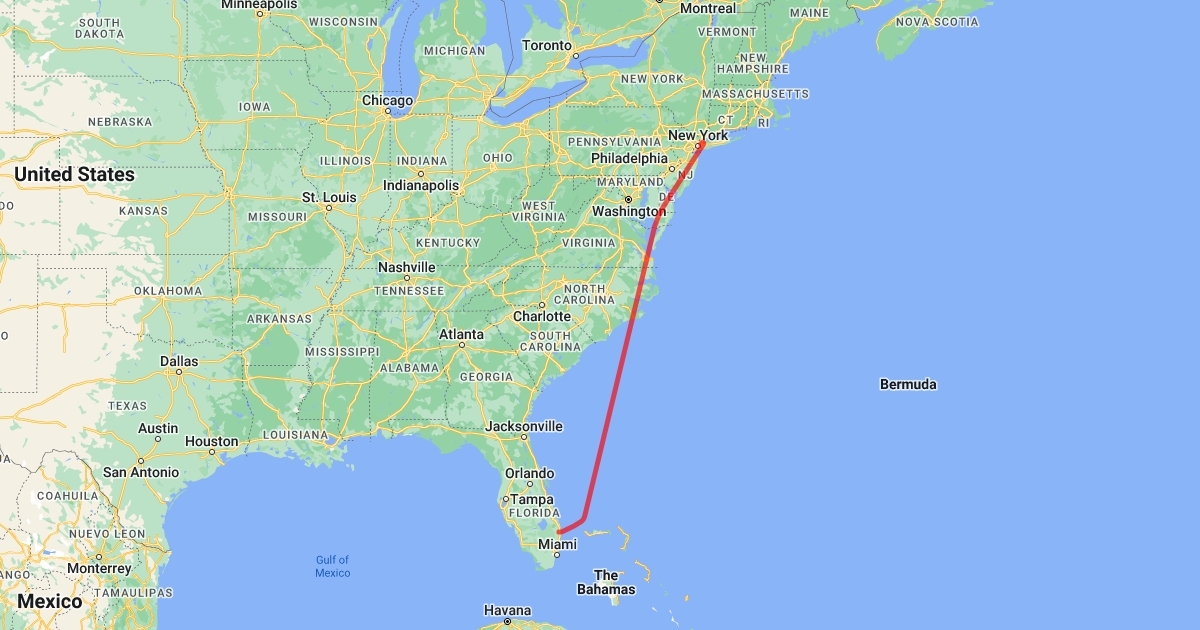
- From South Florida (e.g., Miami, Fort Lauderdale) to New York (e.g., JFK, LGA, EWR): Expect a non-stop flight to last approximately 2 hours and 45 minutes to 3 hours and 30 minutes.
- For example, a direct flight from MIA to JFK or FLL to LGA typically falls in this range.
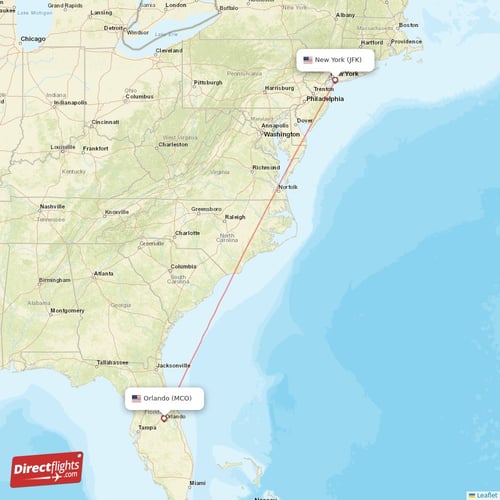
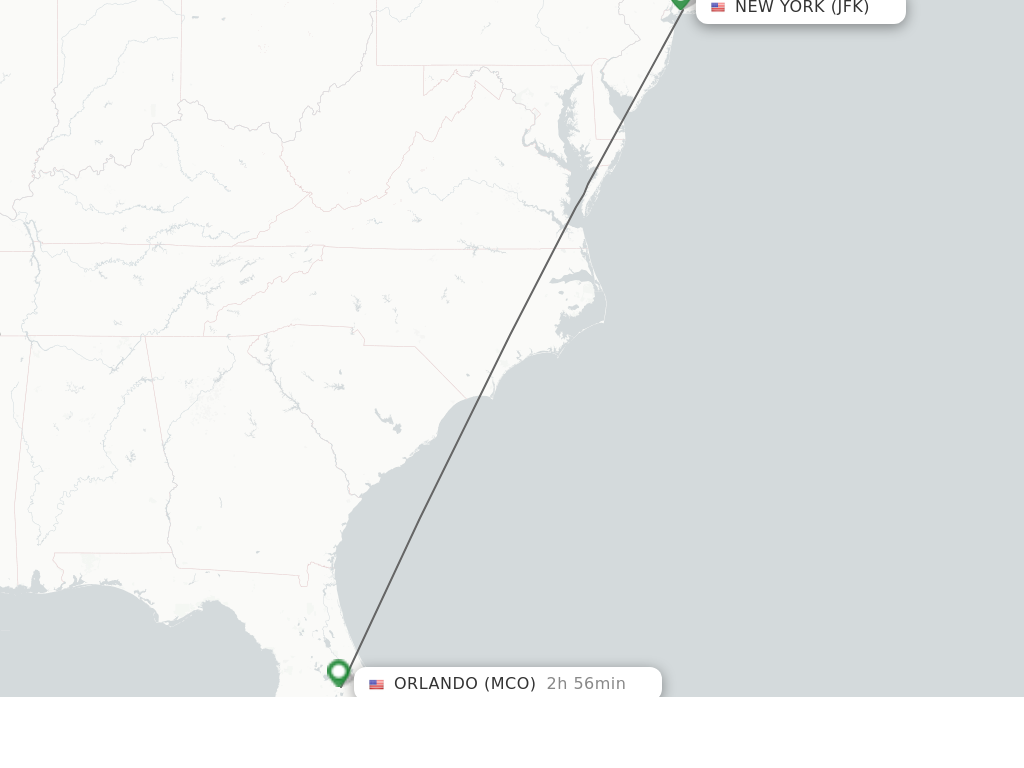
- From Central Florida (e.g., Orlando) to New York: These flights are often slightly shorter due to the more northerly position of Orlando. A direct flight from MCO to any of the New York airports generally takes between 2 hours and 30 minutes to 3 hours and 15 minutes.
- From North Florida (e.g., Jacksonville) to New York: These routes are the shortest. A non-stop flight from Jacksonville International Airport (JAX) to New York could be as short as 2 hours and 15 minutes to 2 hours and 45 minutes.
These times represent the actual duration the aircraft is in the air. Remember that the gate-to-gate time provided by airlines will include taxiing, which can add 10-30 minutes depending on airport congestion.
Connecting Flights
While less common for such a frequently served route, connecting flights are sometimes chosen for cost savings or specific airline loyalty. The total travel time for a connecting flight will be the sum of the individual flight segments plus the layover time.
- One-stop flights: Depending on the layover city (often a hub like Charlotte, Atlanta, or Washington D.C.), total travel time can range from 5 hours to 8 hours or more. A short layover of 1-2 hours would result in a total travel time around 5-6 hours. Longer layovers, often seen with cheaper tickets, can push the total duration well past 8 hours.
Beyond Flight Time: Total Travel Time Considerations
Focusing solely on the time spent in the air provides an incomplete picture of your travel day. The true “how long” of your journey encompasses much more than just the flight itself.
Pre-Flight Essentials
Before you even board the plane, you’ll invest significant time at the airport.
- Check-in and Security: For domestic flights, it’s generally recommended to arrive at least 2 hours before your scheduled departure. This allows ample time for checking luggage, navigating security checkpoints, and reaching your gate. During peak travel seasons or at busy airports, this time buffer is crucial. Expedited security programs like TSA PreCheck or CLEAR can reduce this wait, but contingency planning is always wise.
- Boarding: Boarding typically begins 30-45 minutes before departure, and gates close 10-15 minutes prior. Missing the boarding window means missing your flight.
Post-Flight Logistics
Once your flight lands in New York, your journey isn’t over.
- Deplaning and Baggage Claim: It takes time to deplane, especially if you’re seated at the back of a large aircraft. If you’ve checked a bag, waiting at baggage claim can add another 15-45 minutes to your post-flight activities, depending on efficiency and airport size.
- Ground Transportation: Getting from the airport to your final destination in Manhattan, Brooklyn, or another New York City borough can be a significant undertaking. Traffic, especially during rush hour, is notoriously heavy. Factors like the time of day, day of the week, and your specific airport/destination impact this. For instance, traveling from JFK to Midtown Manhattan can take anywhere from 45 minutes to 2 hours by car or taxi, and roughly an hour via public transport like the AirTrain and subway. LaGuardia typically offers slightly quicker access to Manhattan, while Newark requires crossing state lines but has excellent Amtrak and NJ Transit connections.
Considering all these elements, the “door-to-door” travel time from your home in Florida to your final destination in New York for a direct flight could easily range from 6 to 9 hours, even for a relatively short 3-hour flight.
Choosing Your Flight: Tips for a Smoother Journey
Making informed decisions when booking your flight can significantly enhance your travel experience and manage expectations regarding total travel time.
Booking Strategies
- Book in Advance: Generally, booking 2-3 months out can yield better prices and a wider selection of flight times. For peak seasons (e.g., holidays, spring break), book even earlier.
- Use Flight Comparison Sites: Websites like Google Flights, Skyscanner, or Kayak allow you to compare prices and flight durations across multiple airlines, helping you find the best balance of cost and convenience.
- Consider Mid-Week Travel: Tuesdays, Wednesdays, and Saturdays often offer the lowest fares and potentially fewer crowds, which can lead to slightly less congested airports and quicker security lines.
- Be Flexible with Airports: If possible, be open to flying into or out of different airports in both Florida and New York. Sometimes, flying into EWR instead of JFK might offer a better flight time or price, even if the ground transportation is slightly different.
Airline Choice
Major carriers and budget airlines alike operate frequent services on the Florida to New York route.
- Major Airlines: Delta Air Lines, American Airlines, and United Airlines offer extensive schedules and generally operate from all major airports. They typically provide a full-service experience.
- Budget Carriers: JetBlue, Southwest Airlines, Spirit Airlines, and Frontier Airlines are popular choices for their competitive fares, though often with fewer amenities or additional charges for baggage and seat selection. These airlines are vital for keeping prices accessible and increasing flight frequency. While their flight times are comparable, budget airlines sometimes serve smaller airports or have slightly less schedule flexibility in case of disruptions.
Optimizing Your Experience During the Flight
Even a few hours in the air can be made more comfortable and productive.
- Stay Hydrated: Air travel can be dehydrating. Drink plenty of water before, during, and after your flight.
- Pack Smart: Keep essential items, entertainment, and any medications in your carry-on. A good book, downloaded movies, or podcasts can make the time fly by.
- Dress Comfortably: Layers are always a good idea to adapt to varying cabin temperatures.
- Stretch: A quick stretch in your seat or a walk to the restroom can help alleviate stiffness, especially on longer flights.
In conclusion, a direct flight from Florida to New York typically ranges from 2.5 to 3.5 hours in the air. However, the comprehensive journey, from leaving your doorstep to arriving at your final destination, can easily extend to 6-9 hours or more when factoring in airport procedures and ground transportation. By understanding these components and planning accordingly, travelers can ensure a smoother, less stressful, and more predictable trip between these two iconic U.S. destinations.
LifeOutOfTheBox is a participant in the Amazon Services LLC Associates Program, an affiliate advertising program designed to provide a means for sites to earn advertising fees by advertising and linking to Amazon.com. Amazon, the Amazon logo, AmazonSupply, and the AmazonSupply logo are trademarks of Amazon.com, Inc. or its affiliates. As an Amazon Associate we earn affiliate commissions from qualifying purchases.