
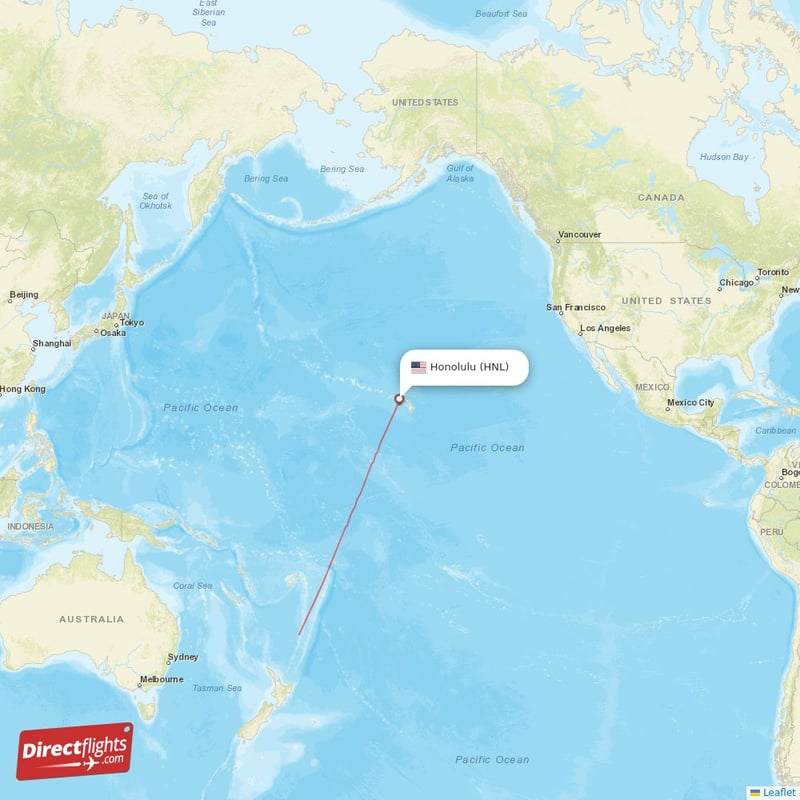
Traversing the vast expanse of the Pacific Ocean to travel from the tropical volcanic shores of Hawaii to the rugged, temperate landscapes of New Zealand is one of the most iconic long-haul journeys in the world. For travelers seeking to trade the surf of Waikiki Beach for the rolling green hills of the North Island or the dramatic peaks of the Southern Alps, understanding the logistics of this trans-Pacific flight is essential. The distance between Honolulu and Auckland spans approximately 4,400 miles (7,080 kilometers), a journey that connects two of the most significant hubs of Polynesian culture and natural beauty.
Understanding the Trans-Pacific Journey: Total Flight Duration
When planning a trip from the United States tropical outpost to the “Land of the Long White Cloud,” the most critical factor is the flight duration. On average, a direct flight from Honolulu to Auckland takes between 8 hours and 50 minutes to 9 hours and 30 minutes. The variation in time is primarily influenced by seasonal jet streams and wind patterns that blow across the central Pacific.
Direct Routes from Honolulu to Auckland
Currently, the primary gateway for this route is Daniel K. Inouye International Airport in Oahu. This airport serves as the central hub for travelers departing from Hawaii. Direct services are predominantly operated by Air New Zealand and Hawaiian Airlines.
Air New Zealand frequently utilizes modern aircraft such as the Boeing 787-9 Dreamliner for this route, which is designed to reduce the effects of jet lag through better cabin pressure and humidity levels. Similarly, Hawaiian Airlines provides a unique cultural bridge, offering island-inspired hospitality before you even touch down in the Southern Hemisphere. For those departing from other islands like Maui or the Big Island, a short domestic hop to Honolulu is required before boarding the long-haul leg to New Zealand.
Layover Options and Multi-Stop Itineraries
While direct flights are the most efficient way to travel, some visitors opt for multi-stop itineraries to explore other Pacific destinations. Common layover points include Fiji, Samoa, or Tahiti. Flying via Nadi with Fiji Airways can extend the total travel time to 12 or 15 hours, but it allows for a “two-country” vacation experience.
Other travelers might find themselves routing through Australia, specifically Sydney or Brisbane, though this significantly increases the travel time and distance. If you choose a connecting flight, the duration can easily exceed 20 hours depending on the length of the layover. For most, the direct 9-hour overnight flight remains the preferred choice, as it allows passengers to sleep through the majority of the transit and arrive in Auckland refreshed.
Crossing the International Date Line: Time Zones and Planning
One of the most fascinating aspects of the flight from Hawaii to New Zealand is the crossing of the International Date Line. This geographical boundary is responsible for a “time travel” effect that can be confusing for first-time visitors.
Losing a Day (and Finding It Again)
When traveling south/west from Honolulu to Auckland, you cross the International Date Line in a forward direction. This means that if you depart Hawaii on a Tuesday evening, you will arrive in New Zealand on Thursday morning, effectively “skipping” Wednesday. This is not a loss of time in the sense of the hours spent on the plane, but rather a calendar shift.
Conversely, on the return flight from New Zealand to Hawaii, you travel eastward across the line and “gain” a day. It is common for travelers to depart Auckland in the evening and arrive in Honolulu on the morning of the same day they left, or even the previous calendar day. This quirk of geography requires careful attention when booking Hotels or car rentals at your destination.
Managing Jet Lag Between the Tropics and the Southern Hemisphere
Despite the 9-hour flight time, the time difference between Hawaii and New Zealand is often 22 or 23 hours depending on daylight savings. Because the two regions are in different hemispheres, their seasons and daylight savings schedules are opposite. When Hawaii is in its summer, New Zealand is experiencing winter.

To mitigate jet lag, travel experts recommend adjusting your sleep schedule a few days before departure. Hydration is key during the trans-Pacific flight, as the dry cabin air can exacerbate fatigue. Upon arrival at Auckland Airport, it is best to immediately align yourself with the local time. If you arrive in the morning, stay awake until the evening to help your internal clock reset.
Essential Travel Tips for the Long-Haul Route
The journey to the South Pacific is a major undertaking, and preparation is the key to a smooth experience. From choosing the right airline to navigating the arrival process, several factors can influence your comfort level.
Airline Options and Onboard Comfort
As mentioned, Air New Zealand and Hawaiian Airlines are the primary carriers. Air New Zealand is renowned for its “Economy Skycouch,” which allows a row of three seats to be converted into a flat surface, ideal for families or couples. Their service often includes a curated selection of New Zealand wines and cuisine, giving travelers a taste of the destination before arrival.
Hawaiian Airlines offers a “Premium Cabin” with fully lie-flat seats for those seeking luxury. Their “Extra Comfort” seating is also a popular choice for the 9-hour journey, providing additional legroom and priority boarding. Regardless of the airline, travelers should pack a small carry-on kit containing essentials like noise-canceling headphones, an eye mask, and a portable charger.
Arrival in Auckland: Your Gateway to New Zealand
Your flight will land at Auckland Airport, the largest and busiest airport in New Zealand. After disembarking, you will proceed through customs and immigration. New Zealand has very strict biosecurity laws to protect its unique ecosystem. Travelers must declare all food, plant materials, and used sporting equipment (such as hiking boots).
Once you have cleared customs, Auckland offers a wealth of immediate attractions. You might start your journey by visiting the Sky Tower for a panoramic view of the “City of Sails,” or take a short ferry ride to Waiheke Island to explore its world-class vineyards. Auckland serves as the perfect jumping-off point for further exploration of the North Island, including the geothermal wonders of Rotorua and the magical Waitomo Glowworm Caves.
Exploring the Contrast Between Hawaii and New Zealand
While both Hawaii and New Zealand are famous for their stunning landscapes, the contrast between the two is what makes this trip so rewarding. One offers the quintessential tropical paradise, while the other provides a rugged, diverse wilderness that ranges from subtropical forests to glaciers.
From the Volcanic Peaks of Oahu to the Southern Alps
In Hawaii, the scenery is dominated by volcanic craters like Diamond Head and lush rainforests. The Pacific waters are warm and inviting year-round. Moving to New Zealand, particularly the South Island, the landscape shifts toward the dramatic Southern Alps. Here, you can visit Milford Sound, a breathtaking fiord characterized by towering cliffs and cascading waterfalls.
The adventure capital of Queenstown offers activities that are a far cry from the relaxing beaches of Maui. In Queenstown, travelers can engage in bungee jumping, jet boating, and skiing. For those who prefer a slower pace, the gardens of Christchurch or the vibrant arts scene in Wellington provide cultural enrichment that complements the natural wonders.

Cultural Connections: Polynesian Roots
A flight from Hawaii to New Zealand is also a journey through the “Polynesian Triangle.” The indigenous Maori people of New Zealand share ancestral, linguistic, and cultural ties with Native Hawaiians. Both cultures are deeply rooted in a respect for the land (Aina in Hawaii and Whenua in New Zealand) and the ocean.
Visitors to New Zealand can experience this connection firsthand by visiting a Marae (meeting ground) or participating in a traditional Hangi feast. Exploring these cultural links adds a layer of depth to the travel experience that goes beyond simple sightseeing. Whether you are visiting the Hobbiton Movie Set in Matamata or exploring the volcanic history of Mount Eden, the shared heritage of the Pacific is ever-present.
The flight from Hawaii to New Zealand is more than just a 9-hour hop; it is a transition between two of the most spectacular regions on Earth. By understanding the flight duration, the date line complexities, and the logistical needs of the journey, you can ensure that your transition from the “Aloha State” to the “Kiwi” way of life is as seamless and enjoyable as possible. From the urban sophistication of Auckland to the pristine beauty of Lake Tekapo, the rewards of this long journey are immeasurable.
LifeOutOfTheBox is a participant in the Amazon Services LLC Associates Program, an affiliate advertising program designed to provide a means for sites to earn advertising fees by advertising and linking to Amazon.com. Amazon, the Amazon logo, AmazonSupply, and the AmazonSupply logo are trademarks of Amazon.com, Inc. or its affiliates. As an Amazon Associate we earn affiliate commissions from qualifying purchases.