
Embarking on a journey from the historic streets of Washington DC to the tropical paradise of Hawaii is one of the longest domestic travel experiences available within the United States. Spanning nearly the entire width of North America and a significant portion of the Pacific Ocean, this trek requires careful planning and a clear understanding of the logistics involved. Whether you are heading to the bustling shores of Waikiki Beach or the secluded cliffs of the Na Pali Coast, knowing the duration and nuances of your flight is the first step in a successful Polynesian getaway.

Understanding the Transpacific Journey from the East Coast
The distance between the capital of the United States and the Hawaiian Islands is approximately 4,800 miles. To put this into perspective, a flight from Washington DC to London is actually shorter than the trip to Honolulu. Because of this immense distance, travelers must prepare for a significant amount of time in the air, often crossing six different time zones during the flight.
Direct vs. Connecting Flight Durations
When booking a trip to Hawaii, the primary factor influencing your travel time is whether you secure a non-stop flight or opt for a connection. A direct flight from Washington Dulles International Airport to Daniel K. Inouye International Airport in Honolulu typically takes between 10 hours and 11 hours and 30 minutes. The variation in time is largely due to the jet stream; heading west against the wind takes longer, while the return flight to the East Coast is usually an hour or two faster.
If you are departing from Ronald Reagan Washington National Airport or Baltimore/Washington International Thurgood Marshall Airport, you will almost certainly have a layover. Connecting flights generally extend the total travel time to anywhere between 13 and 16 hours. Depending on the length of the layover and the location of the hub, some journeys can even stretch to 20 hours.
The Role of Departure Airports
Washington Dulles International Airport serves as the main gateway for those seeking the most efficient route. It is one of the few airports on the East Coast that offers dedicated non-stop service to the islands. Travelers using Ronald Reagan Washington National Airport often find themselves connecting through major mid-country or West Coast hubs, adding a layer of complexity but sometimes offering more competitive pricing or airline preference options.
Major Carriers and Non-Stop Routes
Several major airlines facilitate the connection between the Mid-Atlantic region and the Central Pacific. The availability of direct routes is somewhat limited compared to West Coast cities like Los Angeles or San Francisco, making these specific flights highly sought after.
United Airlines and the Dulles Connection
United Airlines is the primary carrier offering non-stop service from Washington DC to Honolulu. Operating out of their hub at Washington Dulles International Airport, these flights are typically serviced by wide-body aircraft designed for long-haul international travel. These planes offer various classes of service, including United Polaris business class, which provides lie-flat seats—a luxury many find essential for a ten-hour-plus journey.
Connecting Through Major Hubs
For those not on the direct United Airlines flight, other carriers provide numerous one-stop options. American Airlines often routes passengers through Dallas/Fort Worth International Airport or Phoenix Sky Harbor International Airport. Delta Air Lines frequently utilizes hubs in Atlanta, Minneapolis, or Salt Lake City.
Alaska Airlines and Hawaiian Airlines are also popular choices, though they typically require a connection on the West Coast in cities like Seattle, Portland, or Los Angeles. Flying Hawaiian Airlines from a West Coast gateway allows travelers to begin their cultural immersion early, as the airline is known for its “island hospitality” and themed meals.
Popular Layover Cities and Strategy
Choosing the right layover can make or break the travel experience. Since the flight from Washington DC to Hawaii is so long, many travelers intentionally choose a layover that allows them to stretch their legs or even stay overnight in a California city to mitigate jet lag.
The West Coast Pivot
The most common strategy involves flying five to six hours to a West Coast hub, then taking another five to six-hour flight over the Pacific Ocean. San Francisco and Los Angeles are the two most popular transit points. These airports offer the highest frequency of flights to various islands, including Maui, Kauai, and the Big Island.
If your final destination is not Honolulu, connecting through California is often faster than flying to Oahu and then taking an inter-island flight. For example, a flight from Washington DC to Kahului Airport in Maui via Dallas can be more streamlined than going through the main hub in Honolulu.

Mid-Continent Connections
Connecting in Chicago at O’Hare International Airport or in Denver is another viable route. These connections usually happen earlier in the journey, leaving a very long second leg (about 8–9 hours) across the Western United States and the ocean. While this reduces the number of short hops, it does mean spending a significant amount of time on a single aircraft without the opportunity to walk around a terminal.
Reaching Specific Islands from the Capital
While Honolulu on the island of Oahu is the most frequent arrival point for travelers from Washington DC, the archipelago offers diverse experiences that may draw you elsewhere.
Arriving in Oahu
As the site of Pearl Harbor and the iconic Diamond Head, Oahu is the easiest island to reach. The direct flight from Dulles lands here. Once you arrive at Daniel K. Inouye International Airport, you are just a short drive from the luxury resorts of the North Shore or the vibrant energy of downtown Honolulu.
Venturing to Maui, Kauai, and the Big Island
If your heart is set on the volcanic landscapes of Haleakala National Park on Maui, you will likely face a total travel time of 12 to 14 hours with a connection. Similarly, reaching Lihue Airport on Kauai or Kona International Airport on the Big Island requires a stop.
For those visiting Volcanoes National Park, flying into Hilo is an option, though it almost always requires a connection through Honolulu or Maui. These additional flight segments are short—often only 30 to 50 minutes—but they do add to the total duration of your travel day.
Practical Tips for the Long-Haul Flight
Given that you will be spending nearly half a day in transit, preparation is key to ensuring you arrive in Hawaii ready to explore rather than exhausted.
Managing Jet Lag and Time Zones
Hawaii operates on Hawaii-Aleutian Standard Time (HST), which does not observe daylight saving time. Depending on the time of year, Washington DC is either five or six hours ahead of Hawaii.
To combat jet lag, many travelers recommend staying awake until at least 8:00 PM local Hawaii time on the day of arrival. Since most flights from the East Coast arrive in the late afternoon or early evening, this is manageable. Staying hydrated and avoiding excessive caffeine during the flight across the Pacific Ocean will also help your internal clock adjust more rapidly.
In-Flight Comfort and Amenities
Because the flight from Washington DC is so long, airlines generally provide meal service, even in economy class, on the non-stop routes. However, it is always wise to pack supplemental snacks and a reusable water bottle. Noise-canceling headphones are a worthwhile investment for a ten-hour flight, as is a curated selection of movies or books.
If you are flying on a connecting route, be aware that many domestic flights within the United States (such as from DC to Los Angeles) do not provide complimentary meals in economy, so plan accordingly for the first leg of your journey.
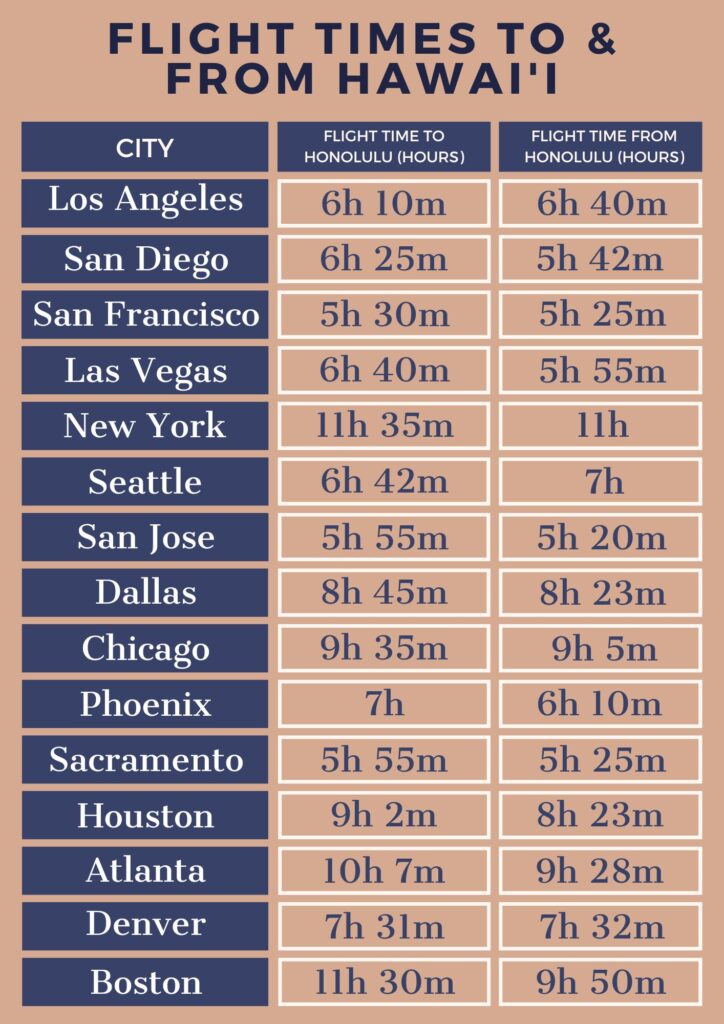
Seasonal Variations in Travel
The time of year can affect both the flight duration and the cost. During the winter months, the jet stream is stronger, which can push a return flight from Honolulu to Washington DC to under nine hours, while the westbound leg might stretch toward twelve.
Furthermore, traveling during peak seasons—such as the holidays or summer break—can result in busier airports and longer security lines at Washington Dulles International Airport. Booking several months in advance is recommended to secure the best routes and seat assignments for this marathon journey.
In conclusion, while the flight to Hawaii from Washington DC is undeniably long, the transition from the bustling political center of the United States to the tranquil beauty of the Pacific is a rewarding experience. Whether you choose the efficiency of a direct flight or the flexibility of a West Coast layover, the destination—be it the sands of Lanai or the lush valleys of Molokai—makes every hour in the air well worth the effort.
LifeOutOfTheBox is a participant in the Amazon Services LLC Associates Program, an affiliate advertising program designed to provide a means for sites to earn advertising fees by advertising and linking to Amazon.com. Amazon, the Amazon logo, AmazonSupply, and the AmazonSupply logo are trademarks of Amazon.com, Inc. or its affiliates. As an Amazon Associate we earn affiliate commissions from qualifying purchases.