
The journey from the bustling urban sprawl of Los Angeles to the serene, tropical landscapes of Hawaii is one of the most popular travel corridors in the United States. For many travelers, this flight represents the transition from a fast-paced metropolitan lifestyle to the “Aloha Spirit.” Understanding the logistics of this transpacific crossing is essential for planning a seamless vacation. While the distance across the Pacific Ocean may seem daunting, modern aviation has made this route remarkably efficient, offering various options for those departing from California.
Understanding Flight Durations from the West Coast to the Islands
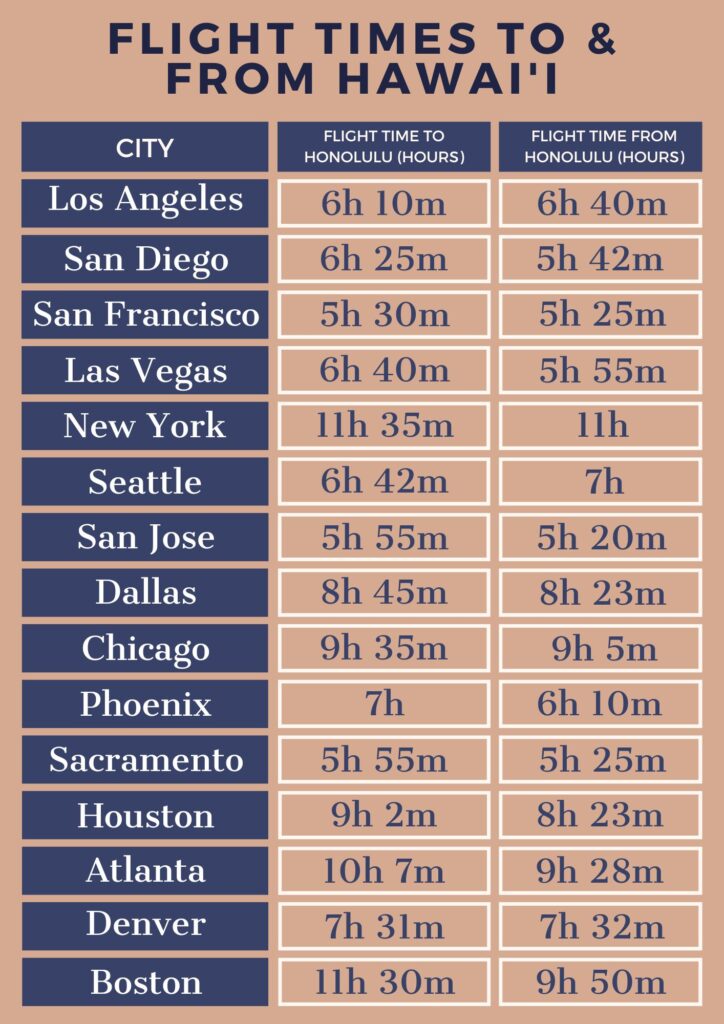
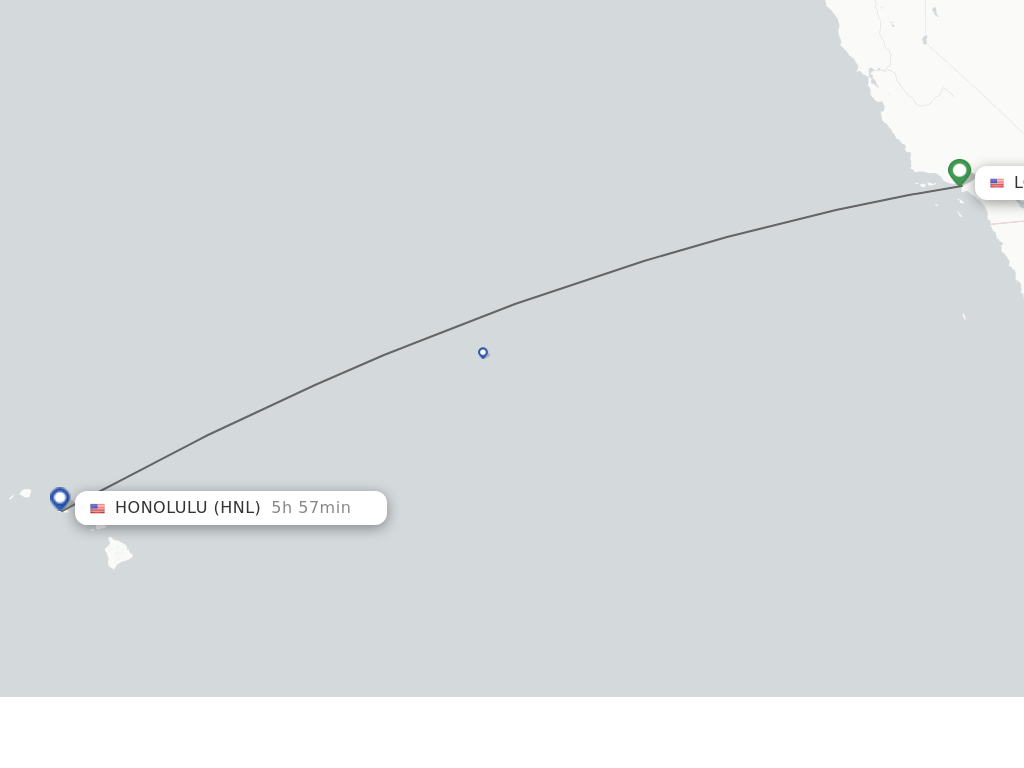
When calculating the time spent in the air, several variables come into play. Generally, a non-stop flight from Los Angeles International Airport to major hubs in the islands ranges between five and six hours. However, this is not a fixed number, as atmospheric conditions and the specific destination island significantly influence the total travel time.
Direct Flights vs. Connecting Flights
The most efficient way to reach the archipelago is via a direct flight. Most major carriers operate non-stop routes that typically clock in at approximately five hours and thirty minutes when heading westbound. Because you are flying against the rotation of the earth and often into headbuffeting winds, the journey to Honolulu usually takes slightly longer than the return trip.
In contrast, connecting flights can extend your travel day significantly. Travelers might find themselves stopping at San Francisco International Airport or Seattle-Tacoma International Airport before heading across the ocean. While these routes can sometimes offer cost savings, they can increase the total travel time to anywhere from eight to twelve hours, depending on the duration of the layover. For most travelers leaving from Southern California, a direct flight remains the preferred choice to maximize time on the beach.
The Impact of Wind Patterns and Jet Streams
Aviation is heavily influenced by the jet stream, a high-altitude ribbon of fast-moving air. When traveling from Los Angeles to Oahu, planes often encounter headwinds. These “trade winds” can add thirty to forty-five minutes to the flight duration. Conversely, on the return leg from Hawaii to North America, the jet stream acts as a powerful tailwind, pushing the aircraft eastward and often reducing the flight time to just under five hours. It is not uncommon for pilots to announce an early arrival in California thanks to these favorable atmospheric conditions.
Major Routes and Airlines Serving the Pacific Corridor
The popularity of the route has resulted in a highly competitive market, benefiting travelers with numerous daily departures and varying service levels. Whether you are looking for luxury or a budget-friendly seat, the options departing from Los Angeles are extensive.
Departures from Los Angeles International Airport
As one of the world’s busiest aviation hubs, Los Angeles International Airport serves as the primary gateway for the Pacific Ocean crossing. Multiple airlines, including Hawaiian Airlines, United Airlines, American Airlines, and Delta Air Lines, offer several daily non-stop flights. More recently, Southwest Airlines and Alaska Airlines have expanded their presence, providing even more flexibility for travelers.
The flight experience can vary by carrier. Hawaiian Airlines is often praised for its island-inspired hospitality and complimentary meals, which help passengers get into the vacation mindset before they even touch down. Meanwhile, the “Big Three” carriers—United Airlines, American Airlines, and Delta Air Lines—offer robust loyalty programs and extensive lounge networks for those seeking a more premium pre-flight experience.
Island Hopping: Honolulu, Maui, and Beyond
While Honolulu on the island of Oahu is the most frequent destination, many travelers fly directly to other islands to avoid a connection. Direct flights from Los Angeles are available to:
- Kahului Airport on Maui
- Lihue Airport on Kauai
- Ellison Onizuka Kona International Airport on the Big Island
Flying directly to Maui typically takes about the same amount of time as flying to Oahu, roughly five hours and forty minutes. However, flying to Lihue Airport on Kauai, which is the westernmost major island, may add a few extra minutes to the journey. Choosing a direct flight to your final island destination is a strategic move that saves the hassle of navigating inter-island terminals after a long-haul flight.
Factors That Influence Your Travel Time
Beyond the mechanical speed of the aircraft, external factors can alter the clock from the moment you leave your house in California until you are checking into your resort.
Seasonal Weather Conditions
While Hawaii enjoys relatively consistent weather year-round, seasonal shifts in the Pacific Ocean can impact flight paths. During the winter months, stronger storms in the North Pacific can force pilots to take more circuitous routes to avoid turbulence, potentially adding time to the flight. Conversely, the summer months often bring calmer skies, leading to more predictable and shorter durations. It is also worth noting that heavy rain or wind in Los Angeles can lead to ground delays, which can postpone your departure time even if the air corridor is clear.
Air Traffic Control and Ground Delays
Los Angeles International Airport is known for its heavy traffic. Tarmac congestion can sometimes result in a twenty to thirty-minute wait before takeoff. Similarly, arriving at Daniel K. Inouye International Airport during peak hours can mean a brief period of circling or waiting for a gate to become available. When planning your first day of activities—perhaps a sunset dinner at Waikiki—it is wise to buffer your schedule by at least two hours after your scheduled landing to account for these minor logistical hurdles.
Enhancing the In-Flight Experience on Long-Haul Pacific Flights
A five-to-six-hour flight is considerable, and how you spend that time can set the tone for your entire trip. Since the journey takes place over a vast stretch of ocean with no land in sight for thousands of miles, preparation is key.
Entertainment and Connectivity Over the Ocean
Most modern aircraft servicing the route between Los Angeles and Hawaii are equipped with sophisticated in-flight entertainment systems. From the latest Hollywood blockbusters to documentaries about Hawaiian culture, there is usually plenty to keep you occupied. However, it is important to remember that satellite Wi-Fi can be spotty over the middle of the Pacific Ocean. Travelers who need to remain productive should download necessary files or entertainment before departing from Los Angeles International Airport.
Preparing for Time Zone Shifts
One of the most significant aspects of the travel time is the change in time zones. Hawaii follows Hawaii-Aleutian Standard Time, which does not observe Daylight Saving Time. This means that for much of the year, Hawaii is three hours behind California. When you land, your body may feel like it is early evening, while the local clock shows mid-afternoon. To combat jet lag, experts suggest staying hydrated during the flight and immediately aligning your meals and sleep schedule with local Hawaiian time upon arrival.
Essential Travel Tips for Your Hawaiian Journey
To make the most of your flight duration and ensure a smooth transition from the mainland to the islands, consider these practical tips.
Best Times to Book for Speed and Comfort
If your priority is a quick crossing, look for morning departures. Flights leaving Los Angeles between 8:00 AM and 10:00 AM usually arrive in Honolulu or Maui by early afternoon, allowing you to enjoy a full evening of island life. Red-eye flights are also an option for the return leg to California, often departing Hawaii late at night and arriving in Los Angeles at sunrise. This can be a great way to save on a night’s accommodation, though it requires the ability to sleep well on a plane.
Arrival Procedures at Daniel K. Inouye International Airport
Upon landing at Daniel K. Inouye International Airport, the largest airport in the state, you will find yourself in a facility that blends modern aviation with open-air tropical architecture. After deplaning, the walk to baggage claim can be somewhat long, though Wiki Wiki buses are available to transport passengers between terminals.
If you are continuing to another island, such as Lanai or Molokai, you will likely head to the inter-island terminal. For those staying on Oahu, car rentals, ride-shares, and shuttles are readily available to take you to the famous hotels of Waikiki Beach or the rugged beauty of the North Shore.
Whether you are heading to see the sunrise at Haleakala National Park, exploring the history of Pearl Harbor, or hiking the trails of Waimea Canyon, the flight from Los Angeles is the vital bridge to your adventure. By understanding the roughly five-to-six-hour commitment, the influence of the Pacific Ocean winds, and the variety of airline options, you can turn a simple flight into a comfortable and exciting part of your total travel experience. The moment the plane wheels touch the tarmac in Hawaii, the flight time will seem like a small investment for the paradise that awaits.
LifeOutOfTheBox is a participant in the Amazon Services LLC Associates Program, an affiliate advertising program designed to provide a means for sites to earn advertising fees by advertising and linking to Amazon.com. Amazon, the Amazon logo, AmazonSupply, and the AmazonSupply logo are trademarks of Amazon.com, Inc. or its affiliates. As an Amazon Associate we earn affiliate commissions from qualifying purchases.