
The Magic Kingdom Florida stands as an undisputed beacon of imagination and a global icon, drawing millions to its gates annually. Beyond its enchanting facade and groundbreaking attractions, one of the most frequently asked questions by curious visitors and urban planners alike pertains to its sheer physical scale: exactly how many acres does this celebrated landmark occupy? The answer is more intricate than a simple number, revealing layers of meticulous planning, innovative design, and strategic infrastructure that allow such a complex, immersive world to exist within its designated footprint. Understanding the acreage of Magic Kingdom is to grasp not just its physical dimensions, but also the monumental ambition and architectural ingenuity that went into creating one of the world’s most famous and beloved destinations.

The park itself, a crown jewel of the sprawling Walt Disney World Resort in Orlando, Florida, is a marvel of engineering and storytelling. Its dimensions are not merely an arbitrary measurement but represent a carefully orchestrated environment where every square foot contributes to the guest experience. From the grand entrance on Main Street, U.S.A., to the furthest reaches of Frontierland and beyond, the acreage dictates not only the capacity for attractions but also the flow of crowds, the scope of thematic immersion, and the unseen operational backbone that keeps the magic alive. Delving into the precise size of Magic Kingdom offers a unique perspective on how a single landmark can encapsulate such vast experiences, continually adapting and expanding within its established boundaries while maintaining its iconic status.
The Grand Scale of an Iconic Landmark
When considering the size of Magic Kingdom, it’s important to differentiate between the theme park’s operational acreage and the broader land area of the Walt Disney World Resort itself. The resort encompasses approximately 27,000 acres, making it roughly the size of San Francisco or two Manhattans. Within this colossal footprint, Magic Kingdom occupies a significant, yet remarkably self-contained, portion. Its scale is a testament to the vision of its creators, who understood that true immersion requires not just detailed theming, but also ample space to transport guests fully into another world.
Pinpointing Magic Kingdom’s Exact Footprint
The Magic Kingdom theme park itself covers approximately 107 acres. This figure represents the area within the park’s berms, encompassing all guest-facing areas, attractions, pathways, and the iconic Cinderella Castle at its heart. It’s a carefully managed space, designed to maximize guest enjoyment and logistical efficiency. While 107 acres might not sound immense when compared to the vastness of the entire resort, it’s crucial to recognize that this is a highly developed and intricately designed parcel of land, packed with density and purpose. For context, many large shopping malls or college campuses often fall within a similar acreage, yet none achieve the thematic complexity and operational demands of Magic Kingdom. This acreage is the stage for an unparalleled theatrical experience, a landmark celebrated for its capacity to inspire awe and wonder.
More Than Just Rides: A World Within Its Walls
The 107 acres of Magic Kingdom are not merely a blank canvas; they are meticulously divided into six distinct, themed lands, each a destination in itself. From the nostalgic charm of Main Street, U.S.A., to the futuristic visions of Tomorrowland, the adventurous spirit of Adventureland, the pioneer tales of Frontierland, the colonial grandeur of Liberty Square, and the fairytale magic of Fantasyland, every acre is imbued with a unique identity. This division allows guests to journey through different epochs and fantasies without ever leaving the park’s boundaries, demonstrating an ingenious use of space. The careful planning ensures that each land feels distinct and immersive, an architectural and narrative achievement within its fixed acreage. Furthermore, a substantial portion of the park’s acreage is dedicated to infrastructure like the Seven Seas Lagoon and canals that allow for transportation and scenic beauty, enriching the landmark’s overall aesthetic and functionality.
A Masterpiece of Themed Design and Engineering
The precise allocation of Magic Kingdom’s 107 acres is a masterclass in urban planning and themed entertainment design. It reflects an understanding that a successful landmark is not just about its size, but how that size is utilized to create an unforgettable experience. The park’s layout is deliberate, guiding guests through a narrative journey while efficiently managing crowd flow and operational demands. This intentional design, often unseen by the casual visitor, is what makes Magic Kingdom a truly extraordinary architectural and immersive landmark.
Thematic Zoning: Maximizing Every Acre
Within its 107 acres, Magic Kingdom employs a brilliant strategy of thematic zoning. Each land is designed with distinct architectural styles, landscaping, and soundscapes, creating a seamless transition from one immersive environment to another. For instance, the transition from Liberty Square to Fantasyland is marked by a deliberate change in visual cues and atmosphere, ensuring guests feel they have truly entered a new “world.” Techniques like forced perspective are heavily utilized, especially in structures like Cinderella Castle and the buildings on Main Street, U.S.A., to make buildings appear taller and grander than they actually are, maximizing the visual impact within the allotted space. This intelligent use of perspective and scale allows the park to create grand vistas and intimate corners, all within its defined acreage, contributing significantly to its status as an architectural landmark. Even the winding pathways and strategically placed vegetation are part of this design, obscuring views of other lands to maintain immersion and guiding guests subtly through the narrative of the park.
Backstage Operations: The Unseen Infrastructure
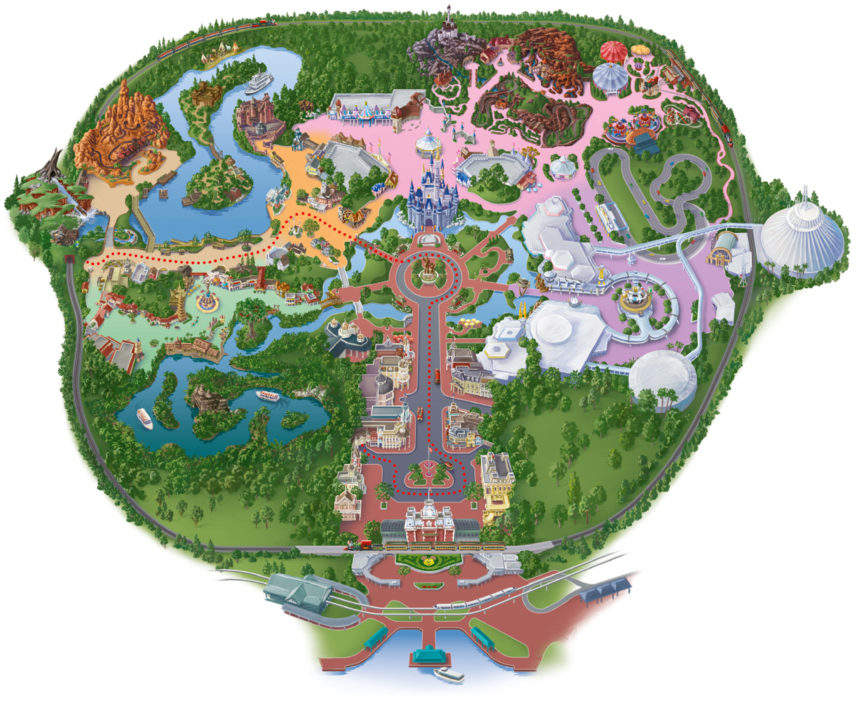
A significant, yet often overlooked, portion of Magic Kingdom’s acreage is dedicated to what is known as “backstage” areas. These are the operational heart of the park, hidden from guest view to preserve the illusion of magic. Below the park’s surface lies a vast network of tunnels called utilidors, which allow cast members, supplies, and waste to move efficiently and discreetly between the lands. These subterranean passages are critical for maintaining the seamless operation of a landmark of this scale, preventing “breaks” in the themed environment. On the surface, backstage areas house workshops, offices, cast member facilities, parade floats storage, and maintenance bays for attractions like Space Mountain and Haunted Mansion. Without this extensive, unseen infrastructure, the front-of-house magic would be impossible to sustain. This allocation of acreage for critical support systems underscores the intricate planning required to operate such a colossal and famous attraction, showcasing the meticulous design that extends far beyond what guests perceive.
The Evolution of a Florida Icon
The 107 acres of Magic Kingdom are not static; they represent a continually evolving canvas for storytelling and innovation. Since its opening in 1971, this landmark has adapted to new technologies, changing guest expectations, and the creative visions of Walt Disney Imagineering. Its history is one of thoughtful evolution, demonstrating how a fixed landmass can continue to offer novel experiences while retaining its classic charm.
From Concept to Colossus: Walt Disney’s Vision
The creation of Magic Kingdom was a direct result of Walt Disney’s vision for a grander, more controlled environment than his original Disneyland Park in California. He acquired vast tracts of undeveloped land in Florida with the dream of building not just a theme park, but an entire “Experimental Prototype Community of Tomorrow” (EPCOT). While the original EPCOT concept evolved, Magic Kingdom became the first and most prominent realization of the Walt Disney World Resort. The initial 107 acres were carefully chosen and developed to establish the core principles of Disney theme park design: immersive environments, groundbreaking attractions, and an unwavering commitment to guest experience. Its historical development firmly establishes its place as a pivotal landmark in entertainment history, showcasing a pioneering approach to leisure and urban planning. The initial layout, including the hub-and-spoke design radiating from Cinderella Castle, was revolutionary and has served as a blueprint for theme parks worldwide, underscoring its historical architectural significance.
Adapting and Expanding Within Its Boundaries
Over the decades, Magic Kingdom has successfully incorporated new attractions and experiences without significantly altering its core 107-acre footprint. Notable expansions, such as the extensive New Fantasyland project which opened in phases starting in 2012, involved reconfiguring existing areas and utilizing previously undeveloped pockets of land more efficiently. This ability to evolve within established boundaries is a hallmark of intelligent landmark management. Projects like the addition of Seven Dwarfs Mine Train or the transformation of 20,000 Leagues Under the Sea lagoon into elements of New Fantasyland demonstrate a continuous commitment to refreshing the guest experience. This adaptive capacity ensures that Magic Kingdom remains a relevant and engaging destination, demonstrating that the magic isn’t solely dependent on endless expansion, but rather on innovative reuse and re-imagination of its valuable acreage. The planned addition of the TRON Lightcycle / Run in Tomorrowland further exemplifies this, integrating a massive new structure into an already dense land.
Significance Beyond the Numbers: A Cultural Landmark
The 107 acres of Magic Kingdom represent far more than just real estate; they are the physical manifestation of dreams, a meticulously crafted environment that transcends its physical dimensions to become a profound cultural landmark. Its enduring appeal lies not just in its rides or shows, but in its ability to transport visitors to a realm where fantasy becomes reality, leaving an indelible mark on generations.
Architectural Storytelling and Immersive Environments
The architecture throughout Magic Kingdom’s 107 acres is an integral part of its storytelling. Each building, from the quaint Victorian facades of Main Street, U.S.A. to the imposing grandeur of Cinderella Castle and the intricate details of the Haunted Mansion in Liberty Square, serves a narrative purpose. The design principles employed are not just about aesthetics; they are about creating immersive environments that evoke specific emotions and transport guests into different stories. The forced perspective on Main Street, for instance, makes the street appear longer and the castle grander from a distance, contributing to a sense of awe and wonder as guests enter the park. The intricate details, from the flags flying in Liberty Square to the futuristic lines of Space Mountain, contribute to a coherent, believable world within its boundaries. This masterful architectural storytelling firmly entrenches Magic Kingdom as a pinnacle of themed design and a significant landmark in its own right. Even subtler elements like the distinct smells piped into certain areas or the carefully chosen background music contribute to this immersive architectural narrative, activating multiple senses within the park’s defined acreage.

A Beacon of Imagination and Tourism
Ultimately, the 107 acres of Magic Kingdom serve as a global beacon of imagination and a cornerstone of the tourism industry in Florida. It’s a place where childhood dreams take flight, where families create lasting memories, and where the boundaries of possibility seem to dissolve. The park’s success has inspired countless other attractions and contributed significantly to the economic vitality of Orlando and the broader region. Its enduring popularity, drawing millions of visitors year after year, speaks volumes about its cultural impact and its status as a timeless landmark. The meticulous management of its acreage allows for a continuous flow of guests, parades, fireworks, and special events, all contributing to its dynamic appeal. Whether experiencing the global unity of “It’s a Small World” or the thrill of Big Thunder Mountain Railroad, every moment within these 107 acres is part of an experience that has shaped popular culture and remains a testament to the power of imagination.
In conclusion, the Magic Kingdom Florida occupies approximately 107 acres, a number that belies the immense complexity and depth of experience it offers. This acreage is not just a measurement; it is the meticulously planned canvas upon which Walt Disney’s vision was brought to life, an architectural and thematic masterpiece that continues to evolve. It stands as a testament to the power of innovative design, efficient operations, and unwavering dedication to storytelling, solidifying its place as one of the world’s most cherished and famous landmarks.
LifeOutOfTheBox is a participant in the Amazon Services LLC Associates Program, an affiliate advertising program designed to provide a means for sites to earn advertising fees by advertising and linking to Amazon.com. Amazon, the Amazon logo, AmazonSupply, and the AmazonSupply logo are trademarks of Amazon.com, Inc. or its affiliates. As an Amazon Associate we earn affiliate commissions from qualifying purchases.