
California, the Golden State, is a land of unparalleled diversity—from its sprawling metropolises and tech innovation hubs to its sun-drenched beaches, towering redwoods, and vast desert landscapes. As visitors and new residents quickly discover, this immense geographical and cultural tapestry is also reflected in its intricate telecommunications system, specifically its area codes. Far more than just a sequence of three digits, California’s area codes are vital identifiers, silently narrating the state’s growth, population shifts, and regional distinctiveness. For anyone planning a trip, relocating, or simply curious about the practical geography of this iconic state, understanding its area code system is an insightful journey into its very fabric.
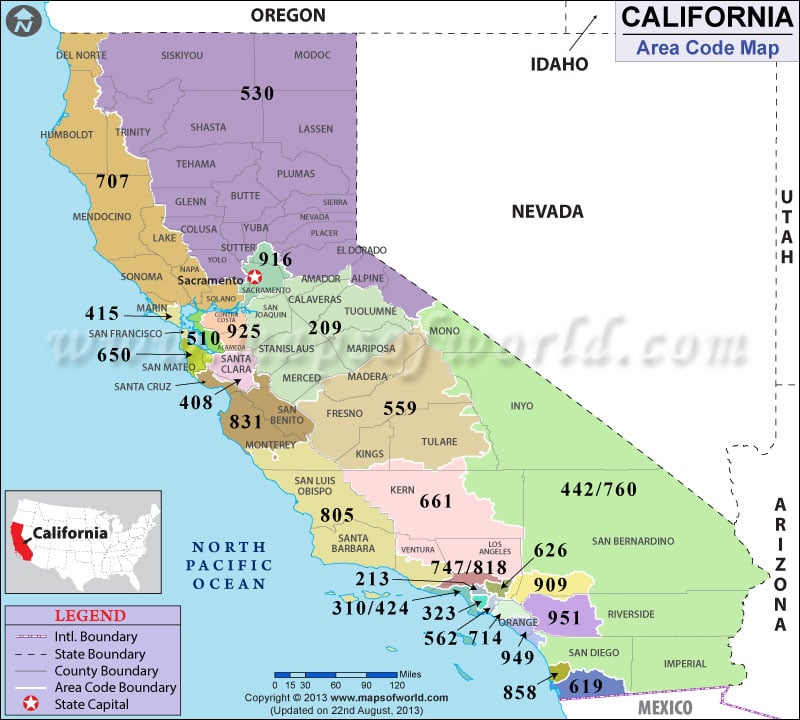
So, just how many area codes does California have? The answer is not a static number, but rather a dynamic figure that continues to evolve with population growth and technological demand. Currently, California is home to approximately 38-40 active area codes, a number that includes both traditional geographic splits and the increasingly common overlay codes. This makes California one of the states with the highest number of area codes in the nation, a testament to its status as the most populous U.S. state and a global economic powerhouse.
The Evolution of California’s Telecommunications Landscape
The journey of California’s area codes reflects a microcosm of the state’s explosive growth throughout the 20th and 21st centuries. What began with just a handful of codes has blossomed into a complex network, each addition telling a story of expanding populations and technological advancements.
From Single Codes to Complex Overlays
When the North American Numbering Plan (NANP) was first introduced in 1947, California was assigned only three area codes: 213 for Southern California, 415 for Central California, and 916 for Northern California. These initial divisions were simple, reflecting a time when telephone lines were relatively sparse and population centers were less dense.
As the state boomed, new area codes became necessary. Initially, these were introduced through “geographic splits,” where an existing area code was divided into two or more new codes. For instance, the original 213 area code eventually spawned codes like 714 (for Orange County and parts of the Inland Empire), 805 (for the Central Coast), and 619 (for San Diego). This process continued for decades, creating distinct geographic boundaries for each code.
However, as the supply of numbers dwindled and the logistics of splitting areas became increasingly cumbersome and disruptive, a new strategy emerged: the “overlay.” An overlay code is introduced into an existing geographic area, meaning that multiple area codes can serve the same region. This requires all callers within that region to dial 10 digits (area code + 7-digit number) even for local calls. The first overlay in California was the 323 code, overlaid on the original 213 in Los Angeles in 1998, marking a significant shift in dialing practices.
Driving Factors: Population Growth and Technological Demand
The proliferation of area codes in California is primarily driven by two relentless forces: unprecedented population growth and burgeoning technological demand. California’s population has surged from roughly 10 million in 1950 to nearly 40 million today, making it a magnet for residents from across the globe. Each new resident, each new business, and each new device requires a unique telephone number, steadily depleting the available numerical pool within existing area codes.
Compounding this growth is the exponential rise in communication devices. Beyond traditional landlines, the advent of mobile phones, fax machines, pagers (in their heyday), and now various internet-connected devices that use phone numbers, has placed immense pressure on the numbering system. Each of these devices consumes a finite resource—a phone number—accelerating the need for new area codes to be introduced. The convenience and necessity of instant communication in a fast-paced state like California dictate a constant expansion of its telecommunications infrastructure.
A Regional Breakdown: Exploring California Through Its Area Codes
For travelers and those seeking to understand California’s vastness, area codes offer a unique geographical lens. They not only define telecommunication regions but often align with cultural, economic, and tourism hubs.
Southern California’s Iconic Digits
Southern California is arguably the most complex area code region due to its dense population centers and sprawling urban development.
- Los Angeles Metropolitan Area: The heart of Southern California is served by a multitude of codes. The historic 213 and 323 codes cover downtown Los Angeles and its immediate surrounding neighborhoods. The coastal and western parts of Los Angeles County, including glamorous locales like Beverly Hills and Santa Monica, use 310 (and its overlay 424). The San Fernando Valley and adjacent areas are covered by 818 (and overlay 747), while the San Gabriel Valley to the east uses 626.
- Orange County: Famous for its beaches, theme parks, and affluent communities, Orange County is primarily served by 714 and its overlay 657.
- San Diego County: The vibrant border city of San Diego and its surrounding county fall under the 619 and 858 overlay.
- Inland Empire: East of Los Angeles, the rapidly growing Inland Empire utilizes 909 and 951.
Northern California’s Innovation and Natural Beauty
Northern California also presents a rich array of codes, reflecting its diverse geography from tech hubs to wine country.
- San Francisco Bay Area: The iconic city of San Francisco is served by the classic 415 area code and its overlay 628. Across the bay, the East Bay cities like Oakland and Berkeley use 510 (and overlay 341).
- Silicon Valley/San Jose: The global center of technology, Silicon Valley, centered around San Jose, is identified by 408 and its overlay 669.
- Sacramento and Central Northern California: The state capital, Sacramento, and its surrounding regions are under the 916 area code, with a new overlay 279 recently introduced.
- North Coast and Wine Country: The beautiful coastal and wine regions, including cities like Santa Rosa and Napa, are primarily covered by 707.
Coastal Gems and Central Valley Sprawls
Beyond the major metropolitan areas, California’s diverse geography extends to its stunning coastline and agricultural heartland.
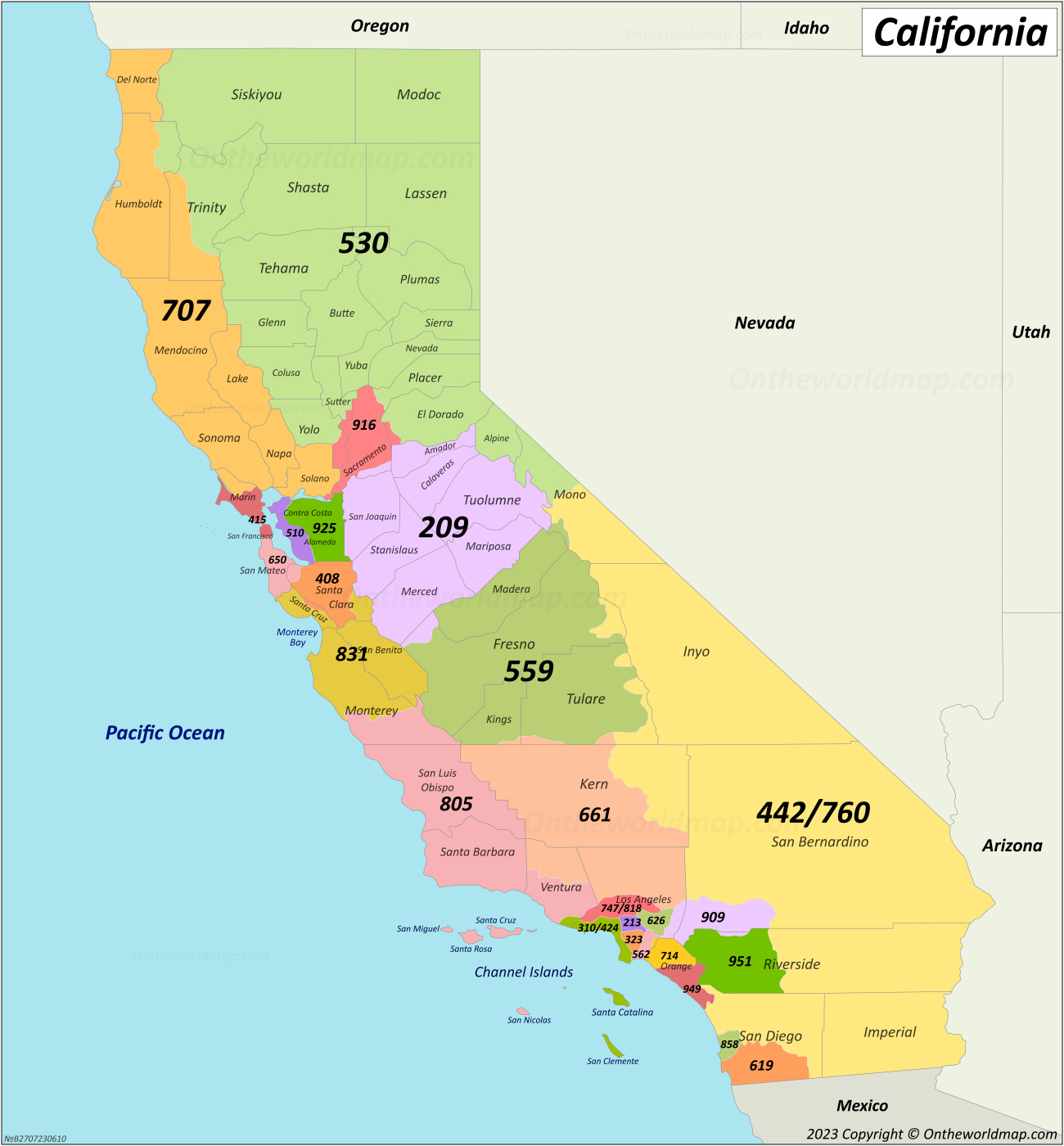
- Central Coast: Stretching from just north of Los Angeles up to Monterey Bay, the Central Coast includes picturesque cities like Santa Barbara, San Luis Obispo, and Ventura. This region is primarily served by 805 and its overlay 820.
- Central Valley: California’s agricultural powerhouse, the Central Valley, features codes such as 559 for the Fresno area, 661 for Bakersfield and northern Los Angeles County, and 209 for Stockton and the San Joaquin Valley.
- Desert Regions: The vast and scenic desert areas, including Palm Springs, Death Valley, and parts of the Mojave Desert, are covered by 760 and its overlay 442.
The Remote and Recreational Codes
Even California’s less densely populated or more geographically challenging regions have their dedicated area codes, essential for connecting communities. These include codes like 530 for the vast northeastern portion of the state, encompassing the Shasta Cascade region and parts of the Sierra Nevada, and 442 (overlay with 760) which extends into the Imperial and Riverside counties. These codes serve areas rich in natural beauty and outdoor recreation, from national parks to ski resorts, ensuring connectivity for both residents and visitors exploring California’s wilder side.
Practical Considerations for Travel and Communication
For anyone visiting or moving to California, understanding its area code system has practical implications for seamless communication.
The Ubiquity of 10-Digit Dialing
Perhaps the most crucial takeaway for newcomers is the almost universal requirement of 10-digit dialing (area code + 7-digit number) for all local calls within California. Due to the widespread implementation of overlay codes, dialing just seven digits for a local call is increasingly rare and often results in a “number not in service” message. Whether you’re calling a local restaurant, a hotel concierge, or a new friend, always include the area code, even if it’s the same as your own. For long-distance calls within the state, you might also need to add a “1” before the 10-digit number.
Understanding Overlays vs. Geographic Splits
The distinction between overlays and geographic splits helps explain the dialing practice. With a geographic split, a clear boundary exists, and within that boundary, a 7-digit call would have sufficed. However, with an overlay, multiple area codes exist simultaneously within the same geographic area. To differentiate between numbers in these co-existing codes, the area code must always be dialed. This system maximizes the number of available phone numbers without needing to redraw complex boundaries or force existing customers to change their numbers, but it necessitates universal 10-digit dialing.
Essential Tips for Visitors and Newcomers
- Save numbers with area codes: When saving new contacts in California, always include the full 10-digit number (e.g., (XXX) XXX-XXXX) to avoid any dialing issues.
- Check your phone plan: If you’re using a phone from out-of-state or internationally, be aware of potential roaming charges or international dialing costs. Most modern plans offer nationwide coverage with unlimited calling, but it’s always good to confirm.
- Familiarize yourself with local codes: While you don’t need to memorize all of California’s area codes, knowing the primary codes for the region you’re visiting (e.g., 310/424 for Los Angeles, 415/628 for San Francisco) can be helpful for quick identification and general geographical orientation.
- Data and Wi-Fi: For travelers, relying on data and Wi-Fi for communication through apps like WhatsApp, FaceTime, or other VoIP services can often bypass traditional dialing complexities and costs, especially if you have an international plan or are heavily reliant on internet connectivity.
The Future Landscape of California’s Area Codes
California’s telecommunications landscape is far from static. As the state continues to grow and technology evolves, so too will its area code system.
Managing Demand in a Constantly Growing State
The California Public Utilities Commission (CPUC) consistently monitors the depletion rate of available telephone numbers and plans for new area code introductions years in advance. Overlays will likely remain the preferred method for adding capacity, as they are less disruptive to existing residents than geographic splits. This ensures that the state can continue to meet the demand for communication services without requiring mass number changes or creating dead zones. New overlay codes, like the recent 279 in the 916 region, are a testament to this ongoing process.

The Role of Technology Beyond Traditional Phone Lines
While traditional area codes still hold significant importance for phone-based communication, the rise of internet-based communication technologies is slowly shifting the paradigm. Many interactions now happen over Wi-Fi-dependent apps, social media, and email, which do not rely on area codes. However, for essential services, emergencies, and the vast network of existing telephone numbers, area codes will undoubtedly remain a fundamental aspect of California’s practical infrastructure for the foreseeable future.
In conclusion, California boasts a robust and ever-expanding number of area codes, currently standing at around 38-40. These three-digit identifiers are more than just dialing prefixes; they are historical markers of growth, practical tools for navigation, and silent reflections of the state’s incredible diversity. For anyone traversing the Golden State, understanding its area code landscape is a subtle yet insightful way to connect with its unique rhythm and vast geographical tapestry.
LifeOutOfTheBox is a participant in the Amazon Services LLC Associates Program, an affiliate advertising program designed to provide a means for sites to earn advertising fees by advertising and linking to Amazon.com. Amazon, the Amazon logo, AmazonSupply, and the AmazonSupply logo are trademarks of Amazon.com, Inc. or its affiliates. As an Amazon Associate we earn affiliate commissions from qualifying purchases.